

Accessory layering guide: style with confidence in 2026
TL;DR:
- Accessory layering involves combining multiple jewelry pieces to create a cohesive and intentional look that enhances personal style. A focal point should be chosen, with strategic spacing and balanced metals to prevent clutter and tangling. Proper techniques like length variation and clasp management ensure a polished appearance suited for any occasion.
Accessory layering is the art of combining multiple pieces, from necklaces and rings to scarves and cuffs, into a cohesive look that amplifies your personal style without overwhelming it. Done well, this practice transforms even the simplest outfit into something intentional and memorable. The key principles are choosing a clear focal point, spacing pieces strategically, and mixing metals with proportion in mind. Jewellery designers like Jennifer Fisher have shaped how modern stylists think about stacking, and their advice cuts through the noise with practical rules anyone can apply.
What is an accessory layering guide and why does it matter?
An accessory layering guide is a practical framework for combining multiple accessories, particularly jewellery, in a way that looks deliberate rather than accidental. The goal is not to wear more; it is to wear smarter. When you understand the mechanics behind spacing, proportion, and focal points, every outfit you put together carries more visual weight and personality.
Fashion accessory layering has moved well beyond the jewellery box. Today, a layered look might include a choker paired with a pendant necklace, stacked rings across multiple fingers, and a single statement cuff on one wrist. The challenge is keeping all of those elements in conversation with each other rather than competing. That balance is exactly what this guide addresses.
How to choose and balance focal points in layered looks
The focal point rule is the single most important concept in any accessory styling guide. Jennifer Fisher advises choosing either your ears or your neck, rarely both, and pulling back on the other. This keeps the eye moving naturally rather than bouncing between competing statements.
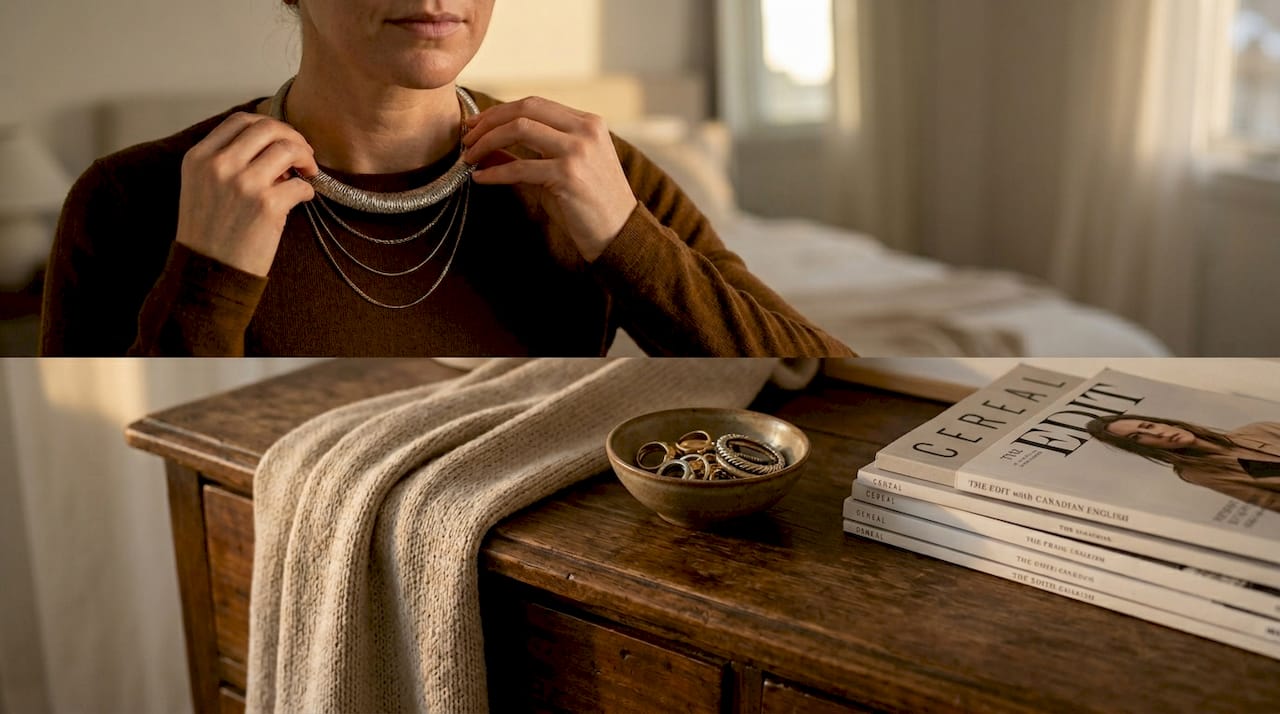
In practice, this means if you are wearing a dramatic collar necklace or a bold layered stack at your throat, your earrings should be small studs or simple hoops. Conversely, chandelier earrings or sculptural ear cuffs call for a single delicate chain at the neck, not three. The same logic applies to wrists: a stack of bangles on one arm reads as intentional; the same stack plus a chunky bracelet on the other arm reads as cluttered.
Pro Tip: Choose your hero piece first, then build everything else around it at a lower visual volume. This one habit prevents the most common layering mistake: too many focal points competing for attention.
Subtler complementary pieces around your focal point do not have to be boring. A thin gold chain, a barely-there anklet, or a single signet ring all add texture without stealing focus. Successful layering comes from limiting dramatic flair to one area and balancing the rest with restraint.
How to layer necklaces without tangling
Necklace layering is where most people run into trouble, and the solution is almost entirely mechanical. Spacing necklaces 1 to 2 inches apart in length significantly reduces tangling and creates the visual separation that makes each piece readable on its own.
The standard length categories give you a reliable framework to work from:
- Choker: 14 to 16 inches, sits at the base of the throat
- Princess: 17 to 19 inches, the most common everyday length
- Matinee: 20 to 24 inches, falls at or just below the collarbone
- Opera: 28 to 34 inches, sits at the chest
- Rope: 35 inches and longer, drapes toward the sternum
Robinson’s Jewelers recommends building your stack from the longest chain outward to the shortest, fastening each one before adding the next. This approach lets you see the spacing as you go rather than guessing after everything is on.
Beyond length, chain texture plays a major role in keeping layers separate. Pairing a thick chain with a thin rope or snake chain keeps layers distinct because the different weights and surface textures move independently at the neck. Two chains of identical weight and width will drift together and tangle within minutes.
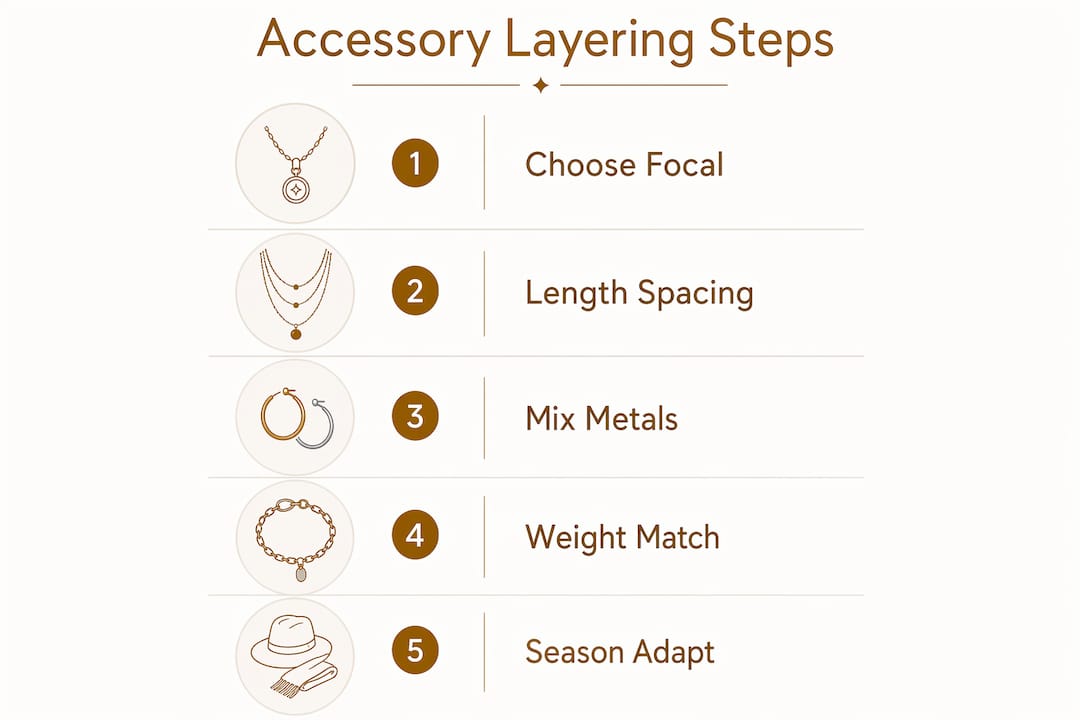
Clasp management is the detail most guides skip. Staggering clasp positions and using a layering clasp or separator bar keeps the backs of your necklaces tidy and prevents the clasps themselves from catching on each other. Layering clasps, which attach multiple chains to a single fastening point at varied lengths, are one of the most underused tools in jewellery styling.
Pro Tip: Before wearing a layered necklace stack, store each chain in a separate zip-lock bag or hang them individually on a jewellery stand. Chains that go into a drawer together always come out tangled.
- Mix at least two different chain styles (e.g., cable, box, herringbone, rope) in every stack
- Keep pendant sizes graduated: largest pendant on the longest chain
- Use a necklace layering clasp for stacks of three or more pieces
- Check the back of your neck in a mirror before leaving the house
How to mix metals and textures for a cohesive look
Metal mixing is one of the most misunderstood parts of layering accessories. The common fear is that gold and silver together look unintentional. The reality is that mixing metals works best when one metal dominates at roughly 60 to 70 percent of the total and the others serve as accents. This proportion creates harmony rather than chaos.
Angela Howenstein and Venier both recommend using a “bridge” piece to unify a mixed-metal look. A two-tone bridge piece incorporates both gold and silver (or rose gold and yellow gold) in a single item, making the combination look deliberate rather than accidental. Without it, multi-metal stacks can read as an afterthought.
Here is a quick comparison of common metal combinations and how they read visually:
| Metal combination | Visual effect | Best occasion |
|---|---|---|
| All yellow gold | Warm, classic, cohesive | Everyday and formal wear |
| Gold dominant with silver accents | Modern, intentional contrast | Casual and smart-casual |
| Silver dominant with rose gold accents | Soft, feminine, current | Daytime and brunch looks |
| Equal gold and silver | Can appear unplanned | Avoid without a bridge piece |
Finish matters as much as metal colour. Mixing a polished gold chain with a brushed gold cuff creates texture contrast within the same metal family, which reads as sophisticated rather than mismatched. Design Signal frames metal mixing as a problem of controlling dominance and matching finishes rather than following strict colour rules. That reframe makes the whole process far less intimidating.
- Stick to one dominant metal per look
- Use a two-tone or mixed-finish piece as your anchor
- Match finishes within the same metal (e.g., all polished gold or all matte silver)
- Contrast textures across metals to add depth without adding bulk
For a deeper look at how different metals behave and age, the precious metals guide from USA Jewels covers gold, silver, and platinum properties in practical detail.
How does season and occasion change your layering approach?
Season affects layering volume directly. Summer stacks breathe more, with fewer, lighter pieces that do not trap heat or catch on lightweight fabrics. Winter allows for more substantial stacks because heavier knits and structured coats provide a visual base that can support bolder jewellery without looking overdone.
For work settings, the general rule is two to three pieces in coordinated metals. A princess-length necklace, small hoop earrings, and a single ring read as polished and professional. Adding a fourth or fifth piece in a boardroom context tips the balance toward distraction. You can find more ideas on building season-appropriate outfits in this autumn layering guide from 16thavenue.
Evening and special occasions open the door to more movement and drama. Long opera chains, chandelier earrings (when the neckline is bare), and stacked cuffs all work in low-light social settings where the goal is presence rather than restraint. The key is still choosing one focal area, even when the overall volume is higher.
Pro Tip: Match the weight of your accessories to the weight of your fabric. Delicate chains disappear against a chunky cable knit; bold statement pieces look jarring on a silk slip dress. Let the fabric guide the scale of your stack.
Seasonal colours and materials also refresh a layering look without buying new pieces. Amber and tortoiseshell pieces read as autumn. Pearl and crystal read as winter formal. Turquoise and shell read as summer. Rotating the same core chains with different pendants or charms is one of the most cost-effective ways to keep your layering style current. Made By Mary builds their entire brand philosophy around mixing sentimental charms with everyday chains, which is a practical model for building a layering wardrobe over time.
Key takeaways
Mastering accessory layering requires one clear focal point, strategic length spacing, a dominant metal, and outfit-appropriate volume for every occasion.
| Point | Details |
|---|---|
| Choose one focal area | Commit to either neck or ears for bold pieces; keep the other subtle. |
| Space necklaces 1 to 2 inches apart | Length variation prevents tangling and keeps each chain visually distinct. |
| Use a dominant metal at 60 to 70 percent | One leading metal with accent metals creates harmony rather than chaos. |
| Match accessory weight to fabric weight | Delicate chains suit lightweight fabrics; bold stacks suit structured or knit pieces. |
| Use layering clasps for three or more necklaces | Clasp tools keep the back of your neck tidy and prevent chain collisions. |
Why I think most people layer accessories backwards
Most people start with their outfit and then pile on accessories at the end. I have found that approach almost always produces a cluttered result. The looks that actually work, the ones that photograph well and hold up through a full day, start with the accessories. Pick your hero piece first, whether that is a bold layered necklace stack or a pair of sculptural earrings, and then build the outfit around it.
The other mistake I see constantly is treating layering as a quantity exercise. More pieces do not equal more style. Some of the strongest layered looks I have put together use only three items: a choker, a matinee pendant, and a single stacking ring. The restraint is what makes them land. When you read the jewellery styling guide from USA Jewels, the same principle comes through: occasion-appropriate restraint is a skill, not a limitation.
The one tool that genuinely changed how I layer necklaces is the layering clasp. Before using one, I spent more time untangling chains than actually wearing them. Now I build my stacks on the clasp before I put them on, which means the spacing is locked in and the back looks clean. It is a small investment that removes the most frustrating part of the whole process.
Experiment freely, but experiment with a framework. The focal point rule, the length ladder, and the dominant metal principle are not restrictions. They are the structure that makes experimentation produce results instead of regret.
— Glenville
Explore layering-ready fashion at 16thavenue

Layered accessories look their best when the outfit underneath gives them room to shine. 16thavenue carries seasonal pieces built for exactly that. The women’s woolen coat is a clean-lined autumn and winter staple that provides the structured backdrop a bold necklace stack needs to read clearly. Pair it with the fashion snow boots for a complete cold-weather look that lets your layered jewellery do the talking. Browse the full collection at 16thavenue for curated pieces that complement every layering approach covered in this guide, from minimalist daytime stacks to full evening statements.
FAQ
What is the focal point rule in accessory layering?
The focal point rule means choosing one area, either your neck or your ears, for bold or dramatic pieces, and keeping everything else subtle. Jennifer Fisher describes this as choosing one and pulling back on the other to avoid overwhelming the look.
How far apart should layered necklaces be in length?
Necklaces should be spaced roughly 1 to 2 inches apart in length. This spacing keeps chains visually distinct and prevents mechanical tangling caused by chains moving at the same neck height.
Can you mix gold and silver accessories in one look?
Yes, mixing metals works when one metal dominates at around 60 to 70 percent of the total. A two-tone bridge piece that incorporates both metals ties the look together and makes the combination appear intentional rather than accidental.
How many accessories are appropriate for a work setting?
Two to three pieces in coordinated metals is the standard for professional settings. A necklace, small earrings, and one ring provide polish without distraction.
How do I stop layered necklaces from tangling?
Use a layering clasp or separator bar, mix chain textures and weights, and stagger clasp positions at the back of your neck. Storing each chain separately before wear also prevents pre-wear tangling.