


Beauty essentials workflow: your 2026 efficiency guide
TL;DR:
- A beauty essentials workflow organizes skincare and makeup steps using multifunctional products for efficient daily routines. It emphasizes core steps like cleanse, treat, and moisturize, with quarterly product audits to maintain effectiveness. Proper sequencing and storage simplify mornings and enhance skin health over time.
A beauty essentials workflow is a carefully organised set of skincare and makeup steps that maximises results by using a minimalist, multifunctional product capsule applied in a consistent daily sequence. Dermatologists refer to the core structure as cleanse, treat, and moisturise. That three-step framework is the backbone of every effective routine, whether you spend five minutes or fifty. A curated product capsule can save you up to four hours per week by cutting decision fatigue and morning overload. This guide walks you through the exact products, organisation methods, and daily sequences that make the whole system work.
What are the essential products for a beauty essentials workflow?
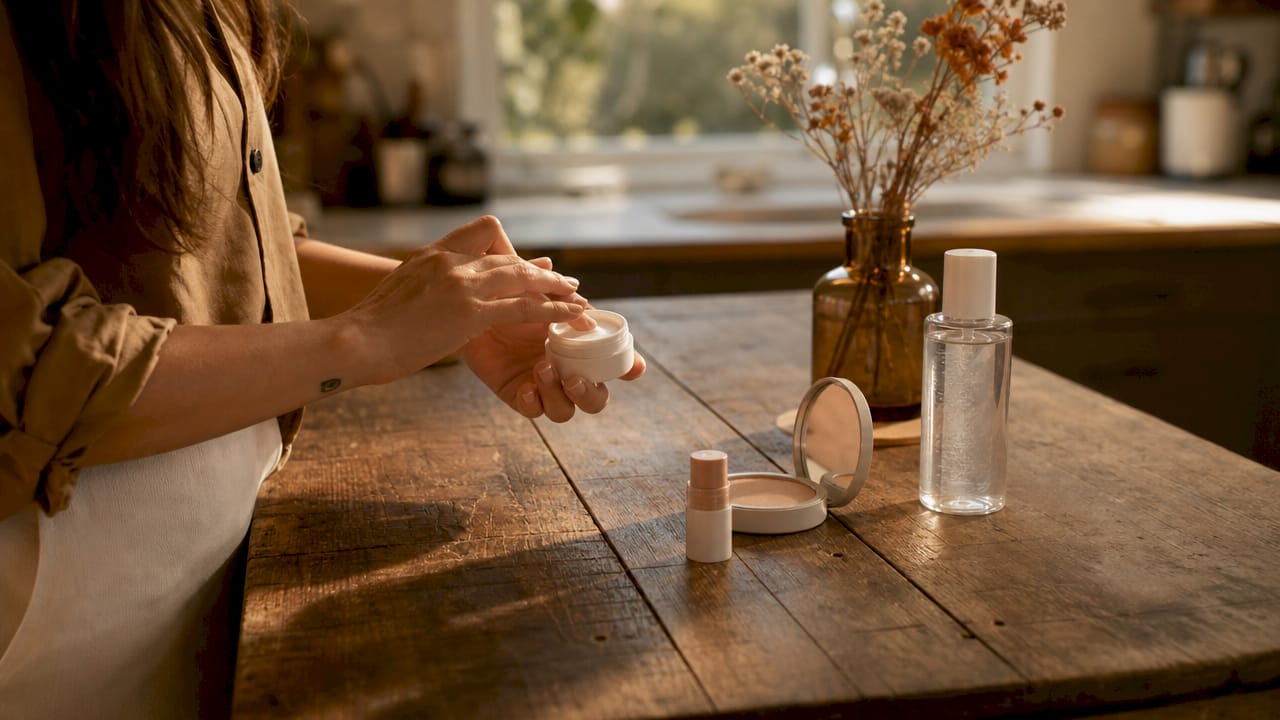
The minimalist beauty capsule is the foundation of any efficient daily beauty workflow. It replaces a cluttered collection with a small set of products that each do more than one job. The goal is coverage without redundancy.
Every effective capsule includes these core categories:
- Cleanser — removes overnight buildup or daytime grime without stripping the skin barrier
- Toner — rebalances pH and preps skin to absorb what follows
- Serum — the targeted treatment step (Vitamin C in the morning, retinol at night)
- Moisturiser — seals in hydration and supports the skin barrier
- SPF — non-negotiable in the morning; skip it at night
- Eye cream — addresses the delicate under-eye area where signs of fatigue show first
- Lip care — a lip oil or balm keeps lips conditioned throughout the day
- Cream tint — one product that works as blush, lip colour, and eyeshadow
That last item is the secret weapon of a minimalist kit. Cream tints used across multiple zones replace three separate products with one. That reduction matters when you are trying to cut clutter without cutting results.
| Product category | Primary use | Multifunctional potential |
|---|---|---|
| Cleanser | Removes impurities | Double-cleanse removes SPF and makeup |
| Serum | Targeted skin treatment | Vitamin C brightens; retinol resurfaces |
| Moisturiser | Hydration and barrier support | Some formulas include SPF |
| Cream tint | Colour for cheeks | Works on lips and eyelids |
| Lip oil | Lip conditioning | Adds subtle gloss over lip colour |
Pro Tip: When selecting products, check whether each one performs under your real-life conditions. A foundation that looks flawless in dry weather may separate in humidity. Choose for your climate, not for the trend cycle.
The criteria for choosing products are compatibility and versatility. Products in your capsule should layer without pilling, and each one should earn its place by serving more than a single purpose. For a deeper look at product types by category, the full breakdown helps you identify gaps in your current kit.
How to organise your skincare and makeup for smooth daily use
The fastest way to improve your morning routine is to treat your physical storage like a digital file system. Categorising products with labelled bins by step (cleanse, treat, moisturise, colour) cuts the time you spend searching and eliminates the mental load of deciding what comes next. Think of it the way you manage email: labels, bins, and rules so nothing gets lost.
Here are the core organisation principles that work:
- Group products by routine step, not by product type or brand
- Label each bin or tray clearly so you can grab and go without thinking
- Store morning products separately from evening products to avoid confusion
- Keep your most-used items at the front of each group
- Set digital reminders for patch-test dates and repurchase timing based on how fast you use each product
Pro Tip: Take a photo of your full product collection once a month. A quick visual inventory tells you what is running low before you run out, and it stops you from buying duplicates.
Physical organisation based on skin type and category labelling also supports sustainable habits. When your storage reflects your routine sequence, you stop skipping steps because the next product is already in front of you.
The quarterly audit is the maintenance step most people skip. Discarding expired or unused products every three months prevents dead stock from building up and keeps your routine focused on what actually works. Set a calendar reminder for the first weekend of every third month. Pull everything out, check the period-after-opening symbols, and remove anything past its date or untouched for 90 days.
What is the step-by-step daily beauty workflow for morning and evening?
The morning and evening routines share the same three-step structure but differ in product focus. Morning and night routines adapt to different skin needs, which means the products you reach for change even when the sequence stays the same.
Morning routine
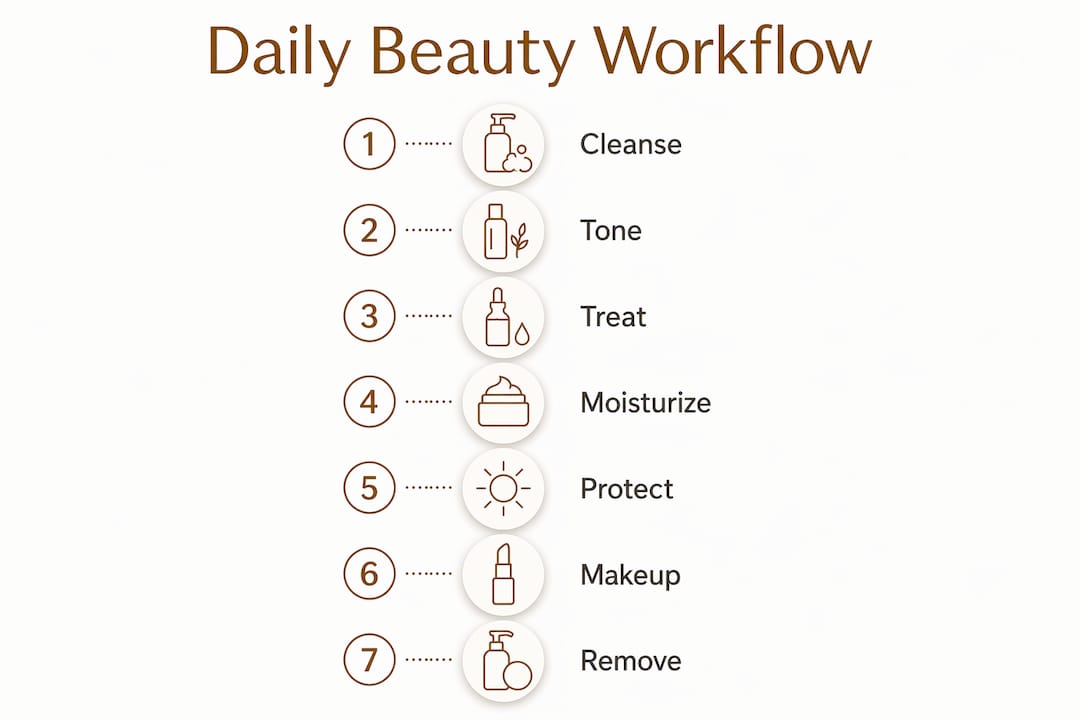
- Cleanse — use a gentle, low-foam cleanser to remove overnight sebum without disrupting your barrier
- Tone — apply toner with a cotton pad or clean hands to rebalance pH
- Treat — apply a Vitamin C serum. This is the step most people skip, and it is the one that makes the biggest difference to brightness and long-term skin health
- Moisturise — press in a lightweight moisturiser while skin is still slightly damp
- SPF — apply a broad-spectrum SPF 30 or higher as the final skincare step, every single morning
- Eye cream — tap gently around the orbital bone with your ring finger
- Makeup — apply cream tint to cheeks, blend onto lips, and use a clean fingertip to press a small amount onto eyelids. Add mascara and a tinted lip oil to finish
The entire morning sequence takes under ten minutes once you have the products organised and the habit locked in. A simple five-minute routine that you actually follow every day outperforms an elaborate one you abandon by Wednesday.
Evening routine
- Double cleanse — use a cleansing oil or balm first to dissolve SPF and makeup, then follow with your regular cleanser
- Tone — same as morning
- Treat — swap Vitamin C for retinol or a peptide serum. Adding a targeted treatment step with retinol significantly improves skin texture and reduces visible ageing over time
- Moisturise — use a richer formula at night; your skin repairs itself while you sleep and benefits from heavier hydration
- Eye cream — apply again, focusing on the outer corners
- Lip care — apply a conditioning lip balm or oil as the final step
Pro Tip: If retinol causes irritation when you first introduce it, apply your moisturiser first and layer the retinol on top. This “sandwich” method reduces sensitivity without eliminating the treatment benefit.
The evening routine does not need SPF. Skipping it at night is correct, not lazy. That one product removal simplifies the sequence and avoids unnecessary occlusion over active ingredients like retinol.
What common mistakes slow down your beauty regimen?
The most common error in any beauty regimen is skipping the treatment step. Cleansing and moisturising maintain the skin. Targeted serums are what actually improve it. Treating steps distinguish basic maintenance from real skin health progress. Skipping them means you are preserving the status quo, not changing it.
The second most common mistake is buying products based on viral trends rather than performance under real conditions. Effective beauty workflows prioritise product performance in your specific climate, skin type, and lifestyle. A product that performs well in a controlled studio environment may not survive a full workday in a humid Canadian summer.
Other pitfalls to watch for:
- Overloading products in a single step, which causes pilling and reduces absorption
- Applying products in the wrong order (always go thinnest to thickest consistency)
- Ignoring expiry dates, which reduces efficacy and can cause irritation
- Chasing new launches instead of reviewing whether your current products are working
Discernment in product choice is the skill that separates a routine that works from a collection that grows. The question is never “Is this product good?” The question is “Does this product work for me, in my conditions, consistently?”
A quarterly review of your routine is as important as the routine itself. Skin changes with seasons, hormones, and age. What worked in january may not serve you in july. Build the review into your calendar alongside the product audit.
Key takeaways
A beauty essentials workflow built on a minimalist product capsule, systematic organisation, and a consistent cleanse-treat-moisturise sequence delivers better skin results in less time than an unstructured collection ever will.
| Point | Details |
|---|---|
| Start with a capsule | Limit your kit to multifunctional products that each serve more than one purpose. |
| Never skip the treatment step | Serums like Vitamin C and retinol are what actually improve skin, not just maintain it. |
| Organise by routine step | Label storage bins by sequence (cleanse, treat, moisturise) to eliminate morning decision fatigue. |
| Audit every quarter | Remove expired and unused products every three months to keep your routine focused. |
| Choose for your conditions | Select products that perform in your real climate and lifestyle, not for trend appeal. |
Why I think most beauty routines are built backwards
Most people build their routine by accumulating products they love and then figuring out where to fit them in. That is the wrong direction. The routine should come first, and the products should fill the slots.
I have watched people spend real money on high-quality serums that never absorb properly because they are applied over a thick moisturiser instead of under it. The product is not the problem. The sequence is. Getting the order right costs nothing and changes everything.
The organisation piece is where I see the biggest time savings in practice. Once your storage mirrors your routine sequence, the morning stops feeling like a search operation and starts feeling like a system. That shift alone reduces the temptation to skip steps when you are running late.
The quarterly audit is the habit I recommend most strongly to anyone who feels like their routine has stopped working. Half the time, the issue is not the products. It is that two or three of them have expired quietly and lost their potency. Pulling everything out and checking dates takes twenty minutes and often solves a problem that felt like it needed a complete overhaul.
The broader principle is this: a well-organised, minimal routine you follow every day will always outperform a complex one you follow inconsistently. Tailor the sequence to your skin, your schedule, and your climate. Then protect it from the noise of new launches and trend cycles. For readers who want to apply the same minimalist logic to their wardrobe, the capsule wardrobe approach follows the exact same principles.
— Glenville
Beauty and style essentials from 16thavenue
A well-built beauty routine pairs naturally with a wardrobe that is just as considered. 16thavenue curates women’s fashion and beauty with the same philosophy: fewer, better pieces that work across your real life.

This season, 16thavenue carries the Women’s Trendy Autumn and Winter Woolen Coat, a structured outerwear piece that complements a polished daily look without extra effort. For days that call for comfort and movement, the Women’s Casual Low Wedge Breathable Sport Sneakers pair well with any outfit you put together in under ten minutes. Free shipping to most destinations means your next wardrobe addition arrives without the extra cost.
FAQ
What is a beauty essentials workflow?
A beauty essentials workflow is an organised, sequential routine that uses a minimalist product capsule to cover all daily skincare and makeup needs efficiently. It follows the cleanse, treat, and moisturise structure recommended by dermatologists.
How many products do I actually need in my daily routine?
A functional daily kit covers seven to eight product categories: cleanser, toner, serum, moisturiser, SPF, eye cream, lip care, and one multifunctional colour product. Multifunctional products like cream tints reduce that number further.
What is the correct order to apply skincare products?
Apply products from thinnest to thickest consistency: toner, serum, moisturiser, then SPF in the morning. Applying in the wrong order prevents absorption and reduces the effectiveness of active ingredients.
How often should I review and update my beauty routine?
A quarterly review aligns with seasonal skin changes and keeps expired products out of your routine. Quarterly audits remove dead stock and help you assess whether your current products are still performing.
Why does the treatment step matter so much?
The treatment step with targeted serums is what separates maintenance from improvement. Skipping serums means your routine preserves your skin’s current state rather than actively improving texture, brightness, or signs of ageing.