


How to Choose the Right Fabrics for Comfort and Style
TL;DR:
- Choosing fabrics based on their breathability, moisture management, and thermal regulation is essential for all-day comfort. Natural fibers like cotton and bamboo suit warm weather, while synthetics offer performance benefits for active or cold-weather wear. Advanced textile technologies, such as bi-layer and sweat-responsive fabrics, further enhance comfort by adapting to changing conditions.
Two outfits hang side by side in your wardrobe. Both look equally chic. Both fit perfectly. But the moment you slip one on, something feels off — scratchy, clammy, or oddly stiff by mid-afternoon. The other one? You forget you’re wearing it at all. That difference is almost never about the cut or the colour. It’s about the fabric. Most of us shop with our eyes, but the garments we reach for again and again are the ones that feel right against our skin. This guide walks you through exactly how to make fabric work for you, from everyday basics to active wear and everything in between.
Table of Contents
- Why fabric choice matters for daily comfort
- Breaking down fabric properties: Natural vs. synthetic fibres
- Innovative fabric technologies that boost comfort
- Choosing fabrics for your lifestyle: From streetwear to sportswear
- The hidden side of fabric comfort: More than just the label
- Discover comfort-driven fashion on 16th Avenue
- Frequently asked questions
Key Takeaways
| Point | Details |
|---|---|
| Fabrics drive comfort | The right fabric determines how stylish and comfortable your clothing feels all day. |
| Natural vs. synthetic blends | Both natural and synthetic fibres have strengths, and blends can boost comfort and style versatility. |
| Innovative textiles matter | Advanced fabrics like sweat-responsive weaves and bi-layer structures make modern comfort possible. |
| Lifestyle-informed choices | Choose fabrics based on your daily activities, climate, and layering needs for optimal comfort. |
| Look beyond the label | True comfort is shaped by how a fabric is made, not just the fibre name on the tag. |
Why fabric choice matters for daily comfort
Clothing comfort is not a vague feeling. It’s a measurable result of specific physical properties in the textile itself. When a fabric rubs, traps heat, or clings with sweat, that’s physics, not bad luck. Understanding why this happens gives you real power when you shop.
Three core properties drive how comfortable a fabric feels throughout the day:
- Breathability: How easily air flows through the weave, keeping your skin from overheating
- Moisture management: Whether the fabric wicks sweat away from your skin or holds it against you
- Thermal control: How well the fabric regulates temperature, keeping you warm in the cold and cool in the heat
These three properties are deeply connected. A fabric that breathes well but traps moisture can still leave you feeling uncomfortable on a warm afternoon. Similarly, a fabric with excellent thermal resistance might feel stifling in a heated office. Getting the balance right for your specific context is what separates genuinely comfortable clothing from clothing that merely looks comfortable.
As the research on fabrics and comfort explained shows, the relationship between textile structure and body feel is far more nuanced than most shoppers realize.
Thermal comfort depends on air permeability, thermal resistance, and water vapour permeability — three interlocking factors that determine how well a garment keeps your body in its ideal comfort zone throughout the day.
The takeaway here is straightforward: when you shop for clothing, those three properties should guide your choices just as much as the silhouette or the shade.
Breaking down fabric properties: Natural vs. synthetic fibres
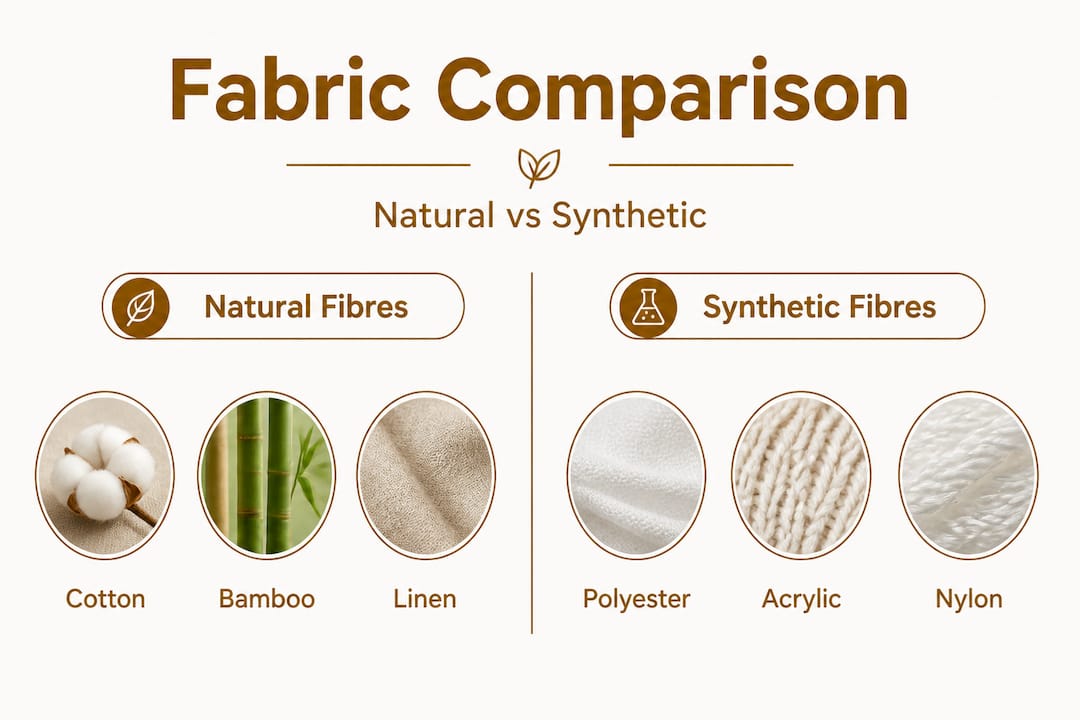
Most fabrics fall into two broad families: natural fibres and synthetic fibres. Each has genuine strengths and real limitations. Neither category is universally superior. What matters is matching the fibre to the occasion.
Natural fibres like cotton provide breathability and hypoallergenic softness, while synthetics can feel artificial but are specifically engineered for performance. That distinction tells us a great deal: natural fibres excel at passive comfort, while synthetics are designed to perform under pressure.

Here’s a side-by-side look at how four common fibres compare:
| Fabric | Breathability | Softness | Moisture response | Best use case |
|---|---|---|---|---|
| Cotton | High | Medium-high | Absorbs moisture | Everyday tops, casual dresses |
| Bamboo | Very high | Very high | Wicks and releases quickly | Loungewear, warm-weather basics |
| Polyester | Medium | Medium | Wicks but dries fast | Sportswear, activewear |
| Acrylic | Low-medium | Medium | Retains warmth | Cold-weather layers, knits |
When to choose each type:
- Cotton: Reach for it on warm days when you want your skin to breathe freely and you’re not doing anything too physically intense
- Bamboo: Ideal when you want ultra-soft fabric that moves moisture away from the skin, especially in warmer seasons or for sensitive skin
- Polyester: Choose this when you need performance, whether that means a yoga class or a long day on your feet
- Acrylic: Best layered in cold weather when warmth retention matters more than breathability
Understanding athleisure fabric choices helps illustrate why synthetic blends have become so popular: they let you move from a morning workout to a coffee meeting without changing clothes or sacrificing comfort.
Pro Tip: Look for fabric blends that combine the best of both worlds. A cotton-bamboo blend offers softness plus quick moisture release, while a polyester-cotton mix gives you durability and breathability together. The label on breathable leggings often tells you exactly what percentage of each fibre you’re getting, and that ratio matters.
Innovative fabric technologies that boost comfort
Traditional weaves and natural fibres have served us well for centuries, but textile science has genuinely moved the needle in recent years. Today’s most comfortable garments often rely on engineered structures and responsive materials that do far more than just sit against your skin.
One of the most exciting advances involves bi-layer fabric construction. Research confirms that bi-layer structures with bamboo outer layers and micro-polyester inner layers optimise thermo-physiological comfort through low thermal conductivity combined with high moisture vapour permeability. In plain terms: the bamboo outer keeps you looking polished and feeling soft, while the micro-polyester inner pulls moisture away from your skin before it can cause that sticky, uncomfortable sensation.
The results of advanced textile innovation are striking. Sweat-responsive fabrics expand the thermal comfort zone by an extraordinary 24.7°C, ranging from 8.3°C to 33.0°C, through a combination of mid-infrared radiation tuning and evaporation management. That’s not a small improvement. That’s the difference between a garment that works for one season and one that adapts to your body across dramatically different conditions.
Here’s a look at the key innovative fabric technologies now appearing in modern women’s fashion:
| Technology | Key feature | Practical benefit |
|---|---|---|
| Bi-layer structures | Dual-fibre construction | Moisture moved away from skin; warmth retained |
| Sweat-responsive textiles | Changes properties with perspiration | Comfort maintained across a wide temperature range |
| Moisture-wicking finishes | Chemical treatments on surface fibres | Faster drying, reduced clamminess |
| Thermo-regulating fibres | Phase-change materials embedded in fabric | Actively absorbs or releases heat as needed |
Understanding the benefits of layering connects directly to these technologies. When you pair an innovative base layer with a breathable mid layer, you’re essentially engineering your own comfort system for the day. Knowing which fabrics go where makes layering for comfort a genuinely practical skill rather than a guessing game.
The bottom line: when you see a garment labelled with terms like “moisture-wicking,” “bi-layer construction,” or “thermo-regulating,” those aren’t just marketing words. They represent real structural decisions with measurable effects on how you feel throughout the day.
Choosing fabrics for your lifestyle: From streetwear to sportswear
Theory is only useful when it translates into action. Here’s how to take everything you now know about fabric properties and use it to build a wardrobe that genuinely works for your life, season by season and activity by activity.
-
Everyday wear: Reach for cotton and bamboo as your core fabrics. Both breathe well, feel soft against the skin, and handle a full day of errands, meetings, or socialising without causing discomfort. A bamboo-blend dress or a 100% cotton blouse will keep you feeling fresh from morning coffee to evening plans.
-
Active lifestyles: Polyester and speciality synthetic blends are your best allies here. Polyester offers superior breathability for sportswear through its air and water vapour permeability, meaning sweat gets pulled away from your body quickly. Pair your activewear with breathable sport shoes to extend that same principle from your clothing all the way to your feet.
-
Seasonal needs: As temperatures drop, acrylic-cotton blends offer the highest thermal resistance for cold weather, making them ideal for cosy knits and layering pieces. In summer or during humid stretches, moisture-wicking fabrics and open-weave cotton keep things manageable. Think about choosing outerwear fabric with the same care you’d apply to your base layers: the outermost garment sets the tone for your whole outfit’s thermal performance.
Building a wardrobe around these principles doesn’t mean sacrificing personal style. It means making choices that keep you feeling as good at 6pm as you did at 8am, regardless of what the day threw at you.
Pro Tip: Layering different fabrics is one of the smartest strategies for unpredictable Canadian weather. A moisture-wicking polyester base, a cotton or bamboo mid-layer for breathability, and an acrylic-blend outer for warmth creates a system that adapts as your environment changes throughout the day. You can peel off layers as you heat up or add them back when the temperature dips, all without compromising your look.
The hidden side of fabric comfort: More than just the label
Here’s something the fashion industry rarely tells you: reading a fabric label is only the beginning. Most shoppers focus entirely on the fibre name, cotton, polyester, bamboo, and treat it as the full story. It isn’t even close.
Groundbreaking research reveals that comfort emerges from yarn, stitch, and structure interactions, not from isolated properties. Machine learning models can now predict how a fabric will feel against human skin based on mechanical features of its construction, things like stitch density, yarn twist, and weave tension. In other words, two garments could both be labelled “100% cotton” and feel completely different because of how that cotton was spun and woven.
This matters practically. When you’re shopping, don’t just read the label. Touch the fabric. Stretch it gently between your fingers. Notice whether it springs back or stays deformed. Run your fingertips across the surface and notice whether it feels smooth or slightly rough. These tactile clues tell you something the label never will.
We’d also encourage you to seek out winter style comfort tips that go beyond just picking heavy fabrics. True cold-weather comfort is about the interaction between layers, the way moisture moves through them, and the structural integrity of each piece under real conditions.
The conventional fashion advice of “choose natural fibres for comfort” is too simple. A loosely knit cotton can leave you cold and drafty in a way a dense polyester never would. A tightly woven bamboo can resist airflow just enough to feel warm on a cool autumn day. Structure is as important as source. Once you start thinking about fabric this way, your shopping decisions become far more intentional and you stop being surprised when a garment that looked promising feels disappointing in real life.
Discover comfort-driven fashion on 16th Avenue
All of these fabric insights only pay off when you can actually find clothing that puts them into practice. That’s where 16th Avenue comes in.
Our curated collections are chosen with both style and real wearability in mind. If you’re building out your colder-season wardrobe, the trendy woolen coats offer the kind of structured warmth that looks polished while genuinely protecting you from the chill. For days when you need footwear that keeps pace with an active lifestyle, our breathable sport sneakers apply the same breathability principles to your feet. Browse the full collection and put everything you’ve just learned to work. Your wardrobe deserves pieces that feel as good as they look.
Frequently asked questions
Which fabric is best for all-day comfort in warm weather?
Cotton and bamboo fabrics are ideal for warm weather because natural fibres provide breathability and hypoallergenic softness that keeps your skin comfortable even when temperatures rise. Both fibres also manage moisture effectively, which matters most on humid summer days.
Is polyester a comfortable choice for sportswear?
Yes. 100% polyester single jersey provides excellent air and water vapour permeability, making it one of the top choices for activewear where sweat management is essential. Its quick-drying nature keeps you feeling fresh throughout a workout.
What’s the advantage of fabric blends like acrylic-cotton?
Acrylic-cotton blends offer the highest thermal resistance among common fabric types, making them ideal for cold-weather layering where retaining body heat is the priority. They’re also generally more affordable than pure wool while delivering comparable warmth.
How do innovative textiles improve comfort?
Sweat-responsive fabrics expand the thermal comfort zone by 24.7°C, while bi-layer structures with bamboo and micro-polyester optimize both warmth retention and moisture movement. Together, these technologies make modern garments far more adaptable than traditional single-fiber fabrics.
Does moisture or humidity change how comfortable a fabric feels?
Absolutely. Wet fabrics affect skin hydration differently depending on whether fibres are hydrophilic or hydrophobic, which significantly changes your comfort experience in humid conditions. This is why the same fabric can feel fine on a dry day and completely wrong when you’ve worked up a sweat or stepped out into rain.
Recommended
- How to select flattering dresses for every body type – 16th Avenue
- How to Choose Trendy Dresses for Stunning Seasonal Looks – 16th Avenue
- 6 Essential Fashion Tips for Women to Elevate Your Style – 16th Avenue
- 6 Steps for Swimwear Selection Guide for Trendy Women – 16th Avenue
- Master the Fabric Selection Process for Decorators Easily - fabric fabric