

The ultimate fashion essentials checklist for women
TL;DR:
- Most women wear only 20–30% of their wardrobe regularly, leading to unnecessary clutter.
- Building a capsule wardrobe with versatile, personal essentials saves decision-making time and enhances style.
- Focus on quality, neutral basics and a few timeless accessories to maximize outfit options and wardrobe efficiency.
Most women open their wardrobe every morning and feel stuck. Racks full of clothes, yet nothing feels right. The reason is surprisingly simple: most women wear only 20–30% of their clothing regularly, with 82% of items worn fewer than three times a year. That is a lot of fabric going nowhere. A focused essentials checklist cuts through the clutter and gives you a wardrobe that actually works, no matter the occasion. This article walks you through exactly what to keep, what to add, and how to make every piece count.
Table of Contents
- How to choose your fashion essentials
- Wardrobe essentials: Clothing must-haves
- Accessories and footwear: Completing your essentials
- Comparison table: Essentials for every lifestyle
- Customising your checklist: Personal style and seasonality
- Why fewer essentials can mean more style
- Upgrade your wardrobe with 16th Avenue essentials
- Frequently asked questions
Key Takeaways
| Point | Details |
|---|---|
| Wear what you love | A concise essentials checklist means you actually wear more of your wardrobe and feel confident in every outfit. |
| Quality beats quantity | Well-chosen, versatile pieces save you money and space by reducing unworn items and fast-fashion regrets. |
| Update with trends | Refresh your style seasonally by swapping in select trends, ensuring your essentials serve you year-round. |
| Personalise your list | Tailor the essentials checklist to fit your climate, daily life and unique sense of style for maximum value. |
How to choose your fashion essentials
Having introduced why so many wardrobes go unworn, we now break down how to curate your own essentials checklist. The word “essential” gets thrown around a lot in fashion, but it has a clear definition when it comes to your closet: an essential is any item you reach for repeatedly, across multiple settings, without hesitation.
Here is how to evaluate whether something earns that status:
- Wear frequency: If you have not worn it in three months (outside of seasonal exceptions), it likely is not an essential for you.
- Versatility: Can it be dressed up and dressed down? Does it work with at least five other items you own?
- Cost-per-wear: Divide the price by how many times you expect to wear it. A $200 coat worn 100 times costs $2 per wear. A $30 top worn twice costs $15 per wear.
- Personal fit: Does it suit your body, your lifestyle, and your actual daily routine?
- Emotional pull: Do you feel good wearing it? Confidence is a real factor in whether clothes get worn.
“The average garment is worn just seven times before being set aside.” That number should change how you shop.
Trend-based purchases almost always fail the essentials test. A colour or silhouette that feels exciting in January can feel dated by April. Personal favourites, on the other hand, tend to stay relevant because they reflect who you actually are.
Pro Tip: Before adding anything new to your wardrobe, ask yourself: “Can I think of three outfits using this item right now?” If the answer is no, put it back.
Exploring capsule wardrobe benefits is a great starting point for mindful buying, and pairing that with key fashion tips helps you build a wardrobe with real staying power.
Wardrobe essentials: Clothing must-haves
With your selection criteria in mind, let us detail the core clothing pieces that form the foundation of a functional wardrobe. Despite the fact that wardrobes hold a median of 166 items, most women wear just 20–30% of their clothes regularly. That means roughly 120 items are sitting idle at any given time.
The goal is to reverse that ratio. Here are the clothing essentials that deliver the highest versatility:
- Classic white tee: The single most versatile item in fashion. Pairs with everything.
- Tailored trousers: Polished enough for work, relaxed enough for weekends.
- Dark wash jeans: A reliable bridge between casual and smart-casual.
- Little black dress (LBD): Timeless and endlessly restyle-able with accessories.
- Neutral blazer: Instantly elevates any outfit, from jeans to dresses.
- Lightweight knit sweater: Works across three seasons with layering.
- Midi skirt: Flattering on most body types and transitions well between occasions.
- Crisp button-down shirt: Doubles as outerwear over a slip dress or tucked into trousers.
| Clothing item | Occasions covered | Seasons |
|---|---|---|
| White tee | Casual, smart-casual | Spring, Summer, Fall |
| Tailored trousers | Work, evenings | All year |
| Dark wash jeans | Weekend, casual | All year |
| Little black dress | Evenings, events | All year |
| Neutral blazer | Work, smart-casual | Fall, Winter, Spring |
| Lightweight knit | Casual, layering | Fall, Winter, Spring |
Pro Tip: When building your clothing essentials, lean towards neutral colours (black, white, navy, camel, grey) first. These create the most outfit combinations without extra effort.
For inspiration on what to add each season, browsing seasonal collections helps you stay current without overbuying. And for practical styling ideas, fall outfit ideas show how to make these basics look anything but basic.
Accessories and footwear: Completing your essentials
With clothing essentials covered, it is time to round out your checklist with accessories and shoes that instantly upgrade any look. Accessories are where most wardrobes go wrong. People either buy too many on impulse or ignore them entirely. The truth is that personalisation prevents unworn purchases and genuinely boosts how often accessories get used.
Here are the accessories that earn essential status:
- Structured handbag in a neutral tone: One quality bag in black, tan, or navy covers most occasions.
- Simple gold or silver jewellery: A delicate necklace, stud earrings, and a classic watch cover everyday and evening needs.
- Silk or lightweight scarf: Adds colour and texture without bulk. Works as a hair accessory too.
- Classic leather belt: Defines the waist and pulls together loose outfits.
- Sunglasses with a timeless frame: Protects your eyes and finishes any look.
For footwear, the goal is coverage across occasions without owning 30 pairs:
- Neutral ballet flats or loafers: Comfortable, polished, and endlessly wearable.
- White or clean classic sneakers: The backbone of casual dressing.
- Ankle or knee-high boots: Elevate dresses, skirts, and jeans through cooler months.
- Block-heel or kitten-heel shoe: A smarter option that is easier to walk in than a stiletto.
- Strappy sandal: Handles warm-weather events and summer evenings.
Pro Tip: Invest more in footwear than in clothing. Shoes touch the ground, endure wear, and define the tone of an outfit. One quality pair outlasts three cheap ones.
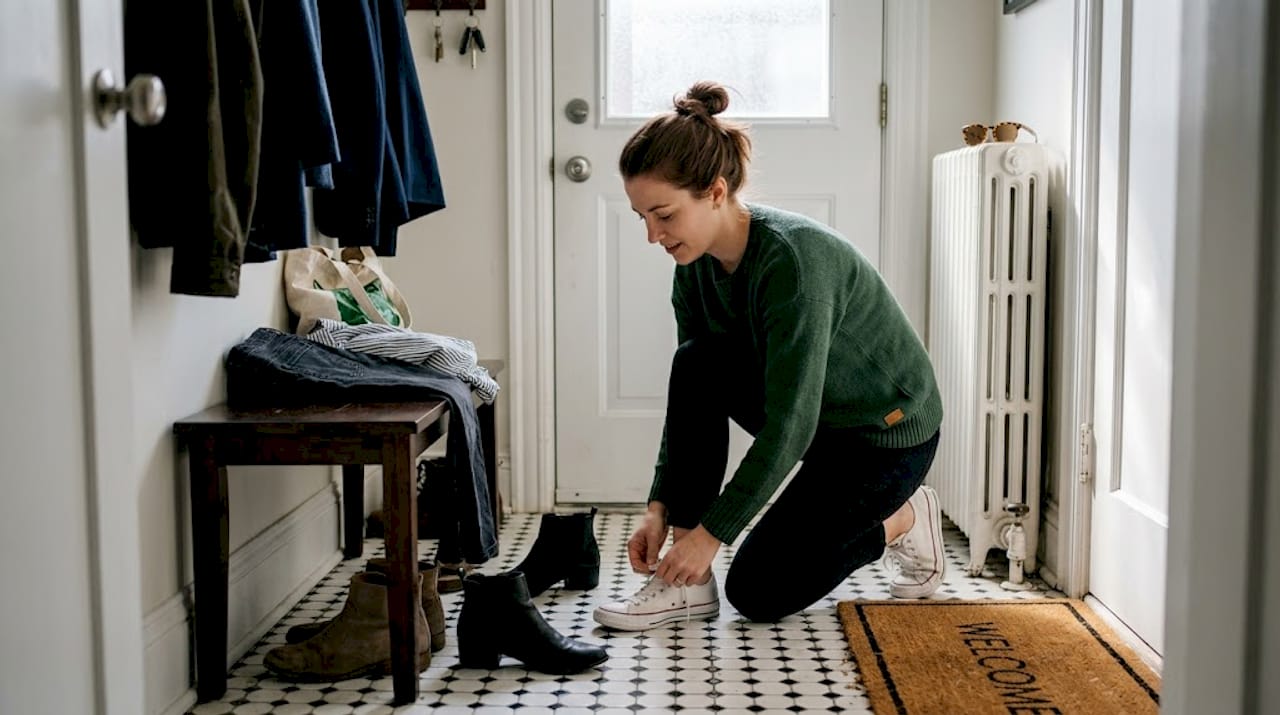
For guidance on matching your shoes and accessories to the season, the advice on seasonal outfit choices offers practical direction without overcomplicating your choices.
Comparison table: Essentials for every lifestyle
To help you tailor your checklist, compare essentials for work, weekend, and special occasions in this summary table. Wardrobe utilisation has dropped 36% compared to 15 years ago, which makes targeted, occasion-specific essentials more valuable than ever. A side-by-side view helps you spot gaps and avoid duplicates.
| Category | Work | Weekend | Special occasions |
|---|---|---|---|
| Clothing | Tailored trousers, blazer, button-down | Dark jeans, knit sweater, midi skirt | LBD, elegant blouse, tailored jumpsuit |
| Footwear | Block-heel shoe, loafers | Sneakers, ankle boots | Strappy sandal, kitten heel |
| Accessories | Structured bag, watch, belt | Crossbody bag, scarf, sunglasses | Clutch, statement jewellery, silk scarf |
| Outerwear | Trench coat, tailored wool coat | Denim jacket, puffer vest | Faux-fur stole, elegant wrap |
This table is not a shopping list. It is a diagnostic tool. Look at your current wardrobe and mark which columns feel complete and which feel thin. That tells you exactly where to focus your next purchase.
For a broader look at how trends shift across seasons, exploring smart wardrobe trends helps you make decisions that stay relevant beyond a single season.
Customising your checklist: Personal style and seasonality
Now that you have a core list, make it your own by adjusting for style, weather, and the latest must-haves. A generic checklist is a starting point, not a final answer. Capsule wardrobes reduce waste and turnover, but the real value comes from customising essentials to fit your actual life.
Here is a simple process for making your checklist personal:
- Audit your climate: If you live somewhere warm year-round, you need fewer heavy layers and more breathable fabrics. Cold climates demand quality outerwear and thermal layering options.
- Identify your colour palette: Look at what you already wear most. If you gravitate towards earth tones, build around those rather than forcing in trend colours that will not work with your existing pieces.
- Map your weekly routine: A woman who works from home needs different essentials than someone commuting to an office five days a week. Be honest about your actual life, not your aspirational one.
- Review seasonally, not annually: Twice a year (spring and autumn), pull everything out and reassess. Swap heavy knits for linen blends, or boots for sandals, based on what the next few months actually require.
- Limit trend purchases to one or two per season: A trendy item should replace something rarely worn, not add to the pile.
Pro Tip: Keep a running note on your phone of items you wish you had when getting dressed. After a month, patterns emerge. Those patterns tell you exactly what is missing from your essentials.
For a more structured approach to shopping, the shopping workflow tips guide helps you buy with intention. And for staying ahead of seasonal shifts, micro-season advice makes the transition between collections feel effortless.
Why fewer essentials can mean more style
With the checklist complete, it is time to rethink how you define “enough” style, and why less can be so much more. Here is an uncomfortable truth: the average woman purchases 59 new items per year, yet wears only 20–30% of her wardrobe. More buying is not solving the problem. It is creating it.
When your wardrobe is smaller and more intentional, something interesting happens. You stop second-guessing yourself. You know what you own, you know how it fits, and you know how to combine it. Decision fatigue drops. Outfit satisfaction rises. There is genuine creative freedom in constraints because you stop scrolling through options and start actually dressing.
Fast fashion has sold the idea that variety equals style. It does not. Authenticity does. A woman who wears the same well-chosen pieces with confidence looks far more put-together than someone drowning in options she never quite feels right in. Choosing to simplify your style is not a compromise. It is an upgrade.
Upgrade your wardrobe with 16th Avenue essentials
Your checklist is ready. Now it is time to fill the gaps with pieces that actually deliver on versatility, quality, and style. At 16th Avenue, you will find wardrobe staples and finishing touches curated specifically for women who want their closet to work harder.
From a beautifully structured woolen coat that anchors your autumn and winter essentials, to a professional makeup brush set that completes your beauty routine, every product is chosen with intention. Whether you are building from scratch or refining what you already have, shop essentials at 16th Avenue and make your checklist a reality with free shipping to most destinations.
Frequently asked questions
How many clothing items should be in a capsule essentials wardrobe?
A functional essentials wardrobe usually contains 25 to 40 versatile clothing items, depending on your lifestyle and climate needs. The average wardrobe holds 148–166 items, but most women wear only 20–30% regularly, which means a smaller, focused collection outperforms a large, scattered one.
How can I make sure I actually wear all my essentials?
Select each essential based on wear frequency and personal style, updating your checklist seasonally to keep it relevant. Personalisation prevents unworn purchases and genuinely increases how often each item gets used.
What is the best way to add trends without crowding my wardrobe?
Swap one trendy item for a rarely-worn piece, ensuring your essentials remain focused and your style feels fresh. Capsules reduce waste and turnover by keeping the focus on functional, versatile pieces rather than impulse additions.
Should accessories be considered essentials?
Yes, a few timeless accessories and versatile shoes complete outfits and multiply your styling options considerably. Accessory personalisation boosts usage and prevents the clutter that comes from buying pieces that do not match your existing wardrobe.
Recommended
- 7 Essential Fashion Accessories Every Woman Should Own – 16th Avenue
- 6 Essential Fashion Tips for Women to Elevate Your Style – 16th Avenue
- Must-have accessories list for effortless style in 2026 – 16th Avenue
- Fresh fall outfit ideas for women: Affordable style – 16th Avenue
- The ultimate dress shopping checklist for every occasion - DressMeUpNY
- 7 Essentials for Your Ultimate Luxury Fashion Checklist – Prima Dons & Donnas