


How colour trends shape fashion and beauty style
TL;DR:
- Colour trends are driven by cultural signals, social data, runway analysis, and AI predictions.
- Pantone’s Colour of the Year reflects societal moods and influences global fashion and design.
- Incorporating trends through small accessories or makeup can refresh personal style without overhauling.
Colour trends are not born from a single designer’s mood board or a lucky guess. Behind every shade that floods the racks each season is a sophisticated mix of cultural signals, social data, runway analysis, and cutting-edge artificial intelligence. Understanding how these trends are built and why they matter gives you a real edge when refreshing your wardrobe or beauty routine. This guide walks you through the full picture: from how forecasters spot the next big colour to how you can confidently use those insights to elevate your personal style without losing what makes your look uniquely yours.
Table of Contents
- What are colour trends and why do they matter?
- How are colour trends forecasted? Behind the scenes
- Who decides the next it-colour? Pantone, culture, and industry influence
- How to use colour trends: Elevate your wardrobe and beauty routine
- Why trusting your instinct matters as much as trend forecasts
- Ready to express your style? Explore the latest colour-forward picks
- Frequently asked questions
Key Takeaways
| Point | Details |
|---|---|
| Trends blend art and science | Colour trends combine expert intuition, cultural cues, and advanced data analysis to shape what you see each season. |
| Pantone sets the tone | Pantone’s Colour of the Year influences everything from runway fashion to drugstore beauty finds. |
| Personal style trumps rules | Use colour trends as inspiration, but adapt them to reflect your personality and everyday wardrobe. |
| Early adoption elevates style | Spotting and using colour trends before they go mainstream lets you lead rather than follow fashion. |
What are colour trends and why do they matter?
A colour trend is a shade or family of shades that gains widespread popularity across fashion, beauty, and lifestyle products within a specific season or year. These trends do not appear randomly. They are the result of careful observation, cultural reading, and data analysis long before a single garment hits the shop floor.
Colour trends shape what you see in stores, in beauty aisles, and across your social feeds. When a particular shade dominates the runway in February, you can expect to see it in mass-market clothing, nail polishes, and lip products by autumn. This cycle repeats season after season, and brands invest heavily in getting it right.
Why does this matter for you? Because knowing which colours are trending gives you a shortcut to looking current without overthinking every purchase. You can build on what you already own and add strategic pieces that feel fresh and intentional. Staying aware of colour trends also helps you personalise your look rather than simply following the crowd.
Here is what colour trends typically influence:
- Clothing collections across all price points, from high street to luxury
- Makeup palettes, including eyeshadow, blush, and lip colours
- Nail polish shades and seasonal collections
- Accessories like handbags, scarves, and jewellery
- Skincare and beauty packaging, which often mirrors fashion palettes
The fashion trend forecasting process now blends traditional intuition from runway analysis and street style with data-based approaches like social listening, e-commerce analytics, and AI-powered computer vision that analyses millions of images for up to 90% accuracy. That is a far cry from a single creative director’s instinct.
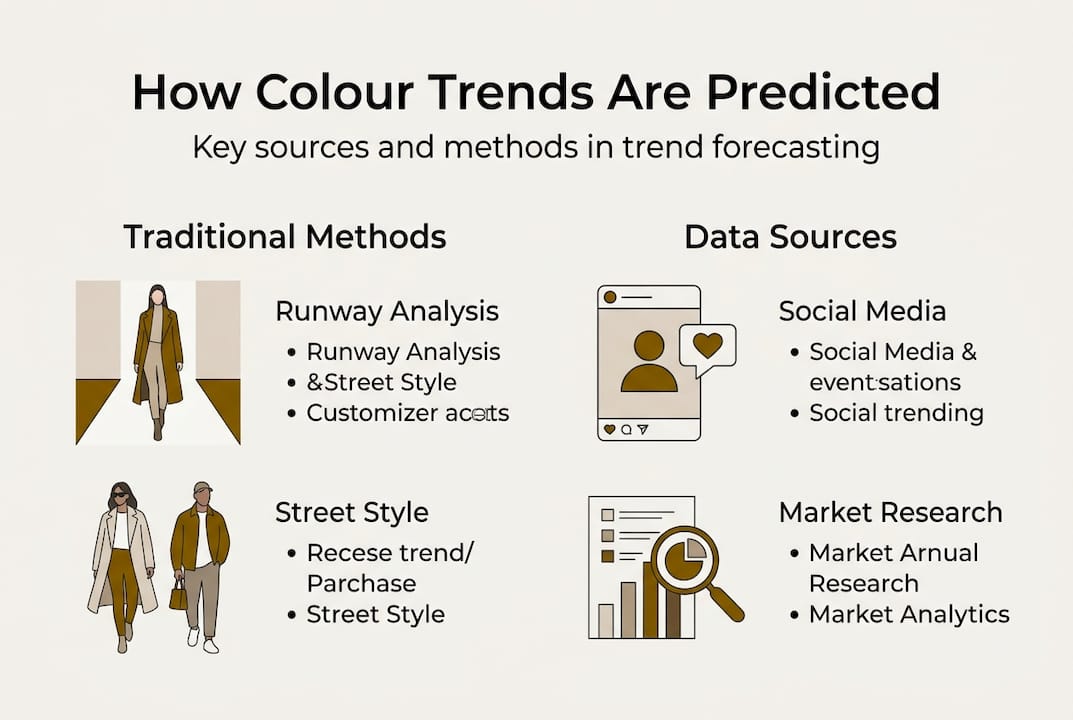
Pro Tip: Follow women’s fashion trends at the start of each season to identify which two or three colours are gaining momentum. You only need a few targeted pieces to look completely on trend.
Colour trends are also deeply tied to emotion and cultural mood. A society navigating uncertainty often gravitates toward soft, comforting neutrals. A culture feeling bold and optimistic reaches for saturated, vivid hues. Recognising this connection helps you understand why certain shades resonate so strongly in a given moment.
How are colour trends forecasted? Behind the scenes
Understanding what colour trends are leads naturally into the next question: how do experts actually predict these trends before they hit the shelves?
Forecasting is both an art and a science. Professionals in this field draw from multiple streams of information simultaneously, and the process typically begins 12 to 24 months before a trend reaches consumers.
Here is how the forecasting process unfolds:
- Runway and street style analysis — Trend analysts attend major fashion weeks in Paris, Milan, New York, and London, cataloguing recurring colours across dozens of collections.
- Cultural and social signal reading — Film, music, politics, and global events are tracked for the emotional undercurrents that tend to translate into colour preferences.
- Social listening — Platforms like Instagram, Pinterest, and TikTok are mined for emerging colour conversations, viral aesthetics, and shopping behaviour.
- E-commerce data analysis — Sales patterns and search trends reveal which shades consumers are actively seeking out.
- AI and computer vision — Algorithms scan millions of images across the internet to detect micro-trends before they become mainstream.
“Data-based approaches like social listening and AI help predict colour trends with high accuracy, giving brands a significant planning advantage.”
One methodology gaining traction is STEPPIC, which stands for Social, Technological, Economic, Political, Psychological, Industry, and Creative factors. This framework ensures forecasters consider the full spectrum of influences rather than relying on aesthetics alone. You can see a real-world look at this process in this
| Method | Strengths | Limitations |
|---|---|---|
| Intuition and runway analysis | Captures creative nuance and cultural depth | Subjective, limited in scale |
| Social listening | Real-time consumer sentiment | Noisy data, requires expert filtering |
| AI and computer vision | High accuracy, processes millions of data points | Lacks cultural and emotional context alone |
| E-commerce analytics | Reflects actual buying behaviour | Reactive rather than predictive |
Once you understand this layered process, reading decoded seasonal trends becomes far more meaningful. You start to see why certain shades arrive together and how to plan your shopping using a smarter fashion shopping workflow.
Who decides the next it-colour? Pantone, culture, and industry influence
Forecasting explains the methods, but who actually decides which colours take centre stage each year? Let’s look at powerhouses like Pantone and broader cultural influence.
Pantone is the most recognised authority in colour standardisation globally. Each year, the Pantone Colour Institute announces its Colour of the Year, a selection that sends ripples across fashion, beauty, interior design, and product packaging worldwide. For 2026, Pantone named Cloud Dancer, a soft and luminous white, as its Colour of the Year, signalling a cultural desire for clarity and calm.
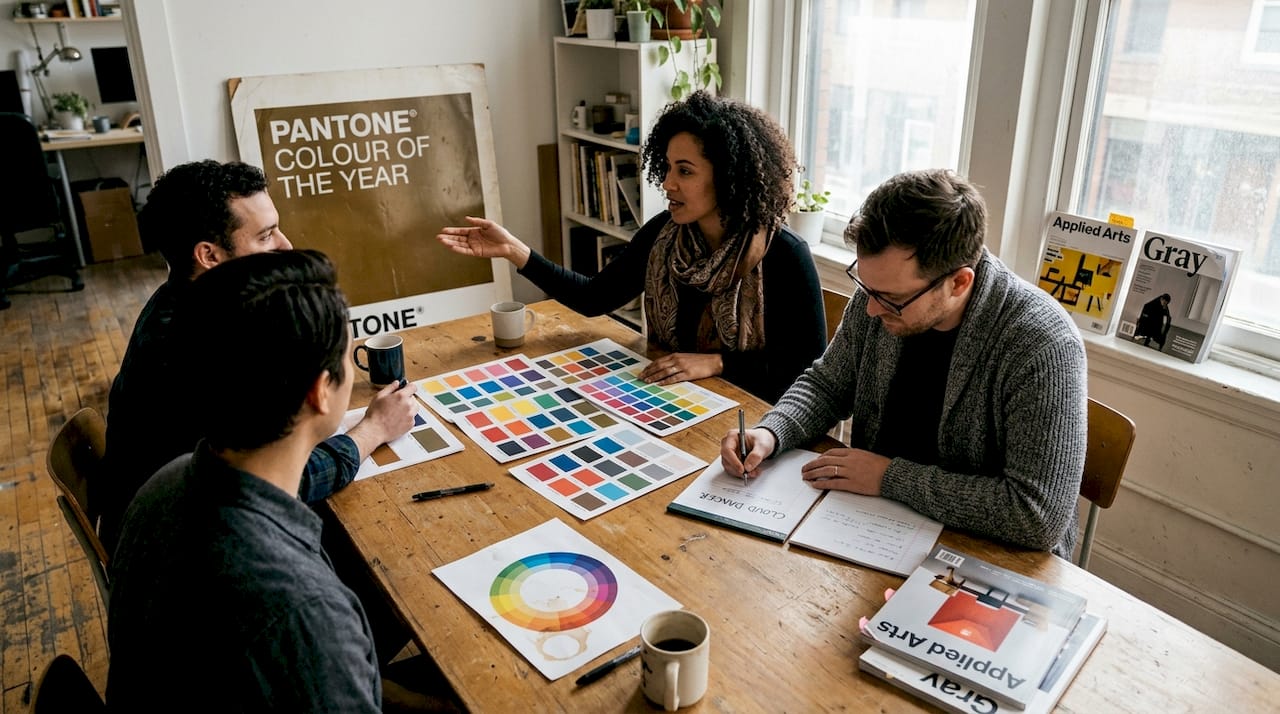
The Pantone selection process involves a global team of trend scouts examining influences across fashion, art, technology, travel, and socio-political developments. The chosen shade is meant to reflect the collective emotional mood of the moment, not just what looks pretty.
You can explore the full story behind Pantone’s 2026 colour to understand the cultural narrative woven into Cloud Dancer.
Here is a snapshot of recent Pantone selections and their cultural symbolism:
| Year | Pantone colour | Symbolism |
|---|---|---|
| 2023 | Viva Magenta | Boldness, nature, digital optimism |
| 2024 | Peach Fuzz | Warmth, community, nurturing |
| 2025 | Mocha Mousse | Comfort, indulgence, groundedness |
| 2026 | Cloud Dancer | Clarity, calm, fresh beginnings |
Beyond Pantone, several other players shape which colours rise to prominence:
- Luxury and independent designers who set the creative tone on the runway
- Mass-market beauty brands that translate high-fashion palettes into accessible products
- Tech companies whose product colours and UI palettes influence consumer aesthetics
- Film and streaming platforms whose visual worlds shape cultural colour associations
- Social media influencers who amplify niche shades into mainstream awareness
Understanding the impact of trends in fashion means recognising that no single voice controls the conversation. It is a collective, global dialogue that you are already part of every time you choose what to wear.
How to use colour trends: Elevate your wardrobe and beauty routine
Once you know how the scene is set by experts and tastemakers, it is time to transform that knowledge into action for a stylish, trend-aware wardrobe.
The good news is that incorporating colour trends does not require a complete overhaul. Small, intentional additions can refresh your entire look. Colour trends influence what appears in stores and beauty aisles season after season, so the options are always there when you know what to look for.
Here is a practical approach to spotting and applying new colours to your style:
- Identify the season’s key shades by checking fashion week recaps and beauty brand launches in January and July.
- Audit your existing wardrobe for neutral or classic pieces that can anchor a trend colour without clashing.
- Start with accessories like a handbag, scarf, or earrings in the trending shade before committing to a full outfit.
- Test in beauty first with a nail polish or lip product in the new colour to see how it works with your complexion.
- Layer trend colours with your signature palette so the look feels personal rather than costume-like.
Quick ideas to work colour trends into your everyday style:
- Swap one neutral accessory for a trend-forward alternative
- Choose a beauty product in the season’s hero shade as a low-commitment experiment
- Mix a trending colour with a classic like white, black, or camel for instant polish
- Use trend colours in prints or patterns rather than head-to-toe solid shades
Pro Tip: If you love a classic palette and find bold trends intimidating, try the trending colour in a texture you already wear. A soft Cloud Dancer knit or a muted terracotta blush can feel fresh without feeling foreign. Browse the wardrobe upgrade guide for specific outfit ideas built around current shades.
Experimenting with colour is one of the most expressive things you can do with your style. It signals confidence and curiosity, two qualities that always look good.
Why trusting your instinct matters as much as trend forecasts
As you experiment with colour trends, consider this bigger question: should you always follow the forecasts, or is personal instinct equally important?
Here is the honest answer. No forecast is perfect. Even with AI achieving 90% accuracy by blending data-driven tools with the subjective, creative intuition of experienced analysts, the remaining gap is filled by something algorithms cannot replicate: individual personality. A shade that dominates every runway and social feed might simply not suit your colouring, your lifestyle, or your sense of self. That is not a failure on your part. It is taste.
The most stylish women we see are not those who wear every trend perfectly. They are the ones who use trends as creative prompts, picking up what resonates and leaving what does not. Colour forecasts are a starting point, not a rulebook.
This is especially relevant when you think about trends and self-identity and how the pressure to follow trends can sometimes crowd out the authentic choices that make a personal style truly memorable. Wear the colour because it makes you feel something, not just because it is on every mood board right now.
Ready to express your style? Explore the latest colour-forward picks
Feeling inspired by what you have learned about colour trends and ready to refresh your personal style?
At 16th Avenue, we curate pieces that bring the season’s most exciting colours to life in wearable, stylish ways. If Cloud Dancer’s soft, luminous energy speaks to you, the women’s trendy woolen coat is a beautiful way to wear the mood this season. For your beauty routine, the 24-piece professional cosmetics brush set gives you the tools to apply any trending shade with precision and confidence. Explore the full 16th Avenue collection to find colour-forward fashion and beauty picks that match both the moment and your unique style.
Frequently asked questions
How far in advance are colour trends forecasted?
AI-based forecasting can predict colour trends up to 24 months in advance, giving brands the lead time needed to plan new collections around emerging shades.
Who picks the Pantone Colour of the Year?
A dedicated team at the Pantone Colour Institute selects the Colour of the Year through a global trend scouting process that spans fashion, art, technology, and socio-political factors.
Are AI forecasts more reliable than traditional methods?
AI has pushed trend-forecasting accuracy to over 90% by analysing millions of images, but expert cultural interpretation remains essential for meaningful results.
How do I make colour trends work for my style?
Start small by testing trend colours in accessories or makeup before committing to full garments, so you can see what genuinely suits your look and personality.
What is the Pantone Colour of the Year 2026?
Pantone named Cloud Dancer as its Colour of the Year for 2026, a soft, modern white that reflects a collective desire for clarity and calm.
Recommended
- Trends in Women’s Fashion 2026 – Impact on Everyday Style – 16th Avenue
- Seasonal trends decoded: smarter wardrobe choices in 2026 – 16th Avenue
- Top beauty accessories to enhance your style in 2026 – 16th Avenue
- Fashion Trends Guide 2026: Upgrade Your Wardrobe Easily – 16th Avenue
- Navigating Colour Trends in Italian Leather Bags – San Rocco Italia
- Goth’s role in modern fashion trends 2026 explained – GothMarket