

How inclusive sizing empowers your style and confidence
TL;DR:
- Genuine inclusive sizing requires redesigning patterns and proportions for each size.
- True inclusivity boosts confidence, personal style, and brand trust among shoppers.
- Consumers should seek brands with consistent size availability and transparent design practices.
Most people assume that inclusive sizing simply means a brand offers more numbers on its tags. That assumption costs a lot of women their confidence and their money. Retailers that offer an inclusive range of clothing sizes genuinely improve brand trust and increase purchase intentions among shoppers. But the difference between a brand that truly practises inclusivity and one that merely markets it is enormous. This article breaks down what real inclusive sizing looks like, how it directly shapes your confidence and personal style, and exactly how to find brands that deserve your loyalty and your dollars.
Table of Contents
- Understanding inclusive sizing in women’s fashion
- How inclusive sizing boosts confidence and personal style
- Why inclusive sizing builds brand trust and better shopping experiences
- Seeking real inclusivity: How to spot quality size offerings
- The hard truth about inclusive sizing in 2026
- Explore size-inclusive fashion at 16th Avenue
- Frequently asked questions
Key Takeaways
| Point | Details |
|---|---|
| Inclusive sizing requires design | Offering more sizes only matters when patterns and proportions are thoughtfully adjusted. |
| Confidence and self-expression | True sizing inclusivity enables diverse women to style themselves with comfort and flair. |
| Brand trust increases | Brands offering inclusive sizing are viewed as more trustworthy and inspire greater loyalty. |
| Spot quality offerings | Savvy shoppers look for consistent sizing, real fit reviews, and brand transparency. |
Understanding inclusive sizing in women’s fashion
Inclusive sizing is one of the most misunderstood concepts in modern fashion. Most shoppers hear the term and picture a retailer that simply extends its standard size chart from a 10 to an 18 or a 20. That picture is incomplete, and it explains why so many women still leave fitting rooms feeling frustrated rather than fabulous.
Real inclusive sizing requires a fundamentally different approach to garment construction. When a brand scales a pattern up without redesigning it, the result is a piece that fits poorly through the shoulders, pulls at the bust, and bunches awkwardly at the hips. True inclusive sizing means returning to the pattern itself and reworking the proportions for each size group. This is why fit transforms fashion styling so dramatically. A well-constructed garment at any size will always outperform an ill-fitting piece regardless of price or trend status.
Here is what genuine inclusive sizing actually involves:
- Pattern grading with proportional adjustments at every size point, not a blanket scale-up
- Seam placement shifts to account for different body curves and torso lengths
- Fabric tension recalibrations so stretch and drape behave consistently across sizes
- Neckline and sleeve restructuring to flatter different shoulder widths and arm circumferences
- Waistband and hip allowance redesigns tailored to real body measurements at each size range
As what inclusive sizing means beyond marketing makes clear, genuine inclusivity depends on design, proportions, and pattern work, not just sizing up. This distinction is critical because it separates brands truly invested in your experience from those chasing a marketing trend.
Common pitfalls brands fall into include launching a “curve” or “plus” line as a separate, often more limited collection rather than integrating all sizes into the main line. This approach signals that larger bodies are an afterthought. Another pitfall is offering extended sizes online only while keeping standard sizes in physical stores, which creates an unequal and frankly isolating shopping experience.
“When a brand makes a genuine commitment to inclusive sizing, it redesigns its entire creative process from sketch to shelf. Anything less is a marketing label, not a design philosophy.”
Understanding this distinction empowers you to advocate for yourself as a shopper. And once you understand what inclusivity actually looks like, you begin to see how deeply it connects to fashion inclusivity and self-expression for women of every size.
How inclusive sizing boosts confidence and personal style
With a firm grasp of what inclusive sizing is, it becomes much easier to understand why it matters so deeply for confidence and personal style. Clothing is not simply functional. It communicates who you are, how you feel, and how you move through the world. When clothing fits well, that communication becomes fluent and natural. When it does not fit, every outfit becomes a negotiation with your body rather than a celebration of it.
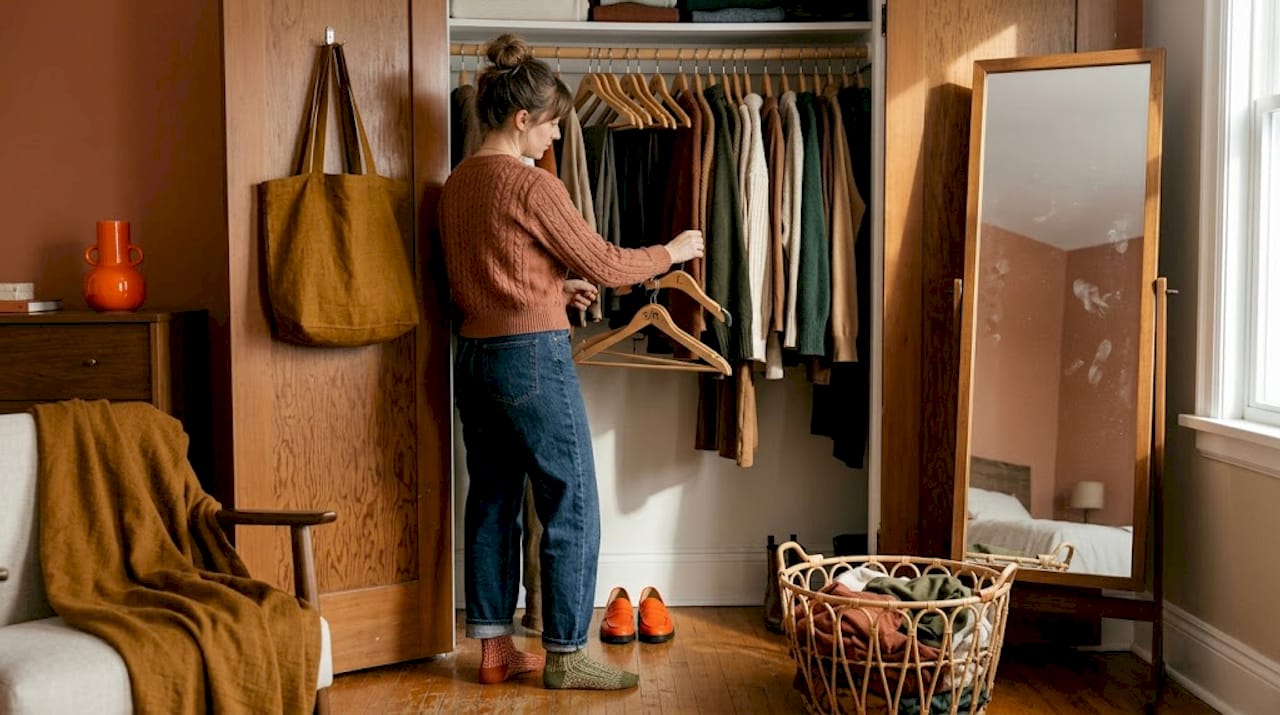
Research confirms what many women already know intuitively. Fashion inclusion affects how consumers perceive themselves and increases purchase confidence. Seeing diverse body types represented in advertising and on the runway helps women of all sizes visualise how a garment might actually look on them. This is not a small psychological shift. It is the difference between feeling invited into a fashion conversation and feeling excluded from it.
How inclusive sizing builds personal style in practice:
- You spend less time searching for something that “works” and more time choosing what you actually love
- You begin to experiment with colour, silhouette, and texture instead of defaulting to safe, concealing choices
- You invest in pieces that enhance your features rather than hide them
- Your wardrobe becomes a curated reflection of your personality rather than a collection of compromises
| Sizing approach | Shopping experience | Style outcome |
|---|---|---|
| Standard sizing only | Frustrating, limiting | Repeated safe choices |
| Extended sizing (scaled up) | Inconsistent fit | Limited experimentation |
| True inclusive sizing | Comfortable, expressive | Confident personal style |
Pro Tip: When you find a brand whose sizing genuinely fits your body well, make note of the specific size label and the garment measurements. Body measurements are far more useful than arbitrary size numbers when shopping across different brands.
Learning how to select flattering dresses for every body type becomes significantly easier when the brands you shop from have done the design work properly. You stop fighting the garment and start working with it, which frees up enormous creative energy for actual style decisions.
The confidence benefits extend beyond the mirror. Women who feel well-dressed in clothing that genuinely fits report greater ease in professional settings, social situations, and even physical activity. Good fit is not vanity. It is a practical foundation for how you engage with your day.
Why inclusive sizing builds brand trust and better shopping experiences
After understanding how inclusive sizing fuels confidence, it is natural to ask: which brands are actually getting this right, and why does it matter for your shopping relationship with them?
The data here is genuinely compelling. Consumers evaluate size-inclusive retailers as more trustworthy, leading to greater willingness to pay and stronger purchase intentions. Critically, even partial inclusivity boosts consumer evaluation of a brand. This means that brands do not need to achieve perfection overnight to improve their relationship with shoppers. Every genuine step toward better sizing signals good faith.
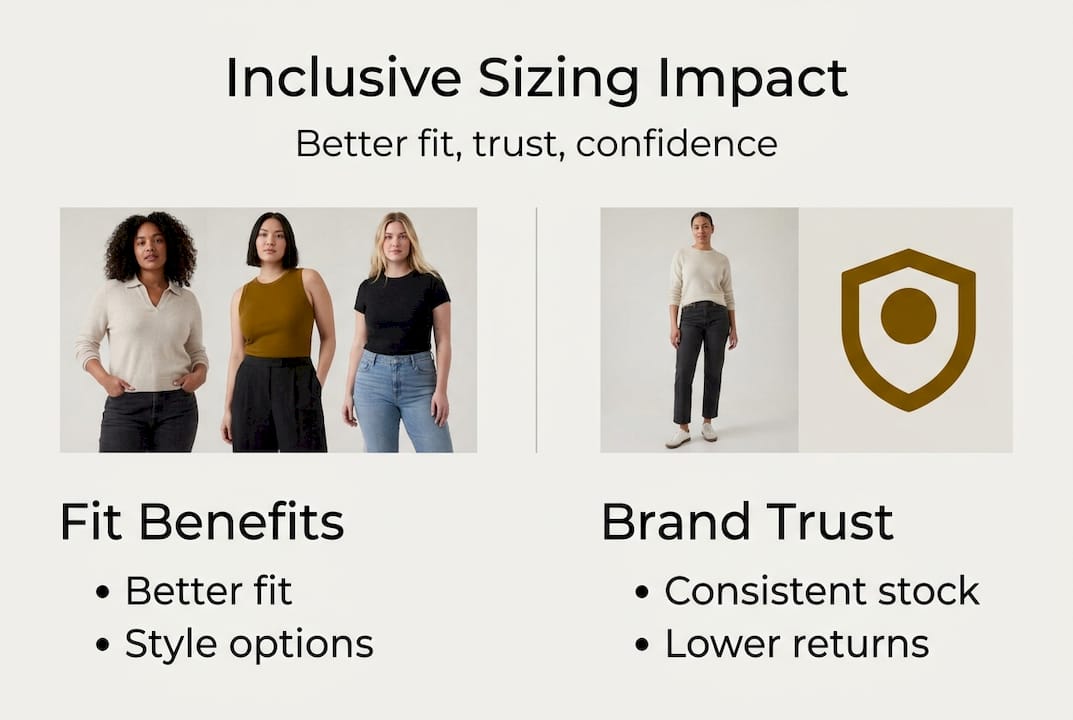
Here is a practical comparison of how brand sizing approaches affect your experience:
| Brand type | Stock consistency | Fit quality | Return rate | Shopper trust |
|---|---|---|---|---|
| Standard sizing only | High in-store | Variable | Moderate | Lower among diverse shoppers |
| Extended sizing (marketing only) | Low in extended sizes | Poor | High | Declining |
| True inclusive sizing | Consistent across sizes | Strong | Low | High across all sizes |
Understanding fashion merchandising’s shopping impact reveals how deeply these decisions affect your actual experience. Returns, disappointment, and wasted time are direct costs of poor sizing. Better brands reduce all three.
Here are the key reasons why brands with genuine inclusive sizing earn more trust:
- Consistency signals respect. A brand that stocks the same styles across all sizes treats all customers as equally valued.
- Fewer returns build confidence. When garments fit as expected, you trust the brand’s size guidance on future purchases.
- Representation in imagery creates connection. Seeing your body type modelled builds a genuine relationship with a brand.
- Thoughtful design demonstrates investment. Pattern work and fit adjustments cost real resources. Doing it signals the brand is serious.
- Clear size guides reduce uncertainty. Brands committed to real inclusivity typically offer detailed measurement guides, not just vague size labels.
Investing in brands that meet these standards also aligns with a broader approach to smarter fashion shopping. A shopping workflow with fewer returns saves both money and frustration, and it becomes possible when you prioritise brands whose sizing you can genuinely trust.
Seeking real inclusivity: How to spot quality size offerings
From brand trust and shopping improvements, it is a natural next step to ask: how do you actually find these brands and avoid the ones making hollow promises?
The challenge is real. Brands often claim extended sizing, but availability and consistency frequently lag behind the marketing, creating what researchers call a “marketing to shop floor” gap. You have almost certainly experienced this. A brand’s website celebrates inclusive sizing, but when you search for your size, half the styles are unavailable or only sold in limited colourways.
Green flags for genuinely inclusive brands:
- Extended sizes available in the same styles and colourways as standard sizes
- Fit notes or size-specific reviews from real customers
- Model imagery across a genuine range of body types, not just one “curve model”
- Clear, detailed size guides with actual body measurements, not just S, M, L labels
- Consistent availability both online and in physical stores
Red flags that signal token inclusivity:
- Extended sizes only available online, not in stores
- A separate “curve” section with a fraction of the main collection’s styles
- Size guides that stop at vague “plus size” labels without measurement specifics
- No fit or design notes for how garments have been adjusted at different sizes
Pro Tip: Before purchasing from a new brand, search for customer reviews that specifically mention your size range. Real fit feedback from shoppers with your measurements is worth far more than any marketing copy.
Statistic to keep in mind: Studies show that size availability gaps are not just frustrating. They directly reduce purchase intent among shoppers in extended size ranges, even when those shoppers are otherwise interested in a brand’s products.
Understanding seasonal wardrobe trend tips also helps here because truly inclusive brands update their extended size offerings alongside seasonal transitions, not as an afterthought. Similarly, shoppers who approach fashion with a sustainable shopping mindset naturally gravitate toward brands committed to longevity and genuine quality across all sizes. These values tend to travel together.
Ask direct questions when you are unsure. Contact a brand and ask how their design team adjusts patterns for extended sizes. A brand with real commitment will have a confident, detailed answer. A brand using inclusivity as a marketing term will not.
The hard truth about inclusive sizing in 2026
Here is an uncomfortable reality: most brands in 2026 still treat inclusive sizing as a communication strategy rather than a design strategy. They announce extended size ranges, update their website photography, and call the work done. The pattern room does not change. The fit model roster does not expand. The design briefs look identical to what they always were, just with larger numbers attached.
This matters enormously for you as a consumer. It means the burden of identifying genuine inclusivity still falls largely on the shopper, which is exactly backwards. You should not need to investigate a brand’s internal design process to find a dress that fits.
The solution lies in using market signals more deliberately. Quantitative signals and market research are how brands should identify unmet needs and adoption barriers before they launch new sizing. When shoppers collectively reward brands that invest in real design work and move spending away from those that do not, market forces begin to drive genuine change. Your purchasing decisions are a form of advocacy.
The brands getting this right are not just the large players with enormous budgets. Smaller labels and emerging designers often lead in true inclusivity precisely because they are building their design process correctly from the start, without decades of standard-size assumptions to undo. Keep your eyes open for them, and let your loyalty reflect your values. The shopping experience transformation you deserve begins with the choices you make today.
Explore size-inclusive fashion at 16th Avenue
Finding fashion that truly fits your body and your personality should not feel like detective work. At 16th Avenue, the commitment is to curated collections that bring together trendy, confidence-building pieces across a range of sizes and styles.
Whether you are looking for a standout seasonal piece like a women’s woolen coat built for cool-weather style or something as practical and expressive as a pair of casual wedge sneakers that keep you comfortable all day, the 16th Avenue collection is assembled with real women in mind. Explore the full range, take advantage of free shipping to most destinations, and discover pieces that genuinely complement your style rather than compromise it.
Frequently asked questions
What is the main difference between extended sizing and true inclusive sizing?
True inclusive sizing adapts patterns and design for each size range, while extended sizing typically increases numbers without real fit improvements. The result of true inclusive sizing is a garment that fits proportionally and comfortably at every size.
How can I tell if a brand offers real inclusive sizing?
Look for consistent stock availability across all sizes, seek fit-specific customer reviews, and ask brands directly how design changes with size. Genuine inclusive brands will always have clear, confident answers about their design process.
Does inclusive sizing actually affect confidence?
Yes, significantly. Fashion inclusion affects how consumers perceive themselves, and wearing clothing that genuinely fits your body increases both self-confidence and purchase satisfaction for women of all sizes.
Are brands with inclusive sizing more trustworthy?
Research clearly shows that size-inclusive retailers are evaluated as more trustworthy by shoppers, who are also more willing to pay and more likely to purchase when a genuine range of sizes is offered consistently.