

How to build a capsule wardrobe: a practical guide
TL;DR:
- A capsule wardrobe is a curated collection of 25 to 40 versatile pieces designed to create multiple outfits without decision fatigue. Building it begins with a thorough closet audit, choosing a cohesive color palette, and developing modular outfit formulas tailored to your lifestyle, with regular maintenance to prevent clutter. Focus on high-quality, lasting pieces that fit your correct size and routine, avoiding reactive shopping and trend chasing to ensure long-term functionality.
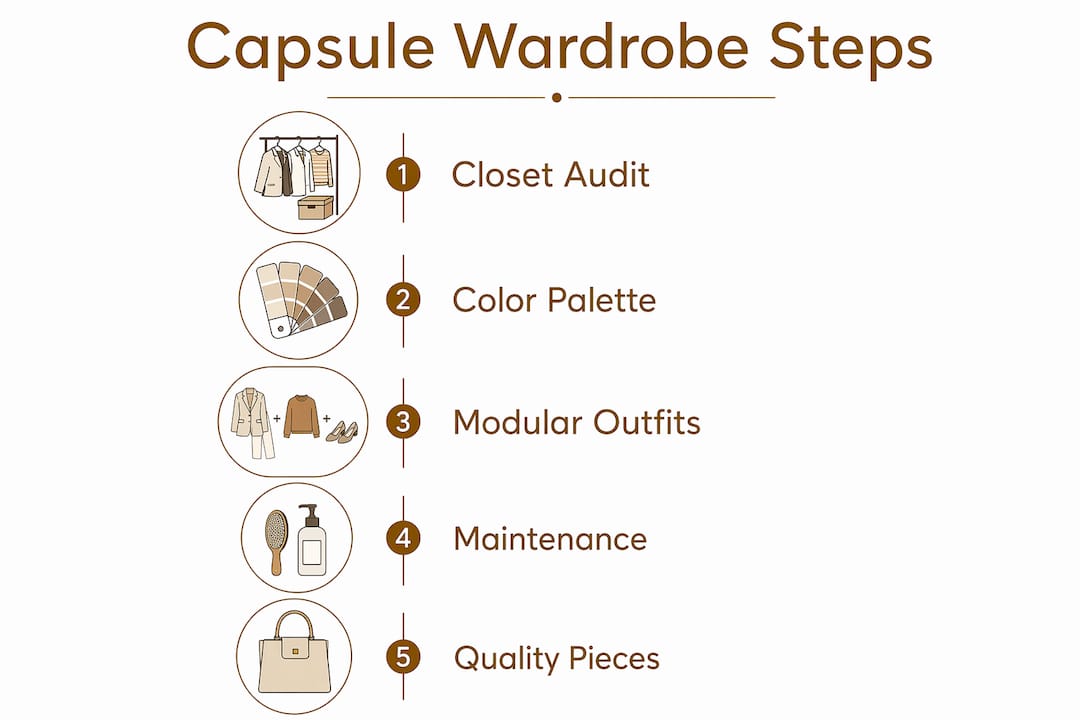
A capsule wardrobe is defined as a curated collection of 25 to 40 versatile pieces that coordinate with each other to create multiple outfits without decision fatigue. Knowing how to build a capsule wardrobe means moving away from a closet stuffed with clothes you never wear and toward a smaller, smarter set that genuinely works for your life. The method rests on four steps: a closet audit, a coordinated colour palette, modular outfit formulas, and consistent maintenance habits. This guide walks you through each step with specific techniques, so you leave with a plan you can act on today.
How to build a capsule wardrobe starting with a closet audit
The closet audit is the foundation of building a minimalist wardrobe, and skipping it is the single most common beginner mistake. You cannot build a functional capsule on top of a chaotic closet. Pull everything out, or work category by category if the full pile feels overwhelming, and sort each item into one of three piles: Love, Review, and Let Go.
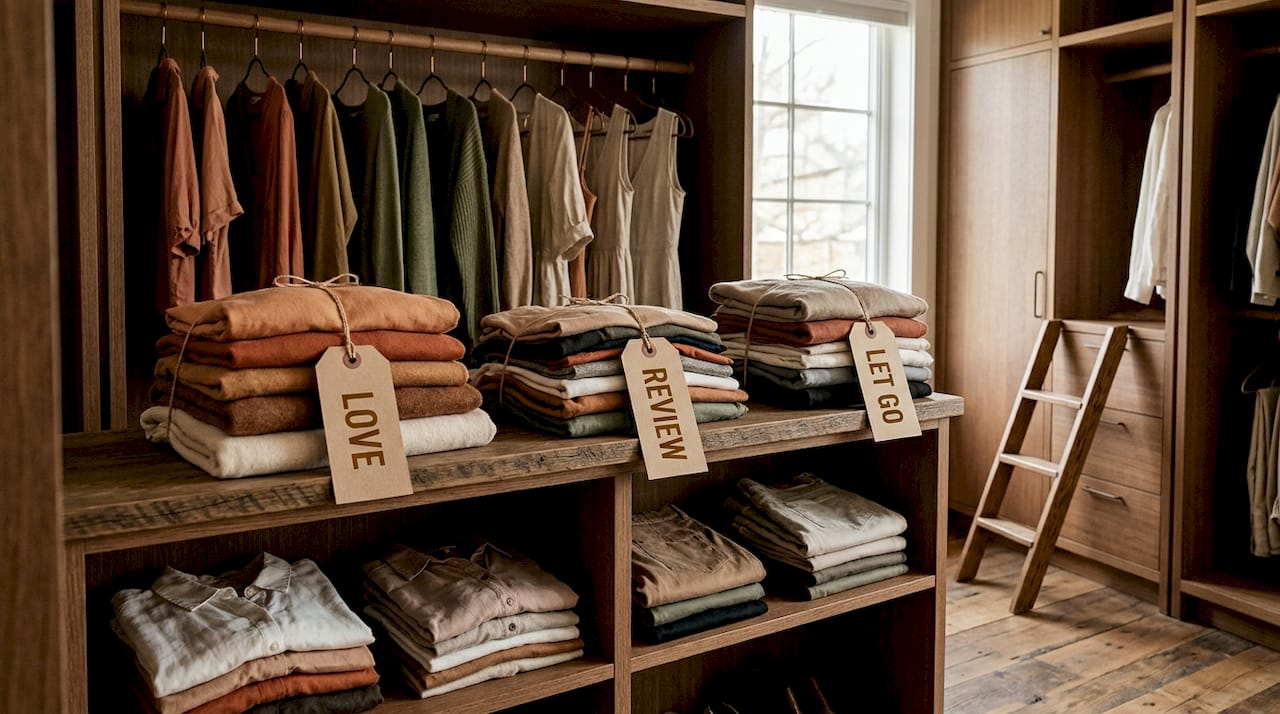
The Love pile contains items you wear regularly, that fit your body well right now, and that match your actual lifestyle. The Let Go pile is for anything worn out, ill-fitting, or tied to a life you no longer live. The Review pile is the honest one. Sorting into these three piles forces quick decisions and prevents the “maybe” trap that keeps useless items in rotation for years.
Pay attention to patterns in your Love pile. If you keep reaching for slim-cut trousers in navy and cream, that tells you something concrete about your silhouette preferences and colour instincts. If three blazers sit unworn, that tells you blazers are not part of your real life, regardless of what style guides say you should own.
Pro Tip: Take photos of your Love pile before putting anything back. Seeing your actual wardrobe as a flat lay reveals gaps and redundancies far more clearly than hanging items in a closet.
Life changes also matter here. A wardrobe built for a corporate office does not serve someone working from home. Seasonal climate shifts, body changes, and major life transitions like a new job or a new city all require honest reassessment. Fit and compatibility trump trends in every functional capsule wardrobe, so if something does not fit your body or your current routine, it does not belong in your collection.
Once your Love pile is clear, list the categories you have: tops, bottoms, outerwear, shoes, and accessories. Note where you have too many of one type and too few of another. That gap list becomes your shopping guide for later.
What colour palette works best for a capsule wardrobe?
Colour is the architecture of a capsule wardrobe. Choose 2 to 3 neutral base colours plus 1 to 3 accent colours that you naturally gravitate toward in your daily dressing. When every piece shares a colour language, every combination works, and that is the entire point.
Effective neutrals include black, navy, cream, camel, and grey. These colours mix with almost anything and photograph well, which matters if you plan outfits visually. Accent colours should reflect your genuine preferences, not the season’s trending palette. If you never actually wear mustard yellow despite loving it in theory, it has no place in your capsule.
Here is why this matters practically. Constraining your colour options can improve perceived outfit variety by 40 to 60 percent, because every piece works with every other piece rather than creating dead-end combinations. A wardrobe of 30 pieces in a shared palette produces far more real outfit options than 60 pieces in clashing colours.
To test your palette before committing, hold your shortlisted accent colours against your existing neutrals. If the combination feels natural and you would wear it tomorrow, it belongs. If you need to think about it, it probably does not. You can also use a tool like Canva to create a simple colour board with swatches from your Love pile, which makes the palette visual and concrete.
- Base neutrals to consider: black, navy, cream, camel, warm grey
- Accent colour rules: choose colours you already own in multiple items, not aspirational ones
- Avoid: seasonal trend colours, colours that require specific skin-tone lighting to work
- Test method: lay accent pieces on top of your base neutrals and photograph the combination
Accessories follow the same logic. A capsule accessories list built around your palette multiplies outfit options without adding clothing pieces.
How do modular outfit formulas simplify building a capsule?
Modular outfit formulas are the structural method behind every well-functioning capsule wardrobe. Instead of thinking about individual pieces, you think in blocks. A single module typically contains 2 pants, 3 tops, 1 outer layer, and 1 pair of shoes, and that combination alone produces roughly 6 distinct outfits. Two modules cover most lifestyle needs.
The power of modules is that they structure purchases around real life needs rather than impulse or trend. Someone who works from home three days a week and attends social events on weekends needs different modules than someone in a client-facing office role. Map your weekly activities first, then assign a module to each context.
Here is a simple three-step process for building your first module:
- Identify your primary lifestyle context. Is it casual daily wear, office work, or social events? Pick the one that covers the most days of your week.
- Draft the module on paper or in Canva. Use screenshots or photos of items you already own from your Love pile. Drafting with images of owned items reveals true gaps and prevents buying pieces that do not integrate.
- Shop only to fill confirmed gaps. If your module needs one pair of straight-leg trousers in navy and you do not own them, that is a targeted purchase. Everything else stays off the list.
| Module type | Example pieces | Approximate outfit count |
|---|---|---|
| Casual daily | 2 jeans, 3 tees, 1 cardigan, 1 sneaker | 6 outfits |
| Work from home | 2 trousers, 3 blouses, 1 blazer, 1 loafer | 6 outfits |
| Social weekend | 1 skirt, 1 trouser, 3 tops, 1 heel | 6 outfits |
Pro Tip: Layering acts as the variety engine in colder climates. A single turtleneck worn alone, under a blazer, or under a coat counts as three distinct looks without adding a single new piece to your capsule.
Outfit formulas for each module follow a simple pattern: bottom plus top plus outer layer plus shoe. Work, casual, and social contexts each get their own formula, and the formulas share pieces across modules wherever possible. A cream blouse that works in both your work module and your social module is worth twice as much as one that only fits one context.
How do you maintain a capsule wardrobe over time?
A capsule wardrobe is not a one-time project. It requires light, consistent maintenance to stay functional as your life, body, and seasons change. The most practical maintenance habit is the one-in-one-out rule: every time a new item enters your wardrobe, one item leaves. This single boundary prevents the slow clutter creep that undoes most capsules within a year.
Seasonal rotation keeps the capsule fresh without expanding it. Swapping key items like shoes and layers according to the weather, while keeping core pieces consistent, is the standard approach. Boots replace sandals in autumn. Lightweight tanks swap out for thermal layers in winter. The core neutral palette stays the same year-round.
Here is a practical maintenance checklist to revisit each season:
- Review each item for wear, fit, and frequency of use over the past three months
- Identify any piece worn fewer than five times in the season and move it to Review
- Check whether your modules still match your current lifestyle
- Store off-season items in breathable garment bags to protect fabric quality
- Replace worn-out basics before they degrade the overall look of your outfits
Quality matters more in a capsule than in a large wardrobe because each piece carries more weight. A wardrobe built on basics that are well-made and properly cared for lasts significantly longer than fast-fashion equivalents cycled through quickly.
Pro Tip: Schedule a 20-minute capsule review at the start of each season. Treat it like a calendar appointment. Consistency here prevents the gradual drift back to a cluttered, non-functional wardrobe.
Life changes require deliberate capsule adjustments, not reactive shopping. A new job, a move to a colder city, or a significant body change each calls for a fresh audit rather than a shopping spree. Revisit the audit process from the beginning, update your lifestyle map, and rebuild your modules from what you already own before buying anything new.
Key takeaways
A functional capsule wardrobe requires a structured audit, a shared colour palette, modular outfit formulas, and disciplined one-in-one-out maintenance to stay effective over time.
| Point | Details |
|---|---|
| Start with a closet audit | Sort every item into Love, Review, and Let Go piles before buying anything new. |
| Limit your colour palette | Choose 2 to 3 neutrals and 1 to 3 accents to make every piece mix-and-match ready. |
| Use modular formulas | Build blocks of 2 pants, 3 tops, 1 outer, and 1 shoe to generate roughly 6 outfits per module. |
| Apply one-in-one-out | Every new item in means one item out to prevent clutter from rebuilding. |
| Rotate seasonally | Swap shoes and layers each season while keeping your core neutral palette consistent. |
Why the capsule wardrobe is simpler than most people make it
I have seen a lot of people start a capsule wardrobe with the best intentions and abandon it within two months. The reason is almost always the same: they treated it as a rigid system rather than a personal tool. They read that a capsule should contain exactly 33 pieces, so they counted obsessively. They saw a minimalist influencer’s all-white wardrobe and tried to replicate it despite living in a city with muddy winters.
The capsule wardrobe concept, properly understood, is about creating repeatable outfits you genuinely wear, not owning the minimum number of items possible. That distinction changes everything. A 40-piece wardrobe you actually use beats a 25-piece wardrobe that leaves you reaching for items outside it every third day.
The other mistake I see constantly is shopping before auditing. People get excited about the idea, buy a set of “capsule basics,” and layer them on top of an already cluttered wardrobe. Nothing changes except the credit card balance. The audit is not optional. It is the whole point.
What actually works is building one module at a time, testing it for a full month, and only expanding once that module feels natural. Start with the context that covers the most days of your week. Get that right before touching anything else. The seasonal wardrobe rotation becomes genuinely satisfying once your core is solid, because you are swapping pieces in and out of a system that already works.
Trends are not the enemy of a capsule wardrobe. One or two trend pieces per season, chosen because they genuinely fit your palette and modules, add freshness without chaos. The problem is buying trends reactively. Buy them deliberately, with a specific gap in mind, and they integrate beautifully.
— Glenville
Build your capsule with pieces that actually last
Once your capsule plan is clear, the pieces you choose to fill it matter enormously. At 16thavenue, the focus is on versatile, well-made items that earn their place in a minimalist wardrobe rather than filling space.

For autumn and winter modules, the women’s woolen coat is exactly the kind of outer layer that works across casual, work, and social contexts. For everyday casual modules, the breathable sport sneakers pair with jeans, trousers, and casual dresses without effort. When winter calls for a seasonal footwear swap, the air-cushion snow boots deliver both function and style. Browse the full 16thavenue collection to find pieces that fit your palette and fill your real gaps.
FAQ
What is a capsule wardrobe?
A capsule wardrobe is a curated collection of 25 to 40 versatile clothing pieces that coordinate with each other to create multiple outfits. The goal is reducing decision fatigue while maintaining a consistently stylish appearance.
How many pieces should a capsule wardrobe have?
Most guides recommend between 25 and 40 pieces as an effective range. The right number depends on your lifestyle, climate, and how many distinct contexts you dress for each week.
What colours work best for a capsule wardrobe?
Choose 2 to 3 neutral base colours such as black, navy, or camel, plus 1 to 3 accent colours you already wear naturally. Avoid trendy colours you have never actually reached for in daily dressing.
How do I stop my capsule wardrobe from growing back into clutter?
Apply the one-in-one-out rule consistently: every new item that enters your wardrobe requires one item to leave. Combined with a seasonal review, this boundary keeps the capsule functional over time.
Do I need to buy new clothes to start a capsule wardrobe?
No. Start with a full closet audit and build your first module entirely from your Love pile. Shop only to fill confirmed gaps identified during the audit, not before it.