


How to layer winter clothing: stay warm and stylish
TL;DR:
- Layering winter clothing involves wearing three distinct layers to manage moisture, insulate, and protect against wind and rain. Proper fit, fabric choice, and dynamic adjustment are essential for warmth, comfort, and style, with attention to avoiding common mistakes like cotton next to the skin. Starting with a slightly cold initial layer and adjusting throughout the day prevents sweating and improves overall winter dressing.
Layering winter clothing is the practice of wearing multiple garments that each serve a distinct role: wicking moisture away from your skin, trapping warm air close to your body, and shielding you from wind and precipitation. The system works because each layer solves a specific problem that a single thick coat cannot. Guides from AMC Outdoors, Woolpower, and TIME all frame winter dressing around the same core principle: keep heat in and moisture out. Get that right, and you stay comfortable whether you’re walking to work or spending hours outdoors in a Canadian winter.
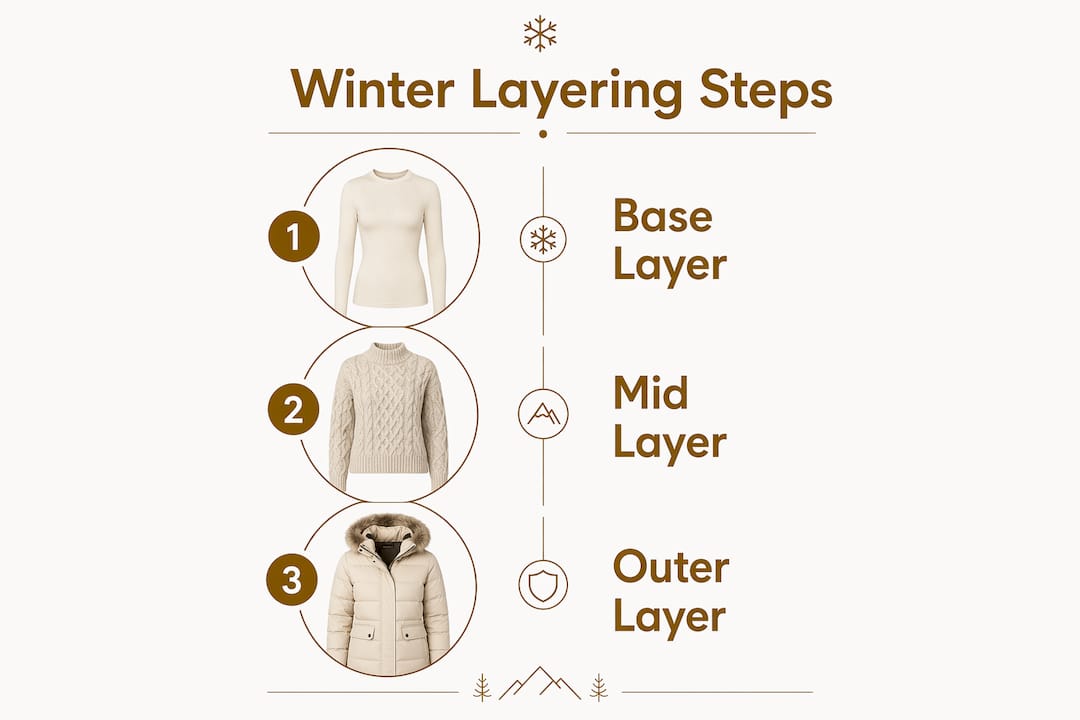
How to layer winter clothing: the three-layer system
The three-layer system is the foundation of effective cold-weather dressing. Each layer has a job, and the system only works when all three layers are doing their jobs at the same time.
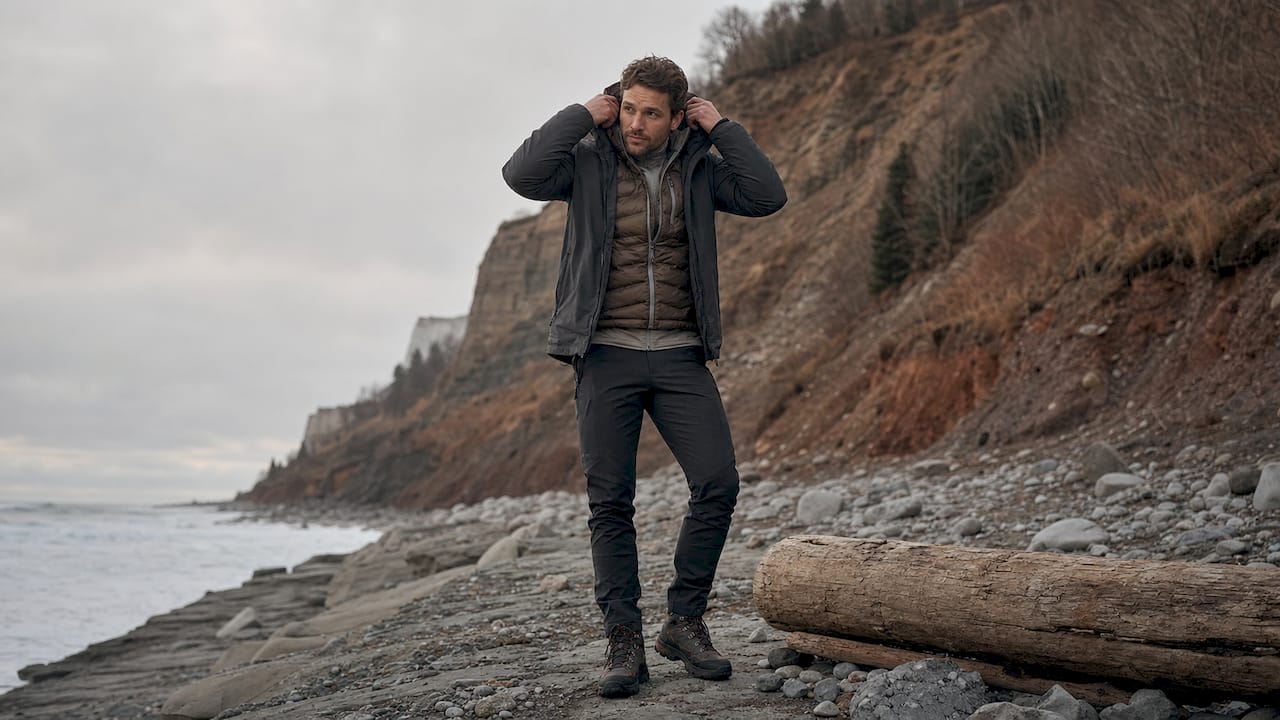
The base layer sits directly against your skin. Its only job is moisture management. Wool and synthetic fibres like polyester pull sweat away from your body and allow it to evaporate. Cotton does the opposite. Water conducts heat roughly 25 times faster than air, so a damp cotton shirt will drain your body heat rapidly. Merino wool is the most popular base layer material because it wicks moisture and retains warmth even when slightly damp.
The mid layer is your insulation. Fleece, wool, and down-type fill all trap warm air close to your body. The right choice depends on how active you plan to be. Breathable mid-layers like fleece suit active use because they allow sweat vapour to escape. Passive insulation like a puffer jacket is better for breaks or low-activity situations where you need maximum warmth without generating much body heat.
The outer layer is your shell. It blocks wind and repels water while allowing some breathability so moisture can still escape from the layers underneath. A waterproof and windproof shell completes the system by protecting your insulation from getting wet or compressed by wind.
Here is a quick reference for each layer:
| Layer | Purpose | Best Materials | Avoid |
|---|---|---|---|
| Base | Moisture wicking | Merino wool, polyester | Cotton |
| Mid | Insulation | Fleece, wool, down fill | Non-breathable puffers for active use |
| Outer | Wind and water protection | Waterproof shell, Gore-Tex style fabrics | Non-breathable plastics |
| Optional extra insulation | Added warmth in extreme cold | Down vest, wool sweater | Bulky fits that restrict movement |
How do you choose the right fit and fabric for each layer?
Fit is not just a style concern. Air pockets larger than 10–15 mm cause natural convection inside your clothing, which pulls warm air away from your body. A base layer that fits snugly eliminates that problem. Your mid layer should fit close enough to trap air without compressing the base layer beneath it.
The outer layer can be slightly roomier to accommodate the layers underneath, but it should not be so large that it billows in the wind. Wind forces cold air through gaps and undoes the work of every layer beneath it.
Choosing natural fibres vs. synthetics
Merino wool is the gold standard for base layers because it manages moisture, resists odour, and retains warmth when damp. Synthetic polyester base layers dry faster and cost less, making them a practical choice for high-output activities. For mid layers, fleece is lightweight and breathable. Wool mid layers are heavier but perform well in wet conditions.
Styling layered outfits without bulk
Stylist Madeleine Park’s advice cuts through a lot of confusion here. She recommends thin layers with a visual point of definition rather than stacking undifferentiated volume. A fitted turtleneck under a structured mid layer, cinched at the waist with a belt over the top, reads as intentional rather than bundled up.
Varying layer lengths also creates visual interest. A longer shirt hem peeking below a cropped knit, or a longline coat over a shorter jacket, adds dimension without adding bulk. The goal is to look like you made choices, not like you grabbed everything in the closet.
- Choose fitted base layers in neutral colours so they work under anything
- Select mid layers with clean lines and minimal exterior hardware
- Use belts, scarves, or structured outerwear to define your silhouette
- Vary the length of each visible layer by at least 5 centimetres for a polished effect
Pro Tip: Shop for base layers one size smaller than your usual size. A snug fit improves moisture transfer and eliminates the air gaps that cause heat loss.
How should you adjust your layers during activity and weather changes?
Dynamic layering is the skill that separates comfortable winter dressing from miserable winter dressing. The start cold rule is the most practical principle here: begin your activity slightly underdressed, warm up through movement, then add layers at rest stops or when temperatures drop.
The logic is straightforward. If you start fully layered and begin moving, you will sweat. Sweat wets your base layer. A wet base layer loses its insulating properties and makes you colder once you stop moving. Starting slightly cool prevents that cycle from starting.
Here is a step-by-step approach for managing layers through a day outdoors or a long commute:
- Start with your base layer and a light mid layer. Leave the heavy insulation in your bag.
- Move at a steady pace until your body temperature rises. You should feel warm but not sweating.
- At your first rest stop, add your insulating mid layer before you cool down completely.
- Put on your outer shell proactively when you see precipitation or feel wind picking up. Do not wait until you are already wet.
- Remove a layer before you start sweating, not after. Wet insulation loses most of its effectiveness.
- At the end of your activity, add all layers immediately to prevent rapid heat loss.
Accessories follow the same logic. Gloves, hats, and neck gaiters are easy to remove and stow, so use them aggressively. Your winter accessories list should include at least two pairs of gloves: a lighter liner glove and a heavier waterproof outer glove.
Pro Tip: Pack an extra pair of wool-blend socks in your bag every time you go out in winter. Wet feet undermine your entire layering system, and a dry pair takes up almost no space.
What are the most common layering mistakes to avoid?
Most cold-weather misery comes from a small number of repeatable mistakes. Recognising them is the fastest way to fix your system.
- Wearing cotton next to your skin. Cotton absorbs moisture and holds it against your body. Even light activity will leave you damp and cold within an hour.
- Over-insulating for your activity level. Too many mid layers cause sweating, which wets your base layer and creates a chill cycle that is hard to break.
- Ignoring extremities. Hands, feet, and ears lose heat faster than your core. A well-layered torso means nothing if your feet are wet and your hands are bare.
- Relying on one thick layer instead of multiple thin ones. A single heavy coat cannot be adjusted. Three thinner layers give you the flexibility to respond to changing conditions.
- Wearing oversized outer layers. A shell that is too large allows wind to enter and disrupts the warm air trapped by your mid layer.
“The biggest layering mistake is treating it as a one-time decision at the door. Layering is something you manage all day, not something you set and forget.” — AMC Outdoors
If you find yourself sweating despite the cold, remove one mid layer immediately and stow it. If you are cold despite wearing everything you brought, check your base layer first. A damp base layer is almost always the cause.
How do you build stylish cold-weather outfits using layering principles?
The role of layering in winter fashion goes beyond function. The same principles that keep you warm also create the visual depth that makes winter outfits interesting. Texture contrast, colour blocking, and varied proportions all come naturally from a well-built layering system.
The key is choosing pieces that serve both a technical and a visual purpose. A ribbed merino turtleneck is a great base layer and a strong style statement. A structured wool coat functions as both an outer layer and the centrepiece of an outfit. When every piece earns its place on both counts, you never look overdressed or underprepared.
- Use texture contrast to add depth: pair a smooth base layer with a chunky knit mid layer and a sleek outer shell
- Choose a colour palette that works across all three layers so pieces mix and match freely
- Let one layer be the focal point and keep the others simple
- Use scarves and hats as both insulation and colour accents
- Reference a complete winter style guide to build outfits that work across different cold-weather occasions
Outerwear deserves particular attention because it is the most visible layer and the one that protects everything underneath. A well-chosen coat does not just finish an outfit. It determines whether your entire layering system performs as intended.
Key takeaways
Effective winter layering requires a base layer that wicks moisture, a breathable mid layer that insulates, and a windproof outer shell that protects all layers beneath it.
| Point | Details |
|---|---|
| Use the three-layer system | Base wicks moisture, mid insulates, outer blocks wind and water. |
| Avoid cotton base layers | Cotton traps moisture and causes rapid heat loss in cold conditions. |
| Fit determines warmth | Snug base layers and close-fitting mid layers eliminate convective heat loss. |
| Start cold, adjust as you go | Begin slightly underdressed to prevent sweating, then layer up at rest stops. |
| Style with intention | Vary layer lengths and add a point of definition to avoid an unstructured look. |
Why i think most people overcomplicate winter layering
After years of dressing for Canadian winters, both outdoors and in the city, I’ve come to believe that most people make layering harder than it needs to be. The technical side is genuinely simple: three layers, right fabrics, snug fit. The part people struggle with is the dynamic adjustment, and that’s almost entirely a habit problem rather than a knowledge problem.
The single change that made the biggest difference for me was committing to the start cold rule. It feels wrong to walk out the door feeling slightly chilly. Every instinct says to add one more layer. But that extra layer is exactly what causes the sweating and chill cycle that makes a long winter day genuinely uncomfortable. Trust the movement to warm you up.
On the style side, I think the advice to add a point of definition is underrated. A belt over a longline knit, or a structured coat over a looser mid layer, immediately makes a layered outfit look considered rather than accidental. You don’t need expensive pieces. You need pieces that fit well and work together. That’s the whole system, and it’s worth building deliberately rather than grabbing whatever is warmest on a cold morning.
— Glenville
Build your winter layering system with 16thavenue
16thavenue carries the pieces that make a layering system both functional and worth wearing. Whether you’re building from scratch or upgrading a single layer, the right outerwear makes the biggest difference.

The Women’s Trendy Autumn and Winter Woolen Coat is a strong outer layer choice: structured enough to anchor an outfit and warm enough to protect your mid layers from wind and cold. Pair it with the Women’s Air-cushion Sole Fashion Snow Boots to keep your feet dry and warm from the ground up. 16thavenue offers free shipping to most destinations, so you can complete your cold-weather wardrobe without the extra cost. Browse the full winter collection at 16thavenue.ca.
FAQ
What are the three layers of winter clothing?
The three layers are the base layer, mid layer, and outer layer. The base wicks moisture, the mid insulates, and the outer shell blocks wind and water.
Why should you avoid cotton in winter layering?
Cotton absorbs and holds moisture against your skin. Because water conducts heat roughly 25 times faster than air, a damp cotton layer drains body heat quickly and leaves you cold.
How do you layer for warmth without looking bulky?
Choose fitted base layers, select mid layers with clean lines, and add a structured outer layer. Stylist Madeleine Park recommends varying layer lengths and adding one point of visual definition, such as a belt, to keep the look polished.
What is the best fabric for a base layer in cold weather?
Merino wool is the top choice because it wicks moisture, resists odour, and retains warmth even when slightly damp. Synthetic polyester is a practical alternative that dries faster for high-output activities.
How many layers do you need for very cold weather?
Three layers cover most conditions. For extreme cold or low-activity situations, add an optional fourth insulating layer, such as a down vest or heavy wool sweater, between your mid layer and outer shell.