

How to match shoes and outfits: a step-by-step style guide
TL;DR:
- Matching shoes to outfits involves understanding formality, silhouette, undertones, and seasonality.
- Building a small, versatile shoe wardrobe focused on neutrals and appropriate styles simplifies outfit coordination.
- Confidence and intentionality are key, allowing rules to be bent or broken for personal style expression.
Standing in front of your wardrobe with a great outfit laid out and absolutely no idea which shoes to reach for is one of the most common frustrations in fashion. It happens to everyone, even women who genuinely love getting dressed. The good news is that matching shoes to outfits is not a guessing game. There are clear, learnable principles that make the process faster and more enjoyable every single time. This guide walks you through exactly what to consider, what to avoid, and how to build real confidence in your choices for every occasion and season.
Table of Contents
- Essential principles for matching shoes with outfits
- What you need before you start matching
- Step-by-step: How to match shoes and outfits for any occasion
- Common mistakes and troubleshooting your look
- Verifying and owning your finished look
- The real secret: why shoe-and-outfit matching is less about rules
- Upgrade your wardrobe with effortless style essentials
- Frequently asked questions
Key Takeaways
| Point | Details |
|---|---|
| Build on wardrobe neutrals | A few versatile shoe colours work with nearly every outfit and simplify daily choices. |
| Match formality, not just colour | Ensure your shoes suit the occasion and style to keep your look intentional, not random. |
| Echo and coordinate | Echoing a shoe colour somewhere in your outfit makes even bold shoes look purposeful. |
| Proportion and silhouette matter | Choose shoe shapes that enhance your leg line and balance your specific outfit for the best result. |
| Let style rules empower you | Learn the guidelines, then adapt them to express your own unique taste and confidence. |
Essential principles for matching shoes with outfits
With the challenge set, let’s build your foundation for stress-free shoe and outfit pairings.
Understanding the role of footwear in outfits is the first step toward better style decisions. Shoes do more than protect your feet. They anchor your whole look, shift the mood of an outfit, and send a signal about the occasion before you even say a word.
Here are the core principles every stylish woman should know:
- Start with neutrals. Many stylists recommend versatile shoe colours and neutrals for easy matching. A shoe in nude, black, or a shade close to your hair colour will work across dozens of outfits without any effort.
- Match formality levels. A strappy stiletto with a casual linen tee and cargo trousers creates a jarring disconnect. Your shoe’s formality should reflect both your outfit and your destination.
- Use silhouette to shape your proportions. A pointed toe elongates the leg. A platform or block heel grounds heavier fabrics. Knowing this lets you strategically adjust how your body reads in an outfit.
- Respect undertones. Warm-toned skin and warm-toned shoes (camel, cognac, ivory) feel harmonious. Cool-toned skin pairs naturally with silver, grey, or true black footwear.
- Consider texture and seasonal fabric. Patent leather looks sleek and deliberate beside silk or satin. Suede feels relaxed and cosy alongside knits and wools.
A helpful way to visualise formality levels is to compare common shoe types across occasions:
| Shoe type | Occasion tier | Best outfit pairing |
|---|---|---|
| Strappy stiletto | Formal/evening | Cocktail dress, tailored trousers |
| Block heel mule | Smart casual | Midi skirt, wide-leg trousers |
| Loafer | Business casual/casual | Jeans, blazer, trousers |
| White leather sneaker | Casual | Jeans, casual dresses, athleisure |
| Platform sandal | Casual/summer | Sundresses, shorts, denim |
| Knee-high boot | Casual to smart casual | Minis, midi skirts, skinny jeans |
| Ballet flat | Casual to business casual | Trousers, casual dresses |
“Your shoes set the formality of your entire outfit. When in doubt, ask yourself where you are going and what the shoes say about that destination.” This single question eliminates most mismatches before they happen.
A solid foundation in colour theory in fashion will also help you make confident choices without second-guessing every pairing.
What you need before you start matching
Now that you know the why behind matching, here’s how to set up your wardrobe for easy success.
Before you can match outfits to shoes with confidence, you need to know what you are actually working with. Most women underestimate the number of shoes they already own and overestimate how well those shoes cover their everyday needs.
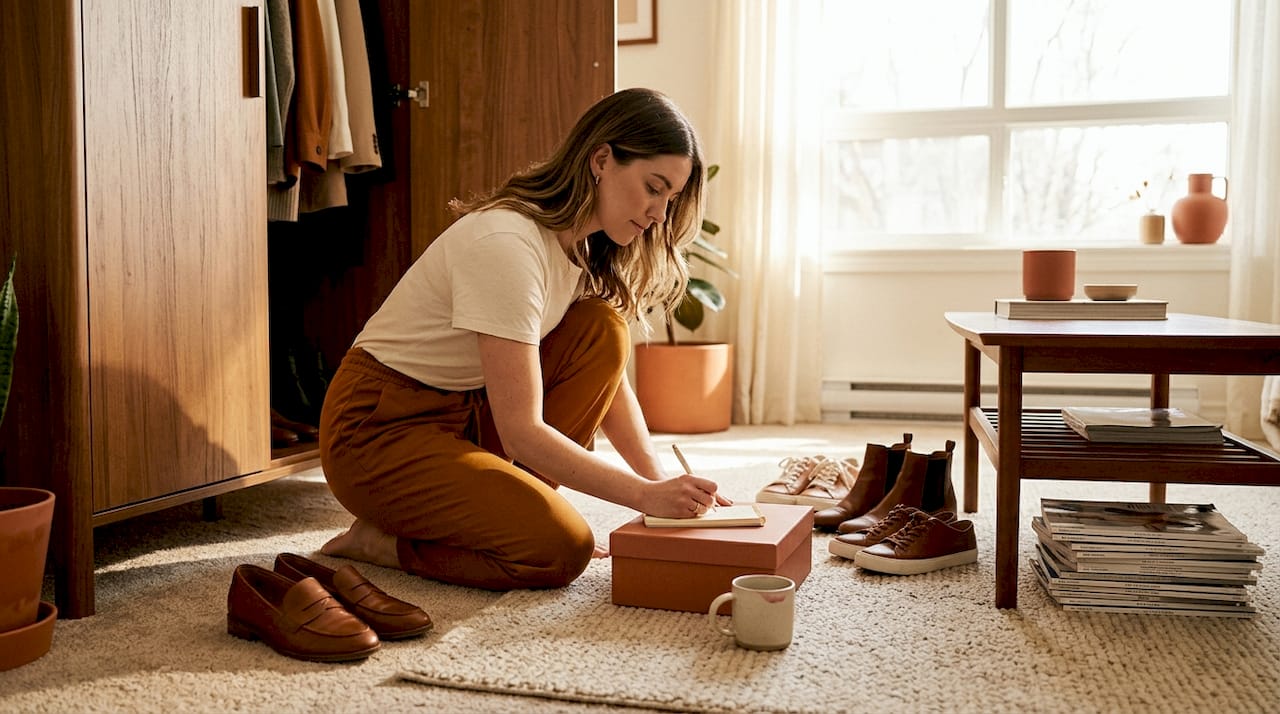
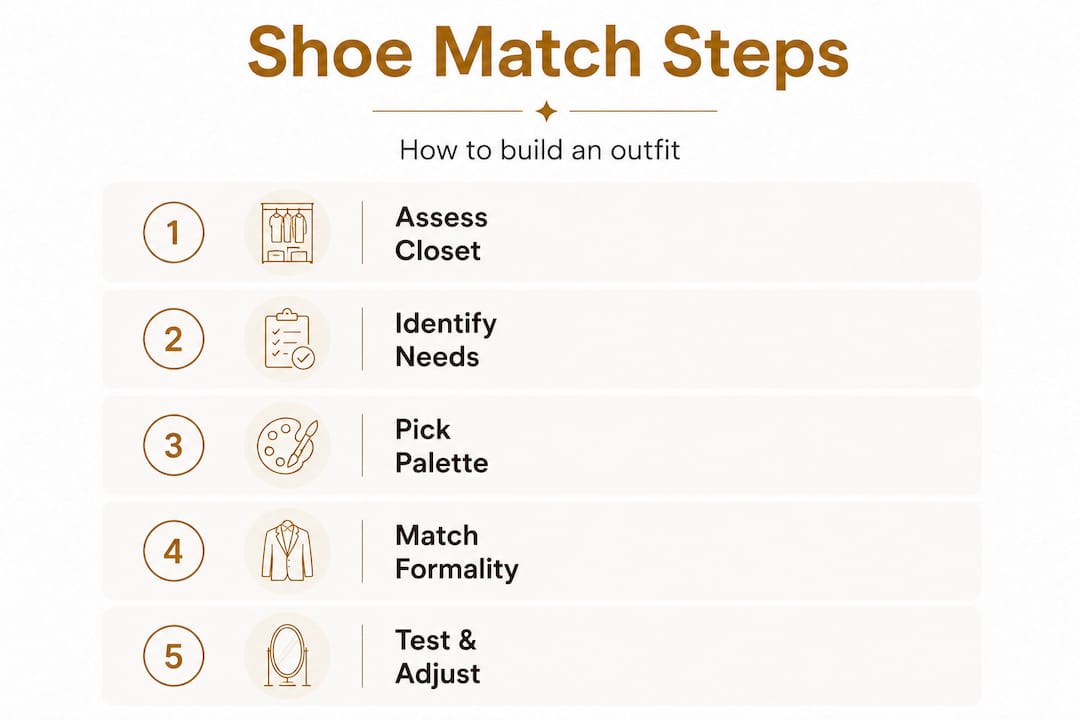
Step 1: Take stock. Pull out every pair you own. Group them by colour family and then by formality. You will almost certainly spot gaps you never noticed and duplicates you forgot you had.
Step 2: Identify your lifestyle needs. Consider how much of your week is spent in formal settings versus casual ones. A woman who works from home needs a very different shoe wardrobe than one attending client meetings daily.
Step 3: Pinpoint your wardrobe’s colour palette. What shades dominate your clothing collection? If 80% of your wardrobe is navy, grey, and camel, you need shoes that work within that palette, not against it.
Here is a practical breakdown of essential types of women’s footwear based on lifestyle:
| Lifestyle profile | Must-have shoe types |
|---|---|
| Work from home / creative | Sneaker, loafer, casual sandal |
| Office professional | Block heel, loafer, pointed flat |
| Active social life | Block heel, strappy sandal, ankle boot |
| Outdoor and travel | Sneaker, low-heeled boot, flat sandal |
| Formal events frequent | Stiletto, dressy mule, metallic flat |
A few shoe colour categories like your hair colour, nude, and one other neutral cover most outfit needs. This is liberating information. You do not need fifteen pairs of shoes to be stylish. You need the right five to seven.
Pro Tip: Group your shoes by formality first, colour second. When you are rushing out the door, you will reach for the right category instinctively, then choose the best colour option within it. This two-second mental shortcut eliminates decision fatigue on busy mornings.
Step-by-step: How to match shoes and outfits for any occasion
With your basics covered, here’s exactly how to put matching into practice, one step at a time.
This is where the real work happens. Having principles is useful. Following a clear process is what actually gets you dressed well every morning. Use this method every time you assemble an outfit.
-
Identify the occasion and dress code first. Before you even think about shoes, ask: where am I going, and what does that place expect? A casual brunch, a job interview, and a wedding all call for completely different energy from your feet upward.
-
Build your outfit base and note its dominant colour. Lay out your clothing. What is the overall tone? Is it warm or cool? Casual or elevated? Your shoes need to respond to this, not compete with it.
-
Select your shoe colour and formality tier. Use the comparison table from the previous section as a quick reference. Match the formality of your shoe to the formality of your outfit. Then choose a colour that either blends (same tonal family) or contrasts intentionally (a bold pop).
-
Apply proportion thinking. Pointed-toe and sleek silhouettes create a longer leg line, while chunkier styles can balance pant and dress shapes beautifully. If you are wearing a voluminous midi skirt, a chunky boot grounds it. If you are in slim trousers, a pointed flat or slim heel keeps the line clean.
-
Handle statement shoes with intention. Bold shoes, think vivid red, electric blue, or anything with intricate embellishment, are stunning but require coordination. Echo one colour from statement shoes in your outfit for a pulled-together look. Even a small detail like a red belt or a blue clutch creates cohesion and makes the choice look deliberate rather than accidental. The multicolour fashion heels on our site are a great example of bold shoes that still coordinate beautifully when you pick up even one of their accent colours in your outfit.
-
Do a final harmony check. Are the undertones consistent? Does the shoe texture complement the fabric weight of your outfit? Is the choice weather-appropriate for the day? If it is raining, that open-toe suede mule might need to stay home.
“The most polished looks feel effortless because every piece speaks the same language: same energy, same level of care, same intention.”
A good trendy shoe guide can help you understand which silhouettes are dominating 2026 so you can make smart purchases and build a wardrobe that feels current without chasing every trend.
If you want to see these steps in action across full outfit builds, the trendy looks styling guide breaks down complete outfit formulas from head to toe.
Common mistakes and troubleshooting your look
Even with a clear plan, small missteps are common. Here’s how to spot and fix the most frequent ones.
Even experienced dressers fall into predictable traps. Recognising these mistakes makes them easy to avoid.
- Over-matching exact colours. Wearing a blush pink dress with blush pink shoes and a blush pink bag looks dated and overly studied. Coordination through undertone, texture, and tone often looks better than trying to duplicate exact colours unless the occasion is formal.
- Misjudging formality. Wearing your best evening heels with an oversized hoodie does not look “fashion-forward.” It looks unintentional. Unless you are deliberately subverting formality as a stylistic choice, match the energy of every element in your outfit.
- Ignoring undertones. Wearing cool-toned silver shoes with a warm-toned camel coat creates a subtle visual tension that most people cannot name but definitely notice. This is one of the most common causes of an outfit that looks “off” without anyone being able to say why.
- Ignoring textural contrast. Chunky rubber-soled platforms with a delicate silk slip dress is a clash. Conversely, a dainty strappy sandal with heavy-weight denim can look oddly fragile. Aim for textures that feel like they belong in the same world.
- Letting trends override occasion. A shoe might be gorgeous and very current, but if it is not right for where you are going, it does not matter how stylish it is.
Pro Tip: Use undertone and material harmony to create intentional-looking outfits. Patent leather pairs well with sleek fabrics like silk and poplin. Suede belongs beside knits, wool, and relaxed cotton. When your fabrics and shoe materials share the same energy, the whole outfit reads as curated.
Understanding colour trends in fashion helps you stay informed without becoming a slave to trends. And when you are styling shoes for a specific dress or occasion, the accessorising dresses guide covers the full picture beautifully.
Verifying and owning your finished look
Once you’ve matched your look, take a moment to verify its polish and make it truly yours.
There is one step most women skip that the most consistently well-dressed women never miss: the final review. It takes thirty seconds and makes a real difference.
- Step back and look at your full silhouette in a mirror. Not just your top, not just your shoes, but everything together. Does it feel balanced? Is there a clear focal point, or is everything fighting for attention?
- Ask yourself one question. Does one element intentionally stand out (and is that intentional?), or does the whole look feel harmonious? Both are valid. Unintentional chaos is the only thing to avoid.
- Check comfort and practicality. Are those shoes going to last the whole day? If you know you will be standing for six hours, the choice that hurts at the two-hour mark is the wrong choice, regardless of how beautiful it looks.
- Trust your gut. If something feels off, it probably is. Change one element, not the whole outfit.
Building a small, versatile shoe wardrobe reduces decision fatigue and increases style consistency over time. This is not about having more shoes. It is about having the right shoes.
Pro Tip: Take a quick photo of your finished outfit before you head out. Photos reveal proportion issues and colour clashes that mirrors sometimes hide. It also builds a visual record of combinations that worked brilliantly, so you can recreate them without trying to remember the details.
Seasonal outfit planning becomes much easier when you have the right foundation. For cool-weather inspo, the affordable fall outfit ideas guide is full of practical combinations that are stylish without being stressful.
The real secret: why shoe-and-outfit matching is less about rules
With all the technical know-how in hand, here is one truth every stylish woman eventually learns through experience.
Rules exist in fashion for one reason: to give you confidence when you are uncertain. They are training wheels, not a cage. The women who consistently look the most put-together are not following every guideline perfectly. They understand why the rules exist, and then they make deliberate choices to bend or break them for effect.
Wearing chunky combat boots with a floral midi dress is technically a formality mismatch. But done with intention and confidence, it is one of the most copied looks in street style. The key word is intention. You are not making a mistake. You are making a statement.
The step-by-step styling perspective we love most is this: use the guidelines to eliminate truly bad choices, then use your instincts to elevate the look beyond what any rulebook would suggest.
The most authentic style moments happen when a woman chooses something because it feels right for her today, not because a chart said it was correct. Learn the foundations, practise them until they are instinctive, and then give yourself permission to play. That is exactly when personal style becomes genuinely interesting.
Upgrade your wardrobe with effortless style essentials
Ready to put your new matching skills into action? Here is where to find your next must-haves.
At 16th Avenue, we curate pieces that make smart dressing easier without sacrificing personality. Whether you are building your foundation wardrobe or looking for something that elevates an everyday look, our collections are designed with real women’s lives in mind.

Start with versatile footwear like our stylish comfort sneakers, which pair beautifully with everything from casual dresses to weekend denim. When the weather turns, our autumn and winter woolen coat gives you an outerwear anchor that works across all your existing pieces. Explore our full range of footwear, clothing, and accessories to keep building a wardrobe that gets dressed effortlessly, every single day.
Frequently asked questions
What colour of shoe goes with everything?
Neutral shades like nude, beige, and black cover most outfit needs, and a shade close to your natural hair colour is another reliable all-rounder. These options blend into any colour palette without drawing unnecessary attention away from your outfit.
How do I match bold or statement shoes to an outfit?
Anchor bolder shoes by echoing one colour from the shoe somewhere in your clothing or accessories. Even a small detail like a scarf or earring creates enough visual connection to make the choice look intentional.
Can I mix brown shoes with black outfits?
Yes, and it often looks more interesting than a strict black-on-black pairing. Coordination of undertone and material works better than strict duplication for most occasions, with the exception of very formal events where perfect matching is expected.
What is the biggest mistake when matching shoes and outfits?
Trying to match colours exactly rather than aiming for overall harmony and coordination. Stylists recommend coordination, not duplication, which results in a more modern and intentional-looking outfit than perfect colour matching ever could.