


How to organise your wardrobe: a practical guide
TL;DR:
- A well-organized wardrobe begins with an honest full edit, removing clutter and sorting items properly.
- Implementing clear zones, choosing suitable storage, and maintaining a one-in, one-out habit ensure long-term order.
A well-organised wardrobe is a system that gives you instant access to every item you own, eliminates morning stress, and makes the most of whatever space you have. Wardrobe organisation, sometimes called closet editing or capsule curation, works best when it combines three things: a thorough declutter, a logical zoning system, and a simple maintenance habit. The right tools, including slim velvet hangers, stackable storage bins, and drawer dividers, make the difference between a system that lasts and one that collapses within a week. Introduce the one-in, one-out rule from day one and your wardrobe will stay manageable without a major overhaul every season.
How to organise a wardrobe: start with decluttering
The single most important step in wardrobe organisation is removing every item from your closet before you do anything else. Professional organiser Meaghan Kessman recommends a full empty-and-edit method precisely because it forces you to confront what you actually own rather than what you assume you own. Most people discover duplicate items, forgotten purchases, and clothes that no longer fit their body or lifestyle the moment everything lands on the bed.
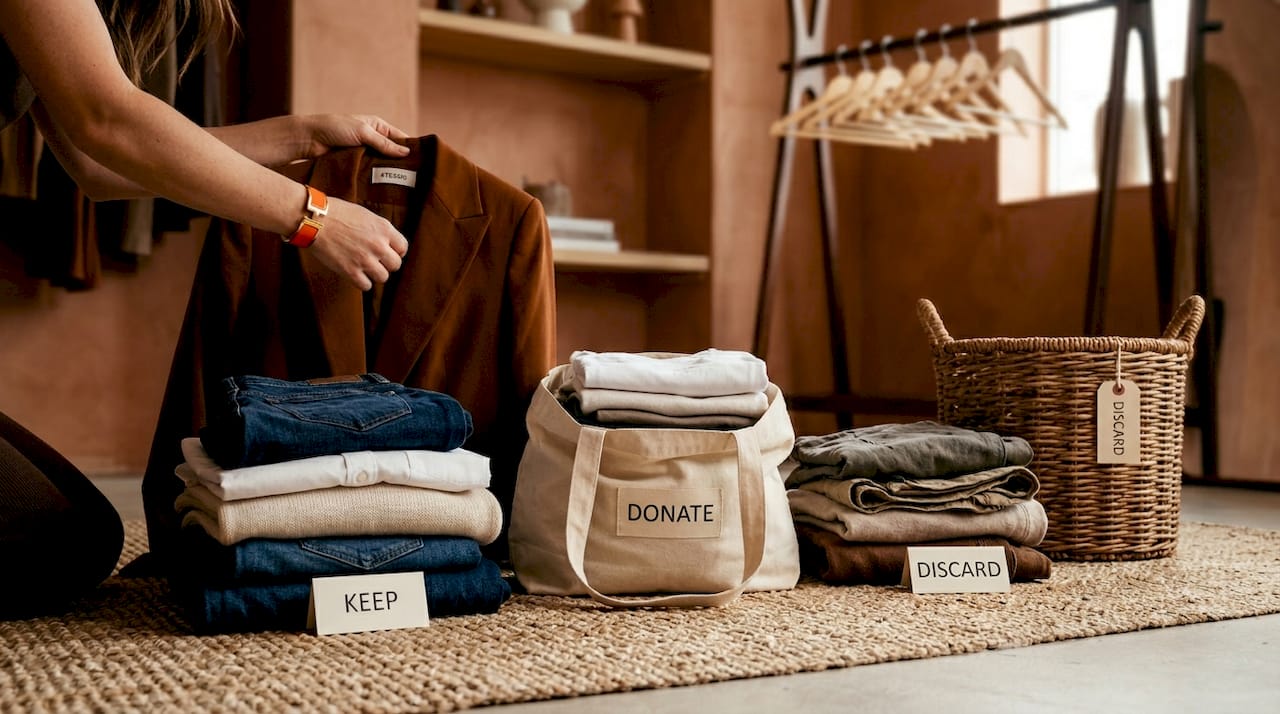
Once everything is out, sort it into three piles: keep, donate or sell, and discard. The keep pile should contain only items you have worn in the past 12 months and genuinely like wearing. For anything borderline, apply the Five Outfit Rule: if you cannot picture at least five outfits built around that piece, it does not earn a place back in your wardrobe.
The discard and donate piles deserve equal attention. Clothes in poor condition go straight to textile recycling. Items in good condition can go to a local consignment shop, a Facebook Marketplace listing, or a charity drop-off. Clearing these out before you build any new system prevents you from organising clutter rather than clothing.
Pro Tip: Organiser Corey Pence advises starting with one category, such as tops or shoes, rather than tackling everything at once. This approach builds momentum without the paralysis that comes from staring at a mountain of mixed clothing.
One category at a time also means you finish something before moving on, which matters enormously for motivation. Completing the tops category in an afternoon gives you a visible result and a clear sense of how the rest of the process will feel.
What is the best way to categorise and zone your wardrobe?
Zones are the architecture of a functional wardrobe. Corey Pence explains that assigning clear zones for shoes, casual wear, workwear, and accessories reduces the friction of putting clothes away, which is the habit that keeps a wardrobe tidy long term. When returning an item is effortless because its home is obvious, the system maintains itself.
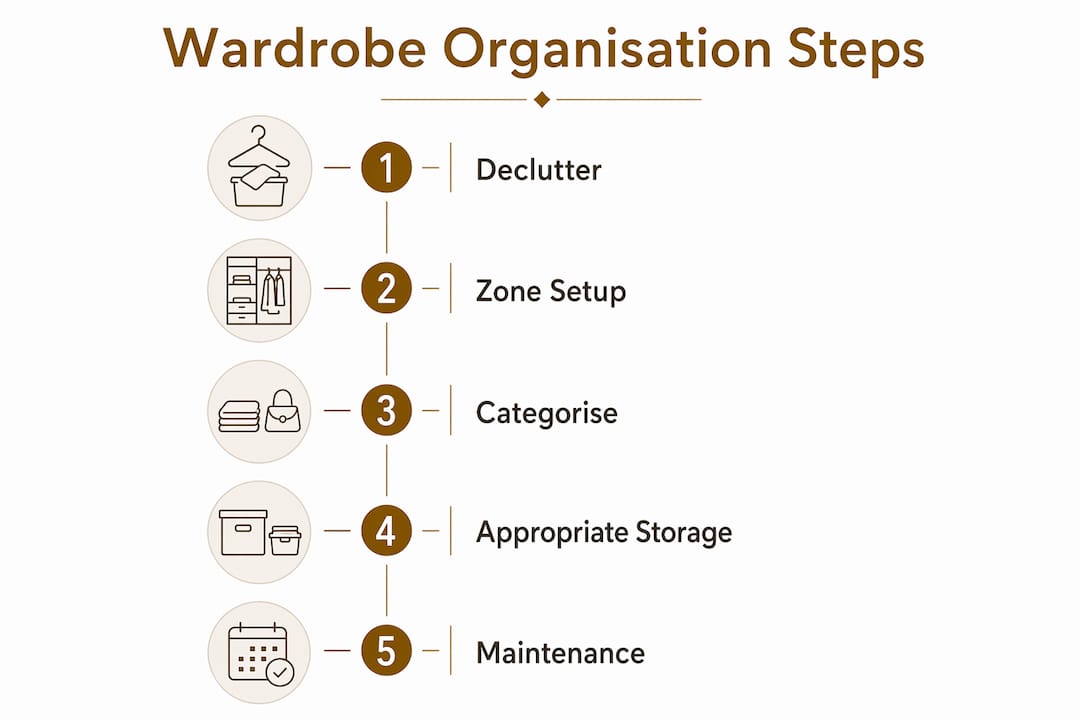
Within each zone, organise first by type and then by colour. Grouping all trousers together, then arranging them from light to dark, makes it possible to scan your options in seconds. The same logic applies to tops, dresses, and outerwear. Colour sequencing is not purely aesthetic. It reveals gaps (three navy tops, no white) and prevents accidental duplicates on future shopping trips.
Outfit logic takes zoning one step further. Vogue’s Allison Finn recommends grouping pieces by outfit rather than purely by garment type. If you always wear a specific blazer with a particular pair of trousers, hanging them together removes one decision from your morning routine. Fewer decisions mean less time spent getting dressed and less chance of grabbing something out of habit rather than intention.
Ergonomics matter too. Place the items you reach for most, your everyday jeans, your go-to tops, at eye level and within easy arm’s reach. Reserve high shelves for seasonal storage and low shelves for shoes or bulky items. Combining open shelving with closed storage, such as baskets or bins on open shelves alongside a drawer unit, creates both visibility and visual calm.
| Zone | What goes there | Storage type |
|---|---|---|
| Eye-level rail | Everyday tops, blazers, frequently worn dresses | Slim velvet hangers |
| Lower rail | Trousers, skirts, casual bottoms | Slim velvet hangers |
| High shelves | Off-season clothing, bulky knits | Labelled bins or vacuum bags |
| Drawers | Underwear, socks, folded tees | Drawer dividers |
| Floor or low shelf | Shoes | Clear boxes or a shoe rack |
How do you decide what to hang, fold, or store?
Garment care is the deciding factor between hanging and folding. Allison Finn’s guidance from Vogue is clear: hang wrinkle-prone items such as blouses, structured jackets, trousers, and dresses, and fold sweaters, knits, and anything with stretch. Hanging a heavy knit stretches it out of shape over time, while folding a silk blouse creates creases that require ironing before every wear.
Here is a practical breakdown of what belongs where:
- Hang: blouses, button-down shirts, blazers, structured coats, trousers, midi and maxi dresses, linen pieces
- Fold: sweaters, hoodies, casual tees, denim, activewear, pyjamas, and loungewear
- Bin or drawer: swimwear, scarves, belts, winter accessories like gloves and hats, and socks and underwear
Replacing bulky plastic or wire hangers with slim velvet hangers is one of the highest-return changes you can make. Velvet hangers take up roughly half the rod space of standard plastic ones, which means you can fit significantly more into the same rail without crowding. The non-slip surface also keeps delicate fabrics from sliding to the floor overnight.
Pro Tip: Use drawer dividers for folded items and stackable bins for accessories. Dividers prevent the collapse effect where one item pulled from a neat stack sends everything else into disorder. Clear-front bins let you see contents without opening every container.
For seasonal accessories like scarves, gloves, and beanies, a labelled bin on a high shelf keeps them accessible in winter and out of the way in summer. Swimwear and beach cover-ups work well in a single dedicated drawer or a small basket, separate from everyday clothing so they are easy to grab when needed.
What tools and storage solutions work best for wardrobe organisation?
The right storage tools turn a good system into a great one. Vertical space and a mix of open and closed storage increase both visibility and the sense of calm in a wardrobe. Most closets waste the top third of their vertical space entirely. Stackable bins from brands like IKEA’s SKUBB range or the Sterilite clear storage line reclaim that space without requiring a renovation.
For shoes, three options cover most situations. A floor-standing shoe rack works for everyday pairs. Over-door organisers with clear pockets suit smaller spaces and keep heels visible. Clear acrylic or plastic shoe boxes stack neatly and protect shoes from dust, which is particularly useful for less-worn pairs or special-occasion footwear. A dressing table with mirror storage can also serve as an accessory hub, keeping jewellery, hair tools, and small items off the closet floor entirely.
Accessory organisation deserves its own dedicated space. Hooks on the inside of a closet door handle belts and bags efficiently. A small tray or jewellery dish on a shelf keeps rings, earrings, and bracelets from disappearing into the depths of a drawer. Wall-mounted hooks or a pegboard system work well for bags and scarves if your closet has interior wall space.
Uniform hangers are worth emphasising again here. A rail of matching slim hangers looks intentional and makes it far easier to scan what you own. Mixed hangers of different heights and widths create visual noise that makes even a tidy wardrobe feel chaotic.
How can you keep your wardrobe organised long term?
Maintenance is where most wardrobe organisation attempts fail. The initial edit and setup take effort, but without a simple ongoing habit, clutter returns within months. Good Housekeeping describes the one-in, one-out rule as the most reliable way to maintain balance after a full declutter. Every new item that enters the wardrobe displaces one existing item. This keeps the total volume stable and forces a moment of reflection before every purchase.
Beyond that rule, a few habits make long-term organisation nearly automatic:
- Return every item to its designated zone immediately after wearing or laundering. Leaving clothes on a chair or the floor is where systems break down.
- Do a five-minute reset at the end of each week. Rehang anything that has drifted, refold what has been disturbed, and return accessories to their trays or hooks.
- Edit seasonally. When you rotate off-season clothing into storage, assess each piece before it goes in. If you did not reach for it this season, it is unlikely to earn a place next year.
- Keep a small donation basket inside or near the wardrobe. When something stops fitting or falls out of rotation, it goes straight into the basket rather than back onto the rail.
Pro Tip: Schedule a 20-minute seasonal edit on your calendar, once in spring and once in autumn. Treating it as a fixed appointment rather than a task you will get to eventually is what separates wardrobes that stay organised from those that revert to chaos.
The fashion shopping workflow you use also affects long-term organisation. Buying with intention, knowing exactly what gap you are filling, prevents the accumulation of impulse purchases that have no natural home in your existing system.
Key takeaways
A well-organised wardrobe requires an honest edit first, a logical zone system second, and a consistent maintenance habit third. Without all three, the system will not hold.
| Point | Details |
|---|---|
| Edit before organising | Remove everything and sort into keep, donate, and discard before building any system. |
| Zone by type and outfit logic | Group items by category and colour, then cluster frequently paired pieces together. |
| Match storage to garment care | Hang structured and wrinkle-prone pieces; fold knits and stretch fabrics. |
| Upgrade your hangers | Slim velvet hangers save rail space and protect delicate fabrics better than plastic. |
| Apply one-in, one-out | Every new purchase should displace one existing item to keep volume stable. |
Why the edit is the part most people skip, and why that’s the real problem
I have helped friends and family sort through their wardrobes more times than I can count, and the pattern is always the same. People want to jump straight to the pretty part: the matching hangers, the labelled bins, the colour-coded rail. The edit feels uncomfortable because it requires honest decisions about money spent, aspirations that did not pan out, and bodies that have changed. So they skip it or rush it, and then they spend an afternoon arranging clutter into neat piles of clutter.
The edit is not a preliminary step. It is the work. Everything else, the zones, the hangers, the bins, is just infrastructure. Infrastructure built on too many items will always collapse back into chaos.
What I have found actually works is treating the edit as a separate event from the organising. Do the edit on a Saturday morning. Live with the results for a day. Then organise on Sunday. The gap gives you perspective and prevents the fatigue-driven decision to keep things you should release.
I also think people underestimate how much a few quality tools change the experience of getting dressed every morning. Switching to velvet hangers and adding two drawer dividers costs very little, but it makes the wardrobe feel considered rather than accidental. That feeling matters. It changes how you interact with your clothes and how carefully you maintain the system.
Start small if the full process feels like too much. One drawer, one category, one zone. A single completed section is more useful than a half-finished overhaul.
— Glenville
Refresh your wardrobe with pieces worth organising

Once your wardrobe is edited and zoned, the pieces you keep should genuinely earn their space. At 16thavenue, the focus is on fashion that works hard across multiple outfits and seasons. The women’s woolen coat is exactly the kind of structured, season-defining piece that anchors an autumn and winter zone without taking up excessive rail space. For your shoe section, the low wedge sport sneakers pair with casual and smart-casual outfits alike, which means one pair covers multiple zones. Browse 16thavenue for wardrobe essentials that are easy to style, easy to store, and worth keeping.
FAQ
How do I start organising a messy wardrobe?
Remove everything from the wardrobe first, then sort into keep, donate, and discard piles before returning a single item. Starting with one category, such as tops or shoes, makes the process manageable rather than overwhelming.
What is the one-in, one-out rule for wardrobes?
The one-in, one-out rule means every new item you bring into your wardrobe requires removing one existing item. Good Housekeeping identifies this as the most reliable habit for preventing clutter from returning after an initial edit.
Should I hang or fold my clothes?
Hang wrinkle-prone and structured pieces like blouses, blazers, and trousers. Fold sweaters, knits, and activewear, since hanging these stretches them out of shape over time.
What are the best tools for wardrobe organisation?
Slim velvet hangers, stackable clear bins, drawer dividers, and labelled baskets are the most consistently recommended tools. Velvet hangers alone can nearly double your usable rail space compared to standard plastic ones.
How often should I reorganise my wardrobe?
A full edit twice a year, once in spring and once in autumn, is enough for most people. Weekly five-minute resets and the one-in, one-out rule handle the maintenance between those seasonal reviews.