


How to select flattering dresses for every body type
TL;DR:
- Understanding your body shape and style goals helps select the most flattering dress silhouettes.
- Proper fit and color choice amplify your natural features and confidence.
- Experimentation and personal touches elevate style beyond standard rules.
Finding the perfect dress can feel like solving a puzzle with too many pieces. You walk into a store, pull five options off the rack, and somehow none of them feel quite right. It is not your body that is the problem. It is the approach. When you understand your shape, know what colours work for your skin tone, and learn how fit actually functions, dress shopping transforms from stressful to genuinely fun. This guide walks you through every step, from identifying your silhouette to adding the finishing touches, so you can walk out of any fitting room feeling exactly the way you deserve to feel.
Table of Contents
- Understand your body shape and style goals
- Choose the right fit and silhouette
- Pick colours and patterns that enhance your look
- Incorporate trends and personal touches
- What most advice misses about choosing flattering dresses
- Elevate your look with curated fashion essentials
- Frequently asked questions
Key Takeaways
| Point | Details |
|---|---|
| Know your shape | Understanding your body shape helps you pick dress styles that naturally flatter your best features. |
| Fit is everything | A well-fitting dress is always more flattering than any trend or colour alone. |
| Use colour wisely | Choosing the right colour or print enhances your look and boosts confidence instantly. |
| Mix trends and classics | Blend trendy elements with timeless pieces for a personal, versatile wardrobe. |
| Trust your taste | Fashion advice is guidance, but your unique style choices make the biggest impact. |
Understand your body shape and style goals
Before you touch a single hanger, it helps to know what you are working with. Identifying your body shape is the first step to finding flattering styles, and it saves you from wasting time on cuts that simply will not work for your frame. Body shapes are generally grouped into five categories: pear, hourglass, apple, rectangle, and inverted triangle. Each one responds differently to various dress silhouettes.
Beyond shape, your style goals matter just as much. Are you trying to highlight your waist? Create the illusion of curves? Feel comfortable enough to dance at a wedding? Your answers will guide every decision you make. The good news is that goals can overlap. You can absolutely prioritise comfort and still wear something that turns heads.
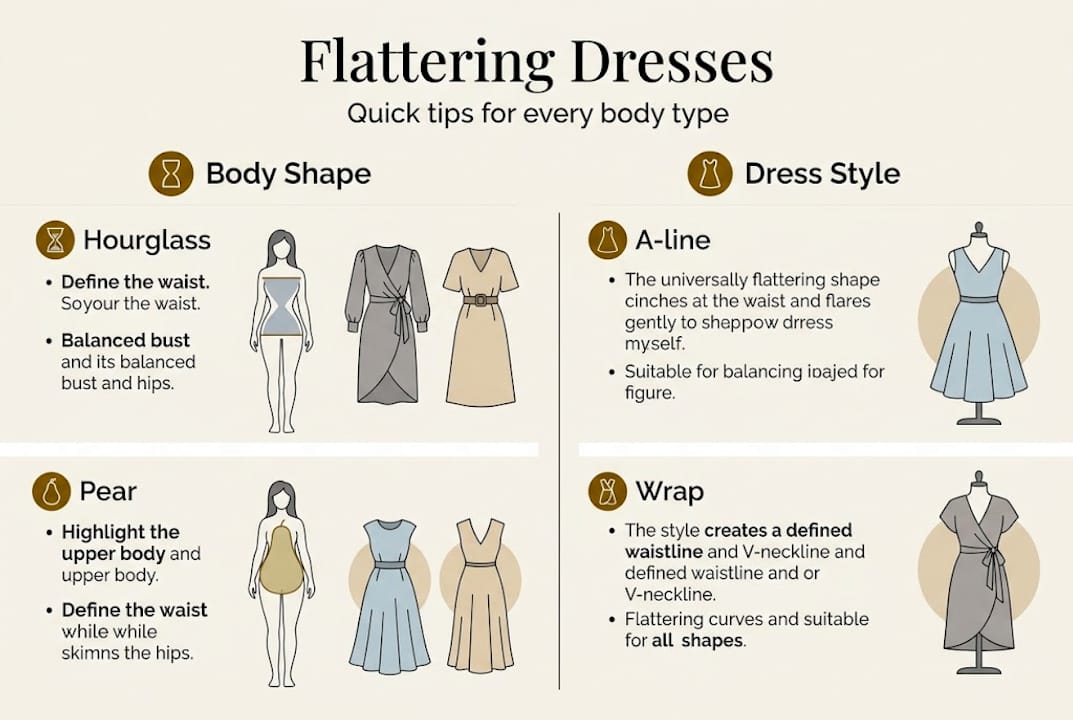
Here is a quick overview of body shapes and the dress silhouettes that tend to work best:
| Body shape | Best dress silhouettes |
|---|---|
| Pear | A-line, fit and flare, wrap |
| Hourglass | Bodycon, wrap, sheath |
| Apple | Empire waist, shift, trapeze |
| Rectangle | Peplum, belted, ruffled |
| Inverted triangle | A-line, skater, fit and flare |
Knowing your shape is not about limiting yourself. It is about giving yourself a starting point. Once you understand which silhouettes naturally complement your proportions, you can explore the full range of types of women’s dresses with much more confidence and far less guesswork.
- Pear shapes benefit from volume above the waist and streamlined skirts below
- Hourglass figures shine in styles that follow the natural waist
- Apple shapes look great in dresses that skim rather than cling at the midsection
- Rectangles can create curves with ruching, belts, and layered details
- Inverted triangles balance broader shoulders with flared or full skirts
Pro Tip: Style is not static. Try mixing goals each season. Pairing a statement silhouette with a comfortable fabric means you never have to choose between looking great and feeling good.
Choose the right fit and silhouette
Once you know your shape and goals, the next step is ensuring your dress fits and flows in all the right places. Fit is the foundation of a flattering look, and ill-fitting dresses undermine even the best style choices. A gorgeous print on a dress that gaps at the bust or bunches at the hips will always look off, no matter how trendy the style is.
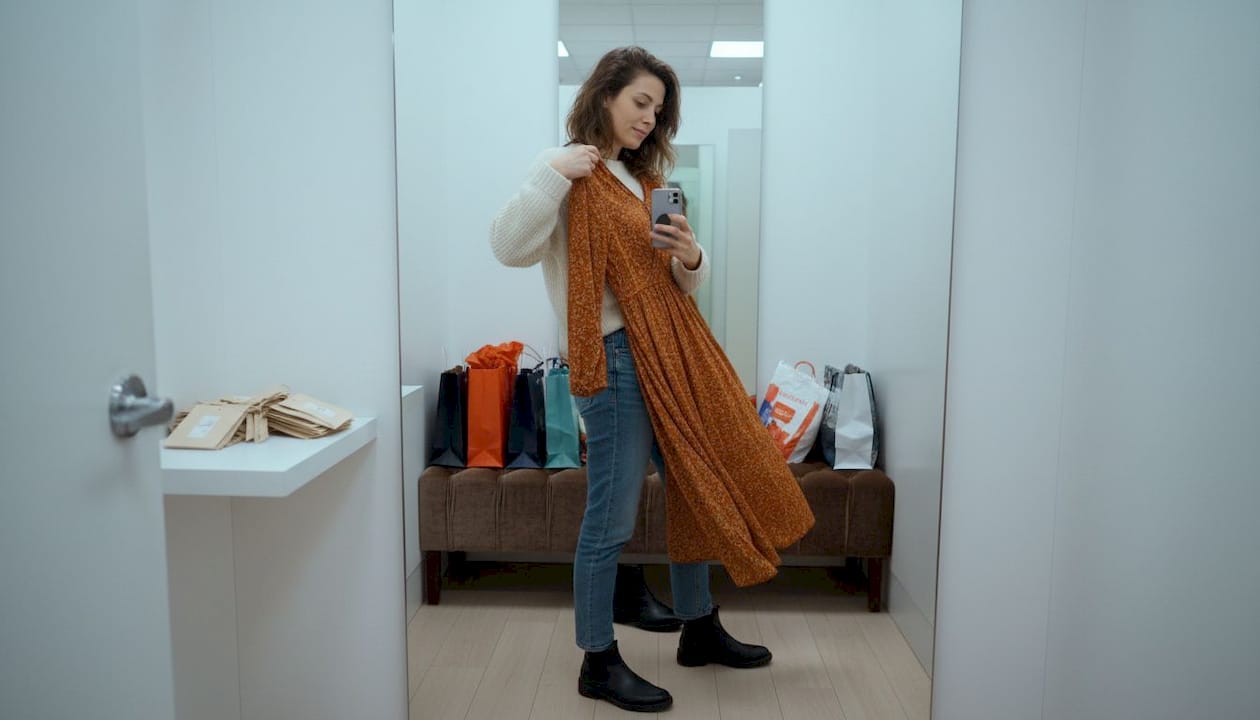
Fit needs to be assessed at four key points: the bust, the waist, the hips, and the hem. Each area tells you something different about whether a dress is truly working for your body.
Use this fitting room checklist before you commit to any purchase:
- Check the bust. There should be no pulling, gaping, or flattening. The fabric should lie smooth.
- Assess the waist. If the dress has a defined waist, it should sit at your natural waistline, not your hips.
- Evaluate the hips. You should be able to move freely. Sit down and stand back up. Walk a few steps.
- Look at the hem. The length should feel intentional, not accidental. Mid-knee, midi, and maxi all create different visual lines.
- Check the back. Zip it fully and look over your shoulder. A well-fitted dress should look just as good from behind.
Here is a comparison of popular silhouettes and their best matches:
| Silhouette | Best for | Effect |
|---|---|---|
| A-line | Most shapes | Balances proportions |
| Wrap | Hourglass, pear | Defines the waist |
| Bodycon | Hourglass | Highlights curves |
| Shift | Apple, rectangle | Skims the midsection |
| Fit and flare | Pear, inverted triangle | Creates balance |
Exploring choosing trendy dresses for each season also helps you stay current while staying true to your fit priorities. And if you want inspiration, browsing trendy dress styles can spark ideas you might not have considered.
Pro Tip: Take photos in the fitting room before you decide. What you see in a mirror and what a photo reveals are often surprisingly different. A photo gives you an objective, full picture.
Pick colours and patterns that enhance your look
Fit matters, but nothing makes a dress pop like the perfect colour and the right type of print. Colour and pattern choices can dramatically change how a dress flatters your natural features, which is why understanding your skin undertone is such a game changer.
Undertones fall into three categories: warm (yellow, peachy, golden), cool (pink, red, bluish), and neutral (a mix of both). Warm undertones tend to glow in earthy tones like terracotta, olive, and warm coral. Cool undertones shine in jewel tones like sapphire, emerald, and berry. Neutral undertones have the most flexibility and can pull off nearly any palette.
Patterns add another layer of strategy. Scale, direction, and placement all affect how a print reads on your body. Large prints draw attention, so placing them where you want the eye to linger is key. Vertical stripes elongate. Horizontal stripes widen. Diagonal prints create movement and energy.
Here are the key dos and don’ts for picking dress colours and patterns:
- Do test colours near your face in natural light before buying
- Do use a bold print on the area you want to highlight
- Do consider the occasion. A floral midi reads differently at a garden party than at a boardroom lunch
- Don’t assume dark colours always slim. A well-fitted bright dress is far more flattering than a baggy black one
- Don’t avoid patterns just because you have curves. The right scale and placement can be incredibly flattering
- Don’t ignore the background colour of a print. It often has more visual impact than the print itself
Understanding colour theory in fashion gives you a real edge when shopping. Pair your colour knowledge with a solid guide to accessorizing dresses and your entire look comes together with intention rather than guesswork.
Incorporate trends and personal touches
With fit, colour, and pattern in place, it is time to elevate your dress with on-trend details and your own flair. Trendy details can work for all shapes when you mix them with your own style sensibility. The key is to treat trends as tools, not rules.
In 2026, some of the standout elements include sheer overlays, statement sleeves, and bold cutouts placed strategically. You do not need to wear all of them at once. Picking one trend per outfit keeps the look polished rather than overwhelming.
Balancing trends with classics is the secret most stylish women already know. A timeless silhouette in a trending colour, or a classic cut with a trendy detail at the neckline, gives you the best of both worlds. It keeps your wardrobe feeling current without making it feel disposable.
“Style is a way to say who you are without having to speak.” The most flattering dress you will ever wear is the one that feels unmistakably like you.
Accessories are where personal touches truly shine. The right additions can transform a simple dress into a complete look:
- Waist belts define your silhouette and add structure to looser styles
- Statement earrings draw the eye upward and frame your face beautifully
- Layered necklaces work especially well with simple necklines
- Structured blazers or jackets add polish and can visually elongate the body
- Ankle boots or heeled sandals change the entire energy of a dress depending on the occasion
Browsing fashion trends 2026 gives you a clear picture of what is resonating right now, while understanding the role of trends in fashion helps you decide which ones are worth adopting. For a deeper look at finishing your outfit, the guide to accessorizing dresses is genuinely worth your time.
What most advice misses about choosing flattering dresses
Most dress guides hand you a list of rules and send you on your way. Wear this shape if you are pear. Avoid that print if you are apple. Follow the formula and you will look great. Except that is not really how style works, and deep down, you probably already know it.
The most flattering dress is not always the one that follows every guideline. It is the one you feel genuinely excited to wear. Confidence changes how clothing looks on a body in ways that no silhouette chart can replicate. When you walk into a room feeling good, people notice. That energy is not something a wrap dress gives you on its own.
The real growth in personal style comes from experimentation. Try the dress that surprises you. Wear the colour you have always avoided. You might discover that the rules were written for someone else entirely. Checking out top trendy dresses for 2026 is a great way to push your boundaries without committing to anything permanent.
Trust your instincts. They are often more accurate than any style quiz.
Elevate your look with curated fashion essentials
Ready to put these strategies into action? Finding the right dress is only the beginning. The pieces you layer over it or pair with it can make just as big an impact on your overall look.

At 16th Avenue, you will find a curated selection designed to complement every dress in your wardrobe. Layer a sophisticated pair of woolen coats over your favourite midi for an effortlessly polished autumn look. Complete a casual daytime outfit with a pair of comfort sport sneakers that keep you comfortable without sacrificing style. With free shipping to most destinations and a thoughtfully curated collection, building a wardrobe that truly flatters you has never been more accessible.
Frequently asked questions
How can I tell what dress style flatters my shape?
Identifying your body shape is the first step, then match it to silhouettes that highlight your best features and compare options in a mirror or with photos.
Which colours generally look best on most women?
Universal tones like rich navy, true red, and teal flatter most skin tones, but colour and pattern choices based on your personal undertone will always deliver the most flattering result.
Are there any dress trends that suit all body types?
A-line dresses and wrap styles are consistently flattering across a range of shapes, and trendy details can work for all body types when balanced with your personal style.
What accessories make a dress more flattering?
Waist belts, v-neck jewellery, and structured jackets highlight curves and visually elongate the body, as outlined in this complete guide to accessorizing dresses.