


How to try new fashion trends without losing your style
TL;DR:
- Trying new fashion trends involves selectively adopting one or two elements rather than copying entire runway looks.
- Using frameworks like the 70/30 rule and trend deconstruction helps ensure that new pieces fit your body, personality, and lifestyle.
- These methods prevent impulse purchases, wardrobe misfits, and promote confidence in integrating trends naturally.
Trying new fashion trends means adopting one or two trend elements that complement your existing wardrobe, rather than copying an entire runway look. The most effective approach to trend experimentation combines the 60-30-10 colour rule, the 70/30 balance rule, and a technique called Trend Deconstruction to filter what actually works for your body, lifestyle, and personality. These frameworks are not just styling theory. They are the difference between a purchase you wear confidently and one that sits untouched in your wardrobe. Knowing how to try new fashion trends strategically is the skill that separates a well-dressed person from someone who simply follows trends.
How to try new fashion trends: what you need before you start
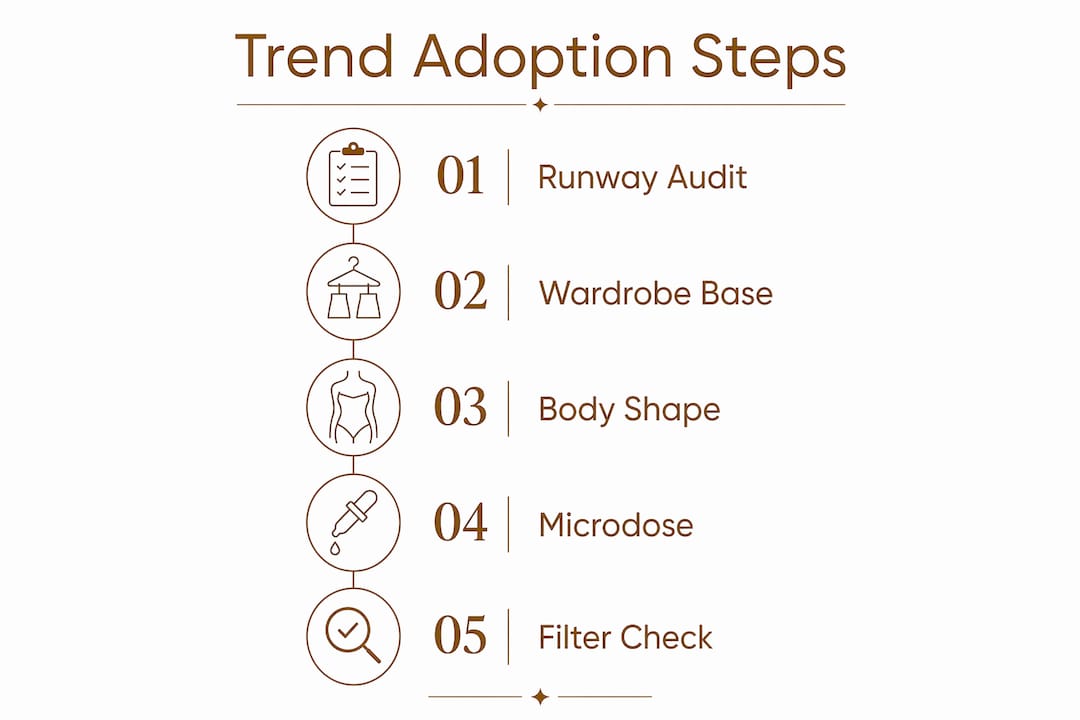
The runway translation audit is the first practical step before buying anything new. It works like this: save three images of a trend you find inspiring, identify the one element that excites you most, and then create two outfits from your existing wardrobe using that element before spending a single dollar. This runway translation audit prevents impulse purchases and forces you to test whether a trend actually fits your real life.
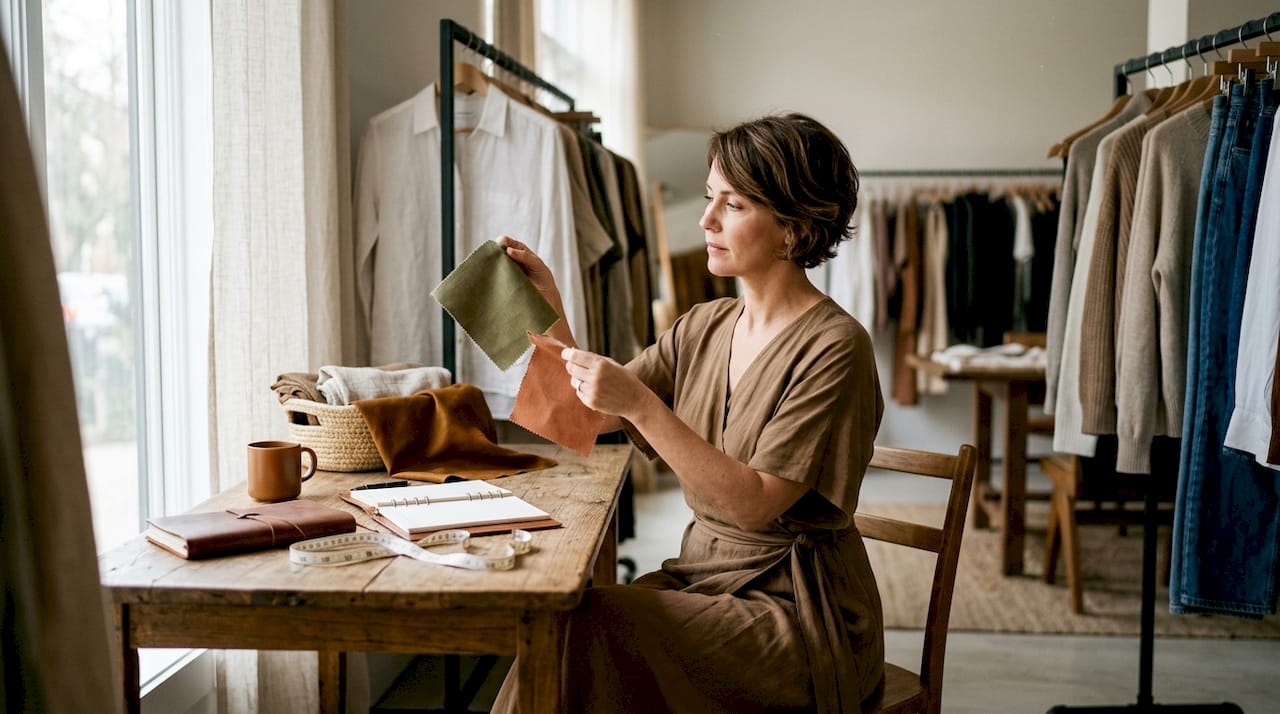
A well-curated base wardrobe makes trend experimentation far less risky. Your staple pieces, such as well-fitted trousers, a quality white shirt, a tailored blazer, and versatile denim, act as anchors. New trend pieces attach to these anchors rather than replacing them. Without a solid base, every new trend feels like a costume.
Colour palette and body shape awareness are equally important prerequisites. Knowing which colours sit well against your skin tone and which silhouettes flatter your proportions gives you a filter before you even enter a store or browse online. The 2026 women’s fashion trends overview at 16thavenue is a useful starting point for understanding which shapes and colours are gaining traction this season.
| Wardrobe essential | Why it matters for trend experimentation |
|---|---|
| Tailored trousers | Grounds bold trend tops without losing proportion |
| Neutral base coat | Pairs with any trending colour or print layer |
| Quality white shirt | Works as a 60% base colour in the 60-30-10 rule |
| Versatile denim | Absorbs trend pieces without clashing |
| Simple block-heel shoe | Completes outfits when trending footwear feels too bold |
What is trend deconstruction and how does it work?
Trend Deconstruction is a styling technique that breaks any trend into four components: colour, texture, print, and silhouette. The method recommends adopting only one or two of these components per outfit while keeping the rest of your look in your established personal style. This approach lets you participate in a trend without being consumed by it.
Silhouette is the most challenging component for most people. A wide-leg trouser or an oversized coat can distort proportions if your body shape does not suit that particular cut. The practical solution is to adopt the trend’s colour or texture instead. For example, if cow print is trending (and cow print interest has risen 87% in recent months), you can wear a cow-print scarf or belt rather than a full cow-print skirt.
Here are the four trend components and practical ways to adapt each one:
- Colour: Introduce a trending colour through a single item, such as a bag, shoe, or top, rather than a full monochromatic outfit.
- Texture: Add a trending texture, such as lace or bouclé, through a small piece like a collar, cuff, or overlay. Lace skirts are projected to grow 13% in popularity, making a lace-trimmed hem a low-commitment entry point.
- Print: Try a trending print in a small surface area first. A printed pocket square, sock, or hair accessory tests the print without overwhelming your look.
- Silhouette: Only adopt a new silhouette if it flatters your proportions. If it does not, adapt via colour and texture instead.
Pro Tip: Microdose trends through accessories. A trendy watch band, a printed scarf, or a statement earring lets you test a new direction without committing to a full outfit change. WizeBand’s guide on trendy Apple Watch bands shows how even tech accessories can carry a fashion moment.
How to style new trend pieces using three practical filters
Before buying any trend piece, run it through three filters. First: does it flatter your body? Second: will you wear it in at least three real situations in your actual life? Third: does it reflect your personality, or does it feel like a costume? If a piece fails any one of these filters, skip the purchase and move on.
The second filter is the most commonly ignored. People buy trend pieces for the version of their life they imagine, not the one they actually live. A dramatic feathered coat looks extraordinary in a boutique. If your real life involves school pick-up, office meetings, and weekend grocery runs, that coat will not earn its wardrobe space.
The rule of three is the practical test for the second filter. A new piece must pair convincingly with at least three items already in your wardrobe. If you cannot identify those three items immediately, the piece is not ready to join your collection.
Here is a step-by-step process for testing any new trend before committing:
- Identify the trend component that appeals to you. Is it the colour, the texture, the print, or the silhouette? Name it specifically.
- Pull three existing wardrobe items that could pair with a new trend piece in that category.
- Apply the body filter. Try the item on and move naturally. Sit down, reach up, and walk. If you feel restricted or self-conscious, the fit is wrong.
- Apply the agenda filter. Name three specific occasions in the next month where you would genuinely wear this piece.
- Apply the personality filter. Ask yourself whether this piece feels like you on a good day, or like someone else entirely.
- Check the 70/30 balance. The 70/30 outfit balance means 70% of your look stays in your signature style and 30% carries the trend. If the trend piece dominates the outfit, scale it back.
This process takes about five minutes and prevents the majority of regretted purchases. The affordable fall fashion trends guide at 16thavenue offers budget-friendly entry points that make this kind of low-risk experimentation even easier.
Common mistakes when experimenting with fashion trends
Buying an entire trend look at once is the most common mistake. Buying entire trendy looks causes style mistakes because it bypasses your personal colour proportions, body shape, and lifestyle filters all at once. The result is an outfit that feels like a costume rather than an expression of who you are.
Ignoring personal proportions is the second major pitfall. A silhouette that distorts your natural proportions will make you feel uncomfortable, and that discomfort shows. The gesture test is a reliable check: put on the outfit and move through your normal gestures, reaching for something on a high shelf, sitting in a chair, and walking at your natural pace. If you adjust the clothing more than twice in two minutes, the fit is not working.
Over-accessorising is a subtler mistake. When you are testing a new trend, the temptation is to lean into it fully. Adding a trending bag, trending shoes, and a trending hat to a single outfit creates visual noise rather than a clear style statement. One trend component per outfit is the rule that keeps looks cohesive.
Pro Tip: Adopt trends gradually over two or three seasons rather than all at once. A periodic wardrobe audit every three months, where you assess which trend pieces you actually reached for, tells you more about your real style preferences than any magazine or social media feed.
Key takeaways
Trying new fashion trends successfully requires selective adoption, not full imitation, using proven frameworks like Trend Deconstruction, the 70/30 balance rule, and the rule of three to filter what genuinely works for your body, lifestyle, and personality.
| Point | Details |
|---|---|
| Start with a runway translation audit | Save three trend images, pick one element, and build two outfits from your existing wardrobe before buying. |
| Use Trend Deconstruction | Break any trend into colour, texture, print, and silhouette, then adopt only one or two components. |
| Apply three filters before buying | Check that a piece flatters your body, fits your real agenda, and reflects your personality. |
| Keep the 70/30 balance | Maintain 70% signature style and 30% trend in every outfit to avoid feeling out of character. |
| Test with the rule of three | A new piece must pair with at least three existing wardrobe items before it earns its place. |
Why I stopped chasing trends and started curating them
For a long time, I approached new trends the way most people do: I saw something exciting on a runway recap or a style blog, bought the full look, and then wondered why it felt wrong the moment I wore it outside. The problem was not the trend. The problem was that I was borrowing someone else’s style identity wholesale instead of filtering the trend through my own.
The shift happened when I started treating my wardrobe like a long-term investment rather than a rotating costume collection. I realised that the pieces I reached for most were never the boldest trend items. They were the ones that happened to carry one interesting element, a colour I loved, a texture that felt luxurious, or a print that made me smile, while the rest of the outfit stayed grounded in what I already knew worked for me.
The 70/30 rule formalised something I had been doing instinctively. Keeping most of an outfit in familiar territory gives you the confidence to let the trend element actually land. When the whole outfit is unfamiliar, you spend the day tugging at it and second-guessing yourself. When only 30% is new, you feel like yourself with an interesting addition.
My honest advice: give yourself permission to get it wrong occasionally. A mistake outfit teaches you more about your actual preferences than ten successful ones. Style confidence does not come from always getting it right. It comes from knowing yourself well enough to course-correct quickly.
— Glenville
Fresh trends, ready to wear at 16thavenue
16thavenue curates pieces that make the 70/30 balance easy to achieve without spending hours searching.
The women’s woollen coat is a strong example of a single trend piece that anchors an entire autumn or winter look without requiring you to change anything else. Pair it with your existing wardrobe staples and the 70/30 balance takes care of itself. For footwear, the comfort sport sneakers and fashion snow boots pass the gesture test with ease, combining seasonal trend appeal with the kind of all-day wearability that satisfies the agenda filter. Free shipping to most destinations makes low-risk trend testing even more practical.
FAQ
What does “how to try new fashion trends” actually mean?
It means selectively adopting one or two elements of a trend, such as a colour, texture, or print, rather than copying an entire look. The goal is to integrate new ideas into your existing personal style rather than replace it.
How do I know if a trend suits my body shape?
Apply the gesture test: put the item on and move naturally through sitting, reaching, and walking. If you adjust the clothing more than twice in two minutes, the silhouette is not working for your proportions.
What is the 70/30 rule in fashion?
The 70/30 balance rule means keeping 70% of your outfit in your signature style and reserving 30% for trend pieces. This prevents you from feeling out of character while still participating in current fashion.
How many trend pieces should I wear at once?
One trend component per outfit is the most effective approach. Wearing multiple trend elements simultaneously creates visual noise and dilutes the impact of each individual piece.
What is the rule of three for buying new clothes?
The rule of three requires that any new purchase pairs convincingly with at least three items already in your wardrobe. If you cannot name those three items immediately, the piece is not yet a practical addition to your collection.