

Keep your leather handbags looking beautiful: care tips
TL;DR:
- Proper leather care involves gentle cleaning, conditioning, and protection to preserve your handbag’s appearance and value. Using dedicated, pH-balanced products and avoiding household remedies prevent damage, especially for untreated or luxury leathers. Consistent storage and avoiding over-conditioning are essential for maintaining your leather bag’s shape, color, and longevity.
There is nothing quite like the feeling of carrying a gorgeous leather handbag, and nothing quite as disheartening as watching it fade, crack, or stain over time. A quality leather bag is one of the smartest fashion investments you can make, but without the right care, even the finest piece can lose its beauty far sooner than it should. The good news is that maintaining leather is not complicated when you know the right steps. This guide walks you through exactly what to do, from gathering your supplies to storing your bag properly, so you can protect that investment and keep every piece looking stunning for years.
Table of Contents
- What you need to care for your leather handbag
- Step-by-step: clean, condition, and protect your handbag
- Gentle care for specialty leathers and luxury trims
- Storing and preserving your leather handbag long-term
- What most handbag care guides overlook
- Discover timeless style and quality accessories
- Frequently asked questions
Key Takeaways
| Point | Details |
|---|---|
| Test before cleaning | Always test cleaners and conditioners on a hidden section of your handbag first to avoid damage. |
| Use the three-step method | Clean, condition, and protect is the expert-approved cycle for maintaining leather handbag beauty. |
| Handle specialty leathers gently | Vegetable-tanned and luxury leathers require minimal moisture and delicate care to prevent stains or cracking. |
| Avoid over-conditioning | Too much product or frequent treatments can harm leather—less is usually more. |
| Store handbags properly | Good storage habits, including dust bags and proper supports, will help your handbags last for years. |
What you need to care for your leather handbag
Once you see the value in caring for your handbags, it’s time to gather the right supplies because using the right tools and products is half the battle. Many people reach for whatever cleaning spray or cloth is nearby, and that is where things go wrong. Different leathers respond very differently to the same products, so understanding what you are working with before you start is essential.
Here is a checklist of the core supplies you will want to have on hand:
- pH-balanced leather cleaner formulated specifically for bags and accessories
- Leather conditioner in cream or lotion form, not a spray
- Two or three soft microfibre cloths, lint-free and clean
- A soft-bristled brush (a clean, unused toothbrush works well for seams and corners)
- A dust bag or soft pillowcase for storage
- Purse inserts or bubble wrap to maintain shape during storage
- Distilled water if you need to dampen a cloth slightly
Understanding the types of women’s handbags you own is a smart first step, because treated leathers (coated with a protective finish) behave very differently from untreated, raw, or vegetable-tanned leathers. Treated leather is more forgiving and easier to clean, while untreated leather absorbs moisture and stains almost instantly.
| Feature | Store-bought leather care kit | Household alternatives |
|---|---|---|
| pH balance | Usually formulated correctly | Often too acidic or alkaline |
| Risk of damage | Low when used as directed | Higher, especially with DIY cleaners |
| Coverage | Designed for multiple leather types | Inconsistent and unpredictable |
| Cost | Moderate upfront investment | Cheap but potentially costly in damage |
| Convenience | All-in-one solution | Requires more research and testing |
The comparison above makes it clear why investing in a proper kit pays off. Household products like olive oil, coconut oil, or vinegar are often suggested online but they can leave residues, alter leather colour, or cause long-term deterioration. A pH-balanced product, used correctly, keeps leather supple without introducing those risks.
Pro Tip: Always test on an inconspicuous area first and avoid conditioning while leather is still damp. Apply only the product appropriate to your leather’s specific type and finish.
Step-by-step: clean, condition, and protect your handbag
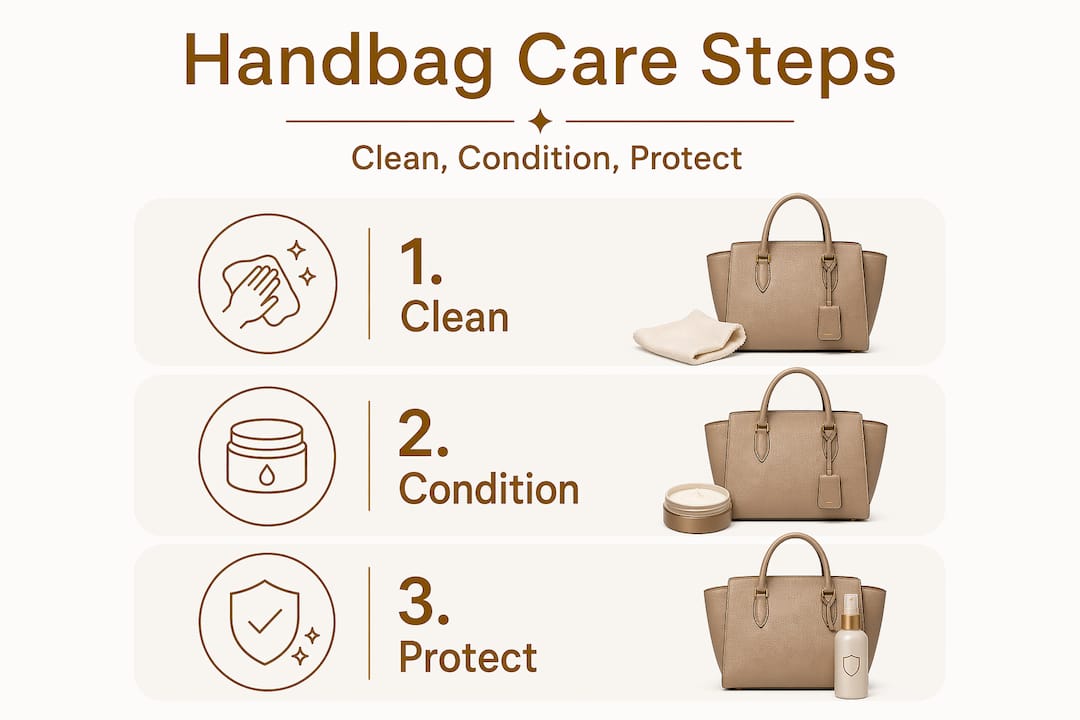
With the right materials in hand, you are ready for the trusted three-step method that experts recommend for leather restoration and care. This approach is not just common advice — it is a widely recognised expert framework used for refreshing and restoring leather through a clean, condition, and protect cycle. Each step builds on the last, and skipping any one of them reduces the effectiveness of the others.
Step 1: Clean
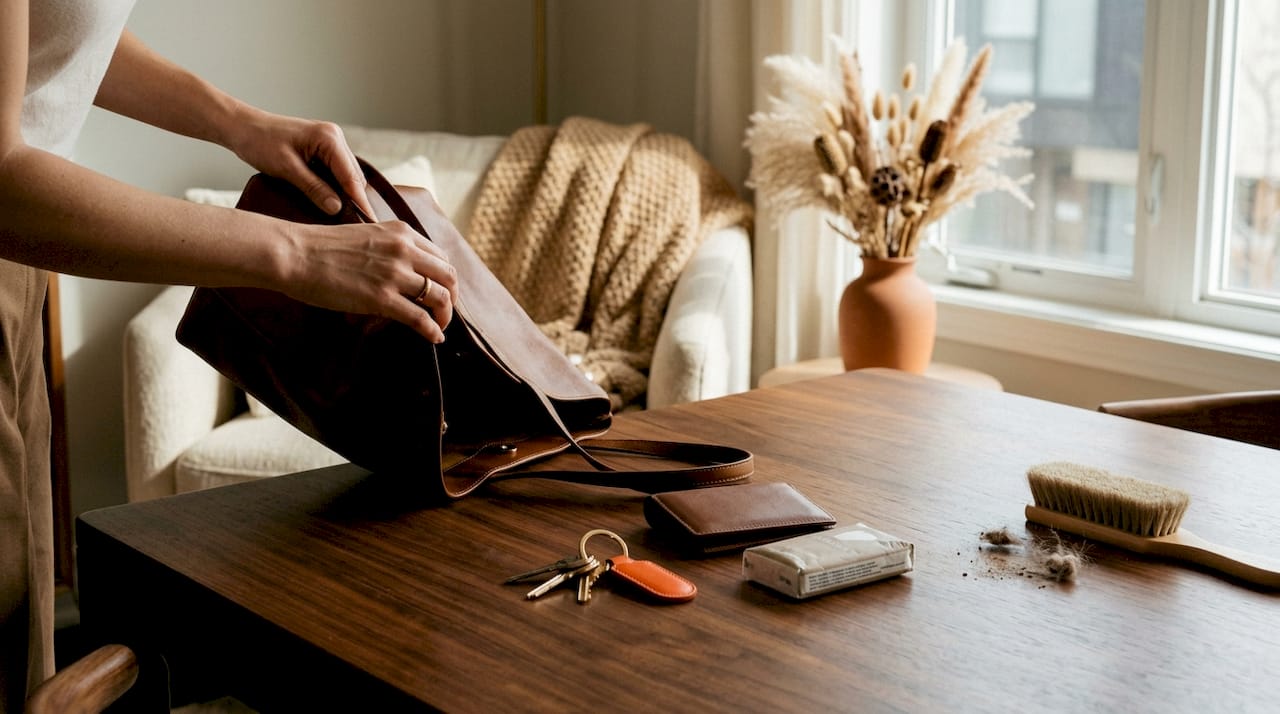
Start by emptying your bag completely and using your soft brush to remove loose dust and debris from the surface, seams, and hardware. Next, apply a small amount of leather cleaner to a clean microfibre cloth (never directly onto the bag). Use gentle, circular motions and work in small sections. Avoid soaking the leather or scrubbing aggressively. For stubborn marks, repeat the gentle pass two or three times rather than increasing pressure.
Step 2: Condition
Wait until the leather is completely dry before conditioning. This is one of the most common mistakes people make, applying conditioner to damp leather which can cause it to absorb unevenly or become discoloured. Use a pea-sized amount of conditioner per section and buff it in with a fresh cloth. Conditioner restores the natural oils that leather loses over time, keeping it flexible and preventing cracks.
Step 3: Protect
Applying a leather protector spray creates a barrier against moisture, light stains, and daily wear. Hold the spray about 20 to 30 centimetres from the surface and apply in a thin, even coat. Allow it to dry fully in a well-ventilated area away from direct sunlight or heat.
| Step | Product needed | Drying time before next step | Frequency |
|---|---|---|---|
| Clean | pH-balanced leather cleaner | 15 to 30 minutes | Every 2 to 3 months |
| Condition | Leather conditioner cream | 20 to 40 minutes | Every 3 to 6 months |
| Protect | Leather protector spray | 1 hour minimum | Every 3 to 6 months |
“The clean, condition, and protect cycle is the gold standard for leather care because it addresses both the surface and the structure of the material, rather than just masking problems.”
The handbag care basics behind this three-step method come down to treating leather like the natural material it is. Leather is not plastic. It breathes, absorbs, and responds to its environment, which means it needs consistent attention rather than one big fix every few years.
Pro Tip: If your bag has metal hardware, protect it with a soft cloth during the cleaning and conditioning steps to avoid accidental product contact, which can dull or tarnish finishes.
Gentle care for specialty leathers and luxury trims
While routine care works for most handbags, certain luxury leathers and trims demand a far more cautious approach. The difference between caring for a coated everyday bag and handling a premium, untreated leather piece can be the difference between maintaining value and causing irreversible damage.
One of the most famous examples is Louis Vuitton’s vachetta leather, the natural, untreated cowhide used on straps and trim. It is visually beautiful precisely because it is raw, but that same quality makes it extremely vulnerable. Untreated leathers like vachetta are especially sensitive to moisture. A single water drop can leave a permanent mark, and using the wrong product can cause staining or colour change that cannot be undone.
For specialty and luxury leathers, follow this gentler process:
- Dust first using a clean, dry microfibre cloth or soft brush before introducing any moisture at all
- Use minimal moisture by dampening a cloth lightly with distilled water rather than applying any cleaner directly
- Blot, never rub to lift marks rather than spreading them deeper into the grain
- Air-dry naturally at room temperature, never near a heater, radiator, or in direct sunlight
- Condition sparingly only after the leather is completely dry, using a conditioner designed for untreated leather
What to avoid is equally important. Never use baby wipes, even though they are marketed as gentle. Many contain alcohol, fragrance, or preservatives that damage untreated leather over time. Avoid alcohol-based cleaning products, and keep away from oils like olive oil or coconut oil, which can darken leather permanently and attract mildew. These warnings apply to all leather, but for premium untreated pieces, the consequences are far more immediate.
You can find inspiring examples of vintage leather handbags that showcase exactly why proper care matters for preserving both beauty and the value of quality handbags over time.
Pro Tip: For luxury bags you are unsure about, consult a professional leather restorer before attempting any home cleaning. A 30-minute consultation can save you hundreds of dollars in potential repair costs.
Storing and preserving your leather handbag long-term
Once your handbag is clean and conditioned, proper storage and smart preventative routines will ensure years of lasting beauty. Many people underestimate how much damage happens not during use, but during storage. A leather bag folded into a shelf or crushed under other bags is a bag quietly losing its shape and suppleness.
Here are the key principles for long-term storage:
- Use a dust bag or a clean, breathable pillowcase (never plastic, which traps moisture)
- Stuff the bag with acid-free tissue paper, a purse pillow, or bubble wrap to hold its shape
- Store upright to prevent the handles and body from deforming under their own weight
- Choose a cool, dry location away from direct sunlight, radiators, and air conditioning vents
- Maintain airflow by not packing bags tightly against each other on a shelf
- Rotate your collection regularly so no single bag sits unused for too long
The environmental conditions you store your leather in matter enormously. Ideal humidity sits between 45 and 55 percent. Too dry and leather dries out and cracks. Too humid and mould or mildew can form on the surface or inside the bag.
“Natural preservation guidance for leather objects in museum contexts emphasises preventive care and warns that routine dressings pose long-term risks; fatty substances cannot be fully removed once applied and may worsen over time.”
That quote from the U.S. National Park Service is a striking reminder that museum conservators, who are the world’s most experienced leather custodians, prioritise prevention and minimal intervention over heavy treatment. The same wisdom applies to your wardrobe. Climate, support, and careful handling are more powerful than any product you can apply.
Avoid the temptation to apply leather dressings as a regular routine. These thick, fatty products might feel nourishing in the short term, but they build up in the leather’s fibres over time, trapping dirt and eventually altering texture and colour in ways that cannot be reversed.
What most handbag care guides overlook
Most guides give you the steps and leave it at that. What they rarely address is the risk of doing too much. There is a pervasive belief in fashion circles that leather needs constant treatment to stay beautiful, and that more product equals better results. That belief is worth questioning seriously.
Over-conditioning is a real problem. Leather that is conditioned too frequently becomes soft and structureless, losing the firmness that gives a quality bag its shape and presence. Conditioning every few months is plenty for most bags. If your bag feels supple and looks good, it does not need another coat of conditioner. The urge to treat it “just in case” is understandable but unnecessary.
The NPS guidance on leather dressings is eye-opening for anyone who grew up thinking saddle soap and mink oil were the holy grail of leather care. Even if these products temporarily improve flexibility, they create residues that are impossible to fully remove and may worsen the leather’s condition over years. Preferred strategies include targeted cleaning with quality products and thoughtful preventive storage rather than heavy, routine treatment.
The vegan leather alternatives conversation also deserves a mention here because understanding the diversity of materials on the market helps you become a more informed buyer and carer. Whether you choose traditional leather or a high-quality alternative, the principle remains the same: less intervention, better prevention, and appropriate products used sparingly.
Our take is this: treat leather care the way you would treat skincare for sensitive skin. You would not layer product after product daily and expect great results. You would cleanse gently, moisturise when needed, protect consistently, and let your skin breathe. Your handbags deserve exactly the same thoughtful restraint.
Discover timeless style and quality accessories
Caring for a beautiful leather handbag is deeply satisfying, and it often sparks the desire to add more carefully chosen pieces to your collection.

At 16th Avenue, you will find a thoughtfully curated selection of women’s handbags, accessories, clothing, and beauty products designed for women who appreciate both style and quality. Whether you are looking for a genuine leather piece to invest in or a complete wardrobe refresh for the season, the collection is built for fashion-conscious women who want pieces worth caring for. Explore the full range with free shipping available to most destinations and discover something beautiful that deserves to last.
Frequently asked questions
How often should I condition my leather handbag?
Most experts recommend conditioning leather handbags every 3 to 6 months, depending on dryness and frequency of use. Following the clean, condition, protect cycle ensures each step supports the others for optimal results.
Is it safe to use baby wipes or household cleaners on leather?
No. Baby wipes and harsh household cleaners can permanently damage leather and leave difficult-to-remove residues. Products like baby wipes and oils such as olive or coconut oil are especially harmful to untreated leathers and should always be avoided.
What’s the best way to store my leather handbag?
Store leather handbags in a cool, dry space away from sunlight, ideally inside a breathable dust bag with supportive inserts to maintain shape. Museum-grade preventive care confirms that environment and support are more important than any treatment product.
Can I speed up the drying process of my leather bag with a hairdryer?
No. Only natural air-drying at room temperature is safe for leather. Avoid heat application entirely, as concentrated heat can cause cracking and irreversible structural damage.
Are leather dressings safe for routine home use?
Routine use of leather dressings is not recommended. Fatty substances build up inside the leather fibres over time, cannot be fully removed, and may reduce your bag’s longevity rather than extend it.