


The role of aesthetic trends: a smart shopper's guide
Aesthetic trends determine what you notice, trust, and ultimately buy online. Brands that align visuals with emotional identity report stronger retention and deeper purchase intent than those chasing feature lists alone. That is not a soft claim. It is the mechanism behind every product page you linger on.
- Market signal: Search interest in vibe-first marketing surged heading into 2026, with brands adopting aesthetic-performance tools to drive emotional connection and repeat purchases.
- Shopper signal: Consistent visual identity across a product page teaches you to recognise quality before you read a single word of copy.
The rest of this guide breaks down which visual signals matter in 2026, how they change your decisions, and a practical checklist you can use the next time you browse.
Table of Contents
- What do ‘aesthetic trends’ actually mean for shoppers?
- Key aesthetic trends shaping women’s fashion and beauty in 2026
- How aesthetic trends actually change what you buy online
- Practical checklist: how to shop smarter using aesthetic signals
- How quickly do trends move, and what does that mean for price?
- How brands use aesthetic strategy, and what that means for you
- A two-week plan to translate trends into your wardrobe
- Key takeaways
- A note on shopping with intention
- Shop the trends at 16thavenue
- Useful sources
What do ‘aesthetic trends’ actually mean for shoppers?
An aesthetic trend is a system of recurring visual and sensory cues — colour palette, photography style, motion, AR interaction, even sound — that circulates across brands at the same moment and shapes your first impression within seconds. It is collective and time-bound, which is what separates it from personal style.
Personal style is persistent. It is the coat silhouette you keep returning to, the lip colour that feels like yours. Aesthetic trends are the surrounding atmosphere brands create to signal that they belong to the same cultural moment you are living in.
Two quick examples worth knowing:
- Minimalist neutral palette: Earthy tones, generous white space, and restrained typography. You see it on product pages for linen sets, skincare, and capsule outerwear. It signals calm, quality, and considered curation.
- AR try-on and sonic branding: Interactive product previews and branded audio cues. These are multisensory design tools that move a product page from static catalogue to sensory experience.
“Aesthetic IS strategy. Art direction is positioning. Visual consistency is how brands teach audiences to recognise them without effort.” — LBBOnline
The role of trends in fashion goes well beyond what is on the rack. It shapes the entire frame through which you evaluate whether something is worth your money.
Key aesthetic trends shaping women’s fashion and beauty in 2026
Six signals are worth recognising as you shop this year:
- Vibe-first identity: Brands build around a feeling before a product. Mood boards, atmospheric photography, and curated colour stories replace feature-led layouts.
- AR and interactive visuals: Try-on tools for lipstick shades, virtual outfit overlays, and 360° product views. A study of 76 participants in advertising and design found AR and interactive elements among the most effective for capturing consumer attention.
- Colourful and multisensory creatives: Saturated accent colours, textural close-ups, and branded sound. The research identified sound and music as having a significant effect on engagement.
- Tactile and textural imagery: Macro shots of fabric weave, knit structure, or skincare texture that let you feel the product through the screen.
- Curated authenticity: Less studio polish, more natural light and real-setting photography. Shoppers are increasingly alert to over-produced imagery.
- Sustainability and eco visual cues: Kraft packaging, earthy pigments, and supply-chain transparency signals embedded in product photography.
Canadian flavour: Canadian shoppers tend to respond to a quieter version of these trends. Earthy tones, practical outerwear silhouettes, and seasonal storytelling (think late-autumn texture and winter layering) carry more weight here than maximalist colour drops.
| Trend signal | What it signals to you | Research backing |
|---|---|---|
| AR try-on tools | Higher confidence, fewer returns | Study of 76 participants (Arts Journal) |
| Vibe-first / emotional branding | Stronger retention and emotional connection | Stormy AI, 2026 playbook |
| Consistent visual identity | Trust, quality, pricing credibility | Brand Vision analysis |
| Sound / sonic branding | Largest engagement effect of any sensory cue | Arts Journal study |
Pro Tip: When a brand’s product page uses the same colour temperature, typography, and photography treatment from the hero image down to the size guide, that consistency is a deliberate quality signal. Inconsistency in the same space is a red flag.
How aesthetic trends actually change what you buy online
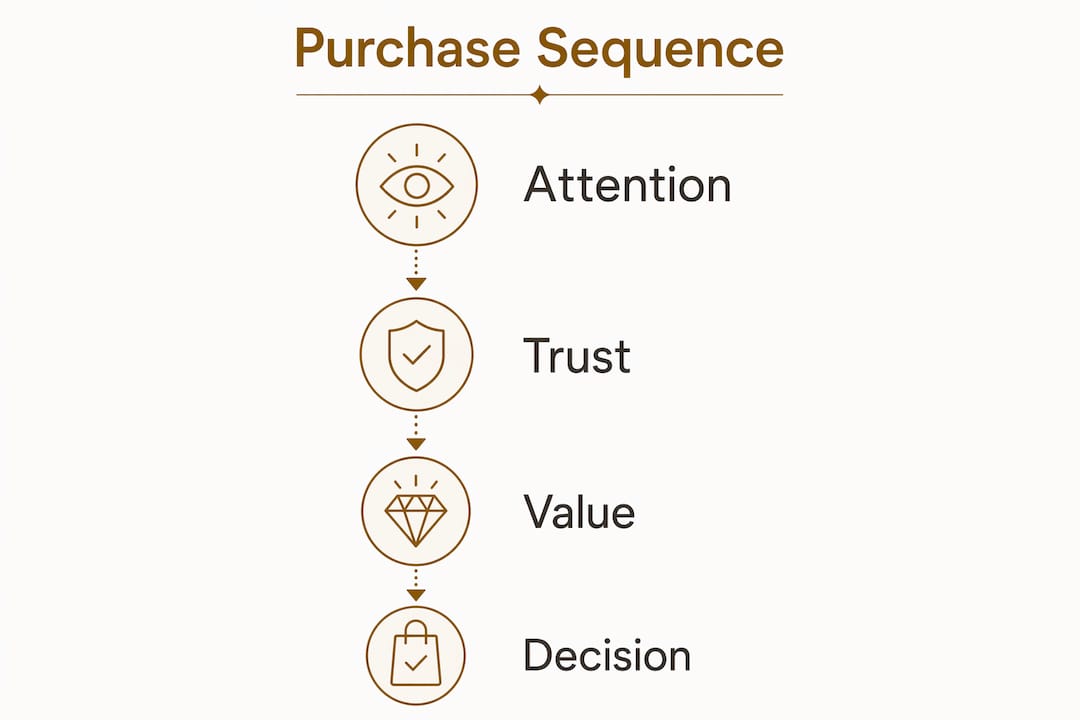
Aesthetics affect attention first, then trust, then perceived value, and finally the purchase decision itself. The sequence matters because you rarely notice it happening.
A product image that shows fabric texture in natural light does two things simultaneously: it reduces your uncertainty about how the item feels, and it signals that the brand cared enough to photograph it properly. Both effects reduce returns. Brands with consistent visual identity use aesthetics as positioning, not decoration. When that positioning is coherent, you evaluate “fit” rather than features, which accelerates your decision and supports a price premium when the substance backs it up.

Engaging at least three senses — visual, audio, and haptic or tactile cues — bypasses logical resistance and boosts emotional recall. That is why a well-executed AR lipstick try-on converts better than a flat swatch: it gives you a sensory experience, not just information.
Social feeds reward this too. A recognisable, coherent feed increases first impressions and discovery. Weak or inconsistent aesthetics erode trust and perceived value before you have read a single product description.
Practical checklist: how to shop smarter using aesthetic signals
Use aesthetics as evidence, not proof. Confirm what they suggest with product details and return policies.
- Check visual consistency. Do the hero image, product shots, and lifestyle photos share the same colour temperature and lighting? Inconsistency across a single page is a warning sign.
- Assess photography treatment. Are textures visible? Natural-light or studio-controlled shots that show fabric structure or skincare finish tell you more than a flat lay on a white background.
- Look for AR or interactive tools. A try-on feature for a lip colour or a 360° coat view signals investment in your confidence, not just your click.
- Evaluate creator authenticity. Is the influencer content on the brand’s page stylistically coherent with the product page, or does it feel pasted in? Coherence signals a real brand relationship.
- Read packaging imagery. Eco-material cues, ingredient callouts, and care labels visible in product photos indicate transparency.
- Confirm measurements and return policy. No aesthetic signal replaces a size chart and a clear returns process.
Red flags to watch for:
- Over-polished stock photography with no brand-specific styling
- Mismatched aesthetics between the homepage, product page, and social feed
- Missing measurements or vague fabric descriptions
- No return or exchange policy visible before checkout
Pro Tip: 16thavenue’s curated seasonal collections are built around a consistent editorial palette. Browsing a full collection, rather than individual items, lets you see the aesthetic system at work and judge whether it fits your own style before you commit.
How quickly do trends move, and what does that mean for price?
Some trends are microtrends: they spike on social feeds, peak within weeks, and fade before the season ends. Others are seasonal shifts that last three to six months. Structural aesthetic movements — like the current turn toward earthy authenticity and tactile imagery — evolve over 18–24 months and tend to hold their value longer.
| Trend type | Typical lifespan | Price implication |
|---|---|---|
| Microtrend | Weeks to 2 months | Buy only if cost is low; resale value drops fast |
| Seasonal trend | 3–6 months | Worth investing in versatile pieces |
| Structural aesthetic shift | 18–24 months | Supports premium pricing when quality backs it |
Price guidance: an aesthetic premium is justified when it reflects craft, material quality, or a sustainability commitment. When a price spike tracks a viral moment with no substance behind it, you are paying for the trend’s peak, not the product’s worth. The role of microtrends in style is real, but so is the cost of buying at the top.
How brands use aesthetic strategy, and what that means for you
Brands use aesthetics as positioning, not decoration. Knowing the tactics helps you read the signals they send.
- Visual systems: A defined palette, type family, and photography style applied consistently across every touchpoint. Restraint and specificity signal a higher-end aesthetic.
- Creator casting: Influencers chosen for aesthetic alignment, not just follower count. When the creator’s feed matches the brand’s visual world, the partnership feels credible.
- Multisensory cues: Sonic branding, haptic packaging descriptions, and AR tools that engage more than one sense at a time.
- Curated scarcity: Limited drops and seasonal exclusives that use visual storytelling to signal rarity.
- UGC versus studio shots: User-generated content signals authenticity; studio shots signal craft. The best product pages use both deliberately.
One thing worth knowing: AI-generated storefronts are producing a recognisable visual homogenisation in 2026. Default templates and common frameworks generate a “beige internet” aesthetic that undermines distinctiveness and trust. When every page looks the same, the brand that invested in a specific visual identity stands out immediately.
A two-week plan to translate trends into your wardrobe
Small, constrained experiments let you test a trend without committing your whole wardrobe or budget.
Week 1: Discover and shortlist
- Browse one curated collection (not a search results page) and note which visual aesthetic pulls your attention.
- Identify one accessory or beauty item that fits the trend at a low price point.
- Use an AR try-on tool for a lip colour or nail shade before adding to cart.
- Check the brand’s style curation guide or blog for seasonal context.
Week 2: Trial and decide
- Order the shortlisted item. Wear or use it three times before deciding.
- If it fits your existing wardrobe without forcing it, it belongs to your personal style, not just the trend.
- If it feels like a costume, return it and note what the disconnect was — that is useful data for the next cycle.
Concrete examples: swap a neutral coat for a terracotta or deep-brown accent piece; try an AR lipstick shade two tones warmer than your usual; add one verified sustainable capsule item to test the eco-aesthetic signal in person.
Key takeaways
Aesthetic trends are decision signals: the brands that use them with consistency and intention earn your trust faster and justify their prices more credibly.
| Point | Details |
|---|---|
| Aesthetics drive purchase sequence | Visuals affect attention, then trust, then perceived value before you read a word of copy. |
| AR and sound lead effectiveness | AR and interactive visuals rank among the most effective attention tools; sound has the largest engagement effect. |
| Consistency signals quality | Coherent photography, palette, and typography across a product page are a deliberate quality cue. |
| Trend tempo affects value | Microtrends fade in weeks; structural aesthetic shifts hold value for 18–24 months and support premium pricing. |
| 16thavenue’s curated collections | 16thavenue’s seasonal collections apply a consistent editorial palette, making it easier to evaluate aesthetic fit before buying. |
A note on shopping with intention
The most common mistake shoppers make is treating a beautiful product page as proof of a beautiful product. It is evidence, not confirmation. Strong art direction reduces friction by teaching you to recognise a brand instantly, but it does not replace reading the size chart, checking the return window, or confirming the fabric content.
The brands worth trusting in 2026 are the ones that invest in both: a considered visual identity and the substance to back it up. When those two things align, the aesthetic is doing exactly what it should.
Shop the trends at 16thavenue
16thavenue curates women’s fashion and beauty around a warm, editorial palette — earthy browns, terracotta, and clean silhouettes that hold their relevance well past a single season. If the trends in this guide resonated, the Women’s Trendy Autumn and Winter Woolen Coat is a strong starting point: a structured outerwear piece that fits the tactile, neutral-toned aesthetic shaping Canadian fashion right now. Free shipping is available to most destinations, and the full seasonal collection gives you the visual context to see how individual pieces work together before you buy.
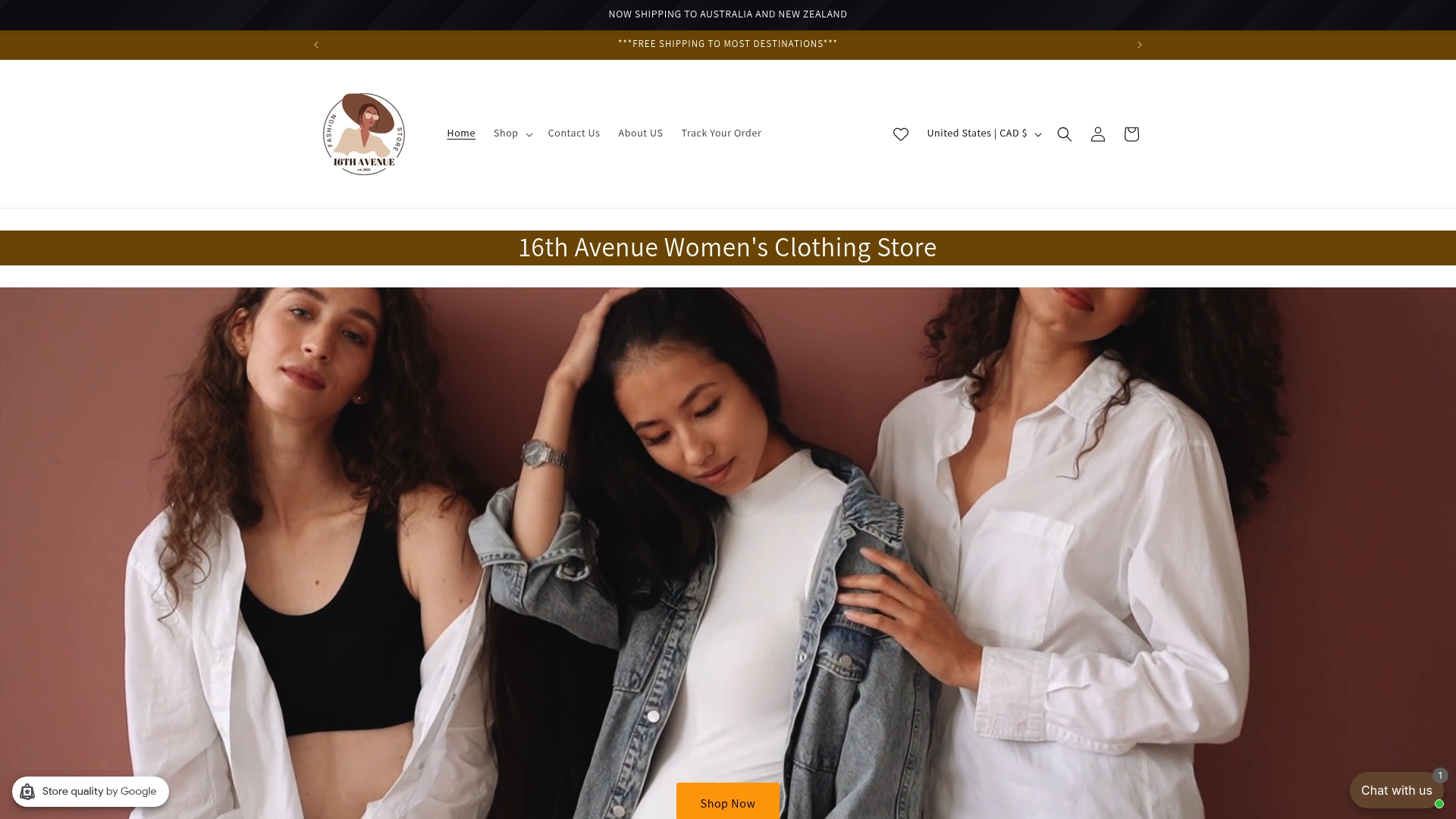
Browse the full collection at 16thavenue.ca and use the checklist above to evaluate each piece on its own terms.
Useful sources
- Research into aesthetic trends in advertising and design — Arts Journal study of 76 participants on AR, interactive visuals, and sound effectiveness
- The Vibe Marketing Playbook 2026 — Stormy AI on vibe-first adoption, multisensory engagement, and retention
- How Marketing Sells an Aesthetic — Brand Vision on visual consistency, trust, and pricing power
- Brand Aesthetics: A Practical Guide — Seven-element framework for reading and building brand aesthetics
- We Don’t Want a Beige Internet — Analysis of AI-driven visual homogenisation and its trust implications
- Aesthetic Matters: Why Look and Feel Is Doing the Heavy Lifting — LBBOnline on aesthetic strategy as brand positioning
- The role of shopping trends in 2026 — 16thavenue consumer guide to visual styles and purchase decisions