


How influencers shape beauty: what marketers need to know
Beauty influencers are the primary discovery engine for beauty brands today, driving product awareness, compressing the path to purchase, and lowering customer acquisition costs in ways that traditional advertising rarely matches. Social media and affiliate links accounted for 20.4% of total online sales during the 2025 holiday season, up roughly 16% from 2024. In Canada, the Competition Bureau expects paid partnerships to be clearly disclosed wherever a consumer might see them. Instagram, TikTok, and YouTube are the three platforms where most of that influence plays out.
The business effects are concrete:
- Reach at scale: A single viral TikTok or Instagram Reel can expose a product to millions of potential buyers overnight, at a fraction of paid-media CPMs.
- Lower customer acquisition cost: Micro-influencer campaigns consistently produce higher engagement-to-spend ratios than macro-star deals, reducing CAC for brands willing to work with creator collectives.
- Improved ROAS: Affiliate-linked influencer content creates a direct, trackable path from content to checkout, letting brands measure return on ad spend with precision.
- Product-market fit signals: Creator feedback and comment-section sentiment give brands early, unfiltered data on how a product is landing before a full retail rollout.
Key takeaways
Beauty influencer marketing works because source credibility and parasocial interaction convert passive viewers into buyers, and brands that pair micro-creator networks with rigorous attribution consistently outperform those relying on single macro deals.
| Point | Details |
|---|---|
| Social commerce is growing fast | Social media and affiliate links drove 20.4% of online sales in the 2025 holiday season. |
| Expertise beats reach | Information quality and creator expertise predict purchase intention more reliably than follower count. |
| Attribution must come first | Set up UTM links, affiliate codes, and pixel tracking before any campaign goes live. |
| Disclosure is a legal requirement in Canada | The Competition Bureau requires clear, prominent disclosure of all material connections between brands and creators. |
| Repurpose creator content | High-performing organic creator posts used as paid ads often outperform brand-produced creative at lower cost. |
Table of Contents
- How does the role of influencers in beauty actually work psychologically?
- What types of beauty influencers should brands work with?
- What business outcomes and KPIs should beauty brands track?
- Which campaign formats do beauty brands use most?
- What does the research actually say about influencer effectiveness?
- What are the risks and disclosure rules for Canadian beauty brands?
- How should brands select, brief and measure influencer partnerships?
- Operational steps for Canadian e-commerce beauty retailers
- The part of influencer strategy most brands get wrong
- Sources
How does the role of influencers in beauty actually work psychologically?
The reason influencer content moves purchase decisions is not mysterious once you understand three research-backed mechanisms: source credibility, parasocial interaction, and information adoption.
Source credibility has three pillars: trustworthiness, expertise, and attractiveness. Peer-reviewed research confirms that when consumers perceive a creator as knowledgeable and honest, the recommendation feels less like advertising and more like advice from a friend. A licensed esthetician reviewing a vitamin C serum on Instagram Reels carries different weight than a celebrity posting a sponsored caption, because the expertise signal is credible and specific.
Parasocial interaction is the one-sided relationship viewers form with creators they follow regularly. Frequency matters here. Someone who watches a creator’s skincare routine every morning for six months develops a familiarity that mirrors a real social bond. PMC research on beauty gurus found that credibility attributes of beauty creators predict product choice among younger consumers, and that parasocial interaction helps convert passive viewers into active buyers. A TikTok creator who posts daily and responds to comments accelerates this bond faster than a YouTube creator who uploads monthly, even if the YouTube content is more thorough.
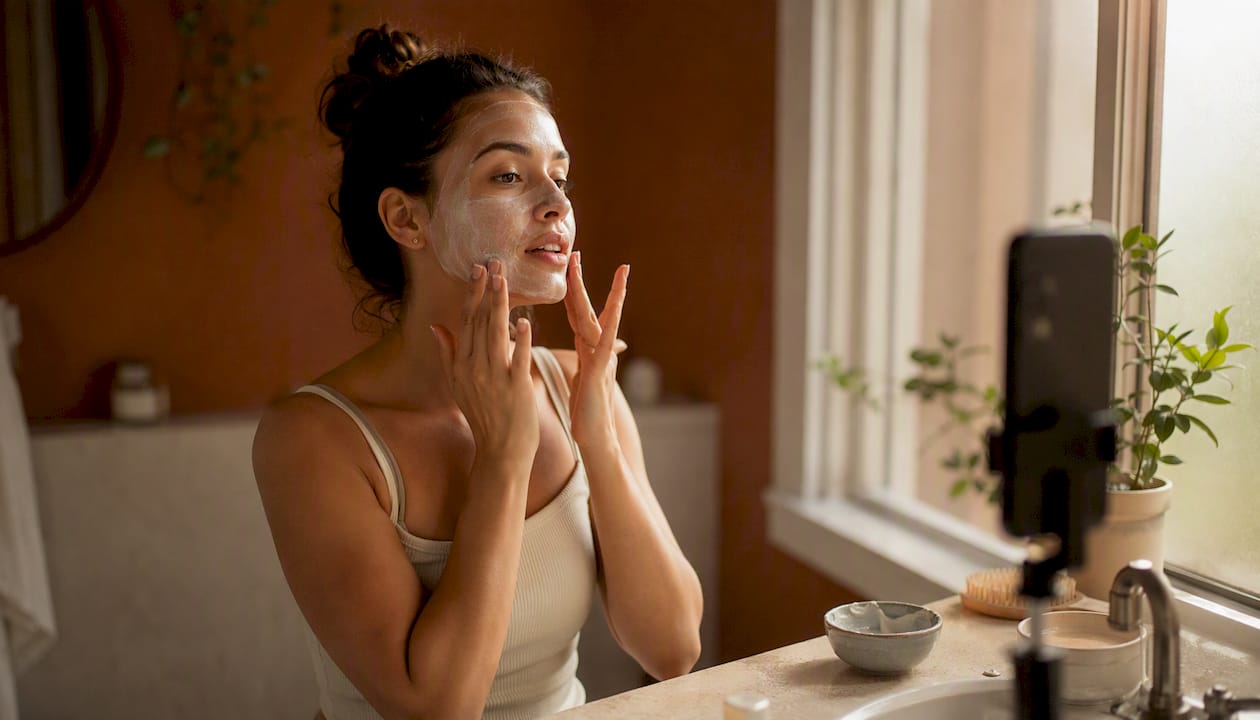
Information adoption explains why a well-structured tutorial or before-and-after video can tip someone from curious to committed. When a creator demonstrates a foundation’s coverage on multiple skin tones in a ten-minute YouTube video, they reduce the uncertainty that typically blocks a purchase. Research on online-to-offline ripple effects shows that high-quality influencer reviews increase perceived value, satisfaction, and repurchase intention when the in-store or delivered experience matches what the content showed.
Pro Tip: Expertise often outperforms raw reach. Studies on South African beauty consumers found that information quality and creator expertise predicted purchase intention more reliably than follower count alone. Brief creators on the technical details of your product, not just its aesthetic.
What types of beauty influencers should brands work with?
The influencer tier system is well-established in influencer marketing for beauty, but the labels matter less than the strategic fit.
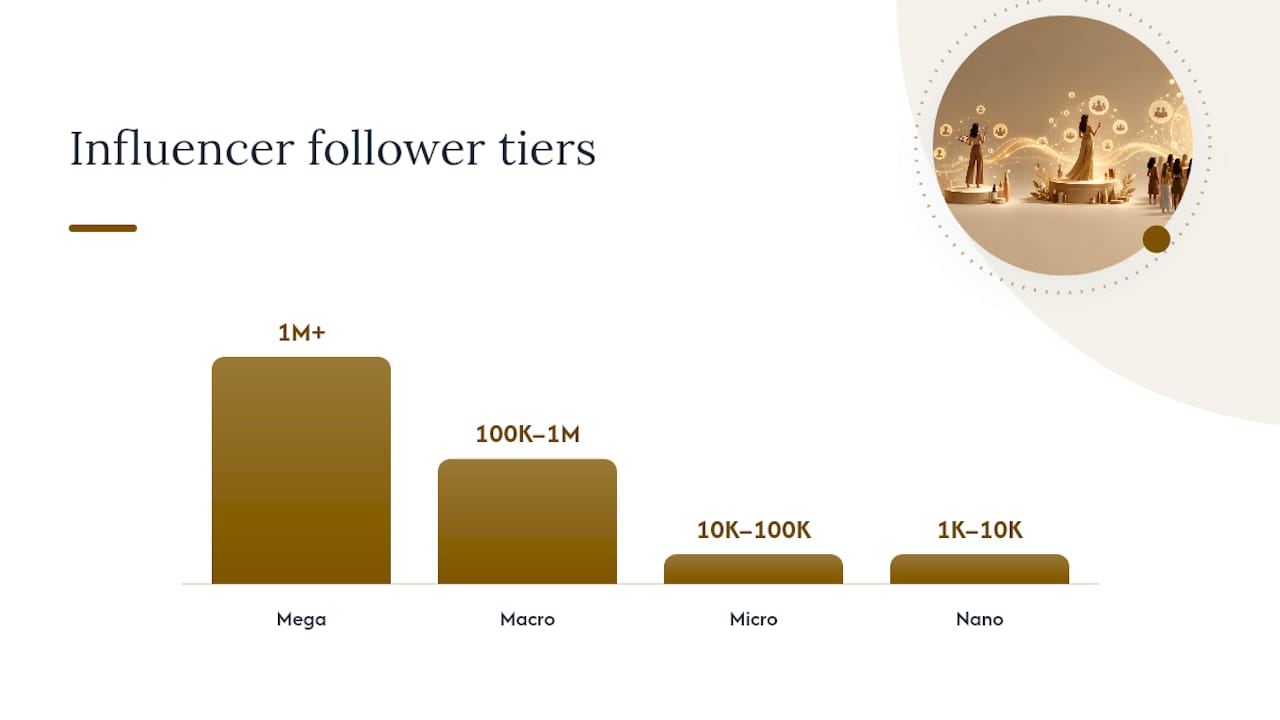
- Mega influencers (1M+ followers): celebrities and household names. Best for brand awareness at scale and launch moments. Expensive, lower engagement rates, and harder to attribute conversion.
- Macro influencers (100K–1M): established creators with broad audiences. Good for awareness and credibility, particularly when the creator has a defined niche (e.g., luxury skincare, clean beauty).
- Micro influencers (10K–100K): the workhorse tier for most beauty brands. Higher engagement, more affordable, and audiences that trust their recommendations because the creator feels accessible.
- Nano influencers (1K–10K): hyper-local and community-driven. Useful for regional launches, testing messaging, or building grassroots word-of-mouth in specific cities or demographics.
- Specialist creators (MUAs, dermatologists, estheticians, cosmetic chemists): follower count is secondary. Their credibility comes from professional credentials, and their audience actively seeks expert guidance. Aspire’s influencer marketing guidance recommends segmenting creators by “superpower” rather than tier alone, pairing content experts, sales drivers, and product partners to different campaign goals.
| Tier | Best use | Example creative formats |
|---|---|---|
| Mega | Brand launch, mass awareness | Hero video, brand campaign |
| Macro | Category education, trend leadership | Tutorials, editorial content |
| Micro | Conversion, community trust | Reviews, GRWM, affiliate links |
| Nano | Local/regional seeding, UGC | Unboxing, honest reviews |
| Specialist | Credibility, claims support | Ingredient explainers, demos |
What business outcomes and KPIs should beauty brands track?
Influencer programmes produce measurable outcomes across the full funnel, but only if attribution is designed before the campaign launches.
The primary outcomes to track are reach and impressions (awareness), engagement rate (relevance and resonance), conversion rate and revenue (bottom-line impact), earned media value (EMV, the estimated cost of equivalent paid media), and brand sentiment shifts. Research on online-to-offline ripple effects confirms that influencer content affects both digital and physical retail performance, so tracking only online conversions understates the true impact.
| KPI | What it shows | How to measure |
|---|---|---|
| Reach / impressions | Audience exposure | Platform analytics, creator reports |
| Engagement rate | Content resonance | Likes, comments, saves ÷ reach |
| Click-through rate | Intent signal | UTM-tagged links, platform link tools |
| Conversion rate | Purchase efficiency | Affiliate links, promo codes, pixel data |
| Revenue / ROAS | Financial return | UTM + checkout attribution, incrementality test |
| EMV | Equivalent paid-media value | EMV formula or platform tools |
| Brand sentiment | Qualitative perception shift | Social listening tools |
Practical attribution methods worth building into every campaign: unique affiliate links per creator, promo codes tied to individual creators, UTM parameters on all bio and story links, and pixel-based attribution for retargeting. For larger programmes, incrementality testing (running the campaign in one region while holding another as a control) gives the cleanest read on true lift. Platform differences matter too: short-form video on TikTok and Instagram Reels drives faster, higher-velocity conversions, while YouTube long-form content builds slower but more durable trust and tends to influence higher-consideration purchases.
Which campaign formats do beauty brands use most?
Format choice should follow funnel position. These are the formats that appear most consistently across beauty influencer marketing programmes:
- Tutorials and GRWM (Get Ready With Me) videos: The highest-trust format in beauty. A creator walking through a full routine with your product embedded naturally generates both awareness and purchase intent. Works best on YouTube and TikTok.
- Product reviews: Honest, detailed reviews build credibility, especially when the creator addresses potential drawbacks. Short-form reviews on TikTok can go viral quickly; long-form YouTube reviews serve the research phase of the purchase journey.
- Affiliate links and promo codes: The most directly trackable format. A creator shares a unique code or link; every sale is attributed. Particularly effective with micro and nano influencers whose audiences trust their specific recommendations.
- Co-created product drops and limited editions: Brands that treat creators as product partners rather than distribution channels unlock both authenticity and higher EMV. A limited shade named after a creator, for example, gives the creator genuine ownership and gives the brand a built-in launch audience.
- Livestream shopping: Growing in Canada as TikTok Shop expands. A creator demos products in real time, viewers purchase without leaving the app. Conversion rates during live events can exceed standard content significantly.
- Long-term ambassador programmes: Repeated exposure over months builds the parasocial familiarity that drives repurchase, not just first trial. Ambassadors also generate a library of content that brands can repurpose in paid media.
Creator-founded beauty brands demonstrate the most advanced version of this: when a creator occupies a specific white space and launches via coordinated micro-influencer networks, the result is rapid EMV generation and genuine product-market fit from day one. The lesson for established brands is to identify that white space before briefing creators, rather than asking them to promote a product that already has ten competitors.
What does the research actually say about influencer effectiveness?
The evidence base for influencer marketing in beauty is now substantial enough to move past anecdote.
Adobe’s 2025 holiday season data puts social media and affiliate links at 20.4% of total online sales, a figure that spans all categories. In beauty specifically, the share is likely higher given how visual and discovery-driven the category is.
Key findings from peer-reviewed literature:
- Source credibility and parasocial interaction are the two strongest psychological predictors of influencer persuasive power in beauty contexts.
- PMC research on beauty gurus confirms that trustworthiness and expertise predict product choice among younger consumers more reliably than attractiveness alone.
- South African consumer research found expertise and information quality predict purchase intention more strongly than follower count, a finding that holds across multiple regional studies.
- Online-to-offline ripple effects are real: positive influencer reviews increase perceived value and satisfaction, and that effect carries into in-store behaviour.
Platform differences are worth noting. TikTok’s short-form ecosystem drives immediate, high-velocity sales. YouTube builds slower but more durable trust, particularly for products that require education (skincare actives, professional tools). Instagram sits between the two, with Reels driving discovery and Stories driving time-sensitive conversion. Geographic and cultural context also affects results: findings from South African, Tunisian, and North American samples show consistent directional patterns, but effect sizes vary. Canadian brands should treat international studies as directional evidence, not precise benchmarks.
What are the risks and disclosure rules for Canadian beauty brands?
Canada’s Competition Bureau treats undisclosed paid endorsements as a form of misleading advertising. The practical requirement: any material connection between a brand and a creator (payment, gifting, commission, or free product) must be disclosed clearly, prominently, and in language the average consumer will understand. “Ad,” “Paid partnership,” or “Sponsored” placed at the start of a caption or as the first spoken words in a video meets the standard. Burying disclosure in a list of hashtags or placing it below a “more” fold does not.
Common risks in influencer programmes:
- Undisclosed paid promotion: The most frequent compliance failure. Brief every creator in writing on disclosure requirements, and review content before it goes live.
- Fake followers and engagement: Inflated metrics are widespread. Vet creators using audience-quality tools that flag sudden follower spikes, engagement pods, and bot-like comment patterns.
- Over-claiming product benefits: Health and cosmetic claims in Canada are regulated. A creator claiming a moisturiser “eliminates” wrinkles or a supplement “cures” acne creates liability for the brand. Brief creators on approved claim language.
- Influencer burnout and content quality decline: Long-term ambassadors who are overextended produce lower-quality content. Build rest periods and creative flexibility into contracts.
- Platform dependency: A brand that builds its entire influencer strategy on one platform is exposed to algorithm changes, policy shifts, and platform-level disruptions. Diversify across Instagram, TikTok, and YouTube.
Pro Tip: Add a disclosure checklist to your creator brief. Require creators to confirm they have read and understood Canada’s Competition Bureau guidance before posting. A short written acknowledgement in the contract protects both parties.
For ethical beauty positioning more broadly, disclosure is only the floor. Brands that actively brief creators on ingredient transparency and sustainability claims build stronger long-term trust than those who treat compliance as a checkbox.
How should brands select, brief and measure influencer partnerships?
A disciplined process separates campaigns that generate measurable ROI from those that produce impressions and little else.
- Define the goal first. Awareness, education, conversion, and retention each require different creator types, formats, and KPIs. A campaign without a single primary objective cannot be measured.
- Segment creators by superpower, not just tier. Some creators drive sales; others build credibility; others generate content volume. Match the superpower to the campaign goal.
- Vet audience quality before follower count. Ask prospective creators for audience demographic breakdowns, past conversion evidence (affiliate sales data, promo code redemptions), and their disclosure practices. Red flags: engagement rates below 1% on large accounts, comment sections full of generic phrases, sudden follower spikes.
- Write performance-based briefs. A good brief specifies the campaign goal, the key message, the required disclosure language, the deliverables, the timeline, and the KPIs you will use to evaluate success. It does not script every word; over-scripted content reads as inauthentic and underperforms.
- Set attribution before launch. Assign unique affiliate links or promo codes, install UTM parameters, and confirm pixel tracking is live. Attribution designed after the fact is unreliable.
- Repurpose creator content in paid media. Creator-generated content used as paid social ads often outperforms brand-produced creative because it retains an authentic, lo-fi quality that audiences trust. Get usage rights in the contract.
Brands that treat creators as tastemaker-consultants rather than one-off media placements consistently report higher EMV and more durable brand associations. The shift from transactional to relational is not just strategic; it produces better content.
Operational steps for Canadian e-commerce beauty retailers
These steps are specific to Canadian retailers running influencer programmes alongside an e-commerce operation:
- Add UTM and affiliate tracking to every creator link. Without this, you cannot separate influencer-driven revenue from organic traffic. Set it up before the first post goes live.
- Run a short pilot with two or three micro-influencers before scaling. A four-to-six-week pilot with creators in the 10K–50K range gives you real conversion data at low cost. Use it to validate messaging and creative formats before committing larger budgets.
- Align disclosure language across all creators. Use a standard disclosure template that meets Competition Bureau expectations. Consistency protects the brand and reduces the risk of one non-compliant post creating reputational damage.
- Coordinate online and offline messaging. If a creator drives traffic to a product that is out of stock on your site, you lose the conversion and the customer. Reserve inventory for influencer campaigns, especially for products likely to go viral. Microtrend dynamics mean sell-outs can happen within hours of a post going live.
- Prepare for viral demand. A single TikTok video can generate more orders in 24 hours than a month of standard traffic. Have a fulfilment plan, a waitlist mechanism, and a customer communication template ready before the campaign launches.
- Track CAC per creator and per format. Not all micro-influencers perform equally. Tracking CAC at the individual creator level tells you which relationships to deepen and which to retire. For beauty product categories like nail polishes, lip oils, and skincare, format matters: video demos consistently outperform static posts for conversion.
The part of influencer strategy most brands get wrong
The standard advice on influencer marketing is to diversify across tiers, track your KPIs, and disclose properly. All of that is correct. What gets less attention is the quality of the brief and the depth of the creator relationship.
Most brands treat influencer content as a media buy: pay for a post, measure the impressions, move on. The brands generating the strongest results are doing something different. They are giving creators early access to products, asking for genuine feedback before launch, and building the creator’s perspective into the product story. That is not just good for authenticity; it produces content that is harder to replicate because it reflects a real point of view.
The other underappreciated lever is repurposing. A creator’s organic post that performs well is already proven creative. Running it as a paid ad, with the creator’s permission and proper usage rights, typically outperforms brand-produced ads at a fraction of the production cost. Most brands either do not get usage rights in the original contract or do not have a workflow to move creator content into paid media quickly. Both are fixable operational problems, not strategic ones.
The brands winning in beauty influencer marketing right now are not necessarily the ones with the biggest budgets. They are the ones who brief better, attribute earlier, and treat their best creators as long-term partners rather than rotating vendors.
Sources
- Adobe holiday shopping season
- Influencer marketing — explaining the effects of source credibility and parasocial interaction
- Interplay Between Online and Offline Realms: Examining Influencers’ Impact and Ripple Effects on Beauty Product Sales
- The credibility of social media beauty gurus in young … - PMC
- Examining the influence of social media influencers on beauty product purchase intentions amongst South African consumers | Motara | South African Journal of Information Management