


Role of moisturizers in routines: why they matter, how to use them
Moisturizing isn’t optional for most people. It’s the single most direct way to repair your skin barrier and stop water loss before dryness turns into irritation, flaking, or a flare of something like eczema. The evidence is consistent enough that dermatology guidance treats a fragrance-free moisturizer as baseline care, not an add-on.
Here’s what the research actually shows:
- Flare reduction is real: consistent moisturizer use lowers the frequency and severity of atopic dermatitis flares in randomized trials.
- Timing has a measurable window: moisturizers do their best work in the first six hours after application, which is why most regimens call for multiple applications per day.
- The mechanism is simple: a moisturizer supplies water and something oily to hold it in, and that combination cuts transepidermal water loss almost immediately.
Your move right now: after your next shower or wash, apply a fragrance-free moisturizer to skin that’s still damp. That one habit does more for hydration than almost any other single change you can make to your routine.
Key Takeaways
Regular, correctly timed moisturizer use repairs the skin barrier, reduces water loss, and lowers flare frequency in conditions like eczema more reliably than any single ingredient trend.
| Point | Details |
|---|---|
| Barrier repair is the core benefit | Moisturizers work by supplying water and sealing it in, not by “rejuvenating” skin structurally. |
| Timing beats ingredient hype | Apply within three minutes of washing while skin is damp to trap moisture effectively. |
| Match formulation to skin type | Choose ointments for very dry or eczema-prone skin, gels or lotions for oily or acne-prone skin. |
| Simple ingredients often win | Petrolatum and glycerin frequently perform as well as costlier specialty formulas. |
| Shop with skin needs in mind | 16thavenue’s seasonal collections make it easy to pair skincare-conscious choices with weather-ready style. |
This article is general information, not a substitute for advice from a qualified doctor. Consult a qualified healthcare professional about your own circumstances before acting on anything here.
Table of Contents
- What is a moisturizer and how are formulations organised?
- How moisturizers work: skin physiology, TEWL and ingredient roles
- What moisturizers actually do: cosmetic benefits and clinical uses
- How to choose the right moisturiser for your skin and goals
- How and when to apply moisturiser for best results
- Common mistakes, safety considerations and when to see a clinician
- Three short sample routines by skin type
- What the research says: short summary of key studies and guideline takeaways
- Differences between moisturizers and other emollients like oils or balms
- The role of moisturizers in anti-aging skin care routines
- How environmental factors affect moisturizer choice and effectiveness
- Tailoring moisturiser choice for seasonal changes and climate variations
- Myths and misconceptions about moisturizers and their effects on skin
- Skincare that pairs well with everything else you’re already wearing
- Sources
What is a moisturizer and how are formulations organised?
A moisturizer is any topical product designed to increase water content in the outermost layer of skin and support the barrier that keeps that water in. That’s the working definition used in clinical literature, and it’s narrower than how the word gets used in marketing. Not every “hydrating” product is doing the same job, which is why formulation type matters as much as ingredient list.
Moisturizers fall into a rough hierarchy based on how much oil they contain relative to water, and that ratio determines which skin conditions they suit.
- Ointments are the heaviest and most occlusive, built mostly from petrolatum or similar bases. They suit very dry, cracked, or eczema-prone skin, especially in winter.
- Creams balance oil and water more evenly. They work for most normal-to-dry skin as a daily driver.
- Lotions are lighter and spread easily, often preferred for larger body areas or warmer climates.
- Gels and serums are the lightest, water-based options, favoured for oily or acne-prone skin, or for layering under sunscreen without feeling greasy.
Each form leans on a different combination of the three functional ingredient classes described in clinical sources: humectants, occlusives, and emollients. Ointments rely almost entirely on occlusives. Lotions and gels lean harder on humectants like glycerin. Creams typically blend both, sometimes with an emollient like shea butter to soften texture.
Fragrance and preservative choices matter more than most people realize. A cream loaded with fragrance can trigger irritation regardless of how well its core ingredients perform, so fragrance-free formulations are the safer default for sensitive or compromised skin. Preservatives are necessary in water-based products to prevent microbial growth, but people with known sensitivities should scan ingredient lists for common irritants before committing to a new product.
How moisturizers work: skin physiology, TEWL and ingredient roles
Your outermost skin layer, the stratum corneum, is built like a brick wall. Skin cells (the bricks) sit inside a matrix of lipids (the mortar), and that structure is what keeps water inside your body instead of evaporating into the air. When that lipid matrix breaks down from age, weather, harsh cleansers, or conditions like eczema, water escapes faster than it should. That process has a name: transepidermal water loss, or TEWL, and it’s the metric dermatology researchers use to measure how well a moisturizer is actually working.
Moisturizers intervene in that process through three distinct mechanisms, and understanding which ingredient does what helps explain why some products work better for your skin than others.
| Ingredient | Primary role | Practical notes |
|---|---|---|
| Glycerin | Humectant, draws water into the skin | Widely tolerated; works best paired with an occlusive in dry climates |
| Hyaluronic acid | Humectant, holds many times its weight in water | Can dehydrate skin in very low humidity if used alone |
| Ceramides | Emollient, replaces lipids in the barrier | Especially useful for eczema-prone or barrier-damaged skin |
| Petrolatum | Occlusive, seals in moisture | One of the most effective occlusives despite its simplicity |
| Dimethicone | Occlusive, silicone-based | Lightweight feel, common in gels and sunscreens |
| Urea | Humectant and mild keratolytic | Helps with rough, thickened skin; can sting on broken skin |
| Shea butter | Emollient | Softens texture, adds mild occlusion |
Humectants pull water toward themselves, either from deeper skin layers or, in humid air, from the environment. That’s useful, but it creates a problem clinical guidance flags directly: in a dry climate or low-humidity room, a humectant with nothing to seal it in can pull water from lower skin layers and then lose it to the air, actually increasing TEWL rather than reducing it. That’s the reason dermatologists recommend pairing a humectant with an occlusive rather than using something like straight hyaluronic acid alone in winter.
Occlusives work differently. They form a physical film on the skin’s surface that blocks evaporation. Petrolatum remains the gold standard here, not because it’s sophisticated, but because it’s remarkably good at its one job. Emollients fill in the gaps between skin cells, smoothing rough texture and reinforcing the lipid matrix itself rather than just trapping water at the surface.
Formulation pH also affects how well these ingredients perform. Skin’s natural surface sits slightly acidic, and products formulated closer to that range tend to interfere less with the skin’s own barrier function and preserve better compatibility with actives layered on top, like retinoids or vitamin C.
What moisturizers actually do: cosmetic benefits and clinical uses
The benefits split into two categories that get blurred constantly in marketing: cosmetic effects and clinical outcomes. Both are real, but they’re not the same thing, and confusing them leads to disappointment.
On the cosmetic side, a well-hydrated stratum corneum simply looks and feels better. Plumped skin cells reflect light more evenly, which softens the appearance of fine lines temporarily. That’s a real effect, but it’s a hydration effect, not a structural anti-aging one, and it fades once you stop applying the product.
On the clinical side, the evidence is stronger and more durable. Regular moisturizer use is a core part of managing chronic dry skin conditions.
- Atopic dermatitis: consistent use reduces both the frequency and severity of flares, and moisturizing is recommended as maintenance therapy even between active flare-ups.
- Xerosis (chronic dry skin): moisturizers with urea or ceramides address the rough, scaly texture that comes with barrier dysfunction directly.
- Adjunct to prescription treatments: applying moisturizer alongside topical steroids or other medicated creams often improves tolerability and helps patients stick with treatment.
- Post-procedure care: after exfoliating treatments or in-office procedures, a simple occlusive moisturizer supports barrier recovery while skin heals.
A 2017 review in Clinical Medicine & Research makes a point that’s easy to overlook: modern formulations succeed clinically when they combine occlusives, humectants, and emollients in a way patients will actually tolerate and use consistently. A theoretically perfect ingredient list means nothing if the texture is unpleasant enough that nobody applies it twice.
Pro Tip: Ignore any moisturizer claiming to “reverse aging” or “rebuild collagen” overnight. The honest, evidence-backed benefit is hydration and barrier support. Cosmetic smoothing follows from that, not from some separate anti-aging mechanism the packaging is implying.
That gap between marketing language and what’s actually happening on your skin is worth sitting with. A Harvard Health explainer puts it plainly: the primary role of a moisturizer is water retention and barrier repair, and most of what people call “rejuvenation” is really just the cosmetic result of skin that’s finally properly hydrated again.
How to choose the right moisturiser for your skin and goals
Start with your specific skin concern, not with a product’s price tag or packaging claims. The checklist below works through the most common starting points.
- Very dry or eczema-prone skin: look for ointments or thick creams built around ceramides, petrolatum, or shea butter. Fragrance-free is non-negotiable here.
- Oily or acne-prone skin: choose a lightweight gel or lotion labelled non-comedogenic. Dimethicone-based options often feel drier on the skin than oil-based ones while still sealing in hydration.
- Sensitive or reactive skin: prioritize short ingredient lists, fragrance-free formulas, and products with urea or glycerin as the main humectant rather than heavily perfumed botanical blends.
- Normal skin with no specific concerns: a basic cream or lotion with a humectant and a light emollient covers daily maintenance without overcomplicating your routine.
- Skin exposed to cold or dry indoor air regularly: pair a humectant with a stronger occlusive layer, since dry air alone can pull moisture back out of skin that only received a lightweight lotion.
A few ingredients and claims are worth actively avoiding depending on your skin type.
- Avoid added fragrance if you have sensitive skin, a history of contact dermatitis, or eczema. It’s one of the most common triggers for irritant reactions in otherwise effective products.
- Avoid heavy oils and thick occlusives across your whole face if you’re acne-prone, though a small occlusive layer on isolated dry patches (like around the nose or mouth) can still help.
- Avoid trusting a high price tag as a proxy for effectiveness. Harvard Health’s comparison of moisturizer options notes that prescription or device-labelled products aren’t consistently superior to well-formulated drugstore options.
Cost shouldn’t be the deciding factor in most cases. A basic cream with petrolatum and glycerin, applied every single day, will outperform an expensive serum used inconsistently. Adherence beats complexity almost every time, and that’s true whether you’re managing occasional winter dryness or a chronic condition like eczema.
How and when to apply moisturiser for best results
Application timing matters nearly as much as which product you choose. A great moisturizer applied at the wrong moment underperforms a mediocre one applied correctly.
Morning routine:
- Cleanse with a gentle, non-stripping cleanser.
- Apply any water-based actives (vitamin C serum, for example) and let them absorb for a minute or two.
- Apply moisturizer while skin still holds a little residual dampness from the cleanser.
- Finish with sunscreen, applied as the last step so it sits on top rather than getting diluted or pushed around by the moisturizer underneath.
Evening routine:
- Cleanse to remove sunscreen, makeup, and the day’s buildup.
- Apply any prescribed actives, such as a retinoid, and give them time to absorb before layering anything else.
- Apply moisturizer within a few minutes of washing your face or showering, while skin is still slightly damp.
- For very dry areas, a thin extra layer of a heavier ointment can go on top as a final seal.
The three-minute rule comes directly from how occlusives work: apply your moisturizer within roughly three minutes of patting skin dry after washing or bathing, while there’s still water sitting in the stratum corneum for the product to trap. Wait too long and that surface water evaporates before your moisturizer gets the chance to seal it in.
Reapplication frequency depends on your skin’s needs. Normal skin usually does fine with twice-daily application. Therapeutic regimens for eczema or severe dryness often call for several applications throughout the day, especially after handwashing or any water exposure.
Pro Tip: If you use a retinoid or exfoliating acid, apply your moisturizer directly afterward, not before. Layering moisturizer under an active can dilute its effect, while applying it after helps buffer irritation without blocking absorption.
Common mistakes, safety considerations and when to see a clinician
A handful of avoidable errors show up constantly, even among people who otherwise take skincare seriously.
- Skipping moisturizer because skin feels oily. Oily skin can still be dehydrated underneath, and skipping moisturizer sometimes triggers the skin to compensate by producing even more oil.
- Applying only to visibly dry patches instead of the whole face or body area, which leaves surrounding skin exposed to the same environmental stress.
- Over-relying on heavily fragranced “luxury” products without checking for irritant ingredients, especially on already compromised or reactive skin.
- Applying to bone-dry skin long after washing, missing the damp-skin window that makes occlusives so effective.
If you’re trying a new product, patch-test it first: apply a small amount to your inner forearm for two to three days before using it on your face. Watch for redness, itching, stinging, or small bumps, which signal irritant or allergic contact dermatitis rather than the normal, brief tingle some active ingredients cause.
Special populations need extra caution. Infant skin is thinner and more permeable, so fragrance-free, preservative-conscious formulations are the safer default. People on systemic treatments like isotretinoin or immunosuppressants often deal with heightened sensitivity and dryness, and should lean toward simple, minimal-ingredient moisturizers. If irritation persists beyond a week, spreads, or comes with swelling or blistering, that’s a signal to see a clinician rather than switch products again on your own.
Three short sample routines by skin type
Normal skin: In the morning, cleanse, apply a lightweight hydrating lotion, then sunscreen. At night, cleanse again and apply the same lotion or a slightly richer cream if your skin feels tight.
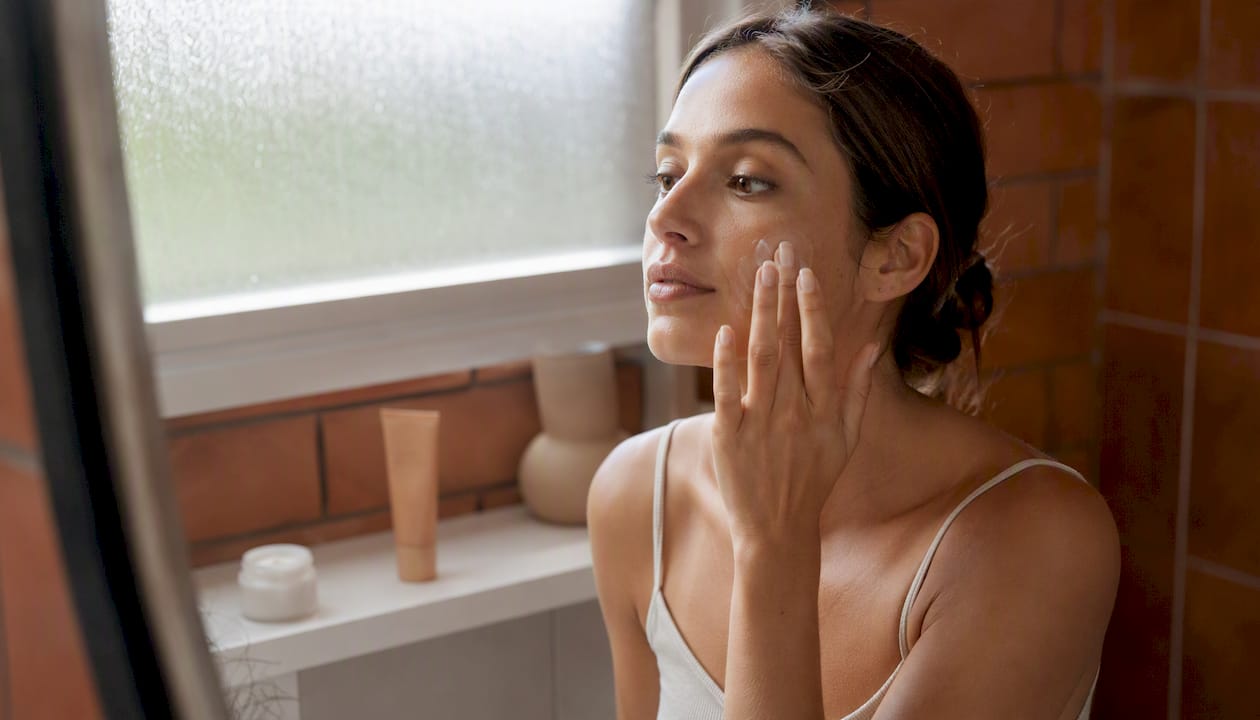
Oily or acne-prone skin: Use a non-comedogenic gel or lotion both morning and night. If you get flaky or dry patches around the nose or jawline, dab a small amount of a heavier cream just on those spots rather than treating your whole face the same way.
Very dry or eczema-prone skin: Apply a thick cream or ointment right after every shower, ideally two to three times a day overall, and pair a humectant-based product underneath an occlusive layer for extra staying power. Reapply hands and forearms after washing, since frequent water exposure strips these areas fastest.
What the research says: short summary of key studies and guideline takeaways
Clinical evidence lines up remarkably well with dermatology guidance on a few core points.
- Consistent, regular moisturizer use reduces both the frequency and severity of eczema flares in randomized trial data, and it improves objective barrier measurements like TEWL.
- The greatest therapeutic benefit occurs within about six hours of application, which is why maintenance regimens for dry or eczema-prone skin often call for two to three applications a day rather than one.
- Simple, well-studied ingredients like petrolatum and glycerin frequently perform as well as costlier specialty formulations, according to comparative clinical reviews.
The practical takeaway: consistency matters more than any single ingredient. Apply to damp skin, stick with a formula you’ll actually use every day, and don’t chase complexity when a basic cream does the job.
Differences between moisturizers and other emollients like oils or balms
Moisturizer is the umbrella term, and emollients, oils, and balms are specific tools within it, each with a different job. An emollient, technically, is any ingredient that smooths and softens skin by filling gaps between cells, and many moisturizers contain emollients as one component among several.
Pure oils, like jojoba or mineral oil, work almost entirely as occlusives or light emollients. They contain no water, so they add nothing to hydrate skin directly. Applied to dry skin with nothing else, an oil alone does little; applied over a water-based product or damp skin, it helps seal that moisture in effectively.
Balms sit at the heaviest end of the spectrum, similar to ointments. They’re usually built from waxes and thick oils with minimal or no water content, designed for maximum occlusion on small, stubborn areas like cracked heels, elbows, or chapped lips rather than for daily full-face use.
The practical distinction: a moisturizer is typically a complete formulation balancing water, humectants, and occlusives. Oils and balms are usually single-function tools you layer on top of, or instead of, a full moisturizer depending on how much sealing power a particular area needs. Using an oil as your only hydration step in a dry climate often leaves skin feeling smooth on the surface while doing little for actual water content underneath.
The role of moisturizers in anti-aging skin care routines
Moisturizers support the appearance associated with anti-aging goals, but they don’t reverse structural aging the way collagen-stimulating treatments or retinoids can. That distinction gets lost constantly in product marketing, and it’s worth being precise about.
Hydrated skin cells sit plumper, which temporarily softens the look of fine lines and improves how light reflects off the surface. That’s a genuine, visible effect, and it’s part of why a good moisturizer remains a staple in almost every dermatologist-recommended anti-aging routine. But it’s a surface-level, reversible effect tied to water content, not a change to collagen density or skin structure.
Where moisturizers earn a real anti-aging role is as a supporting player alongside actives. Retinoids, for example, are one of the few ingredients with solid evidence for improving fine lines and texture over time, but they’re also drying and can irritate skin, especially early in use. A moisturizer applied afterward buffers that irritation, which keeps people using their retinoid consistently instead of quitting after a week of redness and flaking.
Barrier support also matters more as skin ages, since natural lipid production tends to decline over time, making the skin more prone to water loss. A moisturizer built around ceramides addresses that shift directly, reinforcing a barrier that’s naturally getting thinner rather than trying to rebuild collagen it was never designed to affect.
How environmental factors affect moisturizer choice and effectiveness
Humidity and temperature change how much work your skin barrier has to do, and your moisturizer needs to adjust accordingly. In low-humidity environments, whether that’s a cold winter day or a dry, air-conditioned office, the air itself pulls moisture from skin faster than in humid conditions. That’s when occlusives matter most, since they physically block that outward pull rather than relying on humectants to draw in moisture that isn’t available in the air.
In humid environments, humectants work closer to their ideal conditions. Glycerin and hyaluronic acid can pull water from the surrounding air as well as from deeper skin layers, so a lighter, humectant-forward formula often feels more comfortable and performs just as well as a heavier cream would.
Temperature swings compound this. Hot showers and hot climates strip natural oils faster, while cold wind and indoor heating both dry out skin through different mechanisms, one through evaporation, the other through reduced ambient humidity. Wind exposure adds a mechanical stripping effect on top of the dryness itself, which is part of why exposed skin, like hands and faces, needs more frequent reapplication outdoors in winter than skin covered by clothing.
The practical rule: match your occlusive-to-humectant ratio to your environment rather than sticking with one product year-round regardless of conditions.
Tailoring moisturiser choice for seasonal changes and climate variations
Skin’s needs shift with the seasons, and a routine that works perfectly in July often falls short by January. Summer conditions, with higher humidity and heat, generally call for lighter formulations, gels or lotions that hydrate without feeling heavy or contributing to excess oil and breakouts in warm weather.
Winter flips that equation. Cold outdoor air combined with dry, heated indoor air creates a double hit on your skin’s barrier, and that’s when richer creams or even ointments earn their place, particularly on hands, lips, and any area regularly exposed to wind. Switching to a heavier moisturizer in colder months rather than waiting until skin already feels cracked or uncomfortable prevents most of the seasonal dryness people treat as inevitable.
Transitional seasons, spring and fall, are where a lot of people get caught off guard, since weather shifts faster than skincare habits usually do. Paying attention to how your skin actually feels, rather than sticking to a fixed routine by calendar date, works better than a rigid seasonal switch.
Climate matters as much as season for anyone who travels or lives somewhere with extreme conditions. A humid coastal climate and a dry mountain climate demand almost opposite moisturizer strategies even at the same time of year, so the guiding principle stays the same regardless of location: read your skin’s actual behaviour, and adjust the occlusive-to-humectant balance rather than assuming one formula works everywhere.
Myths and misconceptions about moisturizers and their effects on skin
A few persistent myths shape how people shop for and use moisturizers, and most of them don’t hold up against the evidence.
Myth: oily skin doesn’t need moisturizer. Skipping moisturizer on oily skin can actually worsen the problem, since dehydration sometimes triggers the skin to overproduce oil to compensate. The fix isn’t skipping the step; it’s choosing a lightweight, non-comedogenic formula instead.
Myth: expensive moisturizers work better. Comparative research consistently finds that simple, well-formulated ingredients like petrolatum and glycerin perform as well as costlier alternatives for core hydration and barrier repair. Price often reflects packaging, marketing, and added fragrance rather than superior function.
Myth: moisturizer reverses wrinkles. What it actually does is plump hydrated skin cells temporarily, softening the visible appearance of fine lines. That’s a real cosmetic benefit, but it’s not the same as the structural change ingredients like retinoids can produce over months of consistent use.
Myth: you should apply moisturizer whenever your skin feels dry. Waiting for the “dry feeling” cue means you’re already behind. Applying consistently, especially within that damp-skin window after washing, prevents the barrier disruption in the first place rather than treating it after the fact.
First-person perspective: habits that help moisturising stick
The moisturizers that work best long-term are the ones you’ll actually reach for without thinking. Keep the bottle by your sink, right next to your toothbrush, so applying it becomes attached to a habit you never skip. Texture and scent matter more than people admit; if a cream feels greasy or smells wrong to you, you’ll quietly stop using it within a week, regardless of how well-formulated it is on paper. Pick the product you’ll actually use, then build the habit around it.
Skincare that pairs well with everything else you’re already wearing
Good skin isn’t separate from the rest of your look, it’s the foundation the rest of it sits on. If you’re already building out a seasonal routine, browsing affordable beauty essentials alongside your skincare staples makes it easier to keep your whole routine simple instead of scattered across a dozen different retailers.

One practical tip carries over from everything above: if your skin leans sensitive or you’re dealing with any irritation, go fragrance-free first and adjust from there rather than chasing scent or packaging. When you’re ready to round out your seasonal wardrobe alongside your skincare routine, browse 16thavenue’s women’s woolen coats built for the colder months when your skin (and your closet) both need heavier coverage. Check current stock and sizing before the season shifts.
Sources
- Emollients and Moisturisers (Moisturisers) — DermNet
- Moisturisers - StatPearls - NCBI Bookshelf
- PubMed: randomized/clinical literature on moisturiser use and dermatitis
- The role of moisturizers in addressing various kinds of dermatitis: A review — PMC