


Role of monograms in fashion: why they still matter
TL;DR:
- Monograms have shifted from status symbols to subtle markers of heritage, craftsmanship, and personal identity. Modern designers treat monograms as textures and patterns that convey exclusivity without overt branding, emphasizing quiet luxury. Personalised monogramming extends garment life, promotes sustainability, and signals curated taste rather than just wealth or brand loyalty.
Monograms function as identity markers, craft signals, and curated style accents — and in 2026, they are doing all three more quietly than ever. The evolution from practical mark to status symbol is one of fashion’s most consistent through-lines, and 16thavenue explores that story here with sourced reporting from outlets including Business Insider and Influence Journal.
The three roles monograms play right now:
- Brand identity and visual language: A repeating monogram pattern is a house’s shorthand for heritage and craftsmanship, readable in a glance.
- Personalisation and private signalling: A discreet personal monogram signals curated ownership to the wearer first, the world second.
- Texture, pattern, and subtle luxury: Modern designers treat monograms as fabric architecture, not billboard space.
Table of Contents
- How did monograms go from ancient marks to fashion signatures?
- How do major fashion houses use monograms as identity systems?
- What does the 2026 monogram renaissance actually look like?
- How are monograms made and personalised today?
- How do you wear and mix monograms for modern outfits?
- What do monograms actually communicate about identity and taste?
- Are monograms still in style for Canadian consumers in 2026?
- Sustainability and ethical considerations in monogram production
- Key takeaways
- Why monograms deserve more credit than they get
- Useful sources
How did monograms go from ancient marks to fashion signatures?
| Era | Function | Example |
|---|---|---|
| Ancient Greece and Rome | Coin identification, ruler’s mark | Rulers’ initials stamped on currency |
| Medieval Europe | Lineage and heraldry | Family crests on armour and seals |
| Renaissance | Personal jewellery and correspondence | Signet rings, wax seals |
| Victorian era | Trousseau and household linen | Embroidered initials on bed linens |
| 19th-century Paris | Anti-counterfeiting on trunks | Louis Vuitton’s repeating canvas |
| Early 20th century | Commercial branding | Burberry’s Nova Check (introduced 1924) |
| Late 20th century | Logo saturation and mass visibility | Early-2000s logomania |
| 2020s | Quiet luxury, tonal integration | Tone-on-tone jacquard, interior monograms |
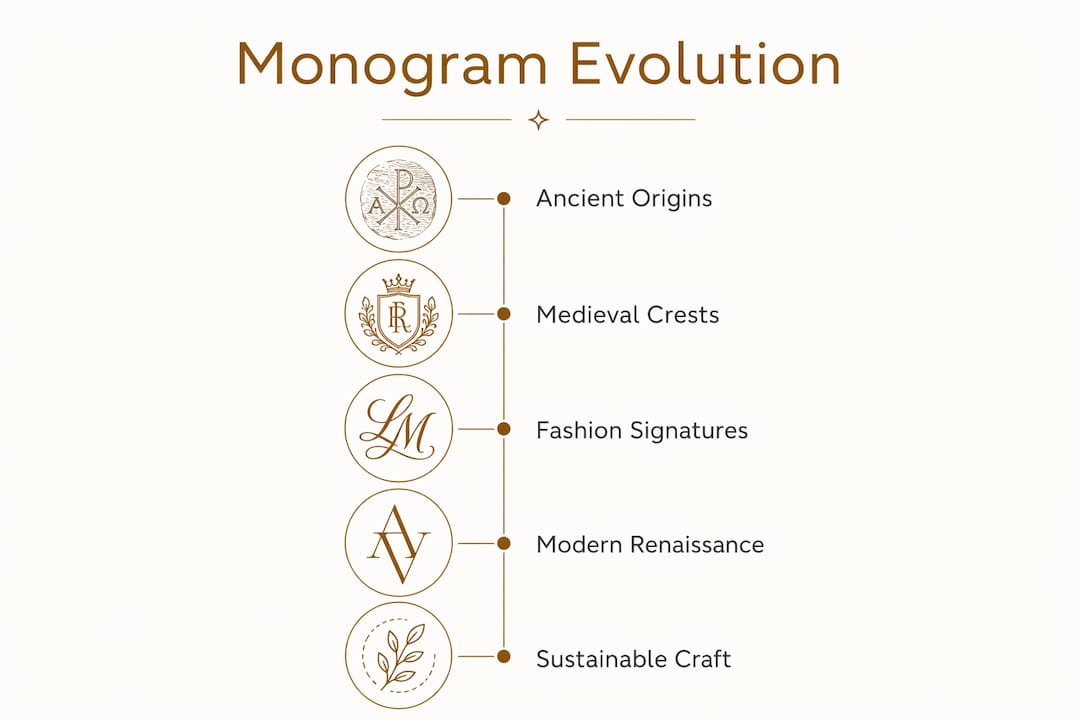
The shift from identification to aspiration happened gradually. Medieval crests told you whose land you stood on. Victorian trousseaux told you whose linen you slept under. Then 19th-century Parisian trunk-makers faced a more commercial problem: counterfeiters copying their designs. The solution was visual complexity — intricate repeating patterns that were difficult to replicate and impossible to mistake. What started as intellectual property protection became, over a century, an aesthetic language that editorial and lifestyle coverage now pairs with travel, heritage objects, and the idea of permanence.
How do major fashion houses use monograms as identity systems?
Each house treats its monogram differently, and those differences are worth understanding before you buy or wear one.
Louis Vuitton designed its monogram in 1896 when Georges Vuitton combined the LV initials with quatrefoils and stylised flowers, drawing on Japanese mon family crests and Neo-Gothic geometry. The 130th anniversary campaign brought back the original jacquard weave through the Monogram Origine line. Under Pharrell Williams, the house now threads LV Flowers as micro-patterns into pinstripe suiting — tone-on-tone prints that read as texture rather than branding.
Gucci’s GG monogram dates to the 1930s, representing founder Guccio Gucci’s initials. Under Demna, appointed in 2025, the GG is being treated as raw material: reworked through oversized proportions, unexpected colourways, and deconstructed silhouettes. His first move was a monogrammed travel trunk, a deliberate signal that the archive was the starting point.
Fendi’s FF logo was created by Karl Lagerfeld in 1965, originally standing for “Fun Fur.” It anchors the Zucca pattern, which became synonymous with early-2000s logomania and has since been refined into the structured Baguette Mini — a piece that works precisely because it sits against a plain coat, not a matching FF skirt.
Burberry’s TB monogram was discovered in the brand’s archive by Riccardo Tisci and reimagined with graphic designer Peter Saville. The earlier Nova Check, introduced in 1924 as a hidden coat lining, moved outward in the late 20th century and reached peak saturation in the early 2000s. Under Daniel Lee, the house has returned to restrained use, restoring the check’s quiet authority it once carried.
Valentino takes a different approach entirely. The house’s VLogo and Toile Iconographe patterns lean into maximalist decoration — bold, unapologetically theatrical, closer to Versace’s Barocco spirit than to Louis Vuitton’s geometric restraint. Valentino’s monogram signals exuberance rather than heritage discretion.
| House | Monogram | Typical placement | Signalling intent |
|---|---|---|---|
| Louis Vuitton | LV initials, quatrefoils, florals | Bags, luggage, suiting | Heritage, luxury travel, craftsmanship |
| Gucci | Interlocking GG | Ready-to-wear, accessories | Archive authority, cultural relevance |
| Fendi | Interlocking FF (Zucca) | Bags, leather goods | Playfulness, noughties revival |
| Burberry | TB initials, Nova Check | Outerwear, scarves, bags | British heritage, restrained authority |
| Valentino | VLogo, Toile Iconographe | Ready-to-wear, bags | Maximalist decoration, bold identity |
What does the 2026 monogram renaissance actually look like?
The quiet luxury shift has reframed what a monogram is supposed to do. The old logomania was about saturation — plaster the print on everything and let the world know exactly what you spent. The 2026 version is architectural. Designers are treating monograms as texture, as pattern language, as a way to signal heritage without screaming for attention.
Business Insider’s reporting frames this as a reclaiming of personal identity in an era of mass production: people monogram clothes and accessories to assert self-expression and curated taste, not just to display a price tag. The most sophisticated examples are often invisible to the casual observer — an interior cuff, a tonal lining, an embossing that catches light only at certain angles. The wearer experiences the mark more than the passerby does.
How are monograms made and personalised today?
Production technique shapes everything: the look, the longevity, and the cost. Here is how the main methods break down:
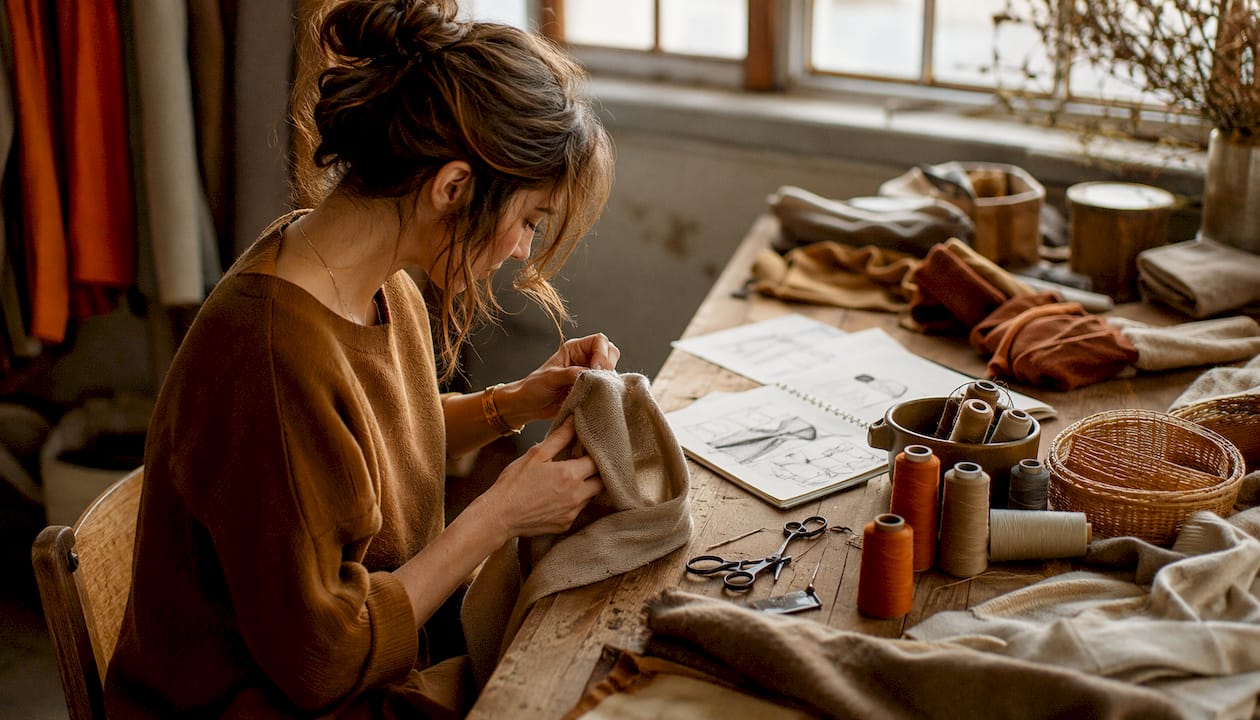
- Hand embroidery: The most labour-intensive option, typically used on shirting, cuffs, and fine linens. Placement on an interior cuff is the classic discreet choice for luxury shirting. Lead times run several weeks; pricing reflects the craft.
- Machine embroidery: Faster and more affordable, widely available for accessories, tote bags, and casual garments. Quality varies significantly by thread count and stitch density.
- Jacquard weaving: The monogram is woven directly into the fabric structure, as with Louis Vuitton’s Monogram Origine revival. Durable, tonal, and the most integrated result — but only available at production scale.
- Heat embossing and debossing: Common on leather goods (wallets, cardholders, luggage tags). Debossing presses the mark into the surface; embossing raises it. Both age well on quality leather.
- Metal hardware: Initials cast or engraved into clasps, zips, and bag feet. Subtle and permanent.
- Digital printing: The most accessible entry point for personalised accessories like makeup bags and packing cubes. Fast turnaround, lower cost, but less durable than woven or embossed options.
Pro Tip: Place a personal monogram on an interior cuff or garment lining rather than the chest or collar. You will know it is there; most people will not. That asymmetry is exactly what makes it feel like quiet luxury rather than a logo.
On sustainability: hand embroidery and jacquard weaving use no chemical processes and produce minimal waste. If you are commissioning a personalised piece, ask whether the base garment is made from certified organic or recycled materials. A monogram applied to a fast-fashion base defeats the permanence argument entirely.
How do you wear and mix monograms for modern outfits?
Follow these four steps when building a monogrammed look:
- Choose your purpose. Is the monogram for you (interior placement, personal meaning) or for the room (a statement bag, a patterned coat)? The answer shapes every decision that follows.
- Choose your technique. Tonal embossing or interior embroidery for quiet luxury; jacquard or visible embroidery for a deliberate statement.
- Choose your placement. One monogrammed piece per outfit is the reliable rule. A monogrammed tote as a focal accessory works against clean, solid separates. A monogrammed knit reads best with plain trousers and no competing print.
- Integrate for balance. If the monogram is visible and bold, keep the rest of the outfit simple. If it is tonal or hidden, you have more freedom to layer texture elsewhere.
For Canadian climates specifically: a monogrammed wool scarf or a debossed leather glove works as a subtle winter accent without adding visual bulk under a heavy coat. In warmer months, a personalised one-piece or a monogrammed canvas tote carries the idea into casual, warm-weather dressing without effort.
Avoid: mixing two visible monograms in one look, pairing a house monogram with a personal monogram on the same piece, or choosing a neon colourway in a conservative setting.
What do monograms actually communicate about identity and taste?
A personal monogram and a brand monogram operate differently, even when they look similar. A brand monogram is a public signal — it tells the room which house you chose and, by extension, what you know about that house’s history. A personal monogram is a private one. It signals curated ownership to the wearer first, and only to those close enough to notice.
In Canada, monograms map naturally onto gifting culture: monogrammed luggage tags, linen, and leather accessories are perennial choices for weddings, graduations, and milestone birthdays precisely because they feel permanent. Local tailoring communities in cities like Toronto and Montréal offer bespoke embroidery services that bring this tradition into contemporary wardrobes.
A few ways monograms function as cultural signals:
- Lineage and stewardship: A monogrammed piece passed between generations carries the original owner’s initials into new contexts, which is a form of slow fashion.
- Digital identity: Monogram-style initials appear in social media avatars, e-commerce branding, and personal logos — the same visual logic, applied to screens.
- Insider recognition: The most coveted monograms (Goyard’s Goyardine, for example) are recognisable only to those already inside the culture, which is precisely their appeal.
Are monograms still in style for Canadian consumers in 2026?
Yes, and the case for them is stronger now than it was five years ago. The quiet luxury shift has given monograms a cultural permission slip: they are no longer associated exclusively with early-2000s logomania. They are associated with intention, craft, and curation.
Practical next steps if you want to start:
- Try a discreet personal monogram on a leather accessory or interior cuff before committing to a visible statement piece.
- Choose a technique that matches the base material: embossing for leather, embroidery for fabric, hardware for bags.
- Start small. A monogrammed crewneck or a monogrammed tote from 16thavenue is a low-commitment entry point that still carries the full weight of the idea.
Looking for pieces that carry that curated quality? 16thavenue’s autumn and winter collection includes outerwear that pairs naturally with a single monogrammed accessory for a complete, considered look.
Sustainability and ethical considerations in monogram production
The permanence argument for monograms is also a sustainability argument. A well-made monogrammed piece is designed to be kept, not discarded at the end of a season. That runs directly counter to fast fashion’s disposal cycle.
The most ethical path is to monogram quality base materials. Hand embroidery and jacquard weaving are low-impact processes. Leather debossing uses no dyes or chemicals beyond what the tanning process already requires. Digital printing, the most accessible technique, tends to use water-based inks on synthetic substrates — check the supplier’s environmental certifications before ordering.
Commissioning a monogram also extends a garment’s emotional life. Research into consumer behaviour consistently shows that personalised items are kept longer and cared for more attentively than anonymous ones. That is not a small thing when the average garment’s active use is measured in months.
Avoid fast-fashion monogramming services that apply initials to low-quality polyester. The monogram outlasts the fabric, which defeats the point entirely.
Key takeaways
Monograms function as identity markers, craft signals, and curated style accents — and the quiet luxury shift of the 2020s has made subtle, tonal monogramming the most sophisticated choice available.
| Point | Details |
|---|---|
| Origins are practical, not decorative | Monograms began as anti-counterfeiting marks on 19th-century Parisian trunks, not as status displays. |
| Quiet luxury defines 2026 usage | Tone-on-tone jacquard and interior placement signal heritage without visible branding. |
| Technique determines longevity | Jacquard and hand embroidery outlast digital printing; match the method to the material. |
| One monogram per outfit | Mixing two visible monograms in one look undermines the curation the mark is meant to signal. |
| Personalisation extends garment life | Monogrammed pieces are kept longer, making them a genuinely sustainable choice. |
Explore monogrammed accessories and personalised pieces at 16thavenue to find your starting point.
Why monograms deserve more credit than they get
The conversation around monograms tends to collapse into two camps: logomania apologists and quiet-luxury purists. Both miss the more interesting point. A monogram is not primarily a status signal or a branding exercise. It is a commitment to an object. When you put your initials on something, you are saying you intend to keep it. That is a genuinely countercultural act in an industry built on seasonal obsolescence.
What strikes me about the current moment is how the best designers understand this. Pharrell’s tone-on-tone LV suiting is not about showing off a price tag. It is about treating a 130-year-old design language as living material. Demna’s Gucci trunk is not nostalgia. It is an argument that the archive is the most radical place to start. The monogram endures because it carries time inside it, and that is something no seasonal trend can replicate.
For Canadian consumers, the practical takeaway is simple: choose one piece, choose a quality technique, and wear it for years. The importance of monograms in style is not about what others see. It is about what you choose to keep.
Useful sources
- The monogram: how a simple mark became the ultimate symbol of elegance — Vive Magazine’s cultural history of the monogram from ancient marks to modern fashion.
- Monograms: menswear status symbol and quiet luxury trend — Influence Journal’s 2026 reporting on the quiet luxury renaissance and monogram intent.
- Monograms are a menswear status symbol; how to customise clothing — Business Insider on personalisation, self-expression, and the practical how-to of commissioning monograms.
- Why monograms are peak chic — Lifestyle editorial pairing monograms with travel, linens, and heritage objects.
- The case for monogramming everything you own and love — Long-form commentary on legacy-building and the Louis Vuitton monogram as a design-continuity case study.
- Are monograms still in style? personalised accessories trend — Retail perspective on personalised accessories as a gifting and trend segment.
- The art of the monogram: adding a signature touch to your luxury shirt — Practical guide to shirt monogramming, placement, and discrete luxury details.
- The ultimate manual of the monogram — Lana Time’s deep dive into luxury house monograms from Louis Vuitton to Goyard.
- How the Louis Vuitton monogram predicted logomania — Cultured Magazine on the 130th anniversary of the LV monogram and its design lineage.
- Logomania’s quiet comeback: Gucci, Louis Vuitton and the Coach Monogram Effect — That Velvet Lady’s analysis of the 2025–2026 monogram revival across major houses.
- 16thavenue.ca — 16thavenue’s curated women’s fashion and personalised accessories, the publishing context for this article.