

Seasonal trends decoded: smarter wardrobe choices in 2026
Fashion trends can feel like a moving target. One season it’s oversized blazers, the next it’s micro-minis, and somewhere in between you’re left wondering if your wardrobe is already outdated. Here’s the truth: seasonal trends aren’t random. They follow established industry cycles that designers, retailers, and savvy shoppers have used for decades. Once you understand how these cycles work, you stop chasing trends and start using them strategically. This guide breaks down exactly what seasonal trends are, how they’re predicted, and how you can apply that knowledge to build a wardrobe that feels current, personal, and genuinely yours.
Table of Contents
- Defining seasonal trends: cycles, colours, and collections
- The fashion calendar: timing and how trends arrive in stores
- How seasonal trends are predicted: data, designers, and real-time analysis
- Seasonal colour analysis: choosing your most flattering palette
- Seasonless and micro-season trends: sustainability and global realities
- Applying seasonal trends to your wardrobe: smart shopping and styling tips
- Find your next statement piece with 16th Avenue
- Frequently asked questions
Key Takeaways
| Point | Details |
|---|---|
| Trends follow set cycles | Fashion trends are driven by industry seasons, not random changes. |
| Informed shopping equals smart style | Knowing retail timelines lets you plan wardrobe updates and find bargains. |
| Forecasts use AI and data | Trend predictions rely on high-tech analysis, not just guesswork. |
| Personalisation matters most | Using colour analysis and remixing trends shapes an authentic, lasting wardrobe. |
| Sustainability drives change | Seasonless collections and micro-seasons reflect real-world and eco needs. |
Defining seasonal trends: cycles, colours, and collections
At their core, seasonal trends in fashion refer to cyclical shifts in styles, colours, silhouettes, and fabrics aligned with the four main fashion seasons. Think of it less like a trend “dropping” and more like a tide coming in. It’s predictable if you know when to look. Understanding how seasonal trends shape style gives you a real advantage when planning purchases.
The fashion industry runs on four primary seasons:
- Spring/Summer (SS): Lighter fabrics, brighter palettes, relaxed silhouettes.
- Autumn/Winter (AW): Rich textures, deeper tones, structured layering.
- Resort/Cruise: A transitional collection shown in late autumn for early spring delivery.
- Pre-Fall: Bridges the gap between SS and AW, often the most wearable and commercially strong season.
Each season brings specific changes across three key dimensions:
| Element | What changes |
|---|---|
| Silhouette | Volume, length, and overall shape of garments |
| Colour palette | Dominant hues, accent tones, and neutrals |
| Fabric | Weight, texture, and finish of materials |
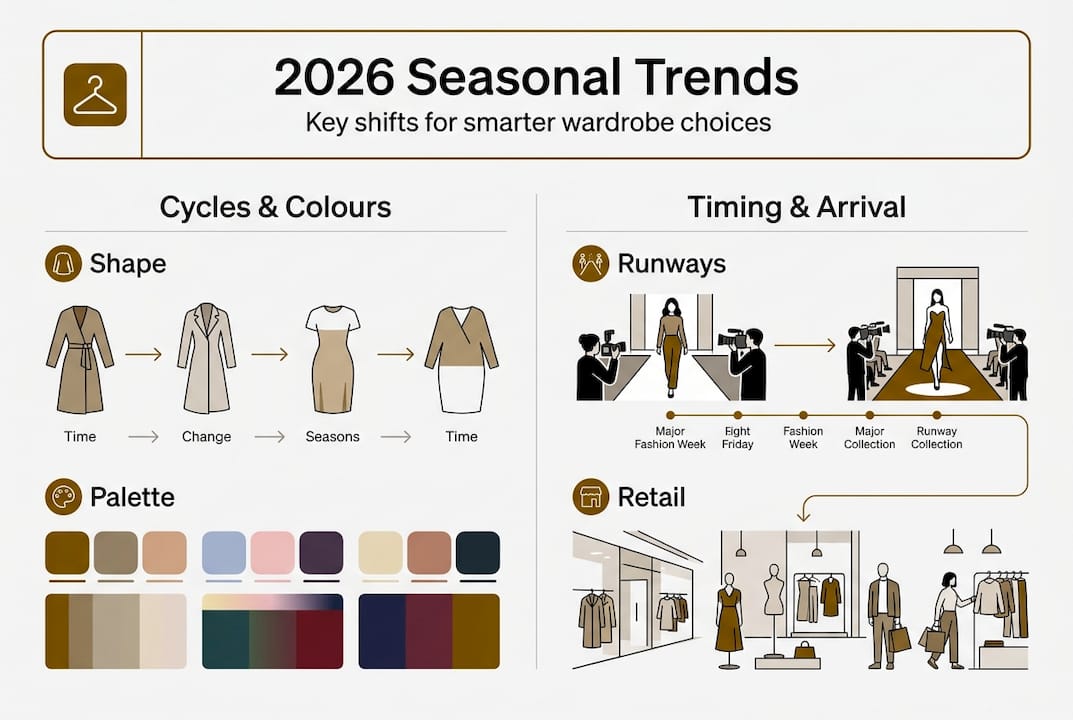
The industry calendar runs roughly six months ahead of actual weather. That means AW collections are shown in February, while SS collections hit runways in September. Learning these rhythms, as explained in seasonal collections explained, helps you plan purchases strategically rather than reactively.
The fashion calendar: timing and how trends arrive in stores
Now that you know the core cycles, it’s important to understand exactly when those exciting new looks show up in your favourite stores. The journey from runway to retail is longer than most people realise, and knowing the timeline puts you ahead of the curve.
Here’s how a trend travels from concept to your closet:
- Designers create collections roughly 12 months before the consumer season.
- Runway shows take place in fashion capitals (New York, Milan, Paris, London) six months before retail delivery.
- Buyers and press attend shows and place orders based on what they see.
- Production and logistics take several months before pieces arrive in stores.
- Retail delivery happens in stages, with new drops refreshing floors throughout the season.
The fashion calendar operates months ahead of actual weather and retail deliveries, which is why you see coats in stores during August. It feels counterintuitive, but it’s by design.
| Season | Runway shows | Retail arrival |
|---|---|---|
| Spring/Summer | September of prior year | January to March |
| Autumn/Winter | February of same year | July to August |
| Resort/Cruise | May to June | November to December |
| Pre-Fall | December to January | May to June |
This timing matters for smart shopping. If you buy SS pieces in January during end-of-season sales, you’re getting current-season styles at a fraction of the price. Understanding micro-seasons in retail takes this knowledge even further, showing how fast fashion has compressed these cycles into near-constant newness.
How seasonal trends are predicted: data, designers, and real-time analysis
Understanding the calendar is only part of the equation. Next, discover how experts and AI predict the looks that will define each season. Trend forecasting is a serious discipline, and it’s far more sophisticated than a designer simply deciding what’s “in” this year.
Modern fashion forecasting techniques include data-driven AI analysis of social media, runway images, sales data, time series, and machine learning models. These tools process millions of data points to identify emerging patterns before they reach mainstream awareness.
Here’s what feeds into a trend forecast:
- Runway analysis: Identifying recurring silhouettes, colours, and details across multiple designer collections.
- Social media signals: Tracking what influencers, celebrities, and everyday users are wearing and sharing.
- Sales data: Spotting which styles are selling through fastest at retail.
- Cultural and economic context: Understanding how world events, music, and art influence fashion appetite.
- Historical cycles: Recognising that fashion moves in roughly 20-year nostalgia loops.
The impact of trend forecasting on retail is enormous. Brands that forecast accurately reduce overstock, improve margins, and deliver exactly what customers want. For you as a shopper, following credible trend forecasts means you can anticipate what’s coming rather than scrambling to catch up.
Pro Tip: Trust reputable trend sources over social media alone. AI-driven forecasting platforms and established fashion publications have far greater accuracy than a single influencer’s opinion, no matter how stylish they are.
Seasonal colour analysis: choosing your most flattering palette
Now, let’s explore a timeless tool you can use to filter every trend through your own lens: Seasonal Colour Analysis. This is where personal style and seasonal trends genuinely intersect.
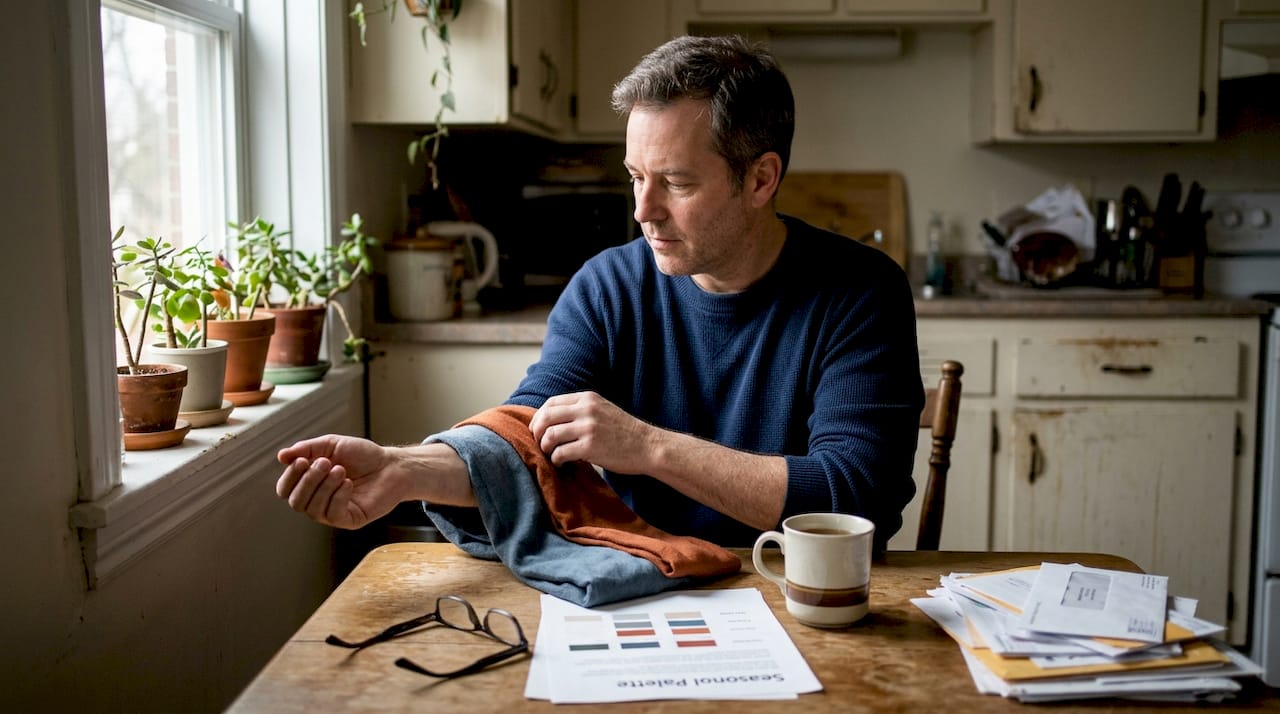
Seasonal Colour Analysis (SCA) categorises women into 4 to 12 “seasons” based on undertone, value, and chroma. In plain terms, it identifies whether your natural colouring is warm or cool, light or deep, and muted or vivid, then maps those qualities to a personalised colour palette.
The four main SCA categories are:
- Spring: Warm, light, and clear. Think peach, coral, and warm ivory.
- Summer: Cool, light, and muted. Think lavender, dusty rose, and soft blue.
- Autumn: Warm, deep, and muted. Think rust, olive, and camel.
- Winter: Cool, deep, and clear. Think true red, navy, and crisp white.
Each category has subtypes that refine the palette further. The idea is that wearing colours within your season makes your skin look luminous, your eyes brighter, and your overall appearance more polished.
That said, SCA has its critics. As noted in The Atlantic’s analysis, some experts view it as an oversimplified framework that can feel restrictive rather than liberating. The nuance is real: no system perfectly captures the complexity of human colouring.
“Seasonal Colour Analysis can be a useful starting point, but it works best as a guide rather than a rigid rulebook.”
The smartest approach is to use SCA as a filter. When fall colour trends arrive, run them through your personal palette and invest in the shades that genuinely flatter you. Skip the rest without guilt.
Pro Tip: You don’t need a professional SCA consultation to benefit from the concept. Start by noticing which colours prompt compliments and which ones make you look tired. That’s your palette speaking.
Seasonless and micro-season trends: sustainability and global realities
With new models emerging, let’s consider how seasonless fashion and global differences are transforming how trends work and how you wear them. The traditional four-season model is under pressure from multiple directions.
Brands like Gucci have experimented with seasonless collections, arguing that the relentless cycle of newness is both environmentally damaging and creatively limiting. The logic is compelling: fewer, better collections reduce waste and allow consumers to invest in pieces they’ll wear for years.
At the same time, fast fashion has pushed in the opposite direction, creating micro-seasons where new styles arrive weekly. This creates a paradox: more choice, but also more pressure to keep up and more textile waste.
Global realities add another layer of complexity:
- A shopper in Toronto experiences four distinct seasons and needs a wardrobe that genuinely transitions.
- A shopper in Singapore or Lagos may have little use for heavy AW collections and gravitates toward year-round lightweight pieces.
- Regional retailers increasingly adapt global trend forecasts to local climate realities.
The sustainable fashion arguments for seasonless dressing are gaining traction. Buying fewer, more versatile pieces that transcend seasonal cycles is both financially and environmentally smarter.
“The fashion industry’s shift toward seasonless collections reflects a broader cultural reckoning with overconsumption and the environmental cost of trend cycles.” The Atlantic
For you as a shopper, this means the old rules are loosening. Wearing a linen dress in October or a cashmere sweater in April is no longer a fashion faux pas. It’s actually quite forward-thinking.
Applying seasonal trends to your wardrobe: smart shopping and styling tips
With all these frameworks in mind, here’s how you can put trend knowledge into practice on your next shopping trip or closet refresh. The goal isn’t to own every trend. It’s to use trends selectively to keep your wardrobe feeling fresh and genuinely you.
Follow these steps for a smarter seasonal approach:
- Audit your wardrobe before each season. Identify gaps rather than buying duplicates of what you already own.
- Check the fashion calendar. Know when new collections arrive so you can shop early for the best selection or late for the best prices.
- Filter trends through your colour season. Only invest in trend pieces that align with your personal palette.
- Remix before you buy. Style existing pieces with one or two new additions rather than overhauling your entire wardrobe.
- Follow credible sources. Publications like Vogue track defining fall 2026 trends with editorial depth that social media alone can’t match.
The key insight from fall styling guides is to understand industry seasons for smart buying, use SCA for timeless enhancement, and focus on remixing and personal style rather than wholesale trend adoption.
When you refresh your wardrobe for fall, prioritise pieces with longevity. A well-cut coat or a quality boot will serve you across multiple seasons and trend cycles.
Pro Tip: The most stylish women aren’t the ones wearing every trend. They’re the ones who know which trends to adopt, which to adapt, and which to ignore entirely. That discernment is the real skill.
Find your next statement piece with 16th Avenue
Ready to put your seasonal trend savvy to work? At 16th Avenue, we’ve curated pieces that make it easy to translate trend knowledge into real outfits you’ll actually wear.
For AW dressing, our woolen coats for autumn and winter are designed to anchor a seasonal wardrobe with structure and warmth. If you’re refreshing your beauty toolkit alongside your closet, the 24-piece makeup brush set helps you experiment with seasonal colour looks at home. And for transitional dressing when the weather can’t make up its mind, our breathable wedge sneakers offer comfort and style across multiple seasons. Free shipping to most destinations makes it even easier to shop with confidence.
Frequently asked questions
What exactly defines a fashion seasonal trend?
A seasonal trend is a shift in style, colour, fabric, or silhouette that aligns with a specific period of the fashion calendar, such as Spring/Summer or Autumn/Winter. These cyclical shifts in styles follow predictable industry patterns rather than appearing at random.
How far in advance are seasonal trends set?
Most trends are set 6 to 12 months ahead, with collections shown on runways well before the styles reach stores. The fashion calendar operates months ahead of actual weather and retail deliveries.
Is Seasonal Colour Analysis necessary for staying in style?
SCA is a useful tool for finding your most flattering colours, but it’s not mandatory for looking stylish. Some experts, including critics cited by The Atlantic, view it as oversimplified and potentially limiting.
Are seasonal trends the same worldwide?
No. Global and regional variations significantly affect how seasonal trends are adopted, and some brands have moved toward seasonless collections to better serve diverse climates.
How can I use seasonal trends to save money?
Buy key seasonal pieces during retail sales that coincide with the arrival of new collections. Shopping SS styles in January to March, as recommended by smart buying guides, gives you current looks at end-of-season prices.