


Skincare for teens: a simple routine that actually works
Most teens only need a three-step routine: a gentle cleanser, a lightweight non-comedogenic moisturizer, and daily broad-spectrum SPF 30+. That combination handles the basics of healthy skin without wasting money or risking irritation.
- Cleanser: removes oil, sweat, and dirt without stripping skin.
- Moisturizer: replaces water loss, especially important for skin using acne treatments.
- Sunscreen: protects against sun damage and stops acne marks from darkening.
A three-step foundation covers roughly 90% of teen skincare needs, according to paediatric guidance. If breakouts persist past that baseline, add one proven acne active, such as salicylic acid, benzoyl peroxide, or adapalene, and give it 8 to 12 weeks before judging whether it’s working. Introduce only one active at a time, and stop if skin turns red, flaky, or painful.
Key Takeaways
A minimalist, three-step routine paired with one evidence-based acne active, evaluated over 8 to 12 weeks, outperforms complex, influencer-driven regimens for nearly all teen skin.
| Point | Details |
|---|---|
| Start with three steps | Gentle cleanser, non-comedogenic moisturizer, and SPF 30+ cover most teen skincare needs. |
| Add one active at a time | Introduce salicylic acid, benzoyl peroxide, or adapalene individually and patch test first. |
| Give it 8 to 12 weeks | Judge any new acne treatment only after two to three months of consistent use. |
| Know the red flags | Painful, cystic acne or scarring after 8 to 12 weeks means it’s time to see a dermatologist. |
| Don’t pick or over-layer | Squeezing pimples and stacking strong actives both raise the risk of scarring and irritation. |
| Shop the basics, not the hype | 16thavenue’s curated beauty essentials favour proven, affordable ingredients over trend-driven extras. |
Table of Contents
- The best teen skincare routine for mornings
- The best teen skincare routine for evenings
- Acne solutions for teens: comparing salicylic acid, benzoyl peroxide, and adapalene
- Ingredients to avoid and how to layer actives safely
- Adjusting your routine for oily, dry, sensitive, and deeper skin tones
- How to pick teen-friendly products without overspending
- Why hydration and diet matter for teen skin
- Common myths about teen skincare, debunked
- How hormones drive teen acne
- Makeup tips for teens with acne-prone skin
- Why picking at pimples makes acne worse, not better
- What actually matters most in teen skincare
- Build a routine that fits, without the guesswork
- Sources
The best teen skincare routine for mornings
A morning routine should take under five minutes. That’s the whole point. Teens who stick with a routine long term almost always have one that fits into a rushed school morning, not a ten-step regimen borrowed from a skincare influencer.
Here’s the sequence that works:
- Cleanse with lukewarm water and a gentle, low-lather cleanser. Skip hot water and anything that leaves skin feeling tight or squeaky. That tightness is a sign the skin barrier just got stripped, not a sign of “clean” skin.
- Apply a lightweight, non-comedogenic moisturizer while skin is still slightly damp. Look for humectants like glycerin or hyaluronic acid, which pull water into skin, and ceramides, which help skin hold onto that moisture. Both work well for oily and acne-prone skin despite the myth that moisturizer makes breakouts worse.
- Finish with a broad-spectrum sunscreen, SPF 30 or higher. Mineral sunscreens (zinc oxide, titanium dioxide) tend to sit better on sensitive or acne-prone skin, while chemical sunscreens often feel lighter and absorb faster, useful before rushing out the door.
A nickel-sized amount of moisturizer and a full teaspoon of sunscreen for the face and neck is the realistic target, most teens apply far less than that. Reapply sunscreen if you’re outside for gym class or lunch past the two-hour mark.
Pro Tip: Keep your three AM products lined up next to your toothbrush. Pairing a new skincare habit with one you already do automatically, like brushing your teeth, makes it far more likely to stick.
The best teen skincare routine for evenings
Evenings are when the real work happens, both removing the day’s buildup and letting any treatment ingredients do their job overnight.
- Remove sunscreen and makeup first. If you wore sunscreen, waterproof mascara, or full coverage foundation, a double cleanse, an oil-based cleanser followed by your regular gentle one, gets everything off without heavy scrubbing. On a bare-faced day, one cleanse is enough.
- Introduce any acne treatment gradually. Start applying a pea-sized amount every other night rather than nightly. A practical patch test looks like this: apply to a small area for three nights, and if there’s no burning or peeling, work up slowly to full-face use. Take a phone photo once a week under the same lighting so progress (or lack of it) is easy to track instead of relying on memory.
- Moisturize to support repair overnight. A slightly richer formula than your morning one is fine here. Ingredients like niacinamide or centella asiatica calm redness without adding fragrance or harsh actives.
Watch for burning that doesn’t fade in a few minutes, persistent flaking, or new redness spreading beyond where you applied product. Any of those mean it’s time to cut back to twice a week or pause entirely before restarting. Regular gentle cleansing twice daily supports acne prevention far more reliably than an aggressive nightly treatment schedule that irritates skin faster than it clears it.
Acne solutions for teens: comparing salicylic acid, benzoyl peroxide, and adapalene
These three ingredients carry the strongest evidence behind them, and each works differently enough that picking the right one (or combination, used carefully) matters.
- Salicylic acid (typically 0.5% to 2% OTC) dissolves the buildup inside pores, making it a solid pick for blackheads and small, frequent breakouts. It’s gentler than benzoyl peroxide for most skin.
- Benzoyl peroxide (2.5% to 10% OTC) kills acne-causing bacteria directly and works fast on inflamed, red pimples. It bleaches fabric and hair on contact, so use white pillowcases and towels while treating with it.
- Adapalene (0.1% OTC) is a retinoid that speeds up cell turnover and prevents new clogged pores from forming. It’s approved for OTC use starting at age 12 and tends to increase sun sensitivity, so daily SPF isn’t optional while using it.
All three need patience. Give any new active 8 to 12 weeks before deciding it isn’t working, skin cell turnover takes weeks, and quitting after ten days almost always means quitting too early. If acne is painful, cystic, leaving dark marks or scars, or showing zero improvement after that 8 to 12 week window, that’s the signal to see a dermatologist rather than trying a fourth product on your own.
Ingredients to avoid and how to layer actives safely
Social media rewards dramatic before-and-afters, which pushes a lot of teens toward stacking three or four strong actives at once, hoping faster equals better. It doesn’t. Combining multiple strong actives raises the risk of irritation and contact dermatitis, sometimes badly enough to set a whole routine back weeks.
Generally best to avoid for teen skin:
- Harsh physical scrubs with jagged exfoliating beads.
- Retinol serums or exfoliating acids marketed for anti-aging, formulated for concerns teens don’t have yet, at strengths teen skin doesn’t need.
- Alcohol-heavy toners that promise a “clean” tight feeling.
- Layering benzoyl peroxide and adapalene in the same application without a dermatologist’s input.
If you want a gentler ingredient to add alongside your main active, niacinamide and azelaic acid are both well-tolerated and pair safely with salicylic acid or benzoyl peroxide.
Pro Tip: When in doubt, alternate. Use your acne treatment on odd nights and a soothing, hydrating product on even nights, giving skin recovery time between doses.
Adjusting your routine for oily, dry, sensitive, and deeper skin tones
Skin type changes what “gentle” and “effective” actually look like.
- Oily or acne-prone skin does well with gel-based cleansers and a salicylic acid product to keep pores clear; skip heavy creams that feel greasy by midday.
- Dry or sensitive skin needs a cream cleanser instead of foam, fewer active ingredients, and a richer moisturizer with ceramides. Over-washing here backfires fast, since harsh cleansing damages the skin barrier and can worsen breakouts rather than prevent them.
- Deeper skin tones are more prone to post-inflammatory hyperpigmentation, dark marks left after a pimple heals, so consistent SPF matters even more. Tinted mineral sunscreens avoid the white cast some mineral formulas leave and double as light coverage.
If dry winter air is making flaking worse regardless of skin type, a few seasonal adjustments to your skincare routine for cold months can prevent the cracked, tight feeling that pushes teens toward over-moisturizing or skipping sunscreen altogether.
How to pick teen-friendly products without overspending
Reading a label matters more than reading a review. “Non-comedogenic” means a product is formulated not to clog pores. “Fragrance-free” means exactly that, not “unscented,” which can still contain masking fragrance. Both matter more for acne-prone or sensitive skin than any influencer endorsement.
- Check the active ingredient concentration and confirm it’s within the OTC range listed above.
- Patch test on the inner arm or jawline for three days before applying to the whole face.
- Introduce one new product at a time, waiting at least a week before adding another.
- Check the expiry date, expired sunscreen and expired benzoyl peroxide both lose effectiveness.
Budget-wise, the ingredients with the strongest evidence, salicylic acid, benzoyl peroxide, adapalene, are all older, off-patent, and cheap. Basic drugstore formulations of these actives perform as well as prestige versions, so there’s rarely a reason to spend more for the same molecule in fancier packaging. A curated list of affordable beauty essentials is a good starting point for building a routine without guessing at every shelf. Pharmacies work fine for these basics; save professional or prescription channels for anything that hasn’t improved after the 8 to 12 week mark.
Why hydration and diet matter for teen skin
Water intake alone won’t clear acne, but chronically dehydrated skin heals slower and looks duller, which makes every other step in a routine work harder than it needs to. Aim for consistent water intake throughout the day rather than chugging a bottle right before bed.

Diet’s role is more nuanced than social media suggests. There’s no single food that causes acne in every teen, but high-glycemic foods, think white bread, sugary cereal, soda, have been linked to increased breakouts in some people because they spike blood sugar and insulin, which can ramp up oil production. Dairy, particularly skim milk, shows a similar pattern in some studies, though the effect varies a lot person to person.
That doesn’t mean cutting out entire food groups on a hunch. A more useful approach is noticing patterns: if breakouts consistently show up a day or two after a specific food, that’s worth mentioning to a doctor, not a reason to overhaul your whole diet based on an influencer’s claim. Foods rich in omega-3s (fish, walnuts) and antioxidants (berries, leafy greens) support skin health generally, the same way they support the rest of the body.
The simplest, most evidence-backed diet advice for skin is genuinely boring: eat a varied diet, stay hydrated, and don’t expect food changes to replace an actual skincare routine or a proven acne active.
Common myths about teen skincare, debunked
A lot of bad skincare habits start with confident-sounding advice that simply isn’t true.
Myth: Tanning clears up acne. Sun exposure can temporarily mask redness, but it damages skin long-term and often makes acne worse once the tan fades, since UV exposure thickens the outer skin layer and can trap more oil underneath.
Myth: Oily skin doesn’t need moisturizer. Skipping moisturizer often triggers oily skin to produce even more oil to compensate for lost hydration. A lightweight, non-comedogenic formula is still part of the best teen skincare routine, oily skin included.
Myth: More product means faster results. Piling on five active ingredients doesn’t clear skin five times faster, it usually just irritates skin faster, sometimes badly enough to cause a reaction that looks worse than the original breakout.
Myth: Acne is caused by poor hygiene. Acne is driven mainly by hormones, genetics, and oil production, not dirt. Over-washing to compensate for this myth is one of the most common reasons teen routines backfire.
Myth: Natural or “clean” products are automatically safer. Plant-derived ingredients can still irritate or trigger allergic reactions. Essential oils, in particular, are a common cause of contact dermatitis in natural skincare for teenagers marketed as gentle.
How hormones drive teen acne
Puberty triggers a surge in androgens, hormones that ramp up oil (sebum) production in the skin’s sebaceous glands. That’s the biological root of most teenage acne, not diet, not dirt, not “bad genes” in some vague sense, but a specific hormonal shift that affects nearly every teen to some degree.
More oil production means pores clog more easily, and clogged pores create the environment where acne-causing bacteria thrive, leading to the inflamed, red bumps most teens associate with breakouts. This is also why acne often tracks with the menstrual cycle in teen girls, hormone fluctuations in the days before a period frequently trigger a predictable flare along the jawline and chin.
Because the trigger is hormonal, no skincare product eliminates acne outright, they manage the downstream effects: excess oil, clogged pores, bacteria, and inflammation. That’s exactly why the three-step foundation plus one targeted active approach works so consistently. It addresses the mechanisms skincare can actually influence, while accepting that hormonal fluctuation is out of a topical product’s control. For a smaller number of teens, acne is severe enough that hormonal factors need medical management alongside topical treatment, which is one more reason the 8 to 12 week dermatologist referral threshold matters.
Makeup tips for teens with acne-prone skin
Wearing makeup doesn’t cause acne on its own, but the wrong products or poor removal habits can make existing breakouts worse. The fix isn’t avoiding makeup, it’s choosing it and removing it deliberately.
Look for makeup labelled non-comedogenic or oil-free, the same label to check on moisturizers and sunscreen. Heavy, full-coverage foundations tend to clog pores faster than tinted moisturizers or lightweight BB creams, especially in warm weather or during gym class when sweat mixes with product.
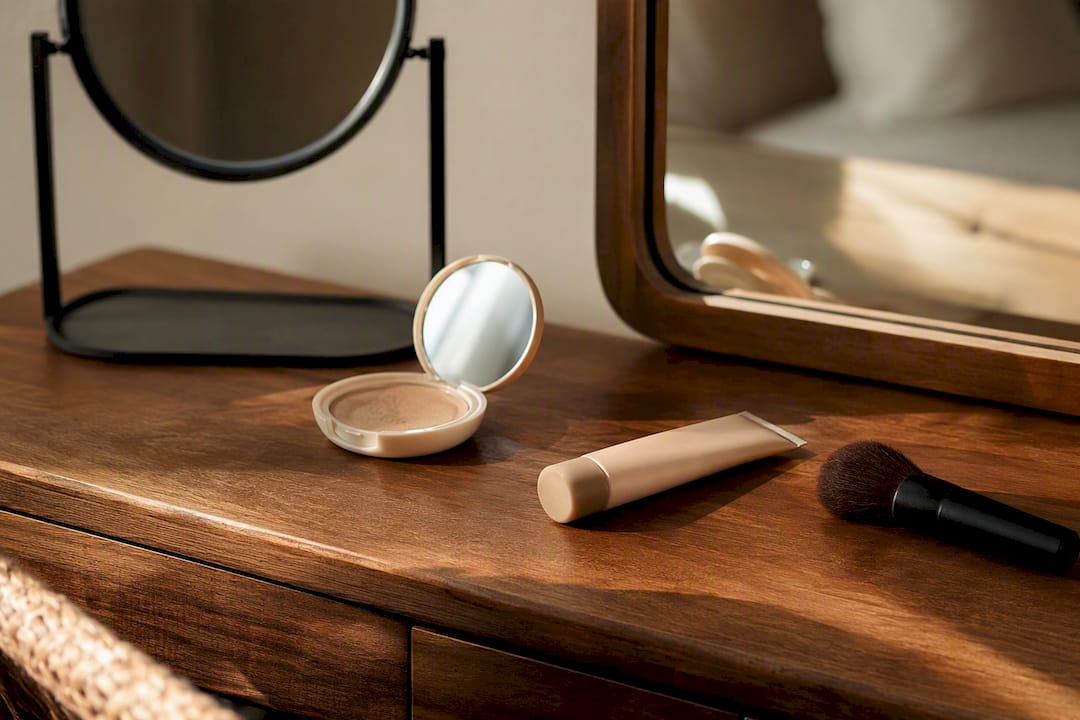
Removal matters just as much as selection. Sleeping in makeup is one of the most common, avoidable causes of stubborn breakouts, since it traps oil, sweat, and bacteria against skin overnight for six to eight hours straight. A proper double cleanse, an oil-based remover or micellar water first, followed by a regular gentle cleanser, gets foundation and concealer off completely instead of leaving a residue that a single wash misses.
Makeup brushes and sponges deserve attention too. A sponge or brush that touches your face daily without being washed becomes a place for bacteria to build up fast, then gets reapplied to skin every morning. Washing brushes weekly with a gentle soap and letting sponges air-dry fully between uses cuts down on that transfer significantly.
Why picking at pimples makes acne worse, not better
Squeezing a pimple feels productive in the moment. It rarely is. Picking pushes bacteria and inflammation deeper into the skin rather than out of it, which often turns a small, manageable pimple into a larger, more inflamed one that takes longer to heal.
The scarring risk is the bigger long-term concern. Picking damages the surrounding tissue and increases the odds of permanent textural scarring or prolonged dark marks, especially on deeper skin tones where post-inflammatory hyperpigmentation already lingers longer. A pimple left alone typically resolves in a week or two; a picked pimple can leave a visible mark for months.
If the urge to pick is hard to resist, a hydrocolloid pimple patch placed directly over an active blemish works well as a physical barrier, it protects the spot from fingers while also absorbing some fluid from the blemish overnight. For breakouts that keep tempting a squeeze because they’re painful or deep under the skin, that’s also one of the clearer signs to bring up with a dermatologist rather than trying to extract it at home.
What actually matters most in teen skincare
Most advice aimed at teens overcomplicates a problem that has a fairly simple solution. The research behind this guide points to one clear judgement: three basic steps, done consistently, beat ten expensive ones done sporadically. That’s not a compromise position, it’s what the evidence on OTC acne actives and paediatric dermatology guidance actually supports.
Where conventional advice falls short is patience. Teens (and often their caregivers) expect visible results in days, then abandon a product at week two, right before it would have started working. The 8 to 12 week rule isn’t a suggestion, it’s the actual timeline skin cell turnover requires, and skipping past it to try the next trending product is probably the single biggest reason teen skincare routines fail.
If there’s one thing to prioritize first, it’s restraint: pick fewer products, buy the proven basics over the trending ones, and give each change enough time to show whether it’s actually helping before adding anything else.
— Glenville
Build a routine that fits, without the guesswork
16thavenue’s beauty collection is built around the same principle this guide follows: proven basics over trendy extras. Instead of scrolling through dozens of influencer-hyped products hoping one works, you get a curated selection of affordable, non-comedogenic essentials, moisturizers, and beauty items chosen for how they actually perform on real skin, not how they photograph.

That curation matters most for teens still figuring out what their skin needs. Rather than buying five products to test one at a time, you can shop a shorter, more deliberate list and spend less overall while building the same evidence-backed routine outlined above. Browse the affordable beauty essentials collection to find non-comedogenic staples worth adding to your own three-step foundation, and check out must-have beauty products for 2026 for the season’s most practical picks before you build out the rest of your cart.
This article is general information, not a substitute for advice from a qualified doctor. Consult a qualified healthcare professional about your own circumstances before acting on anything here.
Sources
16thavenue’s beauty content draws on paediatric and dermatology sources, including HealthyChildren.org and NCBI clinical reviews, to keep recommendations grounded rather than trend-driven. Curated guides like must-have beauty products for 2026 and the role of moisturizers explainer reflect the same evidence-first approach used throughout this article.
- Healthychildren
- Adapalene and acne treatment evidence — NCBI Bookshelf
- Skincare routine for teens: Cheap, simple, consistent — DermApproved
- Guidance on introducing retinoids and safe use — Contemporary Pediatrics