


Step by step nail care: your complete home guide
TL;DR:
- Consistent at-home nail care, focusing on hydration, proper tools, and gentle shaping, leads to healthier nails. Proper routines prevent damage, infection, and premature chipping, maximizing nail strength and appearance.
Healthy nails start with a consistent, step by step nail care routine, not expensive salon visits. The professional term for this practice is a home manicure regimen, and it covers everything from daily hydration to full polish application. Done correctly, it prevents peeling, hangnails, and breakage while keeping your nails looking polished every day. This guide walks you through every stage, from the tools you need to the finishing techniques that make colour last.
What does step by step nail care actually involve?
Step by step nail care is the practice of maintaining nail health and appearance through specific daily, weekly, and periodic actions using the right tools and products. The goal is not just aesthetics. Proper nail maintenance protects the nail matrix, the living tissue beneath the base of each nail, and keeps the proximal nail fold intact as a biological seal against infection.
A daily routine requires only 90 seconds to 2 minutes of focused care. That short investment compounds over weeks into noticeably stronger, longer nails. Consistency in hydration and basic care improves nail health more reliably than switching between polish brands or trying new treatments every month.
What tools and products do you actually need?
The right tools make every step easier and less damaging. A glass nail file is the single most important upgrade you can make. Unlike metal files, a glass file seals the nail edge during filing rather than tearing it, which prevents micro-tears that lead to peeling and splits.
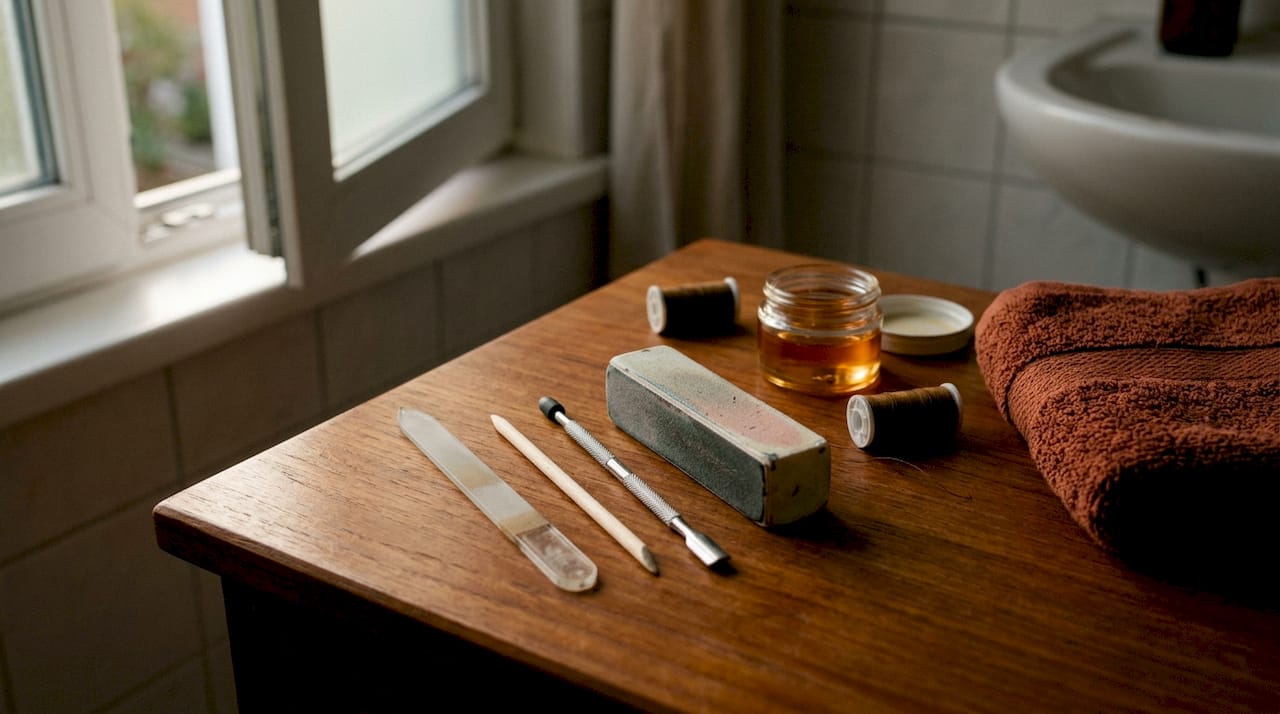
Beyond the file, a wooden orange stick or rubber-tipped cuticle pusher handles cuticle care without cutting. A four-sided buffer block smooths ridges without thinning the nail plate when used lightly. For products, you need an acetone-free nail polish remover for regular use, cuticle oil (jojoba or vitamin E based), a ceramide-rich hand cream, and a base coat and top coat for polish application.
| Tool or product | Function | Why it matters |
|---|---|---|
| Glass nail file | Shapes and seals nail edge | Prevents micro-tears and splits |
| Wooden orange stick | Pushes back cuticles gently | Avoids cutting the biological seal |
| Four-sided buffer block | Smooths nail plate surface | Reduces ridges without thinning |
| Cuticle oil | Hydrates nail fold and bed | Protects nail matrix and prevents hangnails |
| Ceramide-rich hand cream | Locks moisture into skin | Supports nail bed and surrounding skin health |
| Base coat | Bonds polish to nail plate | Improves adhesion and prevents staining |
| Top coat | Seals and protects colour | Extends manicure life and adds shine |
Pro Tip: Clean your tools with isopropyl alcohol after every use. Bacteria on a cuticle pusher or buffer can cause nail fold infections, which are far more painful to treat than they are to prevent.
How to build a daily and weekly nail care routine
Daily care: 90 seconds, every day
Daily nail maintenance centres on hydration. Apply cuticle oil directly to the proximal nail fold, the skin at the base of each nail, and massage it in for 30 seconds per hand. Follow with a ceramide-rich hand cream, working it into the nail bed and surrounding skin. Hydration focused on the proximal nail fold preserves the natural seal and supports nail matrix health, preventing both infections and hangnails.
Avoid using your nails as tools during the day. Opening cans, scraping labels, and prying lids all create stress fractures in the nail plate that worsen over time.
Weekly care: shaping and cuticle maintenance
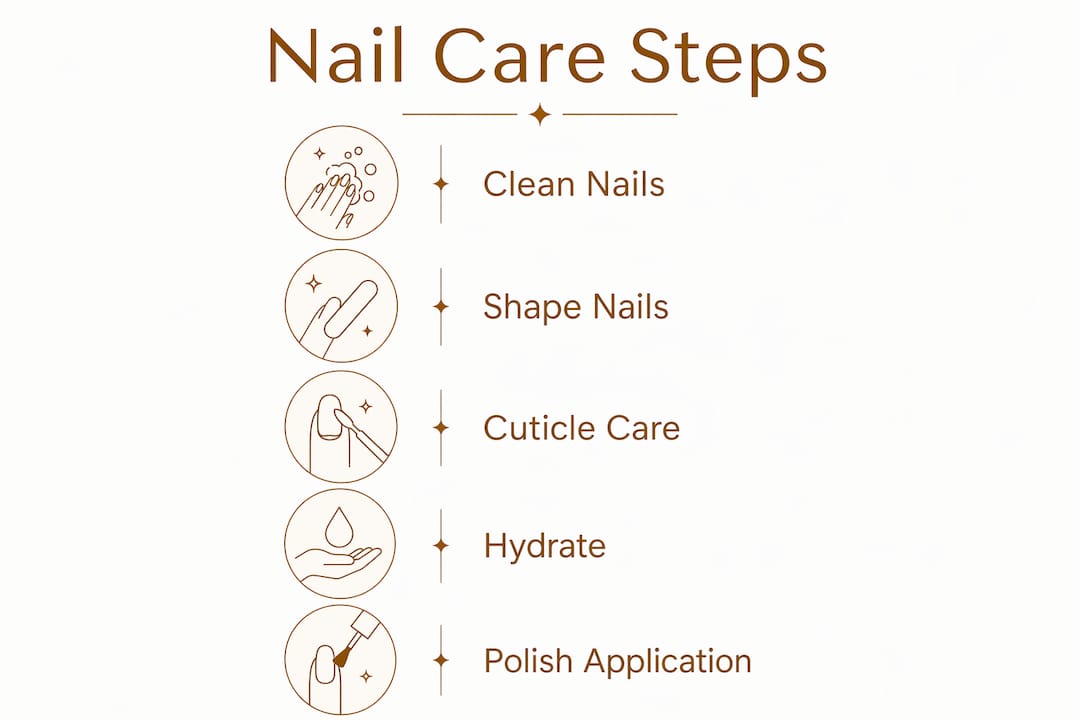
Follow these steps once a week for a complete nail maintenance session:
- File nails dry. Shape each nail using your glass file before any soaking or washing. Filing dry nails prevents the microscopic fraying that happens when soft, wet nails meet an abrasive surface. File in one direction only.
- Soak fingertips. Place fingertips in warm water for 3–5 minutes to soften the cuticle area. Add a few drops of cuticle oil to the water for extra benefit.
- Push cuticles back gently. Use your orange stick or rubber-tipped pusher to ease the cuticle back toward the nail fold. Never cut cuticles. Cutting cuticles risks infection and disrupts the biological seal that protects your nail matrix.
- Buff lightly. Use the smoothing side of your buffer block once across each nail to remove surface ridges. Do not over-buff.
- Apply cuticle oil and hand cream. Finish with your daily hydration routine to seal in moisture after the soak.
Pro Tip: Wear rubber gloves for washing dishes and cleaning. Prolonged water exposure softens and weakens the nail plate, and household chemicals strip the natural oils your cuticle oil works to replace.
Full step by step at-home manicure process
A complete at-home manicure, from polish removal to finished top coat, takes 45–60 minutes across eight core steps. Rushing any stage is the main reason home manicures chip within two days.
- Remove old polish. Saturate a cotton pad with acetone-free remover and press it flat against the nail. Hold for 10 seconds before wiping. The 10-second hold technique dissolves pigment fully so you wipe once cleanly, with no scrubbing friction that damages the nail surface.
- File and shape dry nails. Shape before soaking. Choose square, oval, or squoval based on your nail bed width. File in one direction with your glass file.
- Soak and push cuticles. Soak fingertips for 3–5 minutes, then gently push cuticles back with your orange stick. Do not cut.
- Cleanse and dehydrate the nail plate. Wipe each nail with a cotton pad soaked in acetone or rubbing alcohol. This dehydration step removes invisible oils from the nail surface, which dramatically improves polish adhesion and how long your manicure lasts.
- Apply base coat. Brush one thin, even layer from base to tip. Let it dry for 2 minutes.
- Apply two thin colour coats. Thin coats dry faster and chip less than one thick coat. Wait 2 minutes between coats. Check out the latest nail polish colour trends if you want fresh inspiration for your next shade.
- Apply top coat and cap the free edge. Brush the top coat over the nail surface, then run the brush across the very tip of the nail. This tip-wrapping technique is the professional secret to preventing chipping at the edges, where wear starts first.
- Allow full drying time. Wait at least 10 minutes before light activity and a full hour before anything that risks denting the polish.
Common manicure mistakes to avoid
- Applying thick colour coats to save time. They take longer to dry and peel faster.
- Skipping the dehydration wipe before base coat. Polish will lift within days.
- Filing back and forth in a sawing motion. This shreds the nail edge.
- Cutting cuticles instead of pushing them. Every cut creates a small wound.
- Touching nails together while polish is wet. Even “dry-touch” polish dents under pressure for the first hour.
Pro Tip: Apply a fresh layer of top coat every two to three days to extend your manicure. It reseals the colour and adds another barrier against chipping without redoing the full process.
How to maintain nail health between manicures
Maintenance between manicures determines how your nails grow, not just how they look. The most impactful habit is daily cuticle oil application. Oil applied to the proximal nail fold keeps the seal flexible and hydrated, which directly supports the nail matrix growing healthy new nail beneath.
Cutting your cuticles feels tidy in the moment, but it removes the only barrier between your nail matrix and bacteria. A torn or cut cuticle is an open invitation to infection. Push, never cut, and your nails will grow faster and stronger within weeks.
When nails feel thin or flexible, take a polish break for one to two weeks. Apply a keratin-based nail strengthener as a base coat during this period. Avoid soaking hands for extended periods, and reapply hand cream every time you wash your hands.
Recognise the signs that warrant professional attention. Persistent discolouration, thickening, or separation of the nail plate from the nail bed are signs of a fungal infection or other condition that home care cannot resolve. A dermatologist or licensed nail technician can assess and treat these properly.
- Apply cuticle oil morning and night for maximum hydration benefit.
- Buff lightly once a week, never more. Over-buffing thins the nail plate permanently.
- Take a polish-free week every 6–8 weeks to let the nail plate breathe and recover.
- Wear gloves for gardening, cleaning, and any task involving prolonged water or chemical exposure.
- Eat protein and biotin-rich foods. Nails are made of keratin, a protein, and diet directly affects growth rate and strength.
The role of nail art in your beauty routine is most rewarding when the nails underneath are healthy. Art on damaged nails chips faster and looks less polished regardless of technique.
Key takeaways
A consistent nail care routine built on daily hydration, dry filing, and proper polish application produces stronger, healthier nails than any single product or treatment.
| Point | Details |
|---|---|
| File nails dry | Always shape before soaking to prevent microscopic tears and splits. |
| Never cut cuticles | Push gently instead to protect the biological seal around the nail matrix. |
| Dehydrate before polish | Wipe the nail plate with acetone or alcohol to remove oils and improve adhesion. |
| Cap the free edge | Run top coat across nail tips to prevent chipping where wear begins first. |
| Daily hydration is non-negotiable | Apply cuticle oil to the proximal nail fold every day for lasting nail health. |
What I’ve learned after years of at-home manicures
The biggest mistake I made early on was treating nail care as purely cosmetic. I focused entirely on colour and finish, and my nails paid for it. They peeled, broke at the corners, and never seemed to grow past a certain length. The turning point was understanding that the nail fold is not just skin around the nail. It is a protective structure, and once I started treating it that way, everything changed.
Cuticle oil became non-negotiable for me, not as a finishing touch but as the foundation of the whole routine. I apply it every morning before I do anything else. The difference in nail flexibility and growth rate within a month was more noticeable than any strengthening polish I had tried. Hydration genuinely outperforms every topical treatment I have tested.
The other lesson that took me too long to learn is that thin colour coats are not just a professional preference. They are structurally sounder. A thick coat traps solvent inside as it dries, which creates bubbles and weak spots. Two thin coats bond differently, and the result lasts nearly twice as long in my experience.
If you are starting from scratch or rebuilding damaged nails, resist the urge to cover everything with polish immediately. Give your nails two weeks of oil, cream, and no colour. The improvement you see in that fortnight will motivate you to keep the routine going far more than any shade of red ever could.
— Glenville
Build your nail care kit with 16thavenue
Getting your nail care routine right starts with having the right products on hand.

16thavenue carries a curated selection of beauty essentials to support every stage of your nail care routine, from hydrating treatments to finishing tools. Whether you are building your first kit or restocking your favourites, the collection covers what you need without overcomplicating it. While you are there, browse the full range of women’s fashion and beauty products, including seasonal picks like the woolen coat collection for a complete head-to-toe refresh this season. Free shipping is available to most destinations.
FAQ
How long does a full at-home manicure take?
A complete at-home manicure takes 45–60 minutes from polish removal to finished top coat. Rushing drying time between coats is the most common reason home manicures chip early.
Should you cut or push cuticles?
Always push cuticles back gently with a wooden orange stick. Cutting cuticles removes the biological seal protecting the nail matrix and creates a risk of infection.
Why does nail polish peel off so quickly at home?
Skipping the dehydration step before base coat is the most common cause. Wiping the nail plate with acetone or rubbing alcohol removes invisible oils that prevent polish from bonding properly.
How often should you apply cuticle oil?
Apply cuticle oil at least once daily, ideally morning and night. Daily application to the proximal nail fold keeps the nail matrix hydrated and supports healthy nail growth.
Is it better to file nails wet or dry?
File nails dry, before any soaking or washing. Wet nails are softer and more fragile, making them prone to microscopic tears and splits when filed.