

Sustainable Fashion Benefits: What Every Woman Should Know
TL;DR:
- Choosing sustainable fashion reduces environmental damage by lowering emissions, water use, and waste. It also offers better durability and resale value, making it more cost-effective over time. Supporting ethical brands and circular systems promotes social fairness and minimizes waste through reuse and recycling.
Every time you reach for something new to wear, you’re quietly casting a vote with your wallet. The global fashion industry produces enormous quantities of clothing each year, and a growing number of women are asking whether their wardrobe choices reflect who they actually are and what they actually value. Sustainable fashion is no longer a niche concept reserved for eco-activists; it’s a practical, stylish approach to dressing that balances aesthetic ambition with genuine care for the world. Here’s what the real advantages look like, from your environment to your budget to the workers who make your clothes.
Table of Contents
- Sustainable fashion reduces environmental impact
- Durability and long-term value: Why quality outlasts trends
- Ethical production: Supporting fair labour and transparency
- Circular fashion and next-gen innovation
- How to choose truly sustainable style: Navigating greenwashing
- Why true sustainable style is about more than just fabric
- Elevate your wardrobe with sustainable picks from 16th Avenue
- Frequently asked questions
Key Takeaways
| Point | Details |
|---|---|
| Eco impact matters | Sustainable fashion helps drastically reduce waste, emissions, and water use compared to fast fashion. |
| Better value investment | Quality, durability, and resale make sustainable clothes cost-effective over time. |
| Choose with confidence | Pay attention to third-party labels and supply chain transparency to avoid greenwashing. |
| Supports ethical jobs | Opting for sustainable brands means fairer wages and safer workplaces for garment workers. |
| Circular fashion grows | Innovative resale and take-back programs keep clothing in use and out of landfill. |
Sustainable fashion reduces environmental impact
Let’s break down the most talked-about benefit: protecting the planet. The fashion industry is one of the most resource-intensive sectors globally, and its environmental toll is staggering. Fast fashion relies on cheap synthetic fibres, enormous water consumption, and chemical-heavy dyeing processes that pollute local waterways in producing countries.
Sustainable brands take a fundamentally different approach. They prioritise organic cotton, recycled polyester, Tencel, and other low-impact materials. They design garments for longevity rather than rapid turnover. And they adopt practices that cut down on greenhouse gas emissions at every stage of the production chain. According to research on cutting fashion emissions, the potential for emissions reduction in this sector is enormous when the right systems are in place.
Sustainable fashion reduces environmental impact through lower carbon emissions, water usage, and waste generation compared to fast fashion. That’s not a marketing claim; it’s a measurable, documented difference.
The concrete shifts you’ll see when you choose sustainable brands include:
- Lower carbon emissions from cleaner manufacturing and local sourcing
- Dramatically reduced water consumption since organic fibres avoid pesticide-heavy irrigation
- Less landfill waste because durable pieces aren’t discarded after a handful of wears
- Fewer microplastic pollutants released into waterways from natural vs. synthetic fabrics
“Each garment you choose from a responsible brand represents a small but real reduction in industrial waste, chemical use, and energy consumption. Multiply that by millions of shoppers and the numbers become impossible to ignore.”
Understanding what is sustainable fashion at its core helps you see that every purchase decision is part of a larger system. Choosing well, even occasionally, moves the needle.
Durability and long-term value: Why quality outlasts trends
With the planet in mind, let’s address your wallet, because style should be both conscious and cost-effective. One of the most persistent myths about sustainable fashion is that it costs too much. What that argument ignores is the concept of cost-per-wear, which is simply the purchase price divided by the number of times you actually wear the item.
Sustainable garments have superior durability, lasting 50 to 120 wears versus just 7 to 15 for fast fashion equivalents, translating to a cost-per-wear of roughly $0.40 to $2.00 compared to $0.80 to $3.50. That means a $120 sustainably made jacket worn 80 times costs you $1.50 per wear. A $40 fast fashion alternative worn 12 times costs you $3.33 per wear. The numbers speak clearly.

| Item type | Average wears | Cost-per-wear range | Resale value retention |
|---|---|---|---|
| Sustainable garment | 50 to 120 | $0.40 to $2.00 | 35% to 55% |
| Fast fashion garment | 7 to 15 | $0.80 to $3.50 | 8% to 15% |
Beyond individual items, consumers shifting to sustainable fashion achieve 18 to 27% lower total wardrobe lifecycle costs over five years, with significantly higher resale value retention. That 35 to 55% resale retention from quality pieces versus 8 to 15% for fast fashion means your sustainable wardrobe holds financial value the way fast fashion never could.
Exploring eco-friendly shopping explained in practice also reveals that durable clothing creates a natural wardrobe discipline: you buy less, choose more carefully, and end up with a closet that actually works for you.
Pro Tip: Before any purchase, ask yourself: “Will I wear this at least 30 times?” If yes, the cost-per-wear math almost always favours a quality, sustainable piece over a throwaway alternative.
Key advantages of building a durable wardrobe include:
- Fewer replacements means less money spent overall, year after year
- Stronger resale value so consignment stores and platforms like Depop or Poshmark reward you
- Timeless design in sustainable pieces tends to outlast seasonal micro-trends
- Better materials mean garments retain their shape, colour, and structure over hundreds of washes
Understanding slow fashion choices helps reinforce that slowing down your buying cycle is not a sacrifice; it’s a genuinely smarter way to dress.
Ethical production: Supporting fair labour and transparency
Durable style is deeply satisfying. But what if your choices could also change lives for the better? The human side of fashion is often invisible to consumers. Garment workers, the majority of whom are women in developing countries, frequently work in difficult conditions for wages that fall far short of living standards.
Sustainable fashion promotes ethical labour with far higher living wage compliance (30 to 60% of sustainable brands versus fewer than 5% in fast fashion) and supply chain transparency rates of 40 to 70% disclosing Tier 1 to 3 suppliers, compared to fewer than 10% in the fast fashion sector. That gap is enormous, and it directly reflects how workers are treated.
Here’s how to shop more ethically in practical terms:
- Look for certifications such as Fair Trade, B Corp, or GOTS (Global Organic Textile Standard) on product pages and labels.
- Check brand transparency reports to see if companies publish supplier lists and audit results.
- Research third-party scoring platforms like Good On You, which rate brands on environmental, labour, and animal welfare criteria.
- Ask brands directly via social media or email; responsible companies are proud to answer questions about their supply chains.
- Support brands that invest in community programmes in producing regions, from health care to education for workers.
“When you choose ethical fashion matters with intention, you’re not just buying a shirt. You’re participating in an economic relationship that can either uplift or undermine workers on the other side of the world.”
Understanding about ethical fashion in depth makes it clear that transparency is not just a buzzword; it’s a functional indicator of a brand’s values. Brands willing to show you their supply chains are the ones confident in what you’ll find there.
Pro Tip: Search for the brand name plus “supply chain” or “transparency report” before buying. Five minutes of research can tell you a great deal about where your money is actually going.
Circular fashion and next-gen innovation
Beyond supporting workers, sustainability also means keeping clothing in use and out of landfills. Circular fashion is one of the most exciting and rapidly evolving areas in the entire industry. The traditional linear model is “make, wear, discard.” The circular model loops garments back into use at the end of their first life through resale, rental, repair, and take-back programmes.
Circular strategies like take-back programmes divert millions of garments from landfills, and the secondhand market is projected to reach $350 billion by 2030, growing at a 12% compound annual growth rate. That’s a massive economic signal that consumers globally want fashion to last longer and generate less waste.
| Model | End of life | Landfill diversion | Consumer cost |
|---|---|---|---|
| Linear (fast fashion) | Discard after limited use | Very low | High over time |
| Circular (sustainable) | Resale, repair, take-back | High | Lower over time |
The practical ways circular fashion is showing up right now include:
- Brand take-back programmes where you return worn items for store credit or responsible recycling
- Peer-to-peer resale platforms that give garments a second and third life
- Clothing rental services for occasion wear, reducing demand for single-use purchases
- Repair cafés and brand repair services that extend garment life rather than replacing items
- Fibre-to-fibre recycling technology that recovers material from blended fabrics
Understanding the fast fashion impact on waste streams makes the circular alternative far more compelling. When you see how much ends up in landfill from traditional fashion, the appeal of a closed-loop system becomes undeniable.
The secondhand market in particular is growing faster than any other segment of fashion. Joining that system as a buyer and seller means your wardrobe becomes an asset rather than a cost centre.
How to choose truly sustainable style: Navigating greenwashing
Sustainable fashion offers genuine benefits, but not every “eco” claim is what it seems. Greenwashing, where brands use environmental language without backing it up with action, is widespread. Spotting the real thing requires a bit of know-how.
Multicriteria sustainability scoring, using A to E style labels, integrates life cycle assessment for environmental footprint, ILO-aligned social metrics, and durability scoring. This kind of rigorous methodology is specifically designed to combat greenwashing and give consumers genuine, comparable information.
Here’s a practical checklist for spotting authentic sustainable fashion:
- Look for third-party certifications rather than brand-generated claims. GOTS, Bluesign, Oeko-Tex, and Fair Trade are meaningful; a brand’s own “eco” badge is not.
- Check the durability claim by reading reviews and examining fabric composition. Natural and recycled blends tend to outperform cheap synthetics.
- Verify supply chain data through published audit reports or transparency platforms.
- Assess design longevity by asking whether the piece is a classic or a trend-driven style you’ll discard in six months.
- Cross-reference independent ratings from platforms like Good On You or the Fashion Transparency Index.
“The best sustainable brands don’t need to shout about their credentials. They publish the evidence clearly and let you draw your own conclusions.”
Extending your sustainable values to beauty and personal care makes your whole lifestyle more consistent. The guide to sustainable beauty is a natural companion to building a conscious wardrobe, covering eco-friendly skincare and cosmetics choices that align with the same values you bring to your clothing.
Pro Tip: Download the Good On You app before your next shopping trip. It rates thousands of brands on environment, labour, and animal welfare criteria in seconds, making it easy to shop your values wherever you are.
Why true sustainable style is about more than just fabric
Here’s what many sustainable fashion lists aren’t telling you. The conversation often stops at organic cotton and carbon offsets, but the real frontier is something more ambitious: regenerative fashion. Circular systems, while genuinely valuable, have limitations. Material degradation and downcycling (where fibres are broken down into lower-quality uses) are real constraints. Regenerative fashion systems go further by restoring biodiversity and soil health rather than simply reducing harm. That’s a meaningful distinction.
On the cost argument, the news is getting better. The upfront green premium has already narrowed from 48% in 2021 to approximately 29% today, and the growth of resale means you can buy sustainable pieces at prices that genuinely compete with fast fashion. Second-hand sustainable fashion is arguably the smartest possible entry point if your budget is tight right now.
Policy is also shifting the landscape. EU EPR fees of $0.50 to $3 per garment are expected by 2027, effectively raising the real cost of fast fashion by passing on the environmental clean-up costs to producers. This will level the playing field significantly and make sustainable choices even more economically rational.
Our honest perspective: sustainability is a direction, not a destination. You don’t need to overhaul your entire wardrobe overnight. Choosing one durable piece over three disposable ones is genuine progress. Buying secondhand once this month is meaningful action. The women we most admire in fashion are the ones who’ve made peace with a smaller, better, more intentional wardrobe rather than chasing every trend. That’s a style philosophy that ages incredibly well.
Elevate your wardrobe with sustainable picks from 16th Avenue
Ready to put your eco-friendly values into action? Choosing consciously doesn’t mean giving up style, and at 16th Avenue, we make it easy to find on-trend pieces that are built to last and designed to work across seasons.
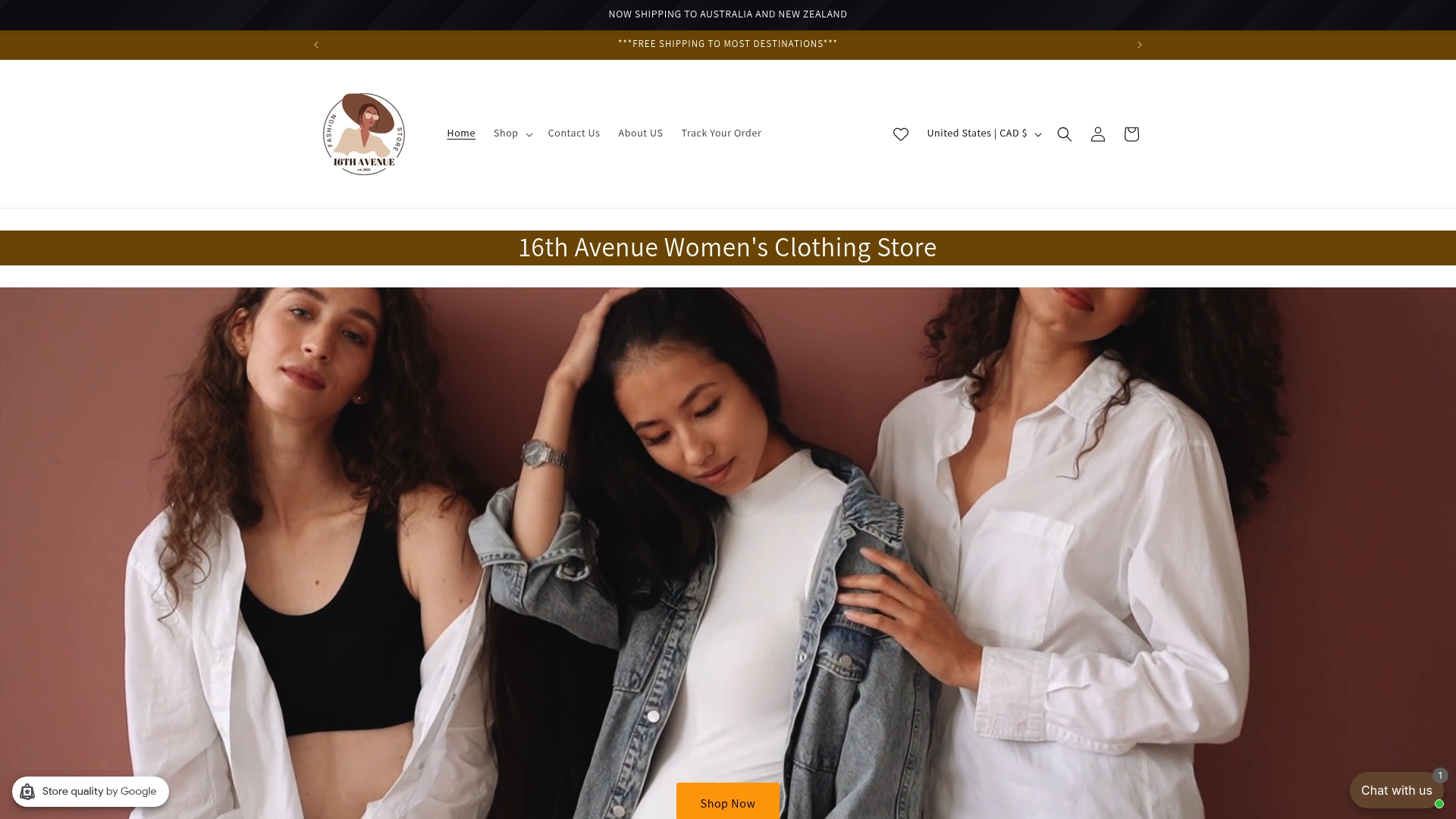
Start with foundational wardrobe investments that deliver real cost-per-wear value. A well-made woolen coat is the kind of season-defining piece that stays stylish for years and holds its value beautifully. For everyday movement, our breathable sneakers combine comfort and durability without sacrificing a polished look. Browse the full curated shop sustainable fashion collection at 16th Avenue and discover how many thoughtful, lasting choices are waiting for you, with free shipping to most destinations worldwide.
Frequently asked questions
How does sustainable fashion directly reduce my carbon footprint?
Switching to sustainable brands lowers overall emissions from apparel by using eco-friendly materials, cleaner production processes, and dramatically reducing garment waste. Sustainable fashion reduces environmental impact through lower carbon emissions, water usage, and waste generation compared to fast fashion.
Are sustainable clothes actually more affordable in the long run?
Yes, because wardrobe lifecycle costs are 18 to 27% lower over five years for sustainable shoppers, driven by durability and resale value retention of 35 to 55% versus just 8 to 15% for fast fashion. The cost-per-wear math consistently favours quality pieces.
What are the benefits of the circular fashion model?
Circular fashion keeps garments out of landfills through take-back programmes, repair services, and a thriving resale economy. The secondhand market is projected to reach $350 billion by 2030, growing at 12% annually, offering shoppers affordable entry points into sustainable style.
How can I tell if a brand is genuinely sustainable?
Look for third-party certifications, published supply chain audits, and independent scoring platforms rather than self-declared “eco” labels. Multicriteria sustainability scoring using A to E labels integrates environmental, social, and durability metrics to give you genuinely comparable information.
Will new policies make sustainable fashion mainstream?
Yes; EU EPR fees of $0.50 to $3 per garment arriving by 2027 will raise the real cost of fast fashion and reward circular, durable alternatives, making sustainable choices even more economically competitive for everyday shoppers.
Recommended
- Why sustainable fashion matters: cut emissions by 44% in 2026 – 16th Avenue
- Sustainable Fashion: Why It Matters for Modern Style – 16th Avenue
- Sustainable shopping explained: Make eco-friendly fashion choices – 16th Avenue
- Why ethical fashion matters: 87% cut emissions by 2026 – 16th Avenue
- Why sustainable shoe materials matter: 47% less carbon impact – YDA UK
- Top ethical jewellery trends for a sustainable 2026 – blackwellonline