

The role of denim in fashion: 2026 guide
TL;DR:
- Denim is the most culturally significant fabric in fashion, serving as workwear, protest symbol, and luxury item. Its evolution over 150 years demonstrates its universal appeal, durability, and ability to transcend social boundaries. In 2026, trends favor sophisticated, lasting styles like stovepipe cuts and heritage selvedge denim, solidifying its place as a wardrobe essential.
Denim is the single most culturally loaded fabric in the history of fashion, functioning simultaneously as workwear, protest symbol, luxury material, and everyday staple. The global denim market reached $101 billion by December 2025, a 28% increase that confirms denim is not a trend but a permanent pillar of the global clothing industry. No other fabric crosses every demographic, price point, and occasion the way denim does. From Levi Strauss’s original riveted work trousers to Balenciaga runway pieces, the role of denim in fashion is unique: it carries cultural memory while absorbing whatever the current moment demands of it.
How has denim shaped the history of fashion?
Denim’s story begins in 1873 when Levi Strauss and Jacob Davis patented the copper-riveted work trouser designed for California gold miners. The fabric itself, a twill-woven cotton originally from Nîmes, France, was chosen for its resistance to tearing under physical labour. That utilitarian origin is the foundation of everything denim became afterward.
The shift from workwear to cultural symbol happened in two distinct waves. Post-World War II, returning soldiers wore their jeans off-duty, and Hollywood amplified the look through Marlon Brando in The Wild One and James Dean in Rebel Without a Cause. By the 1960s and 70s, denim had become the uniform of youth rebellion, worn by civil rights marchers, anti-war protesters, and rock musicians alike. Denim evolved from 19th-century workwear into a universal garment crossing every social boundary, a span of over 150 years that no synthetic fabric has come close to matching.
The key milestones in denim’s cultural evolution include:
- 1873: Levi Strauss and Jacob Davis patent the riveted jean
- 1950s: Hollywood transforms denim into a symbol of rebellion and youth identity
- 1970s–80s: Designer labels like Calvin Klein and Gloria Vanderbilt bring denim into luxury retail
- 1990s: Distressed and acid-washed styles reflect grunge and hip-hop aesthetics
- 2000s–present: Denim enters high couture and sustainability conversations simultaneously
“Denim democratized American fashion by transcending economic and social class boundaries, becoming a global cultural export.” — Shawn Grain Carter, fashion educator, as cited by CNBC
That democratisation is the history of denim in fashion in a single sentence. No other garment has been worn by a coal miner and a head of state in the same decade.
What are the key denim trends in fashion for 2026?
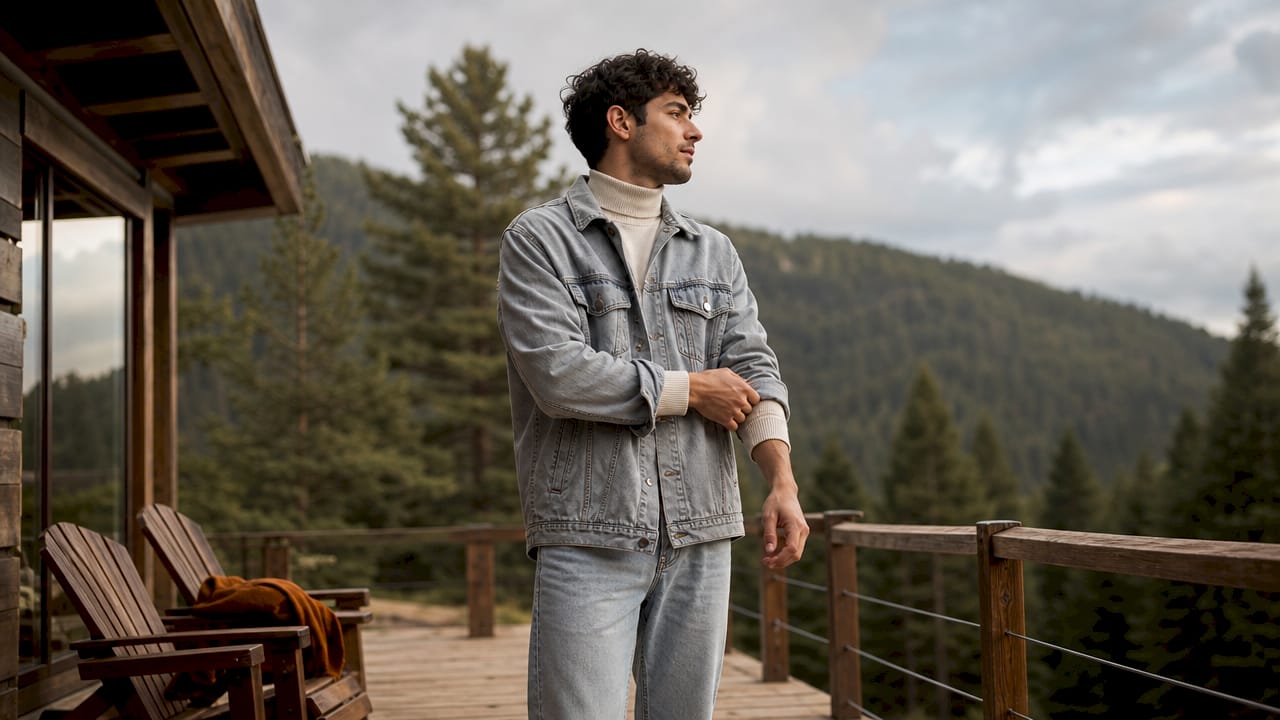
The 2026 denim moment is defined by one word: sophistication. Consumers are moving away from the ultra-distressed, oversized silhouettes that dominated the early 2020s and toward pieces that feel considered and lasting. 2026 denim trends centre on stovepipe cuts, printed denim, and the denim shacket, reflecting a shift toward structured, elevated casual wear.
The six trends worth knowing this year are:
- Stovepipe jeans: A straight, narrow leg that sits higher on the waist than a classic straight cut. It flatters a wide range of body types and pairs equally well with a blazer or a simple tee.
- Low-rise fits: Making a return after years of high-rise dominance, low-rise cuts are appearing in tailored, clean versions rather than the ultra-low styles of the early 2000s.
- Bermuda denim shorts: Longer hemlines in shorts are replacing the micro-cut styles, offering a more polished warm-weather option.
- Printed and coloured denim: Pastel washes, muted earth tones, and subtle prints are replacing the standard indigo as the go-to choice for consumers wanting something beyond the classic blue.
- The denim shacket: A shirt-jacket hybrid in denim fabric that functions as outerwear in transitional weather and as a layering piece year-round.
- Selvedge and heritage denim: Tightly woven, mill-made denim with a clean finished edge, signalling quality and longevity over disposable fashion.
Stylist Marianne Gallagher McDonald describes the 2026 denim energy as “sophisticated but lived-in,” a balance between casual ease and dressier occasions. That description captures exactly why denim continues to outperform every other fabric category in retail.
Pro Tip: When shopping for 2026 denim trends, prioritise fit over finish. A well-cut stovepipe jean in a standard indigo wash will outlast three pairs of trend-driven printed styles. Invest in the silhouette first, then experiment with colour and texture.
Sustainability is also reshaping how consumers approach denim selection. Heritage-made selvedge denim represents a shift toward paying more upfront for durability rather than cycling through fast fashion pieces. This is not nostalgia. It is a calculated economic decision driven by the real cost-per-wear of quality construction.
How does denim compare with other fabrics for versatility?
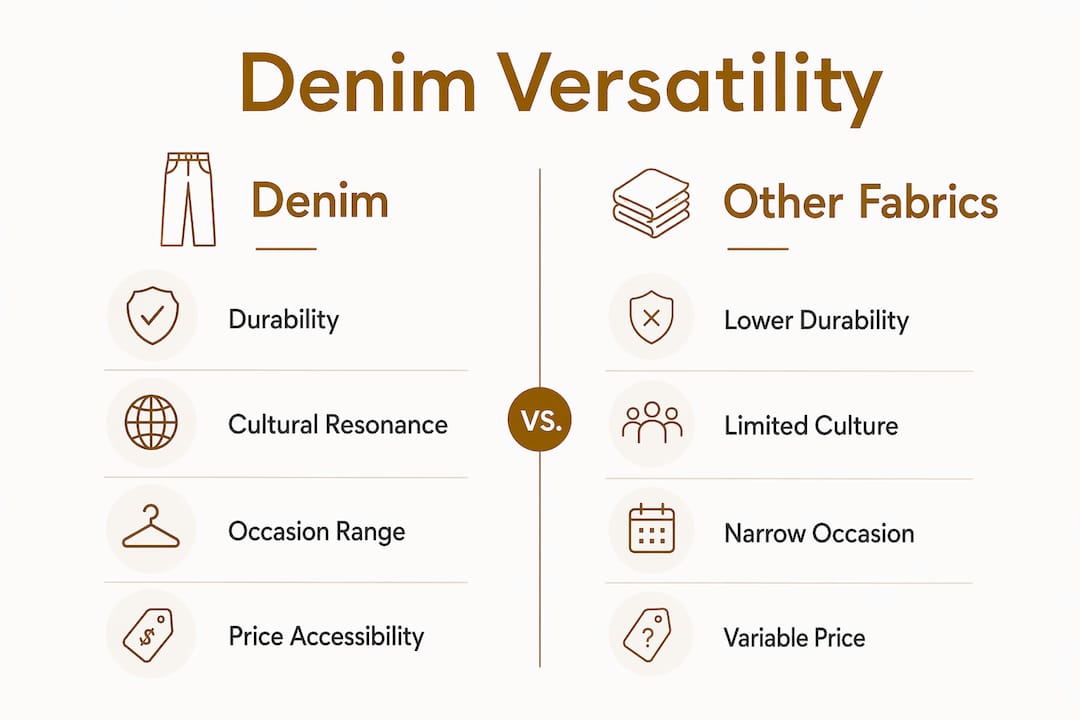
Denim’s advantages over competing fabrics are structural, cultural, and psychological. The comparison below captures why denim holds a position no other textile has been able to claim.
| Fabric | Durability | Cultural resonance | Occasion range | Price accessibility |
|---|---|---|---|---|
| Denim | Very high | Universal | Casual to formal | Mass to luxury |
| Cotton twill | High | Low | Casual to smart casual | Mass to mid-range |
| Wool | High | Formal/heritage | Smart casual to formal | Mid-range to luxury |
| Synthetic blends | Medium | Low | Activewear to casual | Mass market |
| Linen | Medium | Seasonal/artisan | Casual to smart casual | Mid-range |
The table makes the case clearly. No other fabric spans the full range of occasion, price point, and cultural meaning the way denim does.
What makes denim’s versatility genuinely unusual is its perceived neutrality. Technically, indigo is a colour, not a neutral. Yet denim functions as a neutral in most wardrobes because its adoption across all social and gender groups has created a shared visual language. You pair denim with anything because everyone already does.
Beyond aesthetics, denim functions as a protest canvas. Patches, embroidery, distressing, and custom painting have all been used to convey social and political messages on denim garments. No other mainstream fabric carries that tradition. Wool does not get embroidered with slogans. Linen does not get torn to signal solidarity. Denim absorbs meaning in a way that is unique to its cultural history.
The denim fabric versatility argument is also economic. A single pair of quality jeans worn three times per week for three years costs far less per wear than a seasonal synthetic piece worn ten times before it pills or fades.
How can you style denim for a modern wardrobe?
Styling denim effectively in 2026 comes down to understanding the difference between a wardrobe anchor and a trend piece. Most denim items should function as anchors: versatile, well-fitting, and seasonless. Trend pieces like printed denim or a shacket are additions, not foundations.
Start with fit. Finding the perfect pair of jeans involves identity, comfort, and non-standardised sizing, which is why so many consumers find the process frustrating. Sizing is not consistent across brands, so treat every new denim purchase as a fitting exercise rather than a number-matching one.
Practical styling principles worth following:
- Day to evening: A stovepipe jean with a tucked silk blouse and block-heeled mules transitions from a daytime meeting to dinner without a wardrobe change.
- Denim on denim: Wearing two denim pieces together works when the washes are clearly different. A dark indigo jacket over light-wash jeans reads as intentional. Matching washes read as accidental.
- Accessories: A structured leather bag or gold jewellery immediately lifts a casual denim outfit. Denim fashion accessories like belts and hats in complementary textures add dimension without competing with the fabric.
- Seasonal layering: The denim shacket worn open over a knit sweater is one of the most functional autumn layering combinations available, and it appears in 2026 women’s fashion trends across multiple style categories.
Pro Tip: Wash your jeans inside out in cold water and hang them to dry. This single habit extends the life of the dye, preserves the fabric structure, and keeps selvedge denim looking sharp for years longer than machine drying allows.
For consumers interested in the slow fashion approach, denim is one of the easiest categories to apply it to. Buy one excellent pair of high-waist jeans, one pair of slim-fit jeans, and one denim jacket. Wear them constantly. Replace them only when they genuinely wear out.
Key takeaways
Denim’s role in fashion is irreplaceable because it is the only fabric that combines structural durability, universal cultural resonance, and full occasion range at every price point.
| Point | Details |
|---|---|
| Market scale confirms dominance | The global denim market reached $101 billion in 2025, proving denim drives retail at every level. |
| Cultural history creates staying power | From 1873 workwear to 2026 couture, denim’s 150-year evolution is unmatched by any other fabric. |
| 2026 trends favour sophistication | Stovepipe cuts, selvedge quality, and the denim shacket reflect a shift toward lasting style over disposable fashion. |
| Versatility outperforms all competitors | No other fabric spans casual to formal, mass to luxury, and protest to runway simultaneously. |
| Fit and care determine long-term value | Prioritising correct fit and cold-water washing extends denim’s life and cost-per-wear advantage significantly. |
Why denim will never be replaced
I have spent years watching fashion cycles claim that some new fabric or silhouette would finally displace denim. Athleisure was supposed to do it. Then elevated basics. Then the cottagecore movement. None of it worked, and I think I understand why.
Denim is not just a fabric choice. It is a decision about identity. When someone puts on a well-worn pair of jeans, they are not thinking about trend alignment. They are reaching for something that feels like themselves. That psychological relationship is what no other textile has managed to build across 150 years and every demographic on earth.
What I find genuinely interesting about the 2026 moment is that consumers are getting smarter about quality. The shift toward selvedge and heritage denim is not driven by nostalgia. It is driven by people who have bought enough cheap denim to know the difference. That is a meaningful change in consumer behaviour, and it will push the entire category toward better construction and more honest pricing.
My prediction: the next five years will see denim consolidate further at both the luxury end and the quality mid-market, while fast fashion denim continues to lose ground. The consumers who understand sustainable fashion benefits are already making that shift. The rest will follow when their third pair of cheap jeans falls apart in the same year.
— Glenville
Shop denim and fashion-forward pieces at 16thavenue
16thavenue carries a curated selection of denim and trend-led women’s apparel that reflects exactly what is working in 2026. If the stovepipe silhouette and high-waist cuts are on your radar, the high waist jeans collection is a strong starting point. For a more relaxed but still polished look, the ripped slim fit denim jeans offer the lived-in quality that defines this season’s aesthetic. 16thavenue also offers free shipping to most destinations, making it straightforward to try new silhouettes without the commitment of in-store shopping. Explore the full collection and find the denim pieces that anchor your wardrobe this year.
FAQ
What is the role of denim in fashion today?
Denim functions as both a wardrobe foundation and a cultural symbol, spanning casual wear, designer collections, and everything between. Its $101 billion global market valuation confirms it remains the most commercially significant fabric in fashion.
How has denim evolved over the past 150 years?
Denim began as 19th-century American workwear patented by Levi Strauss and Jacob Davis, then transitioned through youth rebellion, designer luxury, and sustainability movements to reach its current status as a universal fashion staple.
What are the top denim trends for 2026?
The leading 2026 denim trends include stovepipe jeans, the denim shacket, Bermuda shorts, printed and coloured denim, and selvedge heritage styles that prioritise craftsmanship over fast fashion turnover.
Why is denim more versatile than other fabrics?
Denim’s indigo colour functions as a visual neutral, its durability outlasts most competing fabrics, and its cultural history allows it to work across every occasion from casual to formal without losing credibility.
What is selvedge denim and why does it matter?
Selvedge denim is woven on traditional shuttle looms with a tightly finished edge that prevents fraying, producing a denser, more durable fabric. It signals high craftsmanship and represents a long-term investment over disposable fast fashion alternatives.