


The role of patterns in fashion: style and design
TL;DR:
- Patterns serve as both decorative motifs conveying cultural identity and technical templates transforming sketches into garments, directly influencing style and fit. Fashion trends cycle approximately every 20 years due to social tensions between individuality and conformity, now splintering into diverse niches with simultaneous pattern popularity. Understanding pattern principles from Gestalt psychology and digital design tools enhances technical skill, cultural awareness, and sustainable decision-making in fashion.
Patterns are the defining visual and structural language of fashion, shaping everything from a garment’s silhouette to its cultural meaning. The role of patterns in fashion operates on two distinct levels: the decorative motifs printed or woven into fabric, and the technical templates that translate a designer’s sketch into a wearable garment. Both functions are inseparable from how style is created, communicated, and consumed. Understanding this dual nature is what separates a fashion enthusiast from a truly informed one. Whether you are studying at a design school or building your personal wardrobe, pattern literacy gives you a sharper eye and a stronger creative voice.
How do patterns influence fashion trends and style cycles?
Fashion trends do not move in straight lines. Analysis of 37,000 clothing images spanning 1869 to the present reveals that pattern styles renew in roughly 20-year waves. That means the plaid you wore in the early 2000s is not just nostalgic; it is mathematically predictable.
The engine driving this cycle is a social tension most people feel but rarely name. Consumers want to stand out from the crowd, but they also fear straying too far from what their peers accept. This tension between uniqueness and conformity is what pulls a pattern from niche to mainstream and eventually back to niche again. Florals peak, saturate the market, and then retreat until a new generation reclaims them as fresh.
“Fashion is not just about aesthetics. It is a mathematical system governed by social differentiation, where the desire to be distinct and the pull of belonging create predictable cycles of renewal.”
What has changed in recent decades is the fragmentation of these cycles. Simultaneous popularity of short, midi, and floor-length skirts signals that fashion is splintering into niche markets rather than following a single dominant trend. Geometric prints, animal motifs, and abstract watercolour patterns now coexist on the same runway season. This diversification reflects how the role of trends in fashion has shifted from dictating one look to offering a menu of identities.
| Pattern type | Current trend status | Typical cycle position |
|---|---|---|
| Floral | Perennial, peaks every 20 years | Mid-cycle resurgence |
| Geometric | Steady, driven by minimalism | Early adoption phase |
| Animal print | Recurring statement piece | Late-cycle saturation |
| Abstract/painterly | Growing niche appeal | Emerging trend |
What is the technical role of patterns in garment construction?
In fashion design education, the word “pattern” carries a precise technical meaning that goes beyond decoration. Patternmaking techniques such as draping and drafting are the methods designers use to convert a two-dimensional sketch into a three-dimensional garment. Drafting uses precise measurements and mathematical formulas to create flat pattern pieces, while draping involves pinning fabric directly onto a dress form to discover shape organically.
The choice between these two approaches affects far more than aesthetics. Drafting offers repeatable precision, which is critical for mass production. Draping allows for sculptural creativity that is harder to standardise but produces garments with a fluid, couture quality. Confusing decorative motifs with construction patterns is a common error among beginners, and it leads to misaligned prints and poor garment fit. Understanding both is non-negotiable for anyone serious about how fit transforms fashion.
Pattern layout on fabric also carries significant financial and environmental consequences. Research comparing sleeve pattern types found that the set-in sleeve achieves 81.26% fabric utilisation, the highest of any sleeve construction method. For a medium-sized manufacturer, optimising pattern layout across thousands of units translates to millions of dollars saved annually in fabric costs.
Pro Tip: When studying patternmaking, practise both drafting and draping on the same design. The contrast reveals how each method interprets the same silhouette differently, and that gap is where your design instinct develops.
| Sleeve type | Marker efficiency | Relative fabric consumption |
|---|---|---|
| Set-in sleeve | 81.26% | Lowest |
| Raglan sleeve | Lower | Moderate |
| Gusseted sleeve | Lowest | Highest |
How does perceptual psychology explain why patterns work?
Patterns do not just decorate a garment. They direct the human eye, create emphasis, and alter the perceived shape of the body. The explanation comes from Gestalt psychology, a framework that describes how the brain automatically groups visual information into meaningful wholes.
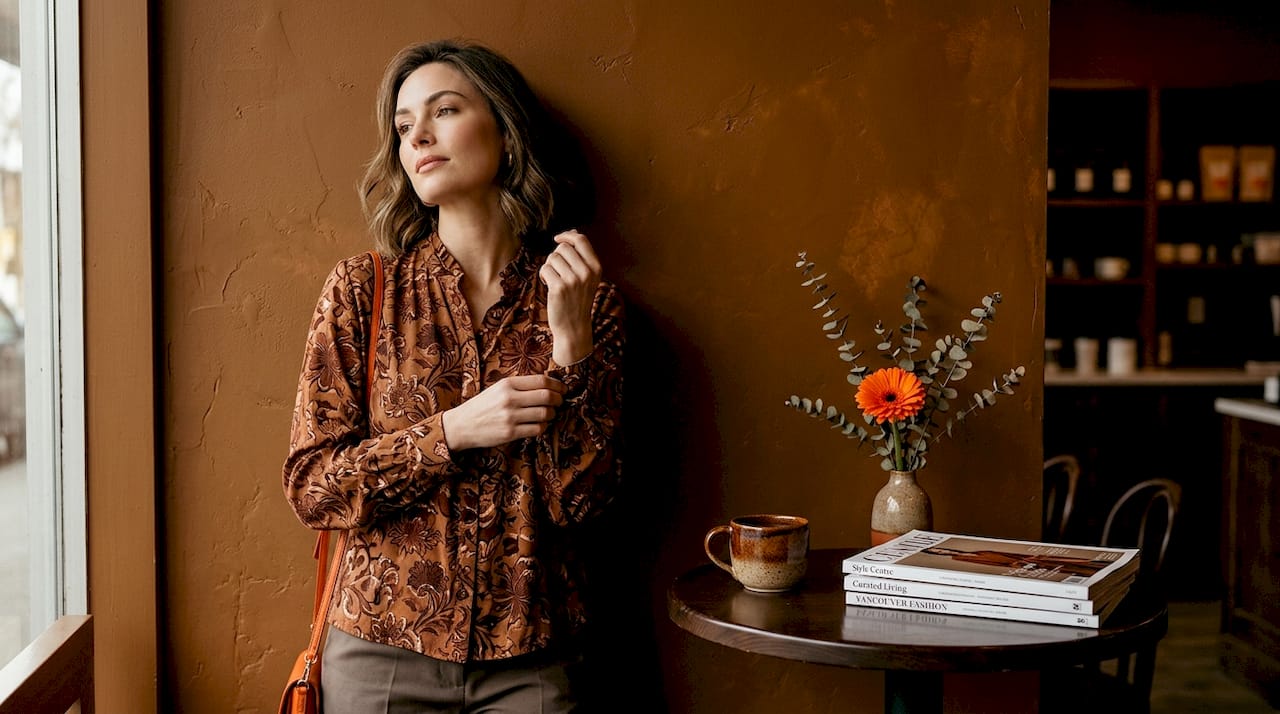
Gestalt laws such as similarity, closure, and figure-ground explain why a repeated stripe reads as a unified direction rather than a collection of individual lines. Similarity causes the eye to group elements that share colour or shape, which is why a monochromatic geometric print feels orderly while a clashing multi-colour pattern feels chaotic. Closure allows the brain to complete incomplete shapes, which is why a broken check pattern still registers as a grid.
These principles have direct styling consequences. A large-scale pattern draws the eye outward and creates the perception of volume, while a small, dense repeat pulls the eye inward and appears to reduce mass. Patterns communicate cultural identity and influence perception through these established visual grouping rules, which means every pattern choice is also a statement about how you want to be seen.
Pro Tip: To use Gestalt principles in your own styling, pair a bold large-scale print on top with a solid or fine-textured bottom. The contrast in scale creates visual hierarchy and prevents the eye from being overwhelmed.
The same logic applies to logo design, interior architecture, and graphic communication. Fashion designers who understand Gestalt are not just making pretty clothes. They are engineering visual experiences with the same rigour a graphic designer brings to a brand identity.
What is the balance between tradition and innovation in pattern design?
Traditional patterns carry centuries of cultural meaning. A Scottish tartan, a West African kente weave, or a Japanese ikat print is not merely decorative. Each encodes history, community, and identity. The question facing contemporary designers is how to work with these motifs without stripping them of their meaning or freezing them in the past.
Two distinct digital approaches have emerged to address this challenge:
- Shape Grammar uses rule-based systems to analyse and replicate the structural logic of traditional patterns. It preserves the geometric relationships and proportional rules that give a motif its cultural authenticity. The output is recognisable and respectful of the original.
- AI diffusion models generate new pattern variations by learning from large datasets of existing designs. They produce results that are visually novel and often surprising, but they can drift from the cultural specificity of the source material.
Research comparing these two methods confirms that the trade-off is real. Shape Grammar excels at preservation; AI diffusion models excel at innovation. Selecting the right digital tool depends entirely on whether the design goal is cultural fidelity or creative exploration. For fashion students, this distinction matters because it frames pattern design as an ethical decision, not just an aesthetic one.
The practical implication is that neither method is universally superior. A designer creating a heritage collection for a luxury brand will reach for Shape Grammar. A designer building a contemporary streetwear line may use AI-generated motifs as a starting point and then refine them manually. The most skilled practitioners understand both tools and choose deliberately.
How are patterns used in styling and sustainable fashion?
The impact of patterns in fashion extends beyond the design studio into the everyday decisions of how you get dressed. Print mixing, once considered a risk, is now a core styling skill. The principles that make it work are not intuitive, but they are learnable.
Effective print mixing relies on three principles: scale contrast, colour repetition, and the use of neutral anchors. A large floral paired with a fine stripe works because the scales differ enough to prevent visual competition. Colour repetition ties the two prints together so the outfit reads as intentional rather than accidental. A neutral shoe, bag, or belt gives the eye a place to rest.
Here is a practical framework for mixing patterns in an outfit:
- Choose a dominant print as your focal point, typically the largest or boldest.
- Select a secondary print that shares at least one colour with the first.
- Ensure the two prints differ significantly in scale.
- Introduce one solid or neutral piece to ground the combination.
- Assess the overall composition in natural light before committing.
Sustainability enters the picture at the production level. Pattern repeat alignment relative to fabric grain is a critical decision in the cutting room. When pattern pieces are nested without accounting for repeat alignment, the result is excess fabric waste that cannot be recovered. Optimised pattern nesting reduces prototype rounds, lowers sampling costs, and directly cuts the environmental footprint of a garment. For conscious retailers and their suppliers, this is where pattern engineering and sustainability strategy intersect most concretely. Exploring seasonal wardrobe choices with an eye for pattern efficiency is one of the most practical ways to shop more responsibly.
Key takeaways
Patterns in fashion function simultaneously as cultural communication, technical construction tools, and perceptual design instruments, making them the most multi-dimensional element in any garment.
| Point | Details |
|---|---|
| Patterns drive trend cycles | Fashion pattern styles renew roughly every 20 years, driven by the tension between individuality and social conformity. |
| Construction patterns affect fit and cost | Set-in sleeve patterns achieve 81.26% fabric utilisation, directly reducing production waste and manufacturing expense. |
| Gestalt psychology explains pattern impact | Laws of similarity, closure, and figure-ground determine how patterns direct the eye and alter perceived body shape. |
| Tradition vs. innovation requires a deliberate choice | Shape Grammar preserves cultural authenticity while AI diffusion models prioritise creative novelty in pattern design. |
| Print mixing follows learnable rules | Scale contrast, colour repetition, and neutral anchors are the three principles that make pattern mixing work in styling. |
Why pattern literacy is the skill most fashion students underestimate
I have spent years reading about and engaging with fashion from both the editorial and consumer side, and the single most consistent gap I see in aspiring designers and enthusiastic shoppers alike is this: they treat patterns as decoration rather than as a design language with its own grammar.
Most people learn to appreciate a beautiful print. Far fewer learn to read why it works. When you understand that a wide horizontal stripe expands perceived width because of the Gestalt law of similarity, you stop guessing and start making deliberate choices. When you know that a set-in sleeve pattern uses fabric more efficiently than a raglan, you begin to see sustainability not as a marketing claim but as a technical outcome of good design decisions.
The cultural dimension is the part I find most underexplored in fashion education. Traditional patterns from kente to ikat to tartan are not just pretty references. They are encoded histories. Using them without understanding their structure, through Shape Grammar or deep research, is the difference between homage and appropriation. That distinction matters more now than it ever has.
My advice to anyone studying fashion or building a more intentional wardrobe is to spend time with both types of pattern knowledge. Learn to draft a basic bodice block. Study a Gestalt diagram. Read about the origins of one traditional textile pattern that you are drawn to. The combination of technical, perceptual, and cultural understanding is what gives you genuine authority over your own style.
— Glenville
Discover patterned fashion at 16thavenue

16thavenue curates women’s fashion with an eye for pieces where pattern does real work, not just decorative work. The women’s woolen coat collection for autumn and winter features structured outerwear where textile pattern and garment construction work together to create silhouettes that are both warm and visually striking. These are pieces designed with the principles covered in this article in mind: scale, proportion, and cultural resonance. Browse the full seasonal collection at 16thavenue to find pattern-forward pieces that reflect both current trend cycles and lasting design quality.
FAQ
What is the role of patterns in fashion design?
Patterns in fashion serve two functions: decorative motifs that communicate style and cultural identity, and technical construction templates that translate sketches into wearable garments. Both functions directly affect how a garment looks, fits, and is produced.
How do fashion patterns influence style trends?
Fashion pattern styles follow roughly 20-year cycles driven by the social tension between wanting to stand out and wanting to fit in. When a pattern saturates the market, it retreats until a new generation rediscovers it as fresh.
What is the difference between draping and drafting in patternmaking?
Drafting uses precise measurements to create flat pattern pieces mathematically, while draping involves pinning fabric directly onto a dress form to discover shape organically. Drafting suits mass production; draping suits couture and experimental design.
How do patterns affect fabric waste in garment production?
Pattern layout and nesting strategy directly determine how much fabric is wasted during cutting. Set-in sleeve patterns achieve 81.26% fabric utilisation, the highest of common sleeve types, making pattern choice a sustainability decision as much as an aesthetic one.
How do I mix patterns effectively in an outfit?
Choose a dominant print, add a secondary print that shares at least one colour, ensure the two differ significantly in scale, and anchor the combination with one solid or neutral piece. This structure prevents visual overload and makes the combination look intentional.