


Women's pocket-style clothing: every type explained
Women’s clothing with pockets falls into three primary functional groups: patch pockets (stitched onto the garment surface), in-seam/slash pockets (hidden inside a seam), and inset/welt pockets (cut into the fabric with a finished opening). Beyond those, specialised styles include cargo, bellows, kangaroo, flap, coin/watch, grommet, and carpenter pockets. The quick rule: choose visible pockets when you want style and easy access; choose hidden or welt pockets when a clean silhouette matters more than carrying capacity.
The main pocket groups at a glance:
- Patch — sewn on the outside; casual to utility
- In-seam/slash — hidden in a side seam; minimal bulk
- Welt/besom/inset — cut opening with a finished lip; tailored and slim
- Cargo/bellows — gusseted for extra volume; workwear and travel
- Kangaroo — large front pouch; hoodies and loungewear
- Flap — hinged cover over an inset opening; jackets and shirts
- Coin/watch — small internal pocket; jeans and trousers
Table of Contents
- Why do women want real pockets so badly?
- What are the main types of women’s pocket-style clothing?
- How does pocket placement change the way a garment fits?
- What materials and closures make pockets last?
- How do you choose the right pocket for a garment or purpose?
- How do designers decide between visible and hidden pockets?
- How do you sew a patch pocket and an in-seam pocket?
- How did pockets in women’s clothing evolve over time?
- What challenges come up when adding pockets to different fabrics?
- How does pocket style affect what you can actually do in your clothes?
- Care and maintenance tips for different pocket constructions
- Key takeaways
- Pockets are a design choice, not an afterthought
- Pocketed women’s clothing worth checking out at 16thavenue
Why do women want real pockets so badly?
The consumer push for functional pockets in women’s clothing is not a trend; it aligns with the growing demand for authentic women’s designer perfumes and fragrances which, like well-designed clothing, combine function with style. It is a correction. For decades, women’s garments shipped with decorative slits or pockets too shallow to hold a lip balm. Deep, secure pockets reduce dependence on a handbag during travel, errands, and work — they carry a phone, keys, and cards without a second thought.
The practical case is straightforward: utility, security, hand warmth, and a styling detail all in one seam. The inclusivity angle matters too. Pockets that work across body sizes and garment types give wearers more autonomy, not just more storage. Sewists and shoppers alike are now actively seeking out garments where pockets are designed in from the start, not tacked on as an afterthought.
Pro Tip: When shopping online, search the product description for the word “functional” alongside “pocket.” Many listings photograph pockets without confirming they open.
What are the main types of women’s pocket-style clothing?
Pocket types in garments number well into the dozens once you count regional and workwear variants, but the core taxonomy covers three construction families. Here is the full catalogue with construction notes, typical garments, and honest pros and cons.
Patch pockets
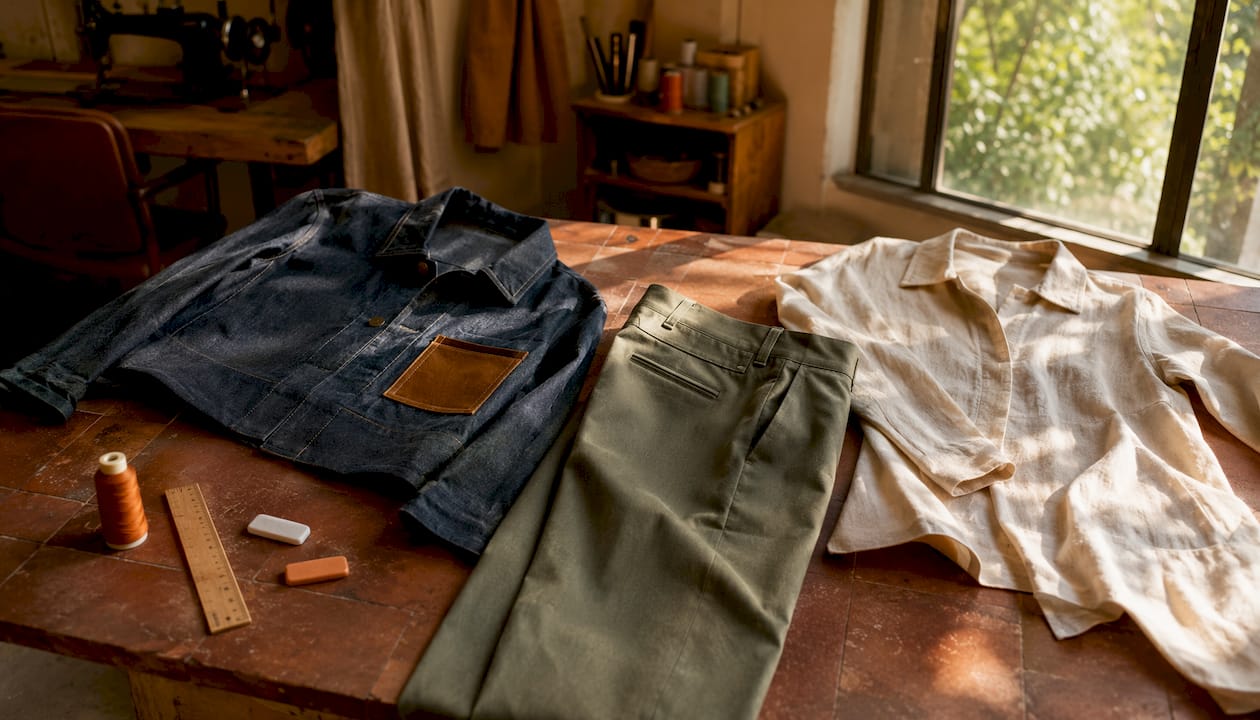
A patch pocket is a separate piece of fabric stitched directly onto the garment’s outer surface. Construction is straightforward: cut a pocket shape, finish the edges, topstitch it on. Because it sits on top of the fabric, it adds visible bulk but offers generous depth.
Variants include:
- Kangaroo pocket — a single large pouch spanning the front of a hoodie or sweatshirt, open at both sides for hand warmth and storage
- Cargo/bellows pocket — a patch pocket with a centre pleat or side gusset that expands for bulkier items like water bottles or larger devices; standard on cargo pants and field jackets
- Coin/watch pocket — a small patch pocket sewn inside the right front pocket of jeans, originally designed for a pocket watch
- Breast/chest pocket — a small patch on the upper chest of shirts, blazers, or jackets; more decorative than functional at this size
- Accordion pocket — similar to cargo, with a gusset along the perimeter; common on outerwear
In-seam (slash) pockets
These sit inside the garment, with only a slit opening visible at the seam. The pocket bag is hidden between the outer fabric and lining. They add almost no external bulk, which is why they appear in dresses, skirts, and tailored trousers.
Variants include:
- Side-seam pocket — the straight opening runs along the side seam; the simplest version to sew and the most common in dresses and skirts
- Slanted/slash pocket — the opening angles diagonally from the waistband toward the hip; typical in jeans and dress trousers
- Handwarmer pocket — a deep in-seam pocket, usually on outerwear, sized to fit a full hand
Welt/besom (inset) pockets
A welt pocket is cut directly into the fabric. A narrow strip of fabric (the welt or besom) finishes the opening edge, creating a slim, tailored look. Welt pockets appear in tailored jackets and trousers where a slim profile is the priority. The trade-off: unless the pocket bag is constructed with a true deep pouch, a welt pocket rarely accepts a full-size smartphone.
Variants include:
- Single-welt — one strip of fabric below the opening; common in suit trousers
- Double-welt/besom — two strips framing the opening; classic in blazers and coats
- Flap pocket — a welt or inset opening covered by a hinged flap of fabric; the flap can be buttoned, snapped, or left loose for easy access
- Zipper pocket — an inset opening closed with a zip; standard in activewear, outerwear, and travel garments
- Buttonhole pocket — a narrow inset closed with a worked buttonhole; seen in vintage and tailored pieces
False/faux pockets
Worth naming separately: false pockets are sewn shut or finished too shallow to carry anything. They appear on many women’s garments for aesthetic symmetry. Always check before assuming a pocket works.
Quick comparison
| Pocket type | Typical depth | Bulk added | Best for |
|---|---|---|---|
| Patch (standard) | Generous depth | High | Casual, workwear |
| In-seam/side-seam | Moderate depth | None | Dresses, skirts |
| Welt/besom | Shallower depth | Very low | Tailored jackets, trousers |
| Cargo/bellows | Deep | High | Travel, utility wear |
| Kangaroo | Deep | Moderate | Hoodies, loungewear |
| Coin/watch | Small depth | Minimal | Jeans |
How does pocket placement change the way a garment fits?
Where a pocket sits on the body shapes the silhouette as much as the pocket type itself. A patch pocket placed at the widest part of the hip adds visual width there. Move the same pocket higher, toward the natural waist, and the eye reads it as a styling detail rather than a bulk point.
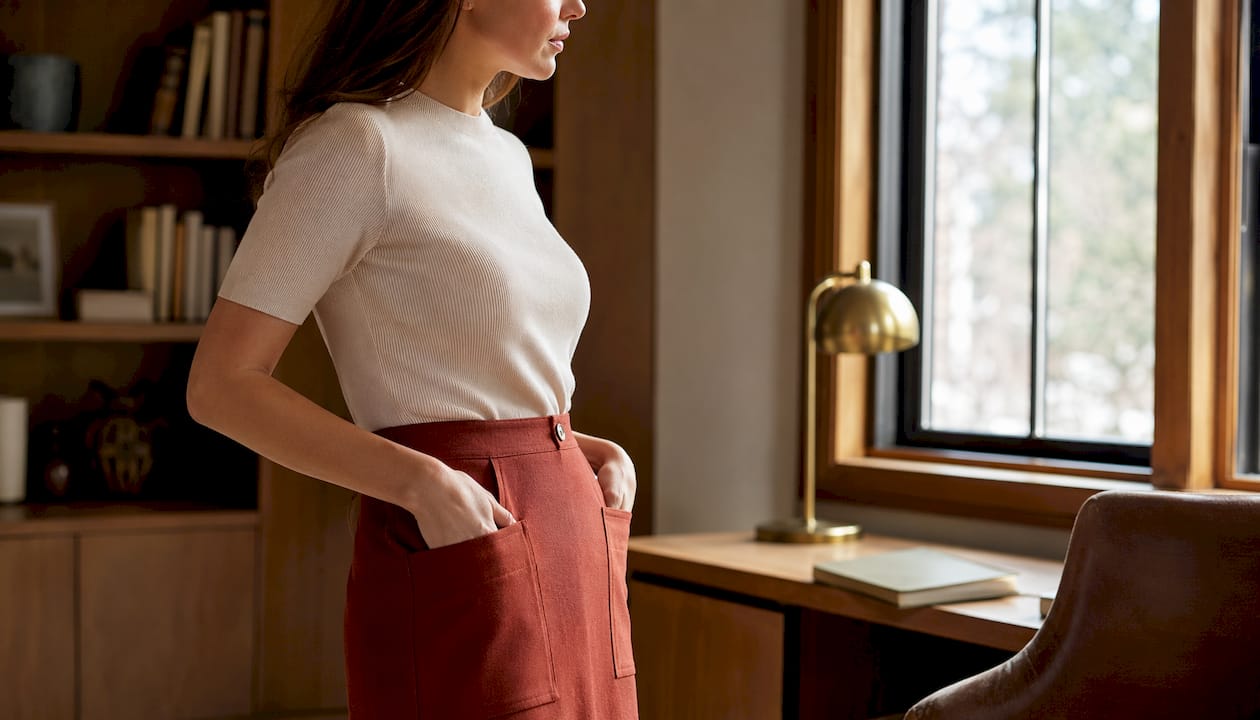
Side-seam pockets sit at the hip by default, which suits most proportions. Slanted slash pockets draw the eye diagonally downward, creating a lengthening effect on the torso. Chest pockets pull attention upward and work well on boxy or oversized silhouettes. Back pockets on trousers and jeans affect how the seat looks: a smaller, higher-placed pocket lifts the visual line; a large, low pocket does the opposite.
Pro Tip: When adding pockets to a dress or skirt, place the pocket opening 2–3 cm higher than feels right on the flat fabric. Once the garment is worn and weighted, it will settle to exactly the right position.
For pocket-style dresses, vertical pocket openings preserve a long, unbroken line. Horizontal openings interrupt the silhouette but are easier to reach into. On fitted styles, in-seam pockets are almost always the better choice; on relaxed or A-line shapes, patch pockets read as intentional design.
What materials and closures make pockets last?
Construction quality separates a pocket that holds its shape for years from one that sags after a season.
Interfacing and reinforcement
Lightweight or drapey fabrics need interfacing at the pocket mouth to prevent stretching and distortion when the pocket carries weight. A narrow strip of woven interfacing fused to the wrong side of the opening is the standard fix. On woven denim or canvas, interfacing is less critical but still worth adding at stress points.
Closure options
- Zipper — closed-end zips for security; invisible zips for a clean finish on tailored pieces
- Snap/press stud — fast to open, low profile; good for flap pockets on casual wear
- Button — classic on flap pockets; adds a styling detail
- Magnetic closure — convenient but can interfere with cards and phones if placed too close
- Velcro — durable and secure; common in activewear and children’s garments
Fabric suitability
Stiff wovens (denim, canvas, twill) hold a pocket’s shape without much help. Knits and jersey stretch with the pocket contents, which feels comfortable but can cause the pocket mouth to gape over time. A stay-stitch along the opening edge prevents this. Leather and PU require special needles and cannot be re-stitched without leaving holes, so placement must be confirmed before sewing.
Pro Tip: For cargo pockets on medium-weight fabrics, cut the pocket bag from a lighter lining fabric rather than self-fabric. It reduces bulk inside the pocket without sacrificing durability.
How do you choose the right pocket for a garment or purpose?
A short checklist for shoppers and sewists:
- Decide your minimum depth. Pockets should be deep enough to hold items like smartphones, keys, cards, or coins comfortably. If a product listing does not state depth, measure the garment in-store or ask the retailer.
- Match pocket type to garment silhouette. Fitted dresses and skirts: in-seam. Relaxed trousers and casual tops: patch. Tailored blazers: welt or flap. Activewear: zipper inset or waistband pocket.
- Check the lining. A lined pocket bag in a contrasting fabric is a sign of quality construction. Unlined pockets in lightweight fabric will stretch and sag.
- Confirm the closure matches your use. Travel and commuting: zipper or magnetic. Casual daily use: open or snap. Formal wear: button or welt (no closure needed for slim items).
- For sewists — check seam allowance and ease. Add 1.5 cm seam allowance around the pocket bag. For in-seam pockets, mark the opening on the seam line before cutting. Test the depth with your actual phone before finishing.
- Reinforce stress points. Bartack the top corners of patch pockets and the ends of welt openings. These are the first places a pocket fails.
- Consider fabric drape. A stiff patch pocket on a fluid silk dress will pull and pucker. Match pocket fabric weight to garment fabric weight, or use a lighter lining fabric for the bag.
How do designers decide between visible and hidden pockets?
Designers group pocket choices into three functional strategies, each with distinct trade-offs.
Visible/statement pockets
Patch and cargo pockets signal casual, utilitarian, or streetwear aesthetics. They add bulk but communicate function clearly. Manufacturing cost is low: no cutting into the garment body, no complex finishing. The trade-off is silhouette: a large cargo pocket on a slim trouser changes the garment’s entire visual weight.
Hidden/minimal pockets
In-seam and welt pockets preserve a clean line. They are the default choice in tailored and formal garments. Manufacturing complexity is higher for welt pockets (precise cutting, interfacing, and finishing), but the result reads as quality. The limitation is depth: a welt pocket bag that is not constructed with a true deep pouch will not hold a phone.
Utility/expandable pockets
Bellows and cargo pockets with gussets offer the most carrying capacity. They are the go-to for travel, workwear, and outerwear. The cost is bulk and a more casual aesthetic.
| Pocket group | Bulk | Security | Manufacturing complexity | Style signal |
|---|---|---|---|---|
| Visible/patch | High | Low (open) | Low | Casual, utility |
| Hidden/welt | Very low | Medium | High | Tailored, formal |
| Utility/cargo | High | Medium–high | Medium | Workwear, travel |
Pro Tip: When designing a garment that needs both a clean silhouette and real carrying capacity, combine an in-seam pocket for everyday items with a single interior welt pocket for valuables. Two pocket types, one garment, no visible bulk.
How do you sew a patch pocket and an in-seam pocket?
Sewing tutorials commonly teach 10–12 pocket types with free patterns. Here are the two most useful for beginners.
Patch pocket
- Cut the pocket piece to your desired size plus 1.5 cm seam allowance on three sides and 3 cm at the top for the hem.
- Fuse a strip of interfacing to the wrong side of the top edge to stabilise the hem.
- Fold and press the top hem to the wrong side; stitch it down.
- Press the remaining three sides under by 1.5 cm.
- Pin the pocket to the garment at the marked position. For a smartphone, the finished pocket should be at least 16 cm deep and 10 cm wide.
- Topstitch around three sides, starting and ending at the top corners. Backstitch or bartack the top corners — this is where the stress concentrates.
In-seam pocket
- Cut two pocket bag pieces in lining fabric, roughly 18–20 cm deep and 14 cm wide.
- With right sides together, stitch one pocket bag to the front seam allowance and one to the back seam allowance at the pocket opening marks.
- Press the pocket bags away from the garment.
- Stitch the side seam above and below the pocket opening, leaving the marked section open.
- Stitch around the pocket bag, joining the two pieces. Clip curves.
- Reinforce the top and bottom of the pocket opening with a bartack or short zigzag stitch.
- Test depth with your phone before pressing the finished seam.
A brief maintenance note: machine-wash pocketed garments with closures fastened to prevent snagging. For welt pockets, press from the inside to avoid flattening the welt lip.
How did pockets in women’s clothing evolve over time?
The history of pockets in women’s clothing is, bluntly, a history of access being granted and then taken away. In the 17th and 18th centuries, women wore separate tie-on pockets beneath their skirts — large, practical pouches accessible through slits in the outer fabric. They held everything: keys, money, sewing tools, letters.
As silhouettes narrowed in the 19th century, those tie-on pockets disappeared. The slim lines of Victorian and Edwardian fashion left no room for a functional pouch, and women were expected to carry a reticule (a small handbag) instead. The shift was not purely aesthetic. Restricting pocket access also restricted the ability to carry money and documents independently.
The 20th century brought partial recovery. Workwear during both World Wars put functional pockets back into women’s clothing out of necessity. Denim jeans, adopted by women in the mid-century, came with the same front and back pockets as men’s versions, though manufacturers quietly made them shallower over subsequent decades. By the 1990s and 2000s, the gap between men’s and women’s pocket depth had become measurable and widely documented.
The current push for real pockets in women’s clothing is a direct response to that history. It connects to broader conversations about utility, autonomy, and inclusive design — the idea that a garment should serve the person wearing it, not just frame them.
What challenges come up when adding pockets to different fabrics?
Fabric type is the single biggest variable in pocket construction. The same patch pocket that looks sharp on denim will pucker and sag on chiffon.
Lightweight and drapey fabrics (chiffon, crepe, silk, rayon): the pocket mouth stretches under the weight of contents. The fix is stay-stitching along the opening and a narrow interfacing strip fused to the wrong side before finishing. Place the pocket slightly higher than intended on the flat fabric — it will drop once worn and weighted.
Knits and jersey: the fabric stretches in all directions, which means the pocket bag can pull and distort. Use a stretch-compatible stitch (narrow zigzag or lightning bolt stitch) rather than a straight stitch. For in-seam pockets in knit dresses, a woven pocket bag in cotton lawn stabilises the opening without adding bulk.
Denim and canvas: stiff and forgiving, but thick. Multiple layers at the pocket corners can be too thick for a standard presser foot. Grade the seam allowances (trim each layer to a different width) to reduce bulk. A jeans needle handles the density.
Leather and PU: needle holes are permanent. Mark placement carefully, test on a scrap, and use clips rather than pins. A Teflon presser foot prevents sticking.
Sheer fabrics: the pocket bag will show through. Cut the bag from self-fabric or use a colour-matched lining. For in-seam pockets in sheer skirts, a French seam finish on the pocket bag edges keeps everything clean and visible.
How does pocket style affect what you can actually do in your clothes?
The right pocket for a garment depends almost entirely on what you are doing in it.
Travel: deep zipper pockets in a coat or jacket keep a passport, phone, and cards secure and accessible without opening a bag. Multi-pocket garments with hidden interior pockets are particularly useful for transit, where pickpocketing is a real concern. Cargo pants with bellows pockets carry a water bottle, snacks, and a small camera without needing a daypack.
Work and office: welt or flap pockets in a blazer or tailored trouser carry a phone and cards without disrupting the silhouette. Patch pockets on a work dress can look intentional if the garment is structured, but they read as casual on fluid fabrics. For women’s casual pocket wear at home or on errands, deep side-seam pockets in lounge trousers are the most comfortable option.
Activewear: waistband pockets and zippered thigh pockets in leggings and yoga pants hold a phone and keys without bouncing. A standard in-seam pocket in activewear fabric will gape during movement unless it has a zip or snap closure. Yoga pants with integrated pockets are specifically designed to keep items flat against the body.
Casual and everyday: the most versatile combination is a garment with both in-seam pockets (for a phone and keys) and a small zip pocket (for cards or cash). That covers most daily needs without adding visible bulk.
Care and maintenance tips for different pocket constructions
Pocket construction determines how a garment should be washed and stored.
Patch pockets: the topstitching at the corners is the first thing to fail. Check it after every few washes and reinforce with a bartack if threads are loosening. Wash inside-out to reduce abrasion on the stitching.
In-seam pockets: the pocket bag can bunch inside the garment if it is not pressed flat after washing. Pull the bag out through the opening and press it separately before hanging the garment to dry.
Welt and besom pockets: press from the inside only. Pressing directly over the welt lip flattens it and distorts the finished edge. Use a pressing cloth on the outside if you must press from the right side.
Zipper pockets: close the zip before washing to prevent the pull from snagging other fabric. Lubricate metal zips occasionally with a beeswax bar or a dedicated zip lubricant to prevent sticking.
Cargo and bellows pockets: empty them completely before washing. A forgotten item in a gusseted pocket adds uneven weight that can distort the pocket shape during the spin cycle. Button or snap the flap closed.
Leather and PU pockets: wipe clean with a damp cloth rather than machine-washing. Leather pockets need occasional conditioning to prevent cracking at the fold lines.
Key takeaways
Pocket choice comes down to three variables: construction group, placement, and depth — get those right and the rest follows.
| Point | Details |
|---|---|
| Three primary groups | Patch, in-seam, and welt/inset cover nearly every pocket style in women’s fashion. |
| Minimum depth for a phone | A pocket needs at least 16–18 cm of depth to hold a standard smartphone securely. |
| Placement shapes silhouette | Pockets placed at the hip add width; placed higher, they read as a styling detail. |
| Fabric drives construction | Lightweight fabrics need interfacing and stay-stitching at the pocket mouth to prevent sag. |
| 16thavenue pocket picks | Browse 16thavenue’s cargo pants, lounge sweatpants, and pocketed coats for garments where pocket depth and closure type are built in from the start. |
Pockets are a design choice, not an afterthought
The conversation about pockets in women’s clothing has shifted. What used to be a complaint is now a purchasing criterion — and rightly so. A garment that carries your phone, keys, and cards without a bag is not a luxury. It is basic utility that men’s clothing has offered for centuries.
What strikes me most, looking at the full range of pocket styles, is how much information is packed into a single construction detail. The pocket type tells you whether a designer prioritised silhouette or function. The depth tells you whether they tested the garment with real objects. The closure tells you whether they thought about security. A false pocket tells you they did not think about the wearer at all.
The good news: sewists can fix almost any of this. An in-seam pocket can be added to nearly any skirt or dress with a side seam. A patch pocket takes an afternoon. The techniques are not complicated; the commitment to doing it is the only requirement.
Pocketed women’s clothing worth checking out at 16thavenue
16thavenue carries garments where pockets are part of the design, not a marketing footnote. The woollen coat includes handwarmer pockets sized for real hands, not decorative slits. The cargo pants feature bellows pockets with genuine depth for travel and daily carry. The lounge sweatpants have deep side pockets that hold a phone without pulling the waistband down.

Before you buy, check the product description for pocket depth (look for a measurement, not just “with pockets”), closure type, and whether the pocket bag is lined. If those details are not listed, the pocket is probably decorative. At 16thavenue, the product pages include construction details so you know what you are getting. Browse the full collection at 16thavenue.ca and filter by the pocket style that fits your life.