


Upgrade your wardrobe: a proven fashion workflow for women
TL;DR:
- A well-built wardrobe reflects your lifestyle and focus on versatility, not quantity.
- Regular seasonal assessments help maintain a functional, stylish closet and prevent clutter.
- Intentional shopping and editing habits promote lasting style transformation and cost savings.
You open your closet every morning, stare at a rail packed with clothes, and still feel like you have nothing to wear. Sound familiar? That quiet frustration is one of the most common experiences among fashion-forward women, and it has nothing to do with how many pieces you own. It has everything to do with how your wardrobe is built. The good news is that there’s a smarter, repeatable workflow that replaces endless trend-chasing with a focused, empowering strategy. Follow it once and you’ll have a closet that actually works for you, season after season, without the guilt or the overspending.
Table of Contents
- What you need for a fashion upgrade workflow
- Step-by-step: The modern fashion upgrade workflow
- Stay on trend without overspending
- Maintaining and evolving your upgraded wardrobe
- Why most style makeovers fail—and how this workflow changes everything
- Next steps: upgrade your look with curated essentials
- Frequently asked questions
Key Takeaways
| Point | Details |
|---|---|
| Step-by-step upgrade | Following a defined workflow makes personal style easy, repeatable, and stress-free. |
| Capsule saves money | Capsule wardrobes reduce clothing spending by 20-40% while offering more outfit options. |
| Seasonal audits essential | Refreshing your wardrobe each season keeps your look current and your closet clutter-free. |
| Trends made affordable | Savvy shopping lets you add trending pieces without overspending on your seasonal updates. |
What you need for a fashion upgrade workflow
Now that you know a more streamlined closet is possible, let’s quickly check what you’ll need to get started.
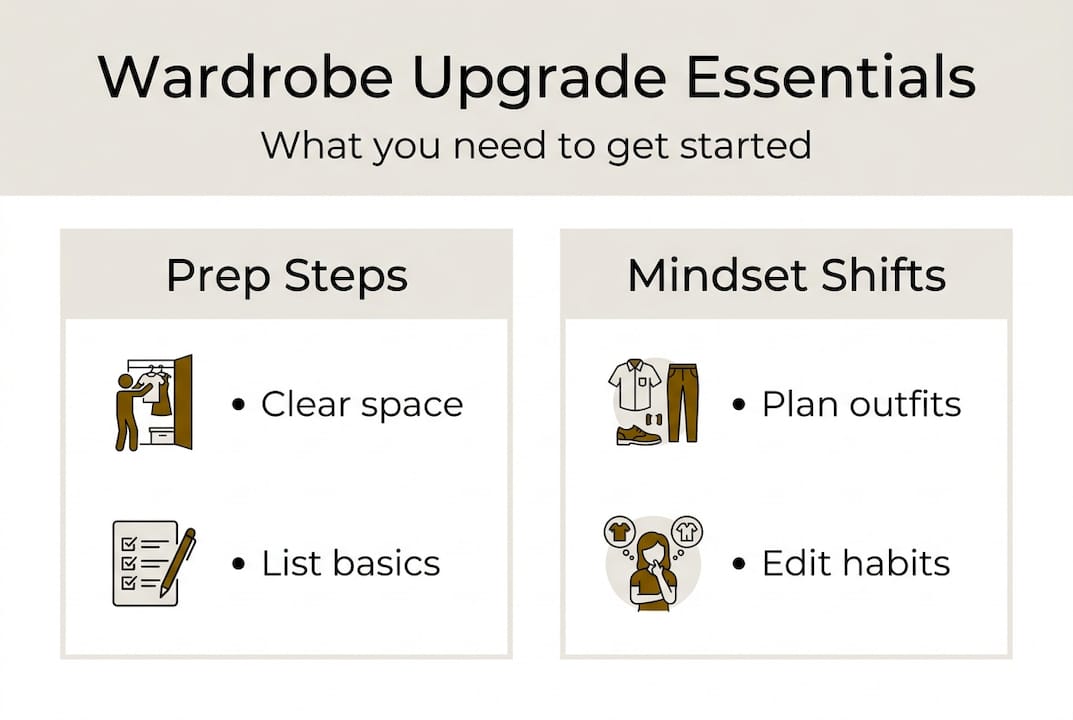
Most wardrobe frustrations share the same roots: too many impulse buys, pieces that don’t coordinate, and a budget that evaporates before the season even ends. Before you can fix any of that, you need to lay the groundwork. A wardrobe assessment of your lifestyle and current collection is the true starting point of any meaningful fashion upgrade.
Here’s a quick overview of the tools and resources worth gathering before you begin:
| What you need | Why it matters |
|---|---|
| Full-length mirror | Accurate fit and styling checks |
| Sorting bins or bags | Separate keep, donate, and repair piles |
| Wardrobe checklist | Track gaps and duplicates |
| Inspiration sources | Pinterest boards, fashion blogs, magazine clippings |
| Budget spreadsheet | Set and track your spending limits |
| Measuring tape | Confirm sizing before online orders |
Beyond physical tools, the right mindset is just as important. Here are the key mental shifts that will make this process stick:
- Edit ruthlessly. If you haven’t worn it in a year, it’s not serving you.
- Focus on versatility. Every piece should pair with at least three others in your wardrobe.
- Prioritise comfort. Clothes you feel good in get worn. Clothes you don’t, don’t.
- Think in outfits, not items. Buying a top without imagining the full look leads to costly orphan pieces.
- Separate sentiment from style. Some keepsakes belong in a memory box, not on your clothing rail.
Understanding capsule wardrobe basics early in the process helps you connect these mindset shifts to practical decisions. The capsule philosophy asks you to build around fewer, better pieces instead of chasing volume.

Pro Tip: Block off two to three hours on a weekend, put together a playlist you love, and treat this like a personal style appointment. When the mood is right, you’ll make better decisions and edit without second-guessing yourself.
Step-by-step: The modern fashion upgrade workflow
With your tools and mindset ready, you’re set to dive into the workflow itself. Let’s break it down step by step.
A structured approach to updating your wardrobe follows a clear arc: assess, edit, define, update, and maintain your collection with intention each season. Here’s how each stage works in practice:
-
Assess your lifestyle. Before touching a single hanger, ask yourself honestly: Where do I spend most of my time? What do I actually do in a typical week? A teacher needs different clothes than a freelance designer or a new mum re-entering the workforce. Your wardrobe should mirror your real life, not an imagined one.
-
Audit and edit your wardrobe. Pull everything out. Yes, everything. Lay it flat and evaluate each piece based on fit, condition, and how often you actually reach for it. Create three piles: keep, donate or sell, and repair or restyle. Be honest.
-
Define a colour palette and adaptable basics. Choose two to three core neutrals (think sand, navy, or charcoal grey) and one or two accent colours that genuinely suit your skin tone. Build your basics around this palette so pieces naturally mix and match. A white fitted tee, dark-wash straight-leg jeans, and a camel blazer are examples of foundational items that carry you across seasons.
-
Repair or restyle before you buy. That linen skirt with a loose hem? Fix it. That oversized blazer? Get it tailored. Restyling what you already own saves money and often reveals pieces you’d forgotten you loved. Many women are surprised to find two or three “new” outfits hiding in their existing wardrobe after a proper edit.
-
Add new trending pieces intentionally. Now that your wardrobe has breathing room, you can identify genuine gaps. Cross-reference your lifestyle assessment with current trends. Use trusted fashion styling steps to choose pieces that align with your aesthetic rather than every runway flash-in-the-pan.
-
Plan seasonal check-ins. Commit to a light review every three to four months. Pull out items that don’t fit the incoming season, refresh your inspiration board, and note what’s missing. This prevents the closet from creeping back into chaos.
Here’s a direct comparison of two common editing approaches and their outcomes:
| Approach | Method | Outcome |
|---|---|---|
| Ruthless editing | Remove anything not worn in 12 months | More space, clearer choices, better outfit flow |
| Sentimental keeping | Hold onto “maybe someday” pieces | Cluttered rail, decision fatigue, style paralysis |
| Ruthless editing | Define a tight colour palette | Easy mixing, fewer outfit fails |
| Sentimental keeping | Keep mismatched impulse buys | Frustration, wasted budget on new “solutions” |
Keeping a current trends guide bookmarked helps you cross-check whether a trending silhouette genuinely works with your palette before you commit to buying it.
Pro Tip: Allow yourself three sentimental pieces maximum. That vintage denim jacket from your first concert, the dress you wore to your best friend’s wedding. Three is enough. The rest should be donated or upcycled so someone else gets the joy from them.
Stay on trend without overspending
You’ve streamlined your closet, but how do you stay current and cost-savvy when trends shift every season?
The most liberating fashion truth is this: you don’t need to buy everything that trends. A well-built capsule reduces spending by 20 to 40 percent per season while still giving you 85 or more outfit combinations from just 30 carefully chosen pieces. That’s not a minor saving. That’s money back in your pocket every single quarter.
The key is knowing where to invest and where to save. Here’s a practical breakdown:
- Splurge on: Classic coats, quality footwear, well-constructed blazers, and leather accessories. These pieces anchor your wardrobe and last multiple seasons.
- Save on: Trendy tops, seasonal prints, statement jewellery, and fast-fashion basics. These are low-cost ways to feel current without financial commitment.
- Avoid altogether: Anything that only works with one outfit, anything that requires dry-cleaning if that’s not your lifestyle, and anything bought purely because it’s on sale.
Affordable seasonal outfit savings come from choosing pieces with maximum outfit potential. A simple ribbed tank in a neutral tone, for example, layers under a blazer for work, ties at the waist for a weekend market, or tucks into a midi skirt for an evening out. One piece, many contexts. That’s smart shopping.
For those seasonal moments when you want something fresh and fun, the market data for affordable style tells an interesting story: budget-friendly sundresses in the $18 to $28 price range sell between 8,000 and 15,000 units per week online. That’s not a coincidence. Women have figured out that a well-chosen, affordable dress delivers enormous style value per dollar spent. You can apply the same logic to any seasonal essential.
For transitional months, browsing fall outfit ideas for women can spark ideas about which new arrivals genuinely complement what you already own. Shop with a list, not an open mind. An open mind in a boutique is a budget’s worst enemy.
Pro Tip: Shop mid-season for the best combination of selection and price. Boutiques discount to clear inventory, new stock hasn’t arrived yet, and you can grab trending pieces at 20 to 30 percent off without waiting for an end-of-season sale with bare shelves.
Maintaining and evolving your upgraded wardrobe
With your new pieces in rotation, long-lasting style is all about simple ongoing habits. Here’s how to tune up each season.
A wardrobe, like any system, needs regular upkeep to stay functional. The good news is that maintenance takes far less time than a full overhaul once you’ve completed the initial workflow. Set a quarterly reminder on your phone and follow this checklist each time:
- Pull out everything from the previous season and assess what still fits and flatters.
- Check for wear and tear: loose buttons, pilling, fading, and broken zippers.
- Rotate storage, moving off-season pieces to the back or to vacuum bags to save space.
- Update your inspiration board with two or three pieces that excite you for the coming months.
- Identify one to three genuine gaps in your wardrobe, not wants, actual gaps.
- Donate or sell anything that didn’t get worn during the previous season.
- Try on every “maybe” piece to confirm it still earns its place on your rail.
“Seasonal audits sustain a healthy and wearable wardrobe, keeping your style consistent and your confidence high throughout the year.”
Beyond the checklist, staying plugged into a style community makes a real difference. Whether it’s a group of friends who swap pieces, a local thrift collective, or an online forum of women with similar aesthetics, community keeps you inspired without requiring you to consume constantly. Following smarter wardrobe choices as a strategy also means staying informed about what’s coming each season before it arrives, so you shop with intention rather than impulse.
If you enjoy planning ahead, exploring seasonal collections well before each new season gives you a first look at what’s coming. You can identify the pieces worth waiting for versus the ones you can skip entirely. That forward-thinking approach is what separates women with effortlessly stylish wardrobes from those who are always scrambling.
Why most style makeovers fail—and how this workflow changes everything
Even with an upgraded wardrobe, you might wonder if it’ll last. Let’s get real about what actually works.
Here’s the uncomfortable truth most style content won’t tell you: most wardrobe makeovers fail within two seasons. Not because the woman lacked style or budget. Because she changed what she owned without changing how she shops. The same impulsive behaviours, the same trend-chasing, the same “this is such a good deal” thinking, all of it eventually fills the closet right back up.
The trap most women fall into is treating a style upgrade as a one-time shopping event rather than a shift in how they relate to clothing. Copying an influencer’s wardrobe feels exciting in the moment, but it ignores the most critical variable: your actual life. An influencer’s “casual Monday look” often involves a full glam team, professional lighting, and a budget that doesn’t reflect reality. Chasing that version of style is expensive and exhausting.
Real transformation, the kind that lasts, comes from auditing your behaviour, not just your closet. Ask yourself: Why do I keep buying items I don’t wear? Is it habit? Emotional shopping? Fear of missing out on a trend? Until you answer those questions honestly, any physical wardrobe edit is temporary.
“The smartest shoppers curate, not accumulate.”
This workflow is designed to interrupt those old patterns by giving you a repeatable system. When you have a defined palette, a lifestyle-based assessment, and a seasonal maintenance habit, you have a framework that makes every future shopping decision easier. You stop buying things just because they’re trending. You start buying things because they genuinely serve your wardrobe and your life.
That shift, from reactive to intentional, is where the real confidence comes from. Exploring what a true shopping transformation looks like can help you identify which of your current habits are worth keeping and which ones are quietly costing you both money and style.
Next steps: upgrade your look with curated essentials
Ready to put the workflow into action? Stock up on curated pieces and must-have upgrades for your next wardrobe refresh.
At 16th Avenue, every product is selected with exactly this kind of intentional wardrobe building in mind. Whether you’re filling a gap in your cold-weather essentials or updating your beauty kit to match your upgraded look, the goal is the same: pieces that pull their weight.

Start with a timeless woolen coat for autumn and winter, a true wardrobe anchor that elevates everything beneath it. Add a complete makeup brush set to finish your look with polish and precision, because your beauty routine deserves the same upgrade as your closet. Round it out with a pair of versatile sport sneakers that take you from a morning coffee run to a weekend afternoon without a second thought. Browse the full collection to discover curated essentials that fit every step of your fashion upgrade workflow.
Frequently asked questions
How often should I update my wardrobe using this workflow?
Seasonal audits every three to four months are the sweet spot, keeping your wardrobe aligned with both current trends and your evolving personal style.
Will a capsule wardrobe make it harder to stay trendy?
Not at all. A capsule approach actually makes trend integration easier because you have a clear, coordinated base to build from, and capsule spending reductions of 20 to 40 percent mean more budget for the seasonal statement pieces you genuinely want.
What are the best affordable pieces to invest in every season?
Focus on mix-and-match basics and one or two statement items per season. Budget-friendly sundresses priced between $18 and $28 are a prime example of high-value, high-versatility seasonal buys.
How can I avoid buying items I’ll never wear?
Stick to your defined colour palette, shop only from your identified wardrobe gaps list, and edit ruthlessly each season to reinforce intentional buying habits over impulsive ones.