

Vegan leather: stylish, sustainable, and ethical in 2026
TL;DR:
- Vegan leather offers animal cruelty-free options with varying environmental impacts depending on the material.
- Plant-based vegan leathers are generally more sustainable than synthetic options but have shorter lifespans.
- Choosing quality, transparent brands, and understanding material composition are key to sustainable fashion choices.
Traditional leather has a long history in fashion, but it carries a cost most of us never see at the checkout. Over a billion animals are killed every year for their hides, and that’s before we consider the land, water, and chemicals used in processing. Vegan leather has moved well beyond the stiff, plasticky alternatives of the past. Today’s options range from cactus and pineapple fibre to high-performance plant-based composites that look genuinely beautiful. This article cuts through the marketing noise and gives you a clear, honest guide to what vegan leather actually is, how it compares, and how to shop for it smartly.
Table of Contents
- What is vegan leather and how is it made?
- Key ethical and environmental benefits explained
- Vegan leather versus animal leather: Durability, style, and care
- How to choose vegan leather for style and sustainability
- A fresh perspective: Why intentional choices matter more than labels
- Find your perfect eco-friendly look at 16th Avenue
- Frequently asked questions
Key Takeaways
| Point | Details |
|---|---|
| Ethics matter | Vegan leather avoids animal cruelty, aligning with compassionate values. |
| Sustainability depends on material | Plant-based leathers offer greater environmental benefits than synthetic or animal leather. |
| Durability varies | Vegan leather’s lifespan is typically shorter than animal leather but evolving materials offer more options. |
| Smart shopping is key | Check for credible certifications and prioritise quality to ensure style with sustainability. |
What is vegan leather and how is it made?
Vegan leather is any material that mimics the look, feel, and function of animal leather without using animal hides. The term sounds straightforward, but the reality is more nuanced. There are two broad families: synthetic vegan leather and plant-based vegan leather, and they are very different in terms of sustainability.
Synthetic vegan leather is made primarily from polyurethane (PU) or polyvinyl chloride (PVC). These materials use plastic coatings to replicate leather’s surface texture. The trade-off is significant: synthetic vegan leather is petroleum-based, non-biodegradable, and sheds microplastics during washing and wear. It’s affordable and widely available, but it’s not a straightforward win for the environment.
Plant-based vegan leathers are a much newer and more exciting category. Materials like Piñatex (made from pineapple leaf fibre), Desserto (cactus leather), and apple leather are among the most recognisable. These plant-based alternatives use agricultural waste and byproducts, which reduces resource use compared to animal leather farming. Pineapple leaves that would otherwise be burned are cleaned, dried, and processed into a textile. Apple cores and peels left over from juice production become a leather substitute. It’s resourceful design at its best.
Here’s a quick overview of the most common vegan leather types:
| Material | Source | Biodegradable? | Sustainability rating |
|---|---|---|---|
| PU leather | Petroleum | No | Low |
| PVC leather | Petroleum | No | Very low |
| Piñatex | Pineapple leaf fibre | Partially | High |
| Desserto | Cactus | Partially | High |
| Apple leather | Apple waste | Partially | Medium-high |
What makes something truly vegan leather is the absence of animal-derived materials. But that label says nothing about environmental impact. Understanding sustainable fashion impact means looking past the marketing and reading the actual material composition.
Key things to look for on a product label:
- Full material composition (not just “vegan leather”)
- Whether it contains plastic-based coatings or binders
- Any third-party eco-certifications
- Country of manufacture and supply chain transparency
Pro Tip: When you see “vegan leather” on a tag, check the material breakdown. If it says 100% polyurethane with no plant-based component, it’s essentially plastic. That’s not a reason to avoid it, but it’s important context for your purchase decision.
Key ethical and environmental benefits explained
Now that we know what vegan leather is, let’s see how it measures up ethically and for the planet.
The ethical case is, frankly, hard to argue against. Vegan leather avoids animal cruelty entirely by not using animal hides, which addresses one of the most significant ethical concerns in the fashion industry. Leather production relies on cattle, pigs, goats, and exotic animals, many of which are raised in conditions that cause significant suffering.
For environmental impact, the picture is more complex but still compelling. Traditional leather farming dominates global warming and other impact categories when measured across its full lifecycle. Cattle ranching drives deforestation. Tanneries use chromium and other toxic chemicals that contaminate local waterways. The water footprint of a single leather handbag is staggering.
“The environmental burden of animal leather begins long before the hide reaches the factory. Land use, feed production, methane emissions, and chemical tanning all compound to create one of fashion’s heaviest footprints.”
Plant-based vegan leathers, by contrast, typically use agricultural byproducts that would otherwise go to waste. They require no additional land clearing, no livestock methane, and no chromium tanning. The carbon savings can be significant, particularly for crops like cactus that need very little water.
| Factor | Animal leather | Plant-based vegan leather | Synthetic vegan leather |
|---|---|---|---|
| Animal welfare | Poor | No harm | No harm |
| CO2 emissions | Very high | Low to moderate | Moderate |
| Water use | Very high | Low | Low |
| Biodegradability | Yes | Partial | No |
| Chemical use | High (chromium) | Low | Moderate |
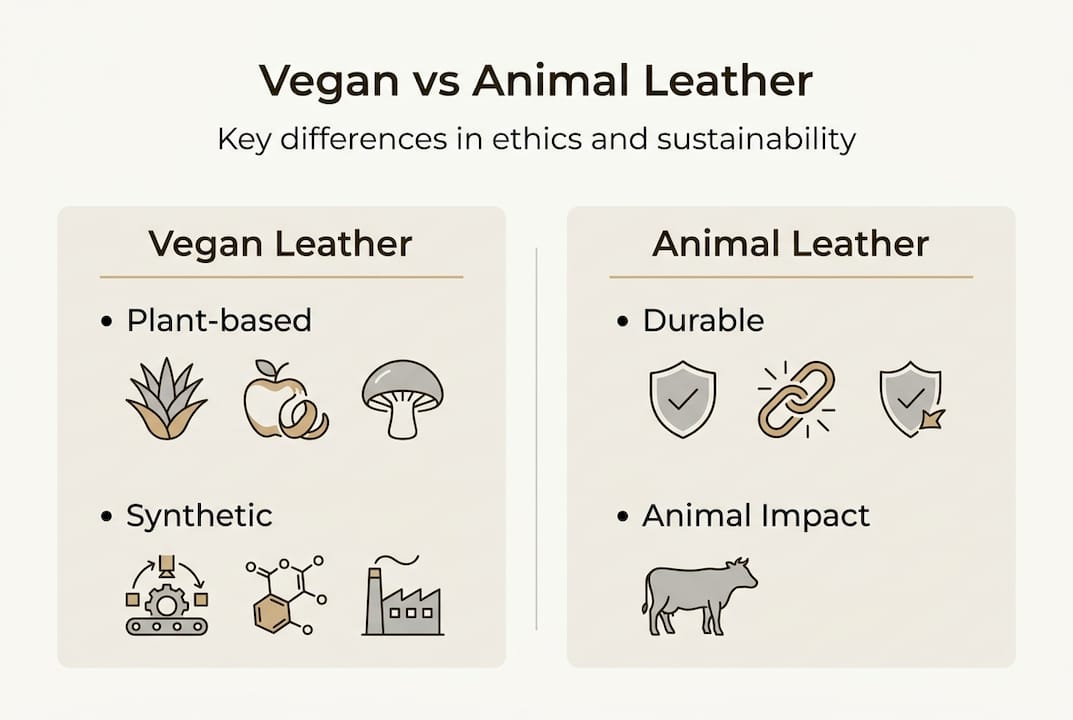
Making ethical fashion choices doesn’t mean sacrificing your wardrobe. It means understanding the true cost of what you wear. Using eco-friendly shopping tips to guide your purchases ensures your style reflects your values without compromise.
One important caveat: not all vegan leather is created equal. Synthetic options still carry a meaningful environmental burden, even if animals are spared. The most responsible path is to prioritise plant-based alternatives where possible.
Vegan leather versus animal leather: Durability, style, and care
Ethics and the environment matter, but what about how vegan leather performs in real life?
This is where honest conversation is most important. Animal leather, with proper care, can last decades. It develops a patina over time, becomes softer with use, and often looks better at ten years than it did on day one. Real leather develops a patina with age, but it does require conditioning, waterproofing, and regular maintenance to achieve that longevity.
Vegan leather has a more complicated durability story. Synthetic vegan leather can peel, crack, and flake over time, particularly at stress points like handles and corners. Plant-based options often have lifespans as low as two years, particularly those with high bio-content and minimal plastic reinforcement. This is improving rapidly as manufacturing technology advances, but it’s worth knowing before you invest.
Durability and care comparison:
- Animal leather: Lifespan of 10 to 30 years with conditioning; vulnerable to water damage and scratches without treatment
- Synthetic (PU) vegan leather: Lifespan of 2 to 6 years; easy to wipe clean, does not require conditioning
- Plant-based vegan leather: Lifespan of 2 to 5 years currently; improving; care instructions vary by material
Style-wise, vegan leather actually has the advantage. It can be produced in an enormous range of colours, finishes, and patterns that would be impossible or impractical with animal hide. Want a cobalt blue structured bag or a metallic tote? Vegan leather delivers options that animal leather simply cannot match at scale.

Cost is another factor. Synthetic vegan leather is often cheaper upfront, but frequent replacement can make it more expensive long-term. High-quality plant-based leathers are priced comparably to mid-range animal leather goods. If you’re curious about how genuine leather handbags hold up, our cowhide handbag option and vintage leather handbags offer a useful point of comparison.
Pro Tip: For vegan leather care, use a damp cloth and mild soap for daily cleaning. Avoid harsh solvents. For plant-based leathers, follow the specific brand’s care guide as each material behaves differently. Check our handbag style guide for more maintenance advice.
How to choose vegan leather for style and sustainability
Armed with pros and cons, let’s talk about how you can make the smartest, most sustainable fashion choices.
Choosing well starts with reading beyond the label. Bio-based options can reduce CO2 compared to traditional leather, but many still require plastic binders for strength, which limits their biodegradability. Knowing this helps you set realistic expectations and choose products that genuinely align with your values.
Durability verification matters too. Prioritising quality over the label alone means looking for specs like abrasion resistance tests, thickness measurements, and coating type. Reputable brands will share this information. If they won’t, that’s a signal worth heeding.
Step-by-step guide for choosing vegan leather:
- Check the full material composition. Look for the percentage of bio-based content versus synthetic binders.
- Look for credible certifications. OEKO-TEX, Global Recycled Standard, and Cradle to Cradle are reliable third-party markers.
- Research the brand’s supply chain. Transparent brands publish sourcing and manufacturing details.
- Ask about durability data. Abrasion test results and expected lifespan tell you more than a “sustainable” label.
- Consider your use case. A daily bag needs more durability than a seasonal accessory.
- Avoid greenwashing red flags. Vague terms like “eco leather” or “green collection” with no supporting detail are warning signs.
Understanding quality indicators for handbags helps you evaluate any material honestly. And understanding fast fashion impact reinforces why investing in one quality piece beats buying three cheap ones that end up in landfill.
Pro Tip: Choose plant-based vegan leathers that carry third-party eco-certifications. This protects you from greenwashing and supports brands doing the real work of sustainable innovation.
A fresh perspective: Why intentional choices matter more than labels
With the facts laid out, it’s time to step back and share a broader view on what truly matters in fashion.
Here’s the thing: “vegan” is not a synonym for “sustainable,” and treating it as one lets brands off the hook. A synthetic PU bag is technically vegan. So is a plastic tarp. The label tells you about animal welfare, not environmental responsibility. Both matter, and they deserve separate consideration.
The most powerful shift you can make isn’t switching from leather to vegan leather. It’s buying less and choosing more intentionally. One well-made plant-based bag you use for five years beats three cheap synthetic ones discarded in two. That simple logic applies to everything in your wardrobe.
We also believe brands have a responsibility here. Transparency about materials, manufacturing processes, and honest lifespan expectations should be standard, not a premium feature. As a shopper, your questions hold brands accountable. Taking a deeper look at ethical fashion means asking the right questions and expecting real answers, not just reassuring hashtags.
Find your perfect eco-friendly look at 16th Avenue
Ready to make your next stylish, sustainable purchase? Here’s where to start.
At 16th Avenue, we believe you should never have to choose between looking great and feeling good about what you wear. Our collection includes options for every season and style preference.
Whether you’re searching for a cosy autumn and winter woolen coat or comfortable breathable sport sneakers that keep up with your lifestyle, we’ve got you covered. Browse our full range of women’s fashion at 16th Avenue and find pieces that reflect both your personal style and your values. Free shipping to most destinations makes it even easier to shop with intention.
Frequently asked questions
Is vegan leather really more sustainable than real leather?
Plant-based vegan leather is generally more sustainable, but the full lifecycle impact depends heavily on the specific material and production method used.
Which vegan leather is most eco-friendly?
Cactus and pineapple-based leathers are among the most eco-friendly options because they use less water and agricultural waste from existing crops.
How long does vegan leather last compared to real leather?
Animal leather can last 10 to 30 years with proper care, while plant-based products can have lifespans as low as two years depending on quality.
Does vegan leather feel and look like real leather?
High-quality plant-based vegan leathers can closely mimic animal leather’s appearance, though synthetic plastic coatings used in cheaper versions often feel noticeably different to the touch.