


What is body contour fashion: your 2026 guide
TL;DR:
- Body contour fashion emphasizes enhancing natural body shapes through tailored clothing made with advanced fabrics. It differs from medical procedures, focusing on style and comfort rather than body alteration. Proper fit, fabric choice, and care are essential for achieving a flattering silhouette and long-lasting garments.
Body contour fashion is clothing designed to follow and flatter your natural body lines through smart tailoring, fabric choice, and construction, not surgery or medical procedures. Unlike medical body contouring, which removes fat or skin surgically, fashion body contouring works with what you already have. Think tailored wrap dresses, high-Lycra bodysuits, and seamless knit pieces that skim your silhouette rather than fight it.
Key things to know upfront:
- Body contour fashion uses design and fabric to enhance your natural shape.
- It is distinct from surgical or non-surgical medical body contouring procedures.
- Common garment types include fitted dresses, contour bodysuits, and structured shapewear worn as outerwear.
- The goal is a smoother, more defined silhouette with genuine all-day comfort.
- Benefits include improved confidence, better garment fit, and freedom to express personal style.
How body shaping garments evolved through history
The fashionable body has always been a cultural construct, and the garments designed to shape it have shifted dramatically over centuries. Foundation garments like corsets and girdles were historically used to mould the female figure to whatever silhouette the era demanded, often at real physical cost.
Key milestones in that evolution:
- 18th century: Boned stays cinched waists and created the hourglass ideal, largely worn by women of the elite.
- Mid-19th century: The crinoline widened skirts to extraordinary diameters, making the waist appear narrow by contrast.
- Early 20th century: Girdles replaced rigid corsets, using elastic and rubber for more movement while still compressing the body.
- 1960s–70s: Designers rejected foundation garments entirely, favouring body-revealing cuts and a thinner ideal.
- 1980s: Aerobics culture pushed a muscular, athletic silhouette, with designers like Jean Paul Gaultier and Thierry Mugler reflecting that shift on the runway.
- 2000s onward: Social media and body-positive fashion pushed the industry toward inclusivity, with designers producing collections across a full range of sizes and shapes.
The shift from restriction to celebration is the defining arc of the past century in fashion.
What modern fabrics and techniques actually do
Body-contoured apparel today uses advanced fabric engineering and precise pattern cutting to follow the body’s natural lines without adding bulk or visible seams. Three-dimensional knitting technology lets manufacturers create garments that conform to individual body proportions from the start, reducing the need for excess fabric or heavy seam allowances.
- High Lycra content provides firm shaping and recovery without stiffness.
- Seamless construction eliminates visible lines under clothing.
- Breathable textiles keep garments comfortable for extended wear.
- 3D knitting creates anatomically precise fits with minimal material waste.
- Digital pattern cutting reduces sizing errors and improves fit consistency.
Pro Tip: When choosing a contour garment for all-day wear, light-to-moderate compression is your best bet. Firm control is great for a special occasion, but anything too tight will restrict movement and create unflattering bunching by mid-afternoon.
How to choose and style body contour pieces for your shape
Understanding your body shape is the starting point for selecting flattering garments. Common body shapes include hourglass, pear, apple, rectangle, and inverted triangle, and each responds differently to contour styling.
- Hourglass: Wrap dresses and cinched waistlines reinforce your natural definition.
- Pear: V-neck tops and A-line dresses draw attention upward and balance wider hips.
- Apple: Empire waist styles and wrap tops create the appearance of a defined waist.
- Rectangle: Belted dresses and peplum tops add the illusion of curves.
- Inverted triangle: A-line skirts and softer shoulder lines balance broader shoulders.
Tailoring transforms even an off-the-rack piece. A good tailor can adjust seams, waistlines, and necklines so a garment drapes exactly right for your proportions. Pairing contour pieces with the right accessories also matters. A well-placed belt or a statement necklace from a jewelry styling guide can anchor a look and draw the eye exactly where you want it.
Pro Tip: Never size down in shapewear hoping for more control. Shapewear that is too tight causes discomfort and can actually look worse under clothing. Fit the garment to your actual measurements, then let the fabric do its job.

Why confidence matters more than silhouette control
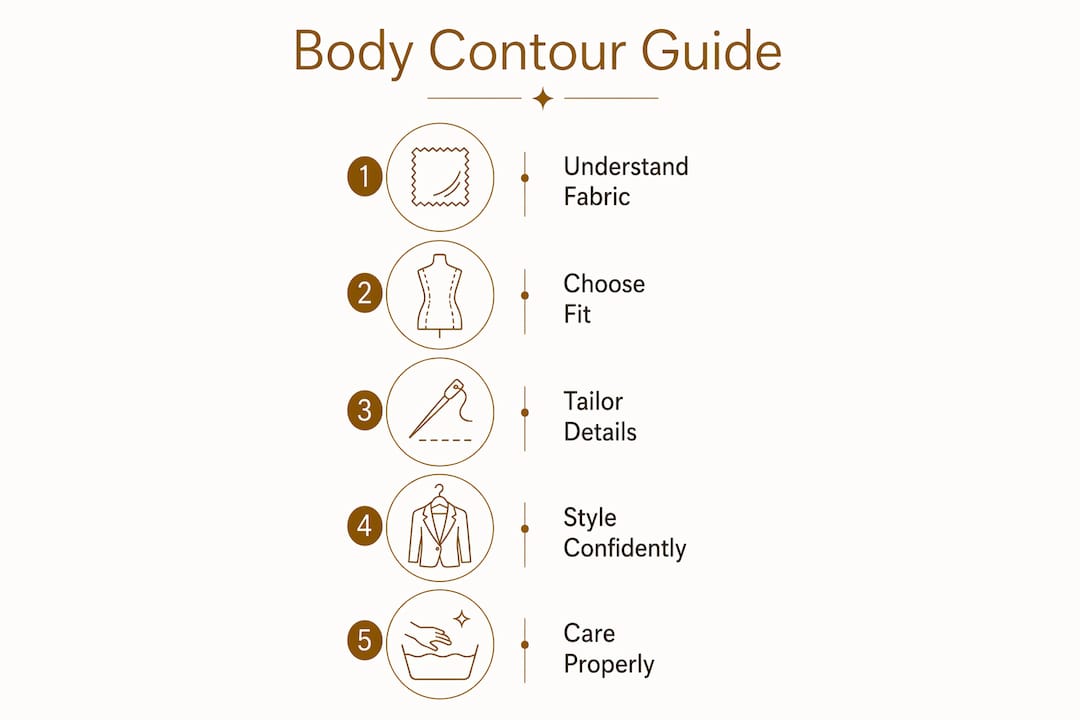
Fashion experts consistently frame body contouring as a tool for self-expression, not a correction. Viewing these garments as an expression of personality rather than a way to conform to a size standard is the shift that makes wearing them genuinely enjoyable.
Benefits that go beyond the mirror:
- Wearing clothes that fit well reduces the mental friction of getting dressed.
- A smooth foundation under clothing lets you focus on the outfit, not the undergarment.
- Choosing pieces that suit your shape builds a more consistent, personal style.
- Feeling physically comfortable in what you wear directly affects how you carry yourself.
At 16thavenue, the whole point is that fashion should feel like yours. Explore essential fashion tips that connect fit, confidence, and personal style in one place.
Body contour fashion vs. shapewear and compression garments
These three categories overlap but serve different purposes. Body contour fashion refers to outerwear and everyday clothing designed with contouring built into the cut and fabric. Shapewear is an undergarment worn beneath clothing to smooth and support. Compression garments are medical or athletic tools designed for circulation, recovery, or injury support.
The practical difference: a contour dress works on its own. Shapewear is a layer underneath. Compression sleeves, like arm shaping compression sleeves, sit at the intersection of function and fashion, offering light shaping with a purpose beyond aesthetics. Knowing which category you need prevents over-layering and the discomfort that comes with it.
Designers and brands shaping the contour fashion space
The Fashion Contour specialisation at London College of Fashion and the Body Contour Fashion degree launched at Cleveland College of Art and Design in 2017 signal how seriously the industry takes this category as a distinct design discipline. Graduates from these programmes focus on lingerie, structured bodywear, swimwear, and active wear as interconnected fields.
On the commercial side, the brands leading in contour fashion tend to prioritise inclusive sizing, technical fabric sourcing, and construction quality over trend cycles. The most credible names in the space release pieces that work across a range of body types rather than fitting a narrow sample size.
Body positivity and what contour fashion actually changed
The fashion industry’s relationship with body diversity has shifted measurably since the early 2000s. Designers like Christian Siriano have built reputations on producing full collections across all sizes, rejecting the traditional “straight” and “plus” division entirely. That structural change, driven partly by social media and partly by consumer demand, pushed contour fashion toward genuine inclusivity rather than aspirational sizing.
The result is that body contour fashion now serves a much wider range of women than the foundation garments of previous decades ever did. Garments engineered for anatomical fit work better when the range of bodies they are engineered for is actually broad.
Caring for your body contour garments
Contour pieces with high Lycra or spandex content need specific care to hold their shape.
- Hand wash or use a delicate machine cycle in cold water.
- Avoid tumble drying. Heat breaks down elastane fibres and reduces the garment’s recovery.
- Lay flat to dry rather than hanging, which can stretch the fabric.
- Store folded, not on a hanger, to preserve the garment’s structure.
- Wash after every wear. Body oils degrade elastic fibres faster than washing does.
Shop body contour fashion at 16thavenue
16thavenue carries pieces built for real fit, from structured outerwear to everyday contour styles. The Women’s Trendy Autumn and Winter Woolen Coat is a strong example: a tailored silhouette that creates shape without shapewear underneath. Free shipping to most destinations, and new arrivals added regularly.
Key takeaways
Body contour fashion uses tailoring and fabric technology to enhance your natural silhouette, not change your body.
| Point | Details |
|---|---|
| Fashion vs. medical contouring | Body contour fashion works through design and fabric; medical contouring involves surgery or procedures. |
| Compression level matters | Light-to-moderate compression suits daily wear; firm control is best reserved for special occasions. |
| Fit beats size | A well-tailored garment flatters more than tight shapewear worn a size down. |
| Shape-specific styling | Each body shape responds to different cuts: wrap styles for hourglass, A-line for pear and inverted triangle. |
| Garment care extends lifespan | Cold wash, flat dry, and fold storage preserve elastane fibres and keep contour pieces performing. |