


Dopamine dressing: wear what lifts your mood
TL;DR:
- Dopamine dressing involves choosing clothes that enhance mood, confidence, and self-perception. The psychological effect relies on symbolism and self-perception rather than a direct neurotransmitter spike. Starting with accessories or familiar pieces can be an easy, low-risk way to boost your daily mood through wardrobe choices.
Dopamine dressing is the practice of choosing clothes specifically to boost your mood, confidence, and sense of self. It’s not about following a trend or buying a new wardrobe. It’s about reaching for the bright scarf that makes you smile, the soft knit that feels like a hug, or the dress that makes you stand a little taller. Fashion psychologist Dawnn Karen frames it simply: dress intentionally to alter your mood and presence. The concept is grounded in a real area of psychology called enclothed cognition, which studies how clothing shapes the wearer’s mental state. 16thavenue curates pieces with exactly this in mind.
Table of Contents
- What dopamine dressing actually means in fashion
- How it might work: the psychology behind the clothes you wear
- Colours, textures, and pieces that commonly give a mood boost
- How to start dopamine dressing this week
- How to wear dopamine dressing in real life without friction
- When dopamine dressing isn’t enough
- Key takeaways
- Why mood-focused fashion matters to us
- Mood-boosting pieces at 16thavenue, ready to wear now
- Further reading and sources
What dopamine dressing actually means in fashion
The phrase itself is relatively new, but the idea behind it is not. Dawnn Karen popularised the term through her work as a fashion psychologist, and it spread through lifestyle press and social media, gaining serious momentum after the pandemic when people were hungry for joy and self-expression in their daily lives. Post-pandemic dressing habits shifted dramatically, and the appetite for colour, texture, and personality in clothing came roaring back.
Dictionary.com defines it as a fashion mindset and practice of choosing clothing, colours, textures, and styles specifically to stimulate positive mood, confidence, and self-perception. What’s worth noting is how broadly people apply the term:
- Colour-forward looks: bold reds, sunny yellows, cobalt blues worn to lift energy
- Tactile pieces: chunky knits, velvet, satin, or soft cashmere that feel good against the skin
- Sentimental items: a grandmother’s brooch, a jacket bought on a memorable trip
- Deliberate silhouettes: a full skirt, a structured blazer, or a flowy dress that changes how you carry yourself
The press sometimes frames it as a colour trend. Stylists and psychologists tend to frame it as a mindset. Both are right, and neither is the whole picture.
How it might work: the psychology behind the clothes you wear
The popular shorthand “dopamine dressing” implies your outfit spikes a neurotransmitter. The reality is more nuanced, and honestly more interesting. Research published on PubMed confirms that clothing can change the wearer’s mental state, confidence, and performance through a mechanism called enclothed cognition. The theory holds that clothes carry symbolic meaning, and when you wear something associated with a particular identity or feeling, your behaviour and self-perception shift to match.
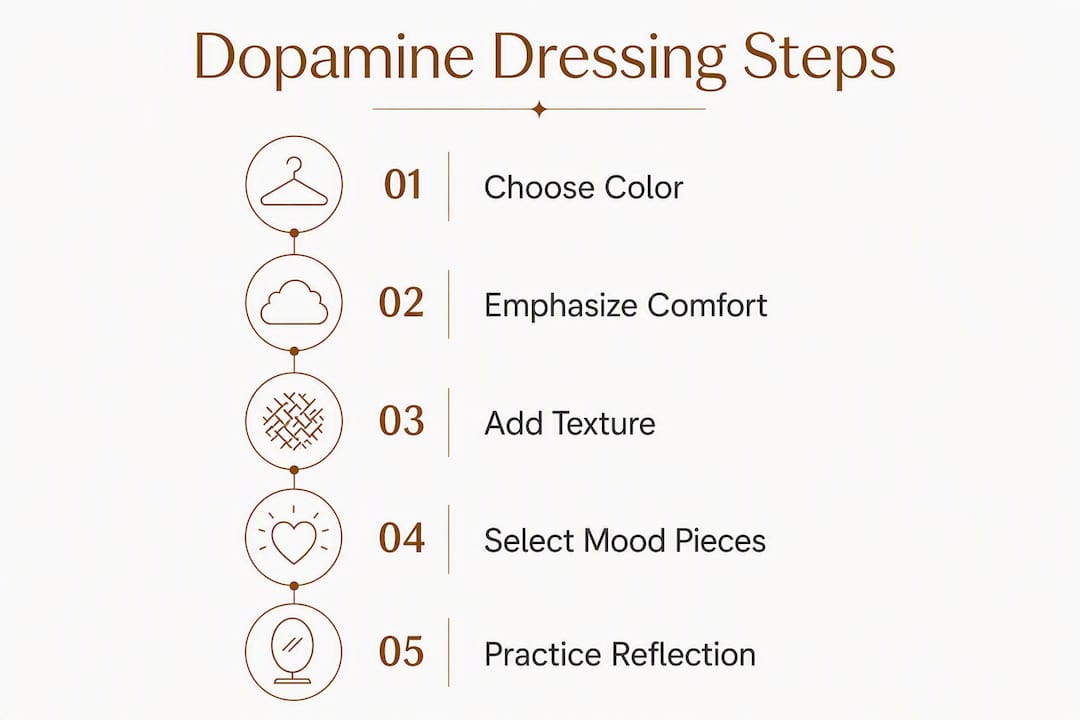
Think about the difference between staying in pyjamas all day versus putting on a structured outfit. You carry yourself differently. That’s enclothed cognition in action.
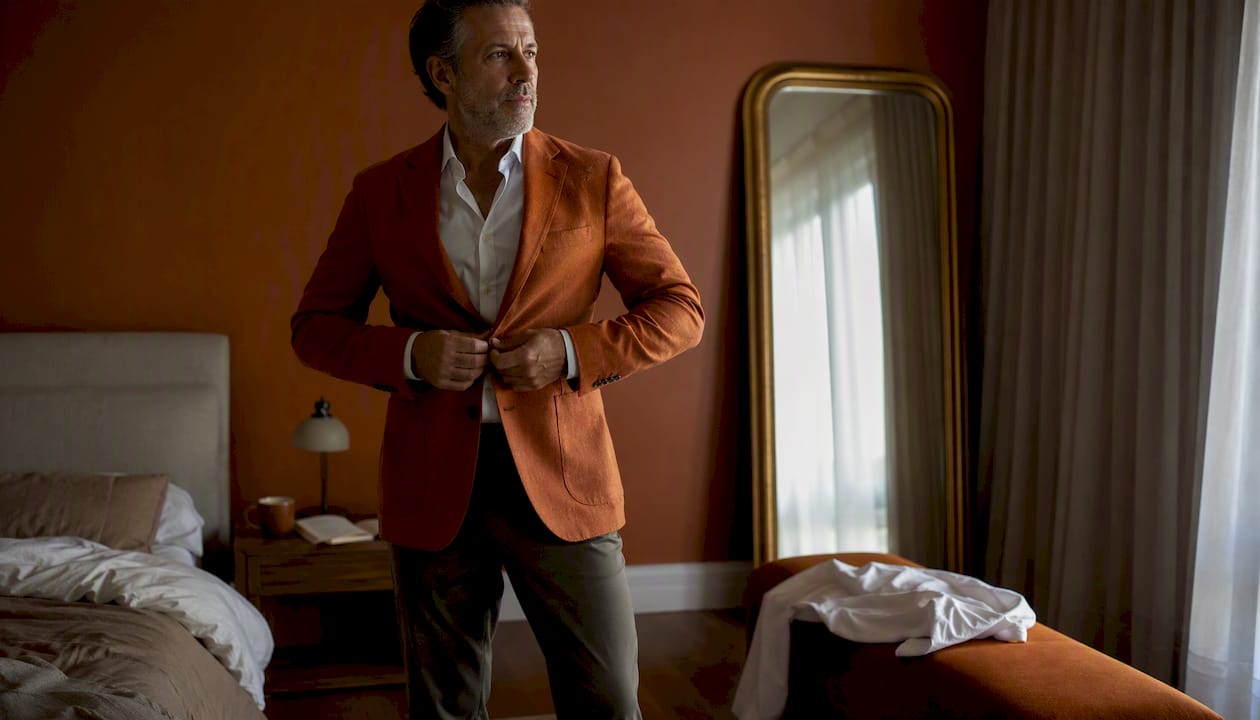
What the science does not confirm is a direct neurochemical link. No study has conclusively shown that a yellow dress raises dopamine levels in the brain. The mood effect is psychological, not pharmacological, and that distinction matters when you’re setting expectations.
| Concept | What it means | What the evidence supports |
|---|---|---|
| Enclothed cognition | Clothes change self-perception and behaviour | Yes, supported by published research |
| Dopamine spike from clothing | Outfit directly raises neurotransmitter levels | Not confirmed by current evidence |
| Colour psychology | Certain colours influence mood and energy | Moderate support; highly individual |
| Comfort and confidence link | Physical comfort relaxes the nervous system | Supported by expert guidance |
Carolyn Mair and other psychologists are consistent on one point: physical comfort matters as much as colour. Feeling at ease in what you’re wearing relaxes the nervous system and supports confident interactions. A tight waistband or an itchy collar can undo whatever mood lift a bold colour was supposed to deliver.
The Forbes coverage by psychologist Mark Travers reinforces this: dopamine dressing is rooted in colour psychology and self-perception theory, not a neuroscience hack. The mood benefit is real. The mechanism is psychological, and that’s enough to make it worth trying.
Colours, textures, and pieces that commonly give a mood boost
One of the most persistent misconceptions about colourful clothing psychology is that dopamine dressing requires neon everything. It doesn’t. The boost comes from wearing something that resonates with you, whether that’s a fire-engine red coat or a perfectly fitted cream sweater in the softest cashmere you’ve ever touched.
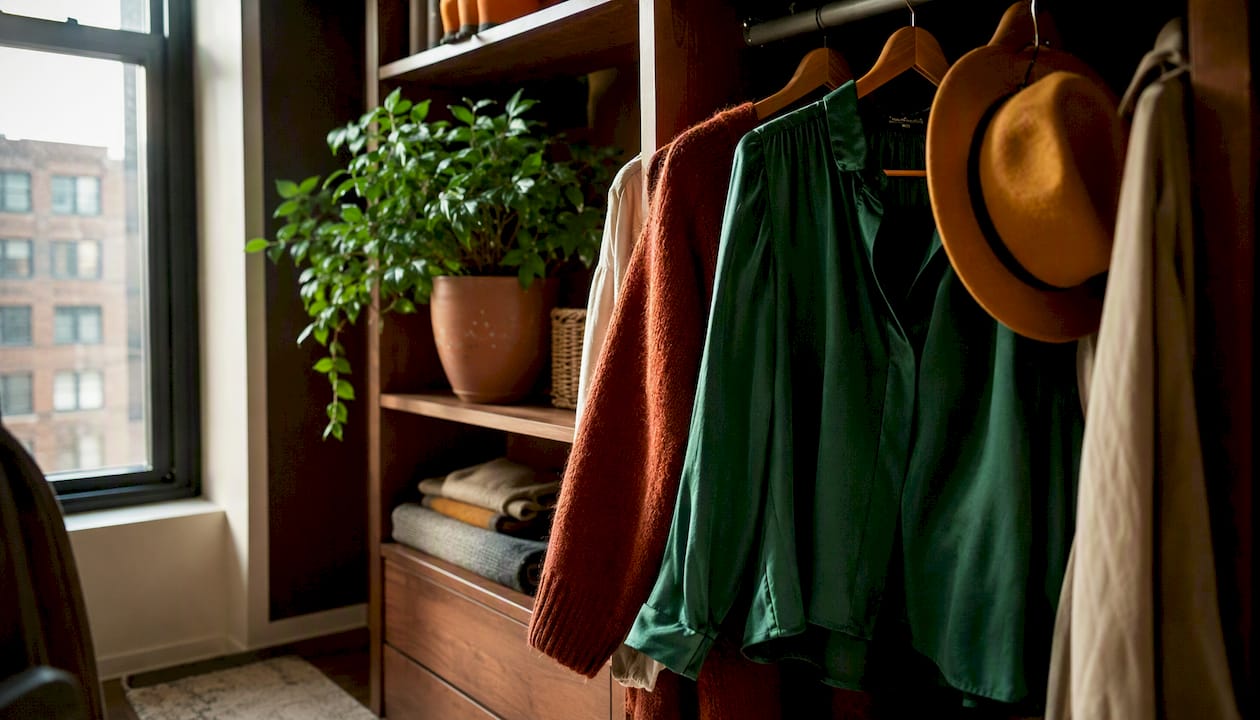
| Category | Mood-boosting examples | Works best for |
|---|---|---|
| Colour | Cobalt blue, terracotta, warm yellow, coral | People who respond to visual energy |
| Texture | Velvet, chunky knit, satin lining, soft fleece | People who are tactile or sensory-sensitive |
| Silhouette | Full midi skirt, structured blazer, wrap dress | People who feel mood shift from how they carry themselves |
| Accessories | Bold earrings, a bright bag, a printed scarf | Anyone wanting a low-cost, low-commitment entry |
| Sentimental pieces | Inherited jewellery, a meaningful gift | People for whom memory and story drive emotional connection |
ABC News coverage makes the point clearly: the trend covers both bright, colour-led looks and subtler approaches. Texture, fit, and sentimental items can produce a similar mood boost for people who prefer neutrals.
Some quick starting points that don’t require spending much:
- A single statement earring or necklace in a colour you love
- A patterned scarf tied to a bag or worn in your hair
- One bright or textured top you already own, worn on a day you’d normally default to grey
- A shoe in an unexpected colour that makes you look down and smile
Pro Tip: Before buying anything new, go through what you already own. Pull out three pieces that have made you feel genuinely good in the past. Wear one this week and notice what shifts.
How to start dopamine dressing this week
You don’t need a shopping trip. The most effective first experiments use what’s already in your wardrobe.
Start with a single accessory. A bright bag, a bold scarf, or a pair of earrings you’ve been saving for a “special occasion” can shift the energy of an otherwise neutral outfit without changing anything else. The practical starting tips from Dictionary.com consistently point to this: a statement accessory or a tactile knit is a lower-risk entry than replacing whole outfits.
The “3-3-3” idea circulates in fashion and wellness circles as a loose heuristic: try three different mood-focused outfits across three days in three different contexts (work, errands, social). Treat it as a casual experiment, not a strict protocol. The goal is to notice patterns, not to grade yourself.
Verywell Mind recommends keeping a short dressing diary to track which pieces genuinely help. It doesn’t have to be elaborate. Three columns work fine: what you wore, how you felt getting dressed, how you felt by mid-afternoon. After a week, patterns emerge. You’ll likely find it’s not always the boldest piece that moves the needle.
For video calls specifically, try one colour-forward or textured top. The visual feedback of seeing yourself on screen in something you like can reinforce the mood effect. Small experiments in low-stakes contexts are the fastest way to learn what actually works for you.
How to wear dopamine dressing in real life without friction
Bold fashion choices can feel out of place in conservative workplaces, family gatherings, or professional settings. The fix is usually about scale, not abandonment.
- Swap the statement piece, not the whole outfit. If a bright blazer feels too much for your office, try a patterned scarf at the neck instead. Same mood signal, lower visual volume.
- Use colour in accessories first. A cobalt blue bag or terracotta earrings reads as polished in most workplaces while still delivering the personal lift.
- Let texture do the work in neutral palettes. A cream ribbed knit, a structured wool coat, or a satin blouse in a muted tone can feel just as intentional as a bold colour choice, especially for people who prefer a quieter aesthetic.
- Match the scale to the setting. A full printed midi skirt works beautifully on a weekend. In a boardroom, the same print energy in a silk pocket square or a printed lining achieves a similar personal effect without drawing attention.
- Layer strategically. A bright inner layer under a neutral blazer gives you the mood benefit when you want it and lets you cover it when the room calls for it.
For seasonal wardrobe choices, the same principle applies. A warm terracotta coat in autumn or a cobalt knit in winter can carry the mood-focused intention without clashing with the season’s palette.
When dopamine dressing isn’t enough
Clothing can shift your mood. It cannot treat anxiety, depression, or any clinical mental-health condition. That line is worth stating plainly: dopamine dressing is a tool for everyday wellbeing, not a substitute for professional care. If you’re struggling, please speak with a qualified mental-health professional.
A few specific limits and pitfalls to watch for:
- Individual differences are real. What sparks joy for one person can overwhelm another. Sensory sensitivities mean some people find bright colours or certain textures agitating rather than uplifting. Start with what feels good to you, not what the trend dictates.
- The shopping trap. Mental-health coverage flags a genuine risk: if dopamine dressing becomes a buying-driven coping mechanism, it can tip into compulsive shopping. The mood lift from a purchase fades quickly. The lift from wearing something you already love does not.
- Sensory overload. For people with sensory processing sensitivities, a heavily textured or very bright outfit can increase stress rather than reduce it. Comfort always comes first.
- Trend pressure. Chasing the “right” dopamine dressing look on social media can produce the opposite of the intended effect. The practice works when it’s personal, not performative.
The best safeguard against all of these: style what you already own first. Make selective, versatile purchases only when you’ve identified a genuine gap.
Key takeaways
Dopamine dressing works because it’s personal: the pieces that lift your mood are the ones that fit your body, your sensory preferences, and your own emotional associations, not a universal colour formula.
| Point | Details |
|---|---|
| What it is | Choosing clothes intentionally to boost mood, confidence, and self-perception. |
| How it works | Enclothed cognition, not a neurotransmitter spike; psychological effect is real and research-supported. |
| Easy first step | Try one statement accessory or a favourite tactile piece before buying anything new. |
| Safety caveat | A mood tool, not a therapy replacement; watch for the shopping trap and sensory overload. |
| Start with 16thavenue | Browse curated accessories, knits, and outerwear at 16thavenue.ca for low-cost entry pieces. |
Why mood-focused fashion matters to us
At 16thavenue, the curation process has always started with a question: does this piece make you feel something? The collections we build lean into texture, colour, and silhouette with intention, because we’ve seen that when women feel genuinely good in what they’re wearing, it shows. Dopamine dressing isn’t a trend we’re chasing. It’s a principle we’ve been working from all along.
Mood-boosting pieces at 16thavenue, ready to wear now
The fastest way to try dopamine dressing is one well-chosen piece, not a full wardrobe overhaul. At 16thavenue, the collections are built around exactly the categories that make mood-focused dressing practical: tactile outerwear, statement accessories, and versatile knits that work across seasons.
The Women’s Trendy Autumn and Winter Woolen Coat is a strong starting point if you want texture and silhouette doing the heavy lifting. A structured wool coat in a rich seasonal tone is the kind of piece you reach for on a flat morning and feel better the moment you put it on. For a lower-cost entry, the Women’s Casual Low Wedge Breathable Non-Slip Comfort Sport Sneakers prove that comfort and mood lift are not mutually exclusive. A shoe that feels good and looks considered is a genuine daily upgrade. Browse the full collection at 16thavenue.ca and start with one piece that makes you feel something.
Further reading and sources
The table below lists the main sources used in this article. Peer-reviewed research is flagged separately from press and editorial coverage.
| Source | Type | Notes |
|---|---|---|
| Enclothed cognition research (PubMed) | Peer-reviewed research | Core scientific basis for clothing’s effect on mental state |
| Forbes: 2 Reasons to Start Dopamine Dressing, by a Psychologist | Expert editorial | Psychologist Mark Travers on self-perception theory and dopamine dressing |
| TODAY: Dawnn Karen on dopamine dressing | Press coverage | Fashion psychologist Dawnn Karen explains the concept |
| Business Insider: How to feel happier with clothes | Press coverage | Carolyn Mair on comfort, authenticity, and mood |
| Verywell Mind: Dress for your happiness | Health editorial | Wardrobe diary and experiment tracking guidance |
| ABC News: Is dressing for dopamine a real thing? | Press coverage | Individual differences and the neutral-palette approach |
| Mind.help: Can dopamine dressing boost our mood? | Health editorial | Mental-health limits and compulsive shopping risk |
| Dictionary.com: Dopamine dressing definition | Reference | Formal definition and practical starting tips |
| Nine.com.au: Dopamine dressing explained | Press coverage | Post-pandemic trend context |
| 16thavenue.ca | Brand / retailer | Curated women’s fashion for readers who want to shop the concept |