


What Is Ethical Fashion and Why It Matters
Finding affordable and ethical style often feels like sorting through confusing claims and trendy buzzwords. Many women looking for conscious fashion choices struggle to separate genuine responsibility from empty promises. Defining ethical fashion means understanding how brands balance social justice with environmental responsibility, going beyond simple eco-friendly labels and addressing fair labour, supply chain transparency, and cultural sensitivity. This guide clears up common myths, highlights global practices, and helps you make confident, stylish decisions that reflect your values.
Table of Contents
- Defining Ethical Fashion And Common Misconceptions
- Types Of Ethical Fashion Practices Worldwide
- Key Features: Fair Labour, Sustainability, Transparency
- Certifications, Standards, And Supply Chain Accountability
- Risks, Greenwashing, And What To Avoid When Shopping
Key Takeaways
| Point | Details |
|---|---|
| Holistic Approach | Ethical fashion integrates fair labour, sustainability, and transparency in production practices. |
| Myth vs. Reality | Common misconceptions about ethical fashion often overlook its focus on worker rights and diverse price points. |
| Global Variations | Ethical fashion practices vary significantly by region, reflecting cultural and economic contexts. |
| Beware of Greenwashing | Consumers should critically evaluate brand claims and seek transparency to avoid misleading sustainability marketing. |
Defining Ethical Fashion and Common Misconceptions
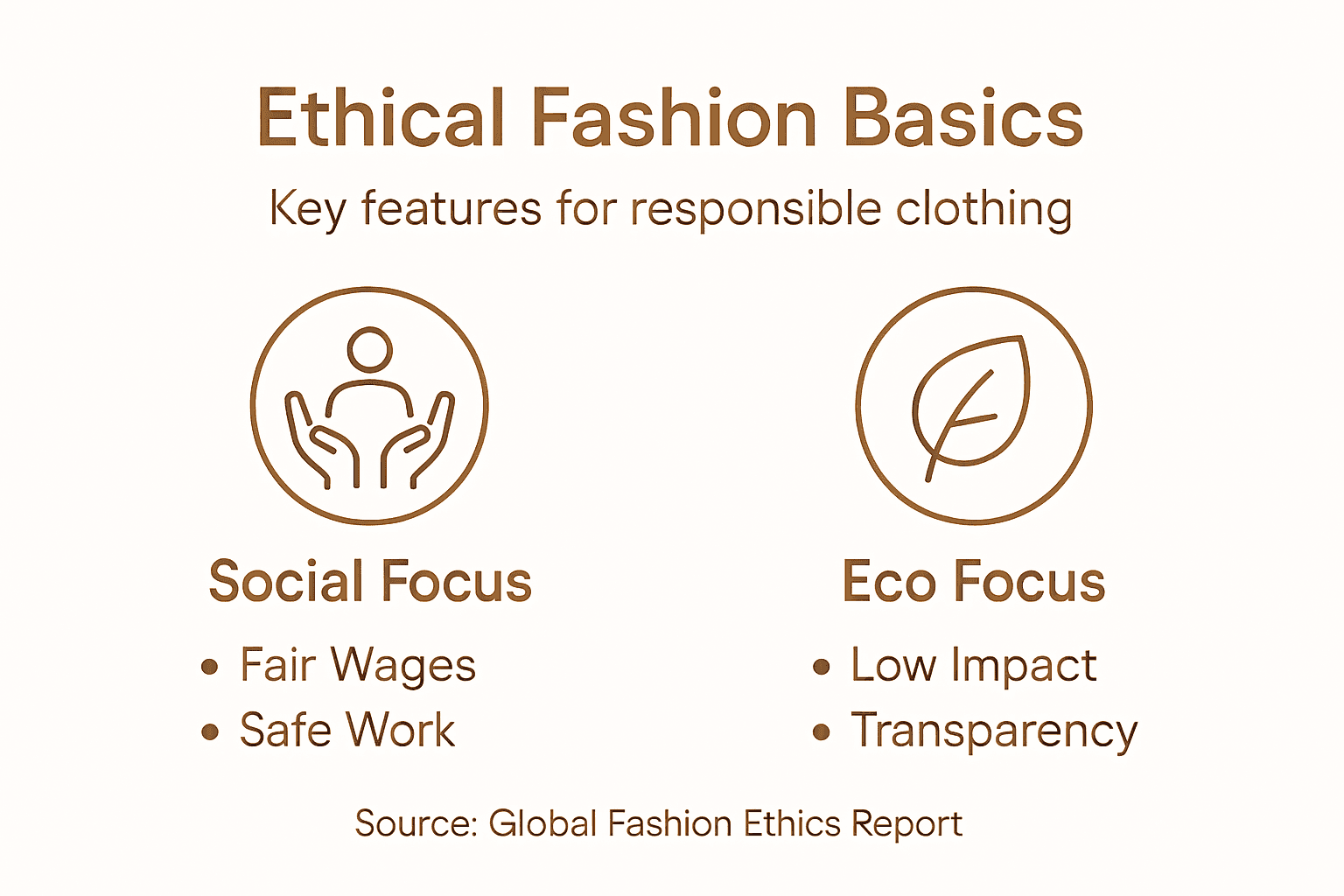
Ethical fashion transcends mere clothing production—it represents a comprehensive approach to responsible garment creation that considers social and environmental implications. Unlike traditional manufacturing, ethical fashion prioritizes human dignity, worker welfare, and planetary health throughout every stage of production.
At its core, ethical fashion involves integrating social-ecological system frameworks that balance human rights with environmental sustainability. This multifaceted concept challenges conventional fashion industry practices by examining complex global production dynamics.
Common misconceptions about ethical fashion often prevent broader adoption:
- Myth: Ethical fashion is only about environmental sustainability
- Reality: It equally emphasizes worker rights, fair compensation, and cultural respect
- Myth: Ethical clothing is always expensive
- Reality: Prices vary, with increasing market competition making sustainable options more accessible
- Myth: Ethical fashion lacks style or trendy designs
- Reality: Many brands now successfully combine aesthetic appeal with responsible manufacturing
Global fashion ethics research reveals that true ethical fashion requires addressing multiple interconnected challenges, including labor exploitation, environmental pollution, and cultural appropriation. It demands a holistic approach that goes beyond surface-level sustainability claims.
Pro tip: Start your ethical fashion journey by researching brands’ transparency reports and understanding their supply chain practices before making purchases.
Types of Ethical Fashion Practices Worldwide
Ethical fashion encompasses a diverse range of global practices that aim to transform traditional clothing production into a more responsible and sustainable industry. Sustainable fashion solutions span multiple phases of garment creation, use, and disposal, reflecting the complexity of modern ethical manufacturing.
Ethical fashion practices vary significantly across different regions and cultural contexts. These approaches typically fall into several key categories that address social, environmental, and economic concerns:
- Slow Fashion: Emphasizes quality, durability, and reduced consumption
- Fair Trade Practices: Ensures fair wages and safe working conditions for garment workers
- Circular Economy Models: Focuses on recycling, upcycling, and minimizing waste
- Transparent Sourcing: Provides complete visibility into supply chain practices
- Eco-Material Development: Uses sustainable, low-impact materials like organic cotton and recycled fabrics
Global ethical fashion research highlights the importance of addressing complex challenges including labor rights, environmental sustainability, and cultural sensitivity. Different countries adopt these practices with varying levels of commitment and effectiveness.
Regional variations play a crucial role in ethical fashion implementation. European markets tend to lead in sustainable textile innovations, while Asian manufacturers are increasingly adopting more transparent production methods. North American consumers are driving demand for more accountable fashion choices, creating market pressure for improved ethical standards.
Here’s a comparison of major ethical fashion practices and their primary impacts:
| Practice | Social Impact | Environmental Impact | Example Region |
|---|---|---|---|
| Slow Fashion | Promotes mindful consumption | Reduces textile waste | Europe |
| Fair Trade Practices | Ensures worker protection | Supports responsible sourcing | South America |
| Circular Economy Models | Encourages community engagement | Minimizes landfill use | Asia |
| Eco-Material Development | Boosts health and safety | Lowers carbon footprint | North America |
| Transparent Sourcing | Builds consumer trust | Reveals production impacts | Global |
Pro tip: When exploring ethical fashion, look beyond marketing claims and investigate brands’ actual sustainability reports and third-party certifications.
Key Features: Fair Labour, Sustainability, Transparency
Ethical fashion represents a holistic approach to clothing production that integrates three critical components: fair labour practices, environmental sustainability, and supply chain transparency. Fashion transparency reveals complex global challenges in creating truly responsible clothing manufacturing systems.
Fair Labour Practices form the foundational pillar of ethical fashion, addressing fundamental human rights within global textile industries:
- Ensuring living wages for garment workers
- Providing safe, regulated working environments
- Prohibiting child labour and forced labour practices
- Supporting worker rights to unionization
- Implementing regular workplace safety inspections
Environmental Sustainability goes beyond simple material choices, demanding comprehensive approaches to reducing ecological impacts. Ethical fashion incorporates systematic environmental strategies that address critical issues like water consumption, energy use, and waste reduction.
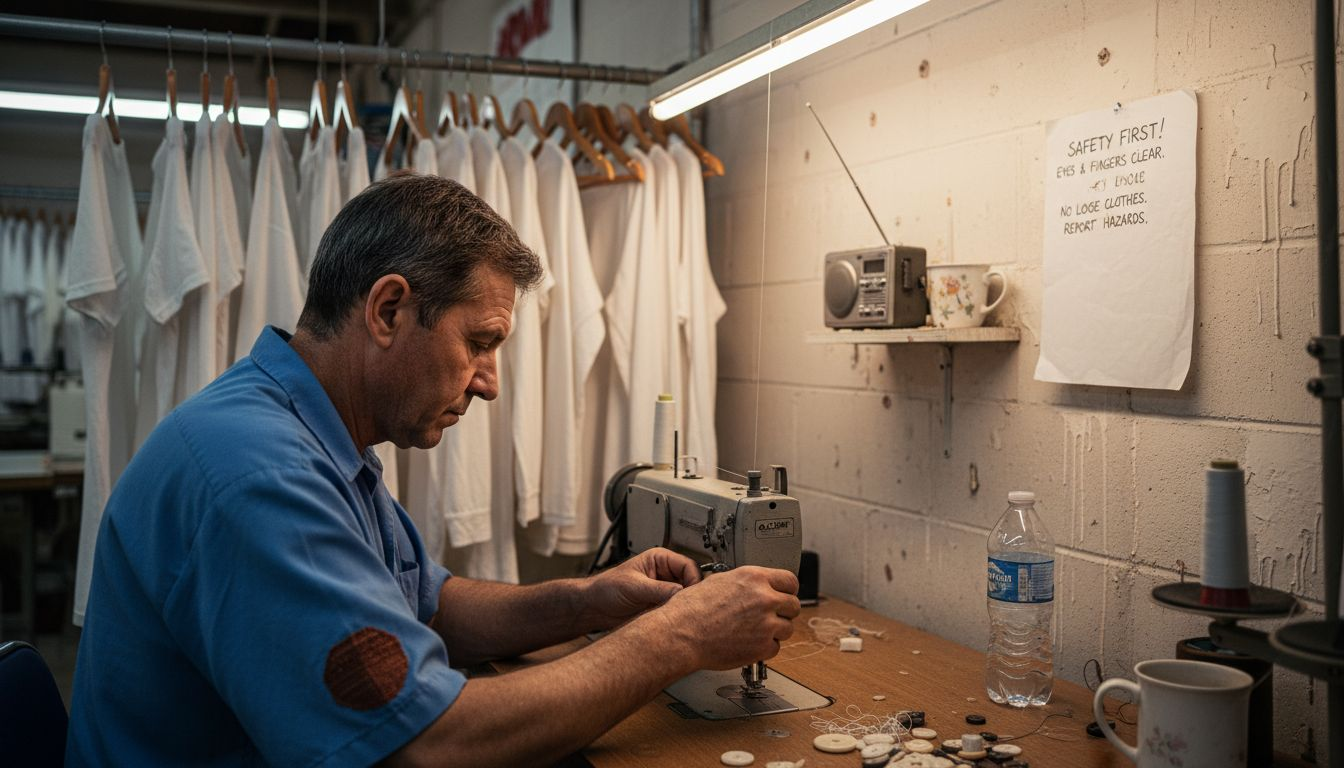
Transparency remains the critical mechanism that enables consumers to understand and validate ethical fashion claims. Brands committed to genuine transparency provide detailed information about their supply chains, manufacturing processes, and environmental impact, allowing informed consumer choices.
Pro tip: Research brands using multiple sources, including independent sustainability ratings and third-party certification organisations, to verify their ethical fashion claims.
Certifications, Standards, and Supply Chain Accountability
Supply chain accountability is the cornerstone of ethical fashion, ensuring transparency and responsible practices throughout the textile production process. Certified management systems play pivotal roles in creating sustainable and accountable textile supply chains.
Key certifications and standards in ethical fashion include:
For reference, here are the essential certifications and their focus areas in ethical fashion:
| Certification/Standard | Key Focus | Typical Benefits |
|---|---|---|
| GOTS | Organic production | Safer materials use |
| Fair Trade Certification | Workplace ethics | Improved worker welfare |
| OEKO-TEX Standard 100 | Chemical safety | Healthier textiles |
| Bluesign Certification | Environmental protection | Reduced pollution |
| ISO 14001 | Management systems | Better resource efficiency |
- Global Organic Textile Standard (GOTS): Ensures organic textile production
- Fair Trade Certification: Guarantees fair wages and ethical working conditions
- OEKO-TEX Standard 100: Verifies textile safety and chemical compliance
- Bluesign Certification: Addresses environmental and worker safety in textile production
- ISO 14001: Validates environmental management systems
Ethical sourcing frameworks demonstrate the complex nature of supply chain accountability, requiring comprehensive approaches that integrate organizational policies, labor regulations, and environmental standards. These certifications serve as critical mechanisms for building stakeholder trust and ensuring responsible manufacturing practices.
The verification process for these certifications involves rigorous independent audits, comprehensive documentation reviews, and on-site inspections. Brands must consistently demonstrate compliance with stringent ethical and environmental standards to maintain their certification status.
Pro tip: Always cross-reference multiple certification sources and look for brands with transparent, verifiable supply chain documentation.
Risks, Greenwashing, and What to Avoid When Shopping
Greenwashing represents a significant challenge in ethical fashion, where brands create misleading environmental claims to appear more sustainable than they truly are. Greenwashing tactics systematically undermine consumer trust by presenting superficial or exaggerated sustainability credentials.
Common greenwashing strategies to watch for include:
- Using vague environmental terminology without specific definitions
- Highlighting minor sustainable practices while ignoring broader unsustainable operations
- Creating misleading eco-friendly packaging
- Making unsubstantiated claims about environmental impact
- Featuring selective or incomplete sustainability reporting
Systematic literature reviews reveal that effective prevention requires enhanced consumer awareness and critical evaluation of brand sustainability claims. Consumers must develop sophisticated strategies to distinguish authentic ethical fashion from marketing manipulation.
To protect yourself from greenwashing, always request detailed documentation about a brand’s sustainability practices, look for third-party certifications, and investigate the comprehensive environmental and social impact of their entire production process.
Pro tip: Develop a habit of researching brands’ full sustainability reports and cross-referencing claims with independent environmental assessment organizations.
Embrace Ethical Fashion Without Sacrificing Style
Discover how you can make a meaningful impact on fair labour, sustainability, and transparency while enjoying fashionable pieces curated just for you. The challenge many face is finding clothing that aligns with ethical values yet meets the desire for elegant, trendy apparel. At 16th Avenue, we understand this balance matters deeply. Our Elegant Women’s Clothing For Every Occasion Collection – 16th Avenue offers styles that reflect your commitment to responsible fashion without compromise.
Take action now to support brands and collections that prioritise social and environmental responsibility. Explore the full range at 16th Avenue and refresh your wardrobe with pieces that proudly represent ethical fashion values. For seasonal inspiration that honours these principles, browse our Women’s Summer Fashion Collection | 16th Avenue. Shop with confidence and be part of the global shift towards transparent and fair fashion today.
Frequently Asked Questions
What is ethical fashion?
Ethical fashion refers to responsible garment creation that considers social and environmental implications, prioritizing human dignity, worker welfare, and planetary health throughout every stage of production.
Why is transparency important in ethical fashion?
Transparency enables consumers to understand and validate ethical fashion claims, as brands committed to transparency provide detailed information about their supply chains, manufacturing processes, and environmental impacts.
How can consumers identify greenwashing in fashion brands?
Consumers can identify greenwashing by looking for vague environmental terminology, superficial sustainable practices, misleading eco-friendly packaging, and unsubstantiated claims about environmental impact.
What are some key certifications for ethical fashion?
Key certifications include the Global Organic Textile Standard (GOTS), Fair Trade Certification, OEKO-TEX Standard 100, Bluesign Certification, and ISO 14001, which ensure adherence to various ethical and environmental standards.