

What is faux fur: your guide to ethical fashion
TL;DR:
- Faux fur has a long history of accessibility and innovation, evolving from Victorian imitation pelts to sustainable fashion. It is a fully synthetic textile made from fibers like polyester, acrylic, and modacrylic, produced through a refined four-step process that ensures durability and ease of care. While faux fur is cruelty-free and more affordable, its environmental impact includes microplastic shedding, prompting consumers to seek transparent, ethically responsible brands.
Faux fur has been quietly revolutionising wardrobes for well over a century, yet most people still treat it as a recent trend or a cheap imitation. Knowing what is faux fur actually means, beyond the surface softness, changes how you shop, style, and care for your clothes. It is a 100% synthetic faux fur fabric engineered to replicate animal pelts without the animal cost, and its story is far more layered than most fashion guides let on. From its Victorian roots to today’s innovations in sustainable faux fur, this guide covers the origins, production, honest trade-offs, and practical tips you need to make genuinely informed choices.
Table of Contents
- The origins and evolution of faux fur
- What is faux fur made of and how is it produced
- Faux fur versus real fur: comparing ethics, cost, and sustainability
- Caring for and styling faux fur: tips for lasting fashion and sustainability
- Rethinking faux fur: an expert perspective on ethics and environment
- Explore ethical faux fur fashion with 16th Avenue
- Frequently asked questions
Key Takeaways
| Point | Details |
|---|---|
| Faux fur origins | Faux fur has a long history dating back to the 1800s as an affordable alternative to real fur. |
| Material and production | It is made from synthetic fibers using a specialized 4-step manufacturing process creating a realistic look. |
| Ethics and sustainability | Faux fur is cruelty-free and affordable but sheds microplastics, requiring responsible care. |
| Care and styling | Proper maintenance and sewing techniques help extend faux fur’s lifespan and appearance. |
| Practical choice | Faux fur offers a stylish, ethical alternative for conscious fashion consumers balancing pros and cons. |
The origins and evolution of faux fur
The story of faux fur begins not in a modern textile mill, but in the late 1800s, when seal plush and early imitation pelts first appeared in catalogues as a direct response to economic reality. Faux fur originated in the late 1800s, priced 3 to 4 times lower than real sealskin jackets, making aspirational fashion accessible to a much wider audience. This was not an environmental movement, at least not yet. It was practical economics meeting growing demand.
What accelerated faux fur’s rise was a combination of factors that had little to do with consumer preference:
- Early wildlife protection treaties in the early 20th century restricted access to certain pelts, creating scarcity that pushed textile manufacturers toward alternatives.
- Wartime shortages of raw materials through the 1940s pushed innovation in synthetic textiles further than peacetime demand ever would have.
- The 1970s animal rights movement gave faux fur a new moral identity, transforming it from a budget substitute into a deliberate ethical statement.
- Hollywood’s influence in the 1990s and 2000s brought high-glamour faux fur coats into mainstream culture, with designers embracing the material without apology.
Understanding fashion trends and faux fur history helps explain why faux fur is no longer just a compromise. It has its own design heritage. By the time synthetic fibre technology caught up with consumer expectations in the 2000s, faux fur had earned a permanent place in fashion on its own terms.
What is faux fur made of and how is it produced
Faux fur fabric is a fully synthetic product. There is no animal fibre, no natural pelt, and no wildlife involved. The three main fibres used are polyester, acrylic, and modacrylic, each chosen for specific performance qualities. Faux fur is made from polyester, acrylic, or modacrylic fibres attached to a knitted backing through a four-step production process that has been refined significantly over the past two decades.
The production sequence follows a clear logic:
- Knitting the backing: A woven or knitted base fabric is created to anchor the pile fibres. This backing determines the drape and stretch of the finished material.
- Tufting the fibres: Synthetic fibres are woven or tufted into the backing using specialised looms that control pile height and density precisely.
- Shearing the loops: The tufted loops are cut and levelled to create an even, uniform pile surface. This step determines the texture, from smooth velvet-like finishes to shaggy, dramatic silhouettes.
- Brushing and heat treatment: The pile is brushed out and heat-treated to set the fibres, add lustre, and create the curl patterns that mimic specific animal furs like chinchilla or fox.
The result is a fabric that can last 5 to 10 years with proper care and is generally machine-washable, two advantages real fur simply cannot match for everyday wearability.
Pro Tip: If you are shopping for higher-quality faux fur, look specifically for modacrylic blends. Modacrylic is inherently flame-resistant and holds curl retention far better than pure polyester or acrylic, which is why it appears in premium faux fur coats designed to mimic long-hair pelts convincingly.
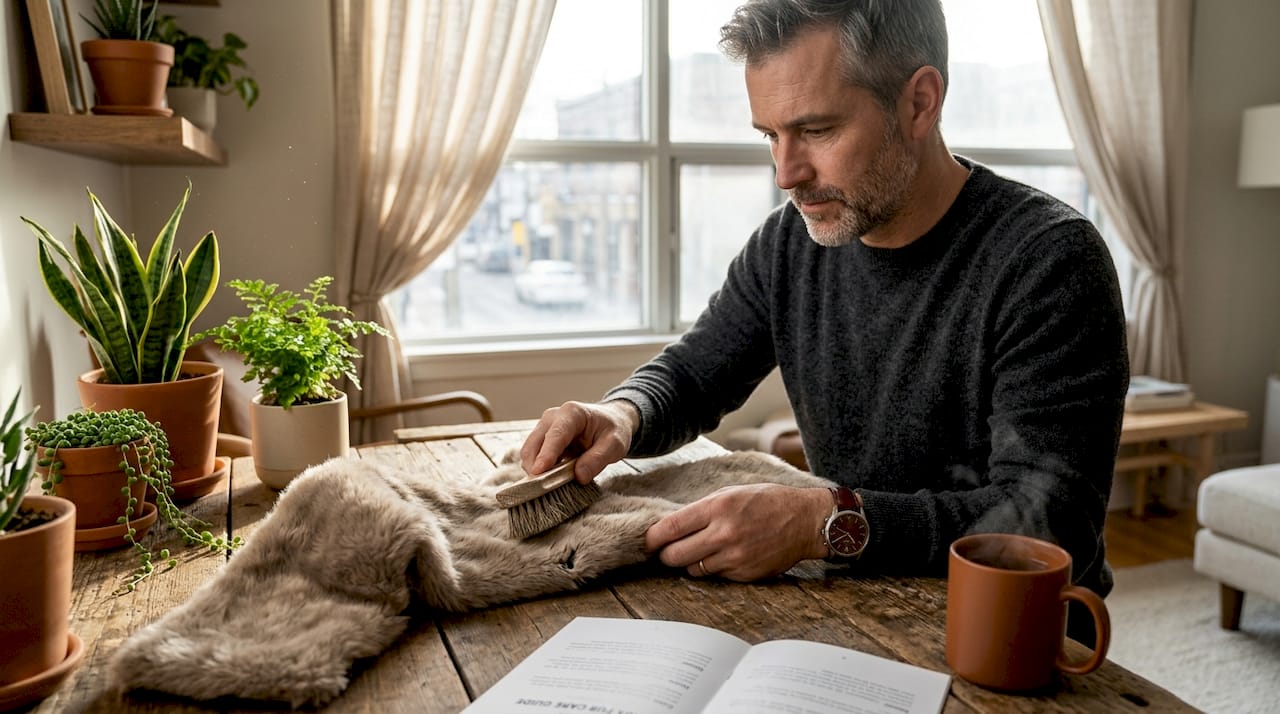
The sustainable fashion benefits of choosing synthetic over animal-derived materials extend beyond the obvious. Understanding how your clothes are manufactured connects directly to why sustainable fashion matters at a systemic level.
Faux fur versus real fur: comparing ethics, cost, and sustainability
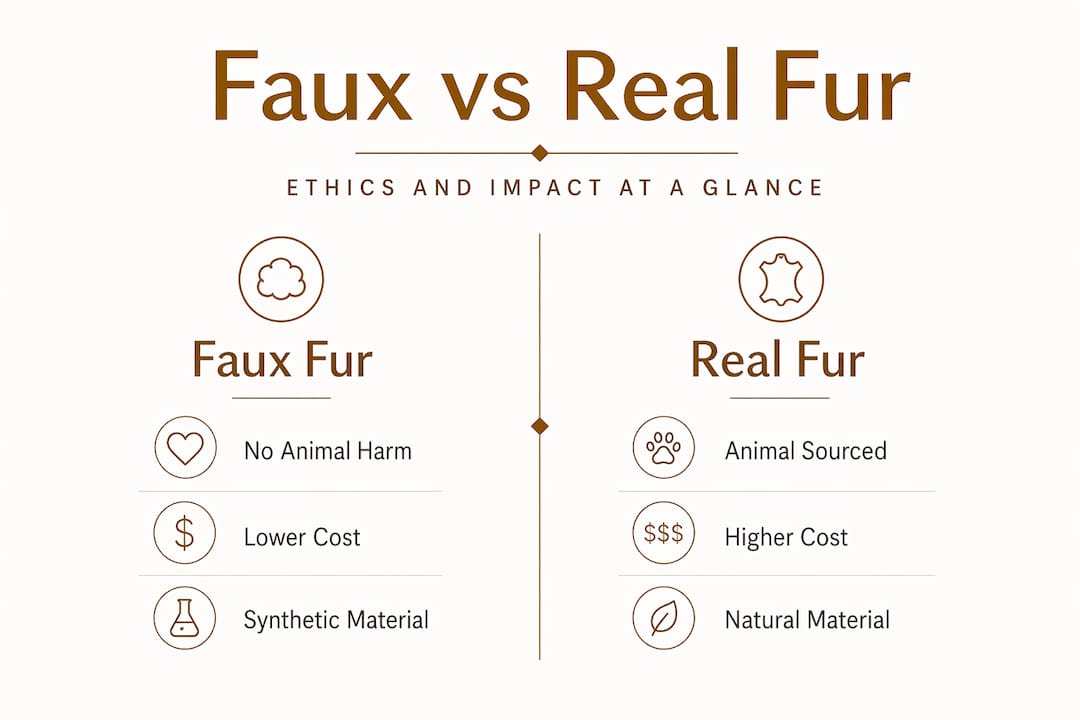
The faux fur vs real fur debate is rarely as straightforward as either side presents it. Both materials carry environmental costs. The difference lies in which costs you are willing to accept, and that is a genuinely personal decision informed by facts.
| Factor | Faux fur | Real fur |
|---|---|---|
| Cost per yard | $8 to $30 | $50 to $500+ |
| Animal welfare | No animals harmed | Animal farming involved |
| Durability | 5 to 10 years | 20+ years with care |
| Biodegradability | Slow, synthetic fibres persist | Biodegrades in 3 to 5 years |
| Microplastic risk | Yes, sheds when washed | None |
| Carbon footprint | Lower production emissions | Animal farming emits methane |
The ethical advantage of faux fur is clear and non-negotiable: no animals are harmed. For many shoppers, that point alone closes the debate. But the environmental picture requires honest nuance. Faux fur sheds microplastics when washed, tiny synthetic particles that enter waterways and accumulate in marine ecosystems. Real fur, by contrast, biodegrades in 3 to 5 years, but animal farming generates methane emissions and requires significant land and water resources.
The good news is that microplastic shedding is partly manageable. Using a microfibre-catching laundry bag during washing can reduce shedding by 30 to 50%, which meaningfully lowers the environmental footprint of each wash cycle. That is a simple, affordable habit that makes a real difference.
Key advantages of faux fur that often get overlooked:
- Price accessibility: At $8 to $30 per yard, faux fur democratises luxury textures without the financial barrier of animal pelts.
- Versatility in design: Because it is manufactured, faux fur can be produced in colours, patterns, and pile lengths that no animal produces naturally, giving designers enormous creative range.
- Everyday practicality: You can spot-clean, machine-wash, and wear faux fur without the professional storage and conditioning that real fur requires.
“Modern high-quality faux fur is very realistic, affordable, and cruelty-free, making it the go-to choice for fashion-conscious consumers who want the look without the ethical cost.”
Exploring ethical fashion considerations gives you a wider framework for understanding how material choices ripple through the supply chain in ways that go well beyond the garment itself.
Caring for and styling faux fur: tips for lasting fashion and sustainability
Faux fur care is straightforward once you understand how the fibres behave. The goal is always to protect the pile and minimise environmental impact simultaneously.
- Machine-wash on cold, gentle cycles with a mild detergent. Hot water breaks down synthetic fibres faster and increases shedding. Always check the care label first since some structured coats require hand-washing.
- Use a microfibre-catching laundry bag every single time you wash. This is the single most effective step you can take to reduce microplastic pollution from your wardrobe.
- Air-dry flat or on a wide hanger. Tumble drying on high heat causes synthetic fibres to matte, curl unevenly, and lose their original texture permanently.
- Brush gently after washing using a wide-tooth comb or a pet slicker brush to restore the pile’s direction and lift. Always brush with the nap, not against it.
- Store hanging in a cool, dry space. Compressing faux fur under heavy items flattens the pile and can cause permanent creasing.
Proper care and sewing techniques for faux fur also matter when you are making or altering garments. Cutting pile in the nap direction (always cut from the back through the backing fabric with small scissors) minimises shedding and preserves the pile on both cut edges. If you are using a sewing machine, a walking foot prevents the slippery backing from shifting and puckering.
Pro Tip: When selecting a faux fur coat for warmth rather than just style, choose a longer, denser pile. Higher pile density traps more air between the fibres, which is exactly how insulation works. A thin, sparse pile looks luxurious but provides far less warmth than a full, well-constructed one.
For styling, faux fur works hardest when it is treated as the statement it is. A faux fur coat worn over simple, clean layers puts all the visual weight where it belongs. Pair with slim trousers, a fitted turtleneck, and ankle boots for a proportional cold-weather look that reads intentional rather than overwhelming. For eco-friendly shopping tips that extend beyond garment care, small consistent choices add up to a significantly lighter footprint over a full season.
Rethinking faux fur: an expert perspective on ethics and environment
Here is the uncomfortable truth most fashion guides skip: faux fur is not a clean solution. It is a better trade-off, and that distinction matters enormously for anyone making genuinely ethical material choices.
Faux fur eliminates animal farming, but petroleum-based synthetic fibres carry their own pollution costs across production, use, and end-of-life disposal. Many consumers buy faux fur feeling virtuous, never realising that every machine wash sends thousands of microplastic particles into waterways. Consumers routinely underestimate microplastic pollution from synthetic garment washing, and the behavioural shift required, using laundry bags, washing less frequently, air-drying, is still far from mainstream.
The most promising direction is not simply choosing faux over real, but pushing for better materials within the faux fur category itself. Bio-based faux furs reduce plastic content significantly, but verifying recycled polyester certifications is essential before accepting any “eco-fur” claim at face value. Greenwashing in this space is rampant, and a recycled polyester label without third-party certification often means very little in practice.
The brands worth supporting are those that disclose their fibre sources, publish supply chain data, and invest in take-back or recycling programmes. That level of transparency is rare, which means your job as a shopper is to ask harder questions, not simply accept “faux” as a synonym for “ethical.”
“Faux fur is a much-needed alternative, but balancing style, ethics, and sustainability requires ongoing scrutiny, not just a one-time purchasing decision.”
Explore ethical faux fur fashion with 16th Avenue
You now know exactly what you are looking for and why it matters. Putting that knowledge into your wardrobe is the satisfying part.
At 16th Avenue, you will find a curated selection of cruelty-free outerwear and accessories designed for women who want style and substance in the same piece. Whether you are shopping for a lapel faux fur coat that makes a statement or a classic woolen coat for layered cold-season dressing, the collection is built around wearability and conscious choices. Complete your look with fashion snow boots that carry the same thoughtful approach from hem to sole. Free shipping to most destinations means there is no reason to wait on the pieces that belong in your wardrobe this season.
Frequently asked questions
Is faux fur really cruelty-free?
Yes, faux fur is 100% synthetic with no animal involvement at any stage of production, making it entirely cruelty-free by design.
Does faux fur harm the environment?
Faux fur sheds microplastics during washing that can pollute oceans, but using microfibre-catching bags reduces shedding by 30 to 50%, significantly lowering its environmental impact per wash.
How long does faux fur last compared to real fur?
With proper care, faux fur lasts 5 to 10 years, while real fur generally exceeds 20 years with professional storage and conditioning.
Can faux fur be washed at home?
Yes, most faux fur is machine-washable on gentle cycles using cold water and mild detergent, though you should always check the garment’s care label before washing.
Are there eco-friendly faux fur options available?
Bio-based faux furs reduce plastic content by up to 70%, but verifying third-party certifications is essential to avoid misleading greenwashing claims from brands with little supply chain transparency.