


Hair plopping: a quick guide for wavy and curly hair
Hair plopping is a technique where you place freshly washed, product-coated hair onto a soft fabric, then wrap it around your head so curls and waves dry in their natural shape without friction. The fabric absorbs excess water while your curls sit undisturbed, which means less frizz and better definition by the time you unwrap.
Three reasons to try it today:
- Less frizz — no rubbing, no roughed-up cuticle
- Better curl clumping — curls stay grouped instead of separating
- Faster drying — the fabric pulls moisture out while you go about your morning
Ready to try it? Apply your leave-in and styling cream to soaking-wet hair, then plop with a cotton T-shirt for a moderate amount of time before air-drying or diffusing.
Table of Contents
- What is hair plopping, and how does it actually work?
- Why people plop: the main benefits for waves and curls
- How to plop your hair: step-by-step instructions
- How long should you plop, and does hair type change anything?
- Common plopping mistakes and how to fix them
- Why plopping works: the science behind it
- Sources
What is hair plopping, and how does it actually work?
The name sounds odd, but the mechanics are straightforward. After washing and conditioning, you lay a soft fabric flat, flip your wet hair forward so it “plops” onto the centre of the fabric, and then wrap the fabric up around your head like a loose turban. Your curls sit accordion-style on top of your head, stacked rather than stretched, which protects their shape while the fabric draws out water gently.
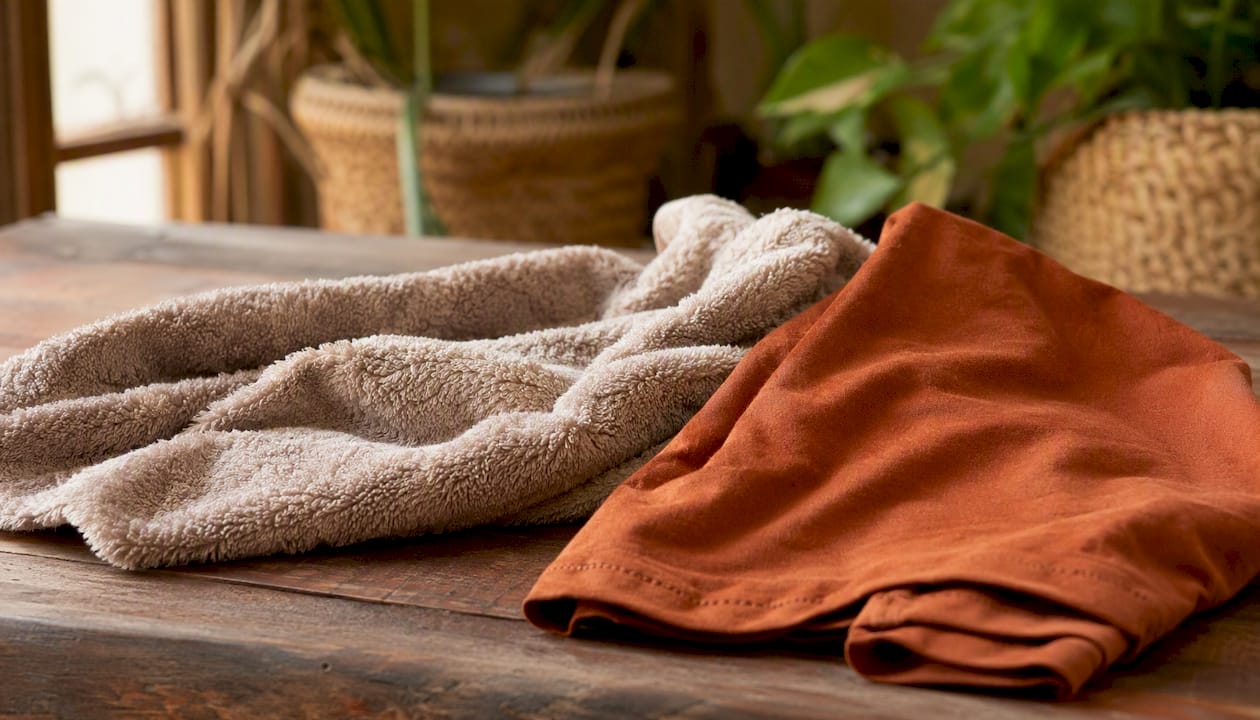
The fabric you choose matters more than most people expect. A smooth cotton T-shirt or a microfibre towel works because neither has the looped pile of a terry bath towel. That pile is what snags the hair cuticle and creates frizz. Microfibre and soft jersey cotton absorb water without roughing the cuticle, so curls stay smooth and clumped together. A dedicated plopping towel or a clean pillowcase works equally well if you do not have a microfibre towel on hand.
Timing in your wash-day routine is fixed: plop immediately after applying styling products to damp hair. If you wait until hair starts to dry on its own, the curl pattern has already begun to set, and wrapping it up at that point disrupts more than it helps.
Why people plop: the main benefits for waves and curls
- Reduced frizz. Because the fabric absorbs water without any rubbing motion, the cuticle stays flat. Rubbing with a terry towel lifts the cuticle and lets humidity in — plopping sidesteps that entirely.
- Improved curl definition and clumping. When curls sit stacked on top of each other rather than hanging down under their own weight, they clump together naturally. The result is more defined, springy curls rather than a stretched-out wave.
- Faster drying. The fabric pulls moisture away from the hair shaft passively, cutting down the time you need to air-dry or diffuse afterward.
- More root volume. Because hair rests on top of the head rather than hanging, roots lift slightly as they dry, which is a genuine bonus for anyone whose curls tend to go flat at the crown.
Plopping works best for curl types 2c through 3b, where the wave or curl pattern is defined enough to benefit from clumping but not so tight that the hair needs a different approach. Looser waves (2a–2b) can still plop, but the results are subtler. Very tight coils (4a and above) may find that other techniques, like shingling or the LOC method, give more control over definition.
How to plop your hair: step-by-step instructions
What you need: a cotton T-shirt, microfibre towel, or plopping towel; your usual leave-in conditioner and styling product (gel, cream, or mousse).
- Wash and condition as normal. Rinse your conditioner thoroughly, then gently squeeze out the dripping water with your hands — do not rub or wring.
- Apply styling products while hair is still very wet. Work in your leave-in conditioner first, then your gel or cream. Scrunch upward to encourage clumping. Do not brush or comb at this stage, as it will break up the clumps you just formed.
- Lay your fabric flat on a bed or counter. A T-shirt works well with the neck opening facing toward you.
- Flip your hair forward and lower it onto the centre of the fabric so all your curls land in a pile on the fabric. Your hair should look like a mound sitting in the middle of the cloth.
- Wrap the fabric. Fold the bottom of the T-shirt up over the back of your head, then bring the sleeves around to the front and tie them loosely at your forehead. The wrap should feel secure but not tight — if it pulls at your hairline, loosen it.
- Wait. Leave the plop in for 10–30 minutes depending on your hair density (more on timing below).
- Un-plop carefully. Untie and lower the fabric slowly. Do not shake your head or scrunch aggressively right away. Let curls fall naturally, then scrunch upward gently to re-activate any gel cast.
- Finish with air-drying or diffusing. Most stylists recommend removing the wrap when hair is still damp, not fully dry, and then finishing with a diffuser on low heat if you want faster results.
Pro Tip: For shorter hair that will not reach the centre of a full-sized T-shirt, try micro-plopping: scrunch sections of hair upward into a small microfibre towel for 30–60 seconds per section instead of wrapping the whole head. You get the same friction-free absorption without needing the full turban setup.
How long should you plop, and does hair type change anything?
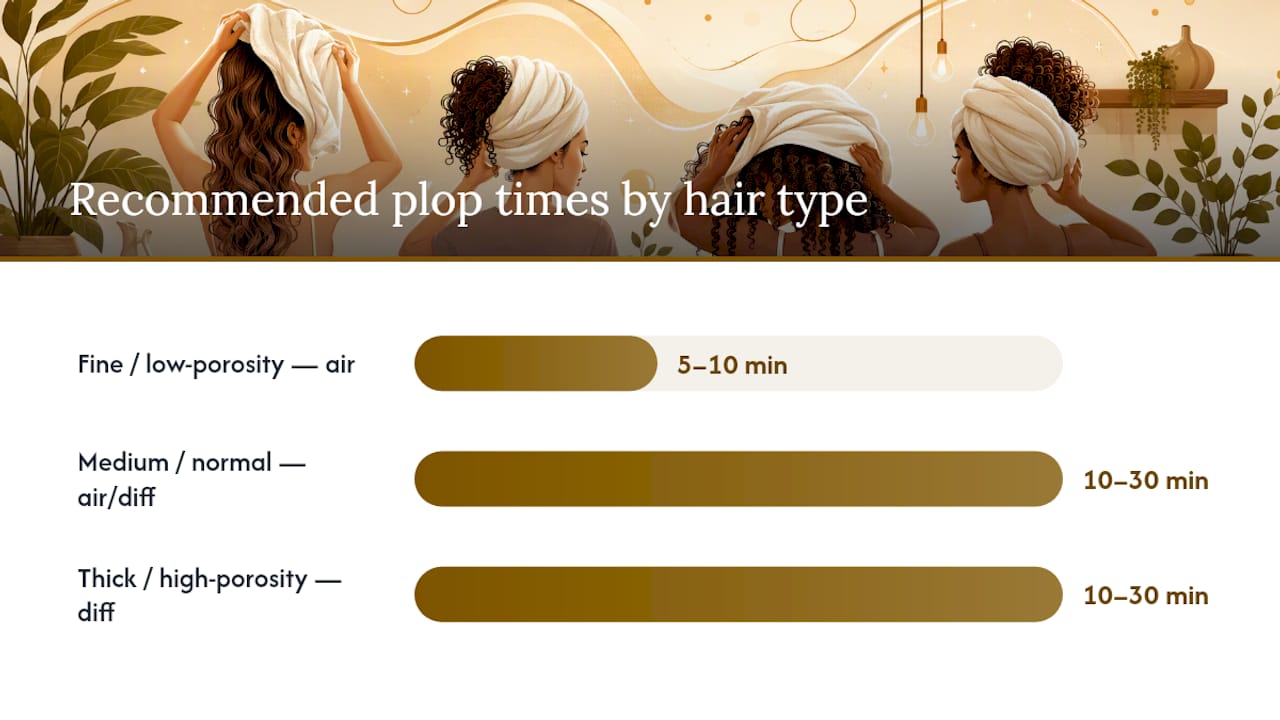
Timing is where most people need to experiment. The general window is 5–30 minutes, but the right end of that range depends on your hair’s density and porosity.
| Hair type | Recommended plop time | Best finish |
|---|---|---|
| Fine or low-porosity | 5–10 minutes | Air-dry or brief diffuse |
| Medium density, normal porosity | 10–30 minutes | Air-dry or diffuse |
| Thick or high-porosity | 10–30 minutes | Diffuse recommended |
Signs your hair is ready to un-plop: the fabric feels damp but not soaking, and when you peek inside, the curls look defined rather than dripping. If the fabric is still very wet after 30 minutes, your hair likely needs a longer plop next time, or your styling products may be too heavy.
Overnight plopping is generally not a good idea. Leaving hair wrapped for hours can flatten curls, create a damp environment that encourages scalp issues, and leave hair feeling stiff or misshapen in the morning.
Common plopping mistakes and how to fix them
- Using a terry-cloth bath towel. The looped fibres snag the cuticle and undo everything plopping is meant to do. Switch to a microfibre towel or a smooth cotton T-shirt.
- Tying the wrap too tightly. A tight wrap dents the hairline and can flatten curls at the roots. Tie just firmly enough to stay in place.
- Plopping after hair has started to dry. Once the curl pattern begins to set on its own, wrapping it disrupts the clumps. Plop immediately after applying products.
- Leaving the plop in too long. Over-plopping can flatten curls or create a damp scalp environment. Stick to the 5–30 minute window for your hair type.
- Skipping styling products before plopping. Plopping on bare wet hair gives the fabric nothing to work with. Products applied beforehand are what lock in the curl shape while moisture is absorbed.
Plopping is not ideal for very short haircuts where there is not enough length to form a mound, or for anyone with a scalp condition that worsens in a damp environment.
Why plopping works: the science behind it
The core mechanism is friction reduction. Terry towels create mechanical friction that lifts the hair cuticle, allowing humidity to enter the shaft and cause frizz. A smooth fabric, whether microfibre or jersey cotton, glides over the cuticle rather than snagging it. Meanwhile, the accordion-stacked position keeps each curl’s natural coil intact rather than letting gravity pull it into a stretched-out wave.
That combination of gentle absorption and protected curl structure is why plopping is considered a heat-free method that works whether you finish by air-drying or diffusing. The wrap does the heavy lifting; the diffuser just finishes the job faster.
An editor’s note on plopping
Plopping is one of those techniques that sounds fussier than it is. Once you have done it two or three times, the whole process takes under five minutes to set up. The biggest shift for most people is accepting that the fabric and the waiting are doing the work, not any product or tool. If you are building out your wash-day kit, a quality microfibre towel is the one item worth spending a little more on. You can browse beauty essentials and hair tools at 16thavenue to find options that fit your routine and budget.
Key takeaways
Hair plopping works because smooth fabric absorbs water without friction, letting curls dry in their natural shape with less frizz and more definition.
| Point | Details |
|---|---|
| Start immediately after products | Plop right after applying leave-in and styling cream to soaking-wet hair. |
| Choose the right fabric | Use a microfibre towel or cotton T-shirt; never a terry-cloth bath towel. |
| Time it by hair type | Fine hair: 5–10 minutes; medium: 10–30 minutes; thick or high-porosity: up to 30 minutes. |
| Finish damp, not dry | Un-plop when hair is still damp, then air-dry or diffuse to complete the style. |
| Avoid over-plopping | Leaving the wrap in too long can flatten curls; overnight plopping is not recommended. |
Sources
- How to Plop Your Hair
- Plopping Curly Hair: How to Plop Hair Tutorials in 2024
- Hair plopping technique 101: How to plop hair with a shirt | Glamour
- How to Plop Hair: The Ultimate Guide – Living Proof
- What Is Hair Plopping? How to Plop Hair | Good Wash Day