


What is multi-functional fashion: your style guide
TL;DR:
- Multi-functional fashion includes clothing designed for multiple uses, looks, or configurations. It emphasizes sustainability through durability, repairability, and versatile design principles, reducing wardrobe clutter and environmental impact. Building a wardrobe around these pieces allows for better outfit flexibility, longer garment life, and lower costs per wear.
Multi-functional fashion is clothing designed to serve more than one purpose, look, or configuration from a single garment. The industry term for its most advanced form is modular fashion, where pieces are built with detachable components, reversible fabrics, or convertible cuts that let you restyle without buying more. This concept sits at the intersection of practicality and personal style, and it directly supports sustainable wardrobe choices by extending the life of every piece you own. Multi-purpose clothing reduces wardrobe clutter, cuts decision fatigue, and adapts effortlessly from a morning meeting to a weekend trip.
What is multi-functional fashion and why does it matter?
Multi-functional fashion is defined as versatile clothing engineered to be worn in multiple ways, across multiple occasions, without losing its style integrity. A wrap dress that cinches into a skirt, a reversible coat with two distinct colourways, or a knit set whose top doubles as a swimsuit cover-up are all real examples of this approach. The concept is not new, but it has gained serious traction as consumers push back against throwaway clothing culture.
The industry term modular fashion goes one step further. Modular fashion represents a systems-level rethink of the linear fashion industry, enabling repair, reconfiguration, and repurposing of garments rather than disposal. That shift moves you from passive shopper to active participant in how your wardrobe evolves. For fashion enthusiasts, this is genuinely exciting. It means your clothing can grow and change with you rather than pile up in a donation bag every season.
What makes fashion multifunctional comes down to three design principles: convertibility, durability, and repairability. A garment that checks all three boxes earns its place in a thoughtful wardrobe.
What are the key benefits of multi-functional fashion?
Multi-functional clothing delivers benefits across three areas: sustainability, economics, and daily lifestyle.
Sustainability impact
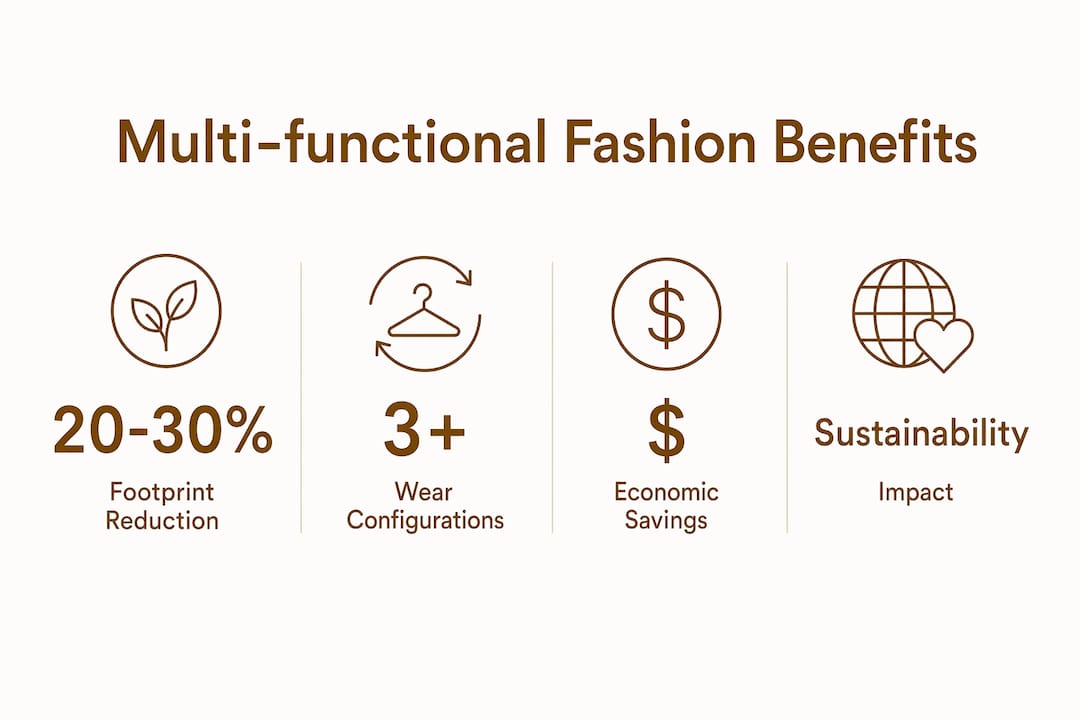
Extending a garment’s active life by just nine months can reduce its combined carbon, water, and waste footprint by 20–30%. That is a meaningful reduction from a single purchasing decision. When you choose one convertible coat over three single-use jackets, you multiply that benefit across your entire wardrobe.
Economic value
Multi-purpose clothing offers a lower cost-per-wear than trend-driven pieces. A $120 reversible coat worn 80 times costs $1.50 per wear. A $40 fast-fashion jacket worn eight times costs $5.00 per wear. The maths consistently favours quality and versatility over volume.
Lifestyle advantages
- Reduced decision fatigue: Owning pivot versatile items like a neutral trench or knit set means fewer daily choices with better outcomes.
- Travel convenience: One convertible dress that works as a beach cover-up, a dinner outfit, and a layering piece replaces three packed items.
- Occasion adaptability: A single well-chosen piece transitions from casual to professional with a swap of shoes and accessories.
- Wardrobe efficiency: Fewer garments mean less clutter, easier storage, and a clearer sense of your personal style.
Pro Tip: Before buying any new piece, ask yourself: can I wear this at least three different ways? If the answer is no, it is probably not earning its place in your wardrobe.
How does multi-functional fashion work? Design principles and garment examples
The practical magic of versatile clothing comes from specific construction choices. Understanding these helps you shop with intention rather than impulse.
1. Modular construction
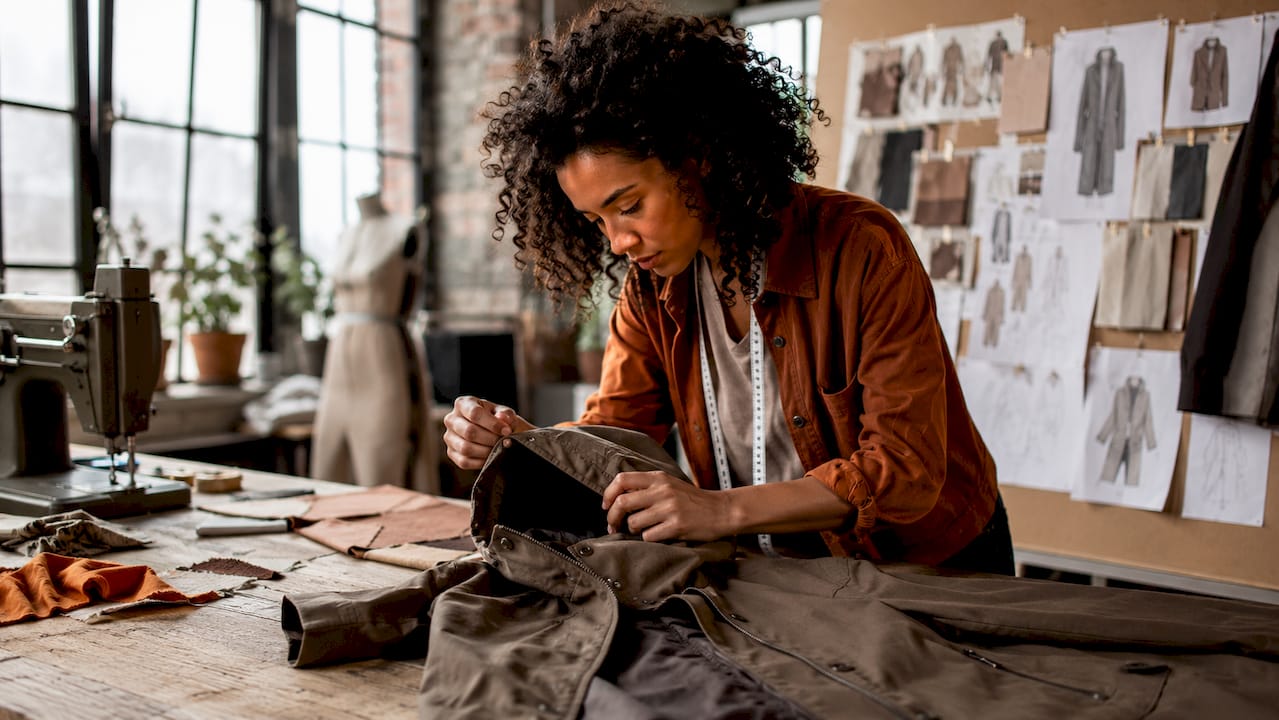
Modular garments use detachable sleeves, removable hoods, zip-off panels, and magnetic closures to let you reconfigure the piece entirely. A jacket with a detachable quilted liner becomes a shell in mild weather and a warm coat in winter. High-quality fasteners like magnetic closures and hidden buttons are essential to modular garment longevity. Cheap hardware fails quickly and defeats the entire purpose.
2. Convertible and reversible design
Wrap silhouettes, adjustable drawstrings, and reversible fabrics give a single garment two or more distinct looks. A reversible trench in camel on one side and black on the other is effectively two coats in one. Wrap dresses are the most accessible entry point: they adjust to fit, work across body types, and transition from office to evening with a change of footwear.
3. Durability and repairability
A multi-functional garment only delivers value if it lasts. Repairability is a foundational principle of modular fashion. Look for reinforced seams, quality zippers, and fabrics rated for repeated washing. Brands that sell replacement hardware or offer repair services extend the garment’s useful life significantly.
| Feature | Multi-functional garment | Standard garment |
|---|---|---|
| Wear configurations | 2 or more | 1 |
| Hardware quality | Magnetic closures, hidden buttons | Basic zippers, press studs |
| Repairability | Designed for repair | Typically disposable |
| Lifespan | Extended by design | Season-dependent |
Pro Tip: When evaluating a modular piece, test every fastener in the store or at home before the return window closes. A magnetic closure that misaligns after ten uses will frustrate you far more than a simpler garment would.
How to style multi-functional clothing for different occasions
Styling versatile pieces well is a skill, and it is simpler than most people expect. The key is restraint.
Neutral tones like black, grey, and navy provide the best versatility for remixing outfits. They pair with almost anything, they photograph well, and they do not date as quickly as trend-driven colours. Build your multi-functional wardrobe around these tones and add colour through accessories.
The footwear-layer-accessory hierarchy is the most practical styling framework for convertible clothing. Changing footwear alone can shift an outfit’s tone dramatically without altering any other component. White sneakers make a midi wrap dress casual. Block-heeled mules make the same dress office-appropriate. Strappy sandals take it to dinner. That is three occasions from one garment and three pairs of shoes you likely already own.
- Casual: Wrap dress plus white sneakers plus a canvas tote.
- Professional: Same dress plus block heels plus a structured blazer.
- Travel: Same dress plus flat sandals plus a lightweight scarf used as a wrap.
- Evening: Same dress plus heeled boots plus minimal gold jewellery.
Consumers often make the mistake of changing too many elements at once. Subtle changes are more effective for versatile styling. Swap one or two components at a time. The outfit stays coherent, and the transformation still reads as intentional.
One more trap to avoid: shapelessness. Transformable clothing can look unfinished if it lacks structure. Define the waist with a belt, or balance volume with a fitted layer underneath. Polish comes from proportion, not from adding more pieces.
Multi-functional fashion vs. fast fashion: what is the difference?
Fast fashion and multi-functional fashion represent opposite philosophies about clothing’s role in your life.
Clothing production has roughly doubled in 15 years, while average item utilisation has declined by 40%. Garments are being made faster and worn less. Apparel accounts for more than 60% of global textile use, which makes design choices at the garment level genuinely consequential for the environment. Fast fashion profits from rapid turnover. Multi-functional fashion profits from depth of use.
| Factor | Fast fashion | Multi-functional fashion |
|---|---|---|
| Garment lifespan | Short, season-driven | Extended by design |
| Cost-per-wear | High | Low |
| Environmental footprint | High waste and emissions | Reduced through longevity |
| Consumer role | Passive buyer | Active stylist and repairer |
| Wardrobe size needed | Large | Small and curated |
The circular economy model underpins multi-functional fashion’s long-term logic. Garments designed for reconfiguration and repair stay in use longer, reducing the demand for new production. That is a direct counter to the fast fashion cycle of buy, wear briefly, and discard. For more on how sustainable fashion reduces emissions, the numbers are compelling.
Examples of versatile multi-purpose clothing to build your wardrobe
Concrete examples make this concept tangible. These are the garment types that deliver the most versatility per piece.
- Reversible wool coat: Two colourways in one garment. Wear the camel side for daytime and flip to black for evenings. A well-made wool coat also holds its shape across seasons.
- Convertible wrap dress: Adjustable tie means it fits across body changes. Works as a dress, a skirt over a bodysuit, or a beach cover-up depending on how it is tied.
- Modular knit set: A matching knit top and skirt or trousers that work together or separately. The top pairs with jeans; the skirt pairs with a blazer.
- Multi-use sneakers: A clean, low-profile sneaker in white or grey pairs with athleisure, casual dresses, and smart-casual trousers. One shoe, multiple registers.
- Quilted liner jacket: Worn alone as a casual layer or zipped into a shell coat for warmth. Removes entirely in mild weather.
A capsule wardrobe built around these pieces requires fewer total items and delivers more daily outfit options. The goal is not minimalism for its own sake. The goal is maximum wearability from every piece you invest in. Choose items based on your actual lifestyle: if you travel frequently, prioritise wrinkle-resistant fabrics and packable silhouettes. If you work in an office, focus on pieces that shift from desk to dinner without a full change.
Key takeaways
Multi-functional fashion is the most direct way to reduce wardrobe size, lower your environmental footprint, and dress well across every occasion from a smaller, smarter collection of pieces.
| Point | Details |
|---|---|
| Core definition | Multi-functional fashion means one garment worn in multiple ways, configurations, or occasions. |
| Sustainability benefit | Extending a garment’s life by nine months cuts its carbon, water, and waste footprint by 20–30%. |
| Design principles | Look for modular construction, quality fasteners, reversible fabrics, and repairability. |
| Styling approach | Use the footwear-layer-accessory hierarchy and change one or two elements at a time. |
| Wardrobe strategy | Build around neutral pivot pieces like a wrap dress, reversible coat, or modular knit set. |
Why I think most people underestimate versatile clothing
Most wardrobe advice focuses on adding. Add this season’s colour. Add a new silhouette. Add the trending piece. After years of paying attention to how women actually dress, I have come to believe the opposite approach is more satisfying and more stylish.
The women I admire most in terms of personal style own fewer pieces and wear them more confidently. They are not minimalists by ideology. They have simply figured out that a reversible coat or a well-cut wrap dress does more work than five trend-driven items ever could. That realisation changes how you shop entirely.
The biggest misconception I encounter is that multi-functional clothing means boring clothing. It does not. A reversible coat in camel and black is not boring. A modular knit set that works three ways is not boring. What is boring is a wardrobe full of single-use pieces that never quite come together. Versatile clothing forces you to think about proportion, colour, and occasion before you buy. That discipline produces a wardrobe with genuine personality.
My practical advice: start with one pivot piece. A wrap dress or a reversible coat is the lowest-risk entry point. Wear it five different ways before you buy anything else. You will quickly see how much mileage a single well-chosen garment delivers, and that changes your entire relationship with shopping.
— Glenville
Shop versatile women’s fashion at 16thavenue
16thavenue curates women’s clothing and footwear with style and real-world wearability in mind.
The Women’s Trendy Autumn and Winter Woolen Coat is a strong starting point for building a multi-functional wardrobe. It pairs with everything from tailored trousers to weekend denim and holds its structure across the season. For footwear that moves between occasions without effort, the breathable sport sneakers and air-cushion snow boots both deliver comfort and style across multiple settings. Browse the full collection at 16thavenue and invest in pieces that work harder for you.
FAQ
What is multi-functional fashion in simple terms?
Multi-functional fashion is clothing designed to be worn in more than one way or for more than one occasion. A single garment serves multiple purposes through convertible cuts, reversible fabrics, or detachable components.
What makes a garment truly multifunctional?
A garment is multifunctional when it offers at least two distinct configurations or uses without losing its style. Quality fasteners, reversible fabrics, and modular construction are the key design features to look for.
How does multi-functional fashion benefit the environment?
Extending a garment’s active life by nine months reduces its carbon, water, and waste footprint by 20–30%. Buying fewer, more versatile pieces directly lowers the demand for new textile production.
How do I start styling multi-functional clothing?
Start with the footwear-layer-accessory hierarchy. Change your shoes first and see how the outfit shifts. Add or remove one layer next. Avoid changing multiple elements at once, as subtle shifts produce the most coherent results.
Is multi-functional fashion the same as slow fashion?
They overlap but are not identical. Slow fashion is a broader philosophy focused on ethical production and reduced consumption. Multi-functional fashion is a specific design and styling strategy within that philosophy. Both prioritise longevity over volume.