


Nap dress: style, care, and how to wear it
A nap dress is a women’s dress defined by a heavily smocked bodice, overexaggerated puff sleeves, and a long, slightly pleated or tiered skirt that falls in a loose, flowy silhouette. The name is a lifestyle promise more than a literal instruction: you could theoretically nap in it, but most wearers reach for it because it looks polished while feeling like nothing at all.
Three things make the nap dress worth knowing:
- At-home comfort — the smocked waist stretches to fit, the skirt never binds, and the fabric breathes.
- All-day wearability — it moves from morning coffee to afternoon errands without a wardrobe change.
- Elevated casual and event dressing — styled with the right accessories, it reads as intentional rather than effortless-by-accident.
Table of Contents
- What makes a nap dress recognisable?
- Where did the nap dress come from?
- How do you wear a nap dress?
- What fabrics and sizes work best?
- Is the nap dress still in style?
- How to shop for a nap dress in Canada
- Why the nap dress endures: what the research shows
- Key takeaways
- The nap dress in a Canadian closet
- Nap-dress silhouettes at 16thavenue
What makes a nap dress recognisable?
The silhouette is specific enough that you can spot one across a room. Four construction details separate a nap dress from a generic flowy frock.
The smocked bodice is the defining feature. Smocking is a form of gathered, elasticated embroidery that creates a honeycomb texture across the chest and sometimes the back. It provides a fitted look without a structured boning or zipper, and it stretches generously to accommodate different body shapes. According to structural descriptions of the silhouette, the smocking is typically heavy — not a single row of elastic but several inches of gathered fabric that shapes the bodice while remaining comfortable.
The puff sleeves are overexaggerated by design. They balloon at the shoulder or upper arm, then gather at a cuff or taper toward the elbow. The volume is intentional: it gives the dress a romantic, almost theatrical quality that distinguishes it from a simple sundress or a prairie-style frock.
The skirt is where the comfort lives. It is typically midi to ankle length, cut with a slight tier or pleat that adds movement without adding weight. The overall silhouette is loose from the waist down, which is why the dress works for such a wide range of body types.
Common trims and finishes include eyelet lace, pintucks, delicate floral or ditsy prints, and ruffle hems. These details push the dress toward romantic femininity rather than utilitarian comfort.
Pro Tip: If a dress has smocking but fitted sleeves and a straight skirt, it is not a nap dress — it is a smocked sundress. The combination of smocked bodice plus puff sleeve plus full, flowy skirt is what qualifies the silhouette. Missing any one of those three markers puts it in a different category. For a broader look at how this compares to other silhouettes, the guide to types of women’s dresses is a useful reference.
Where did the nap dress come from?
The nap dress did not appear from nowhere. It arrived at the intersection of a very old idea and a very specific cultural moment.
The house dress, a loose, comfortable garment worn by women for domestic tasks throughout the early and mid-twentieth century, is the clearest ancestor. Prairie dresses from the 1970s revival and Regency-inspired muslin gowns share the same DNA: gathered fabric, soft construction, and a silhouette that prioritises ease of movement. Cultural essays draw these connections explicitly, placing the nap dress in a longer lineage of domestic and romantic dress styles rather than treating it as a purely contemporary invention.
The modern version gained its name and its cultural momentum around 2019–2020. The term “Nap Dress®” is a registered trademark, which explains why similar silhouettes appear under different names across retailers — the generic construction is not protected, only the specific branded term.
The pandemic accelerated everything. When people stopped commuting and started spending entire days at home, the demand for clothing that felt good and looked presentable on a video call surged. Forbes coverage of the trend credits the pandemic with accelerating interest in romantic, comfort-first silhouettes that doubled as functional everyday wear. The nap dress was perfectly positioned: it looked like you had made an effort, even when you had not left the house.
The timing also aligned with a broader cultural appetite for what some writers called “cottagecore” and “regencycore” aesthetics on social media. Romantic, soft, vaguely historical silhouettes were everywhere, and the nap dress fit that mood precisely.
How do you wear a nap dress?
The silhouette’s real strength is how much it can shift depending on what you put with it. The base dress stays the same; the styling does the work.
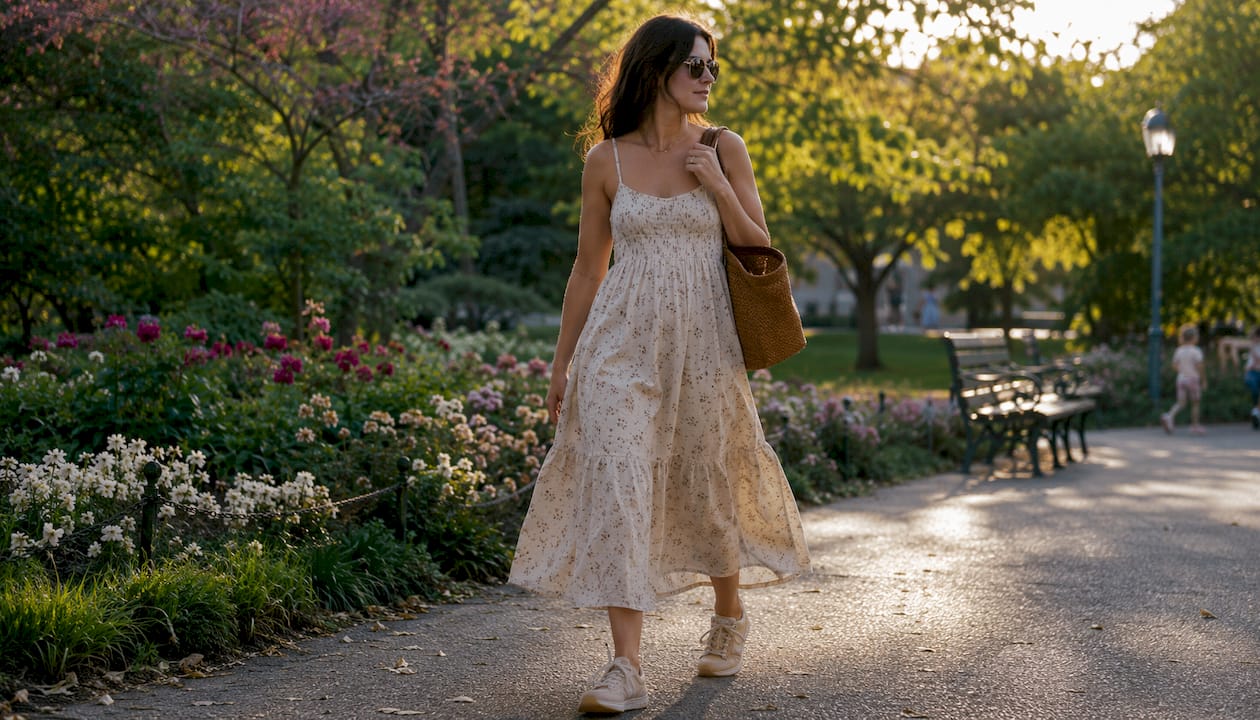
Casual and errand-running looks are the nap dress’s home territory. Flat sandals or white sneakers, a woven tote, and minimal jewellery keep it relaxed without looking sloppy. The dress is doing enough visually that you do not need to add much.
Brunch and weekend outings call for a slight upgrade: block-heeled mules, a delicate necklace, and a structured crossbody bag. The puff sleeves already read as intentional, so the accessories just need to match that energy.
Office-appropriate styling is possible with layering. A fitted blazer over a nap dress tames the volume and signals formality. A longline cardigan works for creative or casual offices. The key is contrast: the structure of the outer layer balances the softness of the dress underneath. For Canadian autumn and winter, this layering approach extends the dress’s season considerably. A wool coat over a nap dress is a genuinely strong combination — the fresh fall outfit ideas guide covers this kind of layering in more detail.
Dressier occasions — garden parties, summer weddings, bridal showers — are where the nap dress genuinely earns its keep. Editorial coverage from the New York Times confirms that the silhouette has moved into bridal and event styling, with designers adapting it for more formal uses. Heeled sandals, statement earrings, and an updo shift the dress from casual to occasion-ready.
Seasonal layering for Canada:
- Summer: Lightweight cotton or linen nap dress, flat sandals, sun hat. The styling guide for caps has useful ideas for casual hat pairings.
- Autumn: Layer a fitted turtleneck underneath, add ankle boots and a structured coat.
- Winter: Thermal tights, a chunky knit cardigan, and knee-high boots extend the silhouette into colder months.
Do you wear a bra with a nap dress? This comes up constantly, and the answer depends on the neckline. Most nap dresses have a square or sweetheart neckline created by the smocking, which means a standard bra strap will show. Options that work well: a strapless bra, a bralette with straps that complement the dress, or a built-in shelf bra if the dress includes one. Many wearers skip a bra entirely given the smocking’s support structure, particularly in lighter-weight styles.
Pro Tip: When the puff sleeve and full skirt are both at maximum volume, keep accessories minimal and structured. A single pair of gold hoops and a leather belt at the waist (worn loosely over the smocking) grounds the silhouette without fighting it.
What fabrics and sizes work best?
The fabric choice shapes almost everything about how a nap dress performs: how it breathes, how it wrinkles, and how long it lasts.
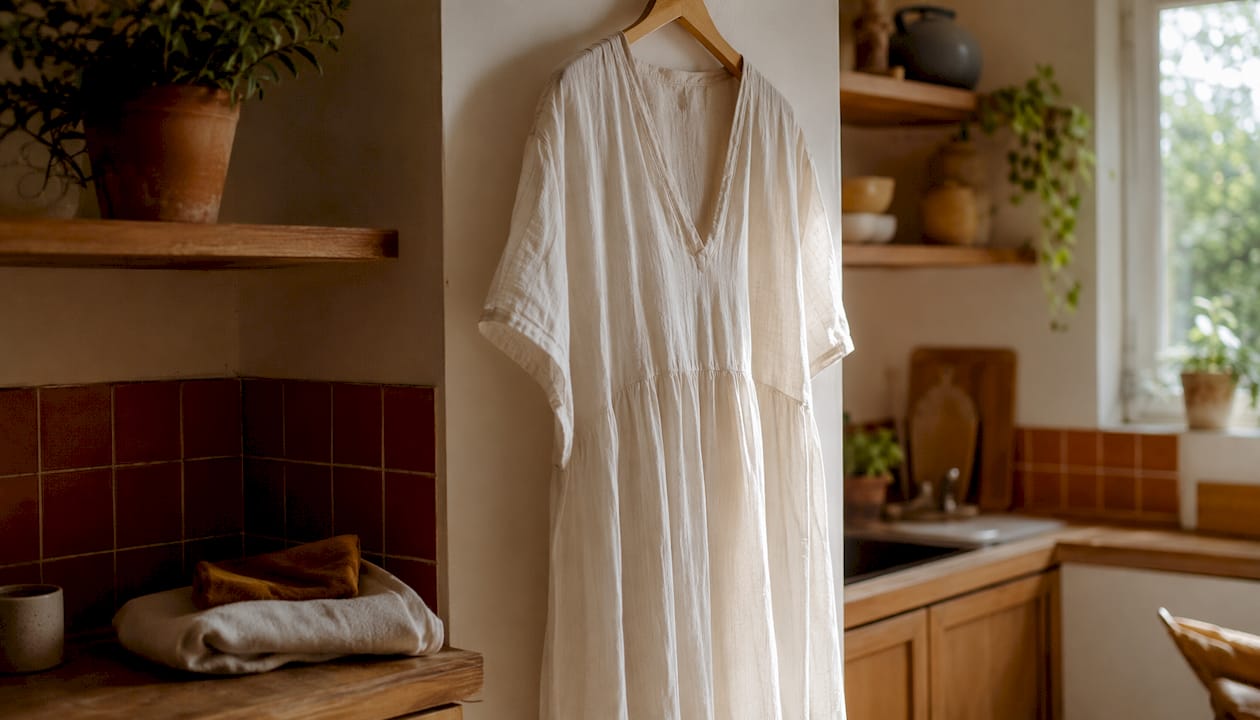
Mainstream editorial roundups consistently recommend natural fibres for breathability and all-day comfort. Here is how the common options compare:
| Fabric | Pros | Cons |
|---|---|---|
| Cotton lawn / dobby cotton | Breathable, soft, holds structure, easy to wash | Wrinkles easily; needs pressing after washing |
| Linen | Excellent breathability, gets softer with wear | Wrinkles significantly; can feel stiff initially |
| Rayon / viscose | Drapes beautifully, lightweight, affordable | Less durable; often requires hand-washing; can shrink |
| Cotton-linen blend | Balances breathability and wrinkle resistance | Slightly less breathable than pure linen |
| Synthetic blends | Wrinkle-resistant, holds shape | Less breathable; can feel warm in summer |
Sizing with smocking requires a slightly different approach than sizing for a structured dress. The smocked bodice stretches, which means it accommodates a range of sizes — but it also has a maximum stretch point. If you are between sizes, consider where you carry volume: the smocking adjusts for the bust and ribcage, but the skirt is cut to a fixed width. Sizing up gives more skirt volume and a more relaxed bodice; sizing down gives a snugger smocked fit that shows the construction more clearly.
Practical care guidance flags two consistent issues: smocking can feel restrictive for sleeping (despite the name), and puff sleeves lose their shape in the dryer. To preserve both:
- Wash on a gentle or delicate cycle in cold water.
- Lay flat or hang to dry rather than machine-drying.
- Press puff sleeves lightly with a low-heat iron or steam, stuffing the sleeve with tissue paper to hold the shape while it dries.
- Store hanging rather than folded to prevent smocking from creasing permanently.
Is the nap dress still in style?
The short answer: yes, though the conversation around it has matured.
The nap dress peaked in cultural visibility around 2020–2021, when pandemic conditions made comfort-forward dressing feel both practical and politically resonant. Since then, the discourse has split. Fashion writers who embraced it early have noted its evolution into bridal and event categories — a reliable sign that a silhouette has moved from trend to wardrobe staple. The New York Times covered nap-dress weddings as a genuine phenomenon, not a novelty.
Critics have pushed back on the marketing language. The Wardrobe Consultant makes the point plainly: the value of the dress is in its “ready-to-go” ease, not its literal sleep suitability. The name is a lifestyle promise, and some writers find that promise slightly overworked. Elle ran a piece titled “The Nap Dress Must Be Stopped,” which captured a real fatigue with the marketing cycle around the silhouette even while acknowledging the dress itself remained popular.
The indicators that suggest staying power are concrete: runway adaptations of smocked bodices in resort collections, bridal designers adopting the tiered skirt and puff sleeve for wedding-adjacent looks, and the silhouette’s continued placement in editorial styling for spring and summer seasons. The styling versatility that made it appealing in 2020 has not changed. A dress that works for a Tuesday at home and a Saturday wedding is not going anywhere.
How to shop for a nap dress in Canada
Cross-border shipping, sizing inconsistencies, and fabric descriptions that obscure more than they reveal make online nap-dress shopping genuinely tricky. A few specific things to check before you buy:
- Fabric content and weight: Look for the fibre percentage in the product description. “Cotton” can mean anything from a stiff canvas to a tissue-weight lawn. Aim for descriptions that specify the weave (lawn, dobby, voile) or weight (lightweight, sheer, medium-weight).
- Smocking construction: True smocking is embroidered and elasticated. Some dresses use a simple elastic casing that mimics the look but lacks the texture and stretch recovery. Product photos should show the honeycomb pattern clearly.
- Size chart with model measurements: A size chart alone is not enough. Look for listings that state the model’s height and the size she is wearing — this tells you how the skirt length will fall on your frame.
- Return window and duties: Canadian shoppers buying from US or international retailers may face import duties on orders above the de minimis threshold. Check whether duties are included in the listed price or added at checkout, and confirm the return window covers the time needed for delivery and try-on.
- Seasonal restocking: Nap-dress silhouettes typically restock in spring (March–May) and again around bridal season (January–March). If a style sells out in autumn, it is likely to return in the new year. For guidance on shopping seasonal dresses strategically, that timing matters.
Pro Tip: Order one nap dress in a neutral colour — white, cream, or a soft sage — before committing to prints. Neutrals photograph well for returns if the fit is off, and they reveal the construction quality more clearly than a busy print does. Once you know your size and preferred fabric weight, prints are much easier to shop confidently.
Why the nap dress endures: what the research shows
Three evidence-backed reasons explain why this silhouette has outlasted the pandemic moment that launched it:
- Styling versatility: Because the base construction is simple, accessories and layering determine how casual or formal the dress reads. A single garment covers a wide range of occasions, which makes it a genuinely efficient wardrobe addition.
- Comfort as a lasting value: The pandemic shifted consumer expectations permanently. Shoppers who discovered that clothing could feel good and look intentional have not reversed that preference. The nap dress was an early, visible expression of that shift.
- Social media and bridal adoption: The silhouette’s spread on social platforms gave it cultural momentum that outlasted the trend cycle. Its move into bridal and event styling confirmed it as a category rather than a moment.
The practical recommendation for wardrobe integration: start with one lightweight cotton version in a neutral colour, wear it through a full season across different occasions, and assess whether the silhouette works for your lifestyle before expanding.
Key takeaways
The nap dress is a durable silhouette, not a passing trend — its smocked bodice, puff sleeves, and tiered skirt make it as versatile as it is comfortable.
| Point | Details |
|---|---|
| Defining construction | Smocked bodice, puff sleeves, and a tiered or pleated midi-to-ankle skirt are all three required. |
| Fabric matters most | Natural fibres (cotton lawn, linen) breathe best; rayon drapes well but needs careful washing. |
| Styling range | Flat sandals for errands, a blazer for the office, heeled sandals for events — the base dress adapts. |
| Trend longevity | Bridal and runway adoption since 2021 signals a silhouette with staying power beyond pandemic dressing. |
| Shop at 16thavenue | 16thavenue carries flowy, feminine dress silhouettes with free shipping to most Canadian destinations. |
The nap dress in a Canadian closet
The nap dress conversation in Canadian fashion tends to skip over the most practical question: what do you actually do with it in October? The silhouette was designed for warmth, which means it earns its keep in Canadian summers without much thought. The more interesting styling challenge is the shoulder-season transition, and that is where the dress genuinely proves itself.
A nap dress layered under a well-cut wool coat — the kind that hits mid-thigh and has a clean lapel — reads as deliberately styled rather than accidentally warm. Thermal tights and ankle boots extend the look into November without looking like a costume. The smocked bodice means you can add a fitted turtleneck underneath in colder months and the dress still sits correctly over it.
My honest view: the nap dress rewards commitment. Wear it once to the grocery store and it feels like a costume. Wear it consistently, styled with intention, and it becomes one of those pieces that people ask about. The silhouette is distinctive enough to be memorable and comfortable enough that you will actually reach for it. That combination is rarer than it sounds.
Nap-dress silhouettes at 16thavenue
If the nap dress aesthetic appeals to you, 16thavenue is a practical starting point for Canadian shoppers. The site carries flowy, feminine dress silhouettes alongside the outerwear and footwear that complete the look — including a women’s wool coat that pairs cleanly with tiered skirts for autumn and winter, and comfort-forward sneakers for the casual end of the styling spectrum.
Shipping is free to most Canadian destinations, and the site’s seasonal collections refresh in spring and autumn — which aligns with when nap-dress silhouettes are easiest to find and style. Browse the current collection at 16thavenue.ca and check the size charts carefully before ordering; the fit guidance in this article applies directly to what you will find there.
Useful sources and further reading
- Nap dress — Wiktionary — dictionary definition and structural description
- How the nap dress rose to pandemic stardom — Forbes — cultural context and pandemic-era rise
- What are nap dresses and why is everyone obsessed with them? — Evie Magazine — historical lineage and cultural analysis
- Getting married in a nap dress — New York Times — bridal and event adoption coverage
- Nap dresses: practical fit and care guidance — Who What Wear — smocking care and sizing caveats
- Best nap dresses — Bustle — styling versatility and occasion guidance
- Nap trademark record — Justia — trademark registration context
- 16thavenue women’s fashion collections — Canadian shopping destination for similar silhouettes