


Personalisation in beauty: what consumers need to know
Personalisation in beauty is the practice of tailoring skincare, makeup, and beauty products to an individual’s unique skin type, concerns, lifestyle, and preferences, ranging from a simple digital quiz to algorithm-driven bespoke formulations. According to NIQ’s 2023 beauty personalisation report, brands that personalise effectively reduce wasted purchases and improve inclusivity. Euromonitor frames it as a long-term megatrend, not a passing retail trend.
- This guide covers: levels of personalisation, the technologies behind it, consumer and brand benefits, the phygital delivery model, risks to watch for, and how Canadians can access these services today.
Key takeaways
Personalisation in beauty delivers the most value when it combines real diagnostic data, iterative updates, and transparent ingredient practices, not just a one-time quiz.
| Point | Details |
|---|---|
| Definition matters | Personalisation adapts to you using data; customisation lets you pick from options. The distinction affects price and outcome. |
| Five clear levels exist | From basic quiz recommendations to microbiome-driven bespoke formulas, each level carries different costs and evidence standards. |
| 49% of consumers want it | Euromonitor’s global survey data shows nearly half of respondents want products uniquely tailored to them. |
| Phygital delivers best results | Combining digital diagnostics with physical samples or in-store consultations produces stronger outcomes than either channel alone. |
| 16thavenue offers a starting point | Curated seasonal beauty products at 16thavenue let Canadian shoppers trial trend-informed options before committing to premium personalised services. |
Table of Contents
- What is personalisation in beauty, and how does it work?
- Which technologies actually power personalised beauty?
- What does personalisation actually deliver for consumers?
- How does personalisation reshape brand R&D and product development?
- How do you actually experience personalised beauty? The phygital model
- What should you watch for when choosing personalised beauty?
- How Canadians can access personalised beauty services
- The gap between the promise and the practice
- 16thavenue: curated beauty for every style
- Sources
What is personalisation in beauty, and how does it work?
There is a meaningful distinction between customisation and personalisation that most shoppers miss. Customisation means you pick from a set of options (choose your scent, choose your shade). Personalisation means the system adapts to you, using aggregated data, diagnostics, and sometimes real-time sensors to build a recommendation or formula you did not have to consciously configure.
Both approaches appear across five recognisable levels:
- Basic recommendations: A short online quiz asks about skin type, climate, and concerns, then surfaces pre-existing products. Low cost, low friction, and widely available on brand websites.
- Guided routines: A more detailed intake (photos, lifestyle questions, seasonal factors) generates a sequenced routine. Some platforms update recommendations quarterly.
- Mass customisation: Consumers choose from modular ingredient or shade options to build a product within a defined formula range. Think mix-your-own lip colour or a serum with a selectable active concentration.
- Device-assisted at-home formulations: A countertop device (connected to an app) dispenses a daily dose calibrated to that morning’s skin readings. Humidity, sleep data, and skin-sensor output all feed the formula.
- Hyper-personalised bespoke formulas: Sia Partners describes hyper-personalisation as using real-time data and advanced diagnostics, including microbiome or genetic analysis, to create deeply tailored products. This is the most expensive tier and the one with the steepest evidence bar.
Pro Tip: When a brand claims “personalised,” ask one question: does the recommendation update over time, or is it a one-time quiz result? A system that learns and adjusts is genuinely personalised. A static quiz result is closer to a product filter.
Which technologies actually power personalised beauty?
AI and machine learning do the pattern-matching work: they analyse thousands of skin profiles, ingredient interactions, and outcome data to generate recommendations no human formulator could produce at scale. The practical limit is that an AI is only as good as its training data, and most datasets skew toward lighter skin tones and Western skin concerns.
Augmented reality (AR) virtual try-on lets shoppers preview lip colours, eyeshadow, and foundation shades on their own face in real time. Recent academic research shows that diffusion-based models now produce high-fidelity, controllable virtual makeup simulations without heavy fine-tuning, a significant improvement over earlier methods. Region-aware diffusion techniques further improve identity preservation and region-specific control, making virtual try-on more accurate for diverse face shapes and features.
Image-based skin diagnostics analyse photos for hydration, pore size, pigmentation, and texture. They are convenient but cannot replace an in-person dermatology assessment, particularly for conditions like rosacea or contact dermatitis.
Statistic: Vogue Business reports that 70% of consumers want skin diagnostics and colour matching when shopping for beauty online, framing these tools as an expectation rather than a premium add-on.
| Technology | Typical use case | Consumer promise | Key limit |
|---|---|---|---|
| AI/ML recommendation engines | Routine building, product matching | Relevant suggestions at scale | Data bias toward certain skin types |
| AR virtual try-on | Shade and look preview | See it on your face before buying | Cannot convey texture or scent |
| Image-based skin diagnostics | Skin concern identification | Faster path to the right product | Not a substitute for dermatology |
| Microbiome/genetic testing | Bespoke serum or supplement formulation | Formula matched to your biology | High cost; evidence still emerging |
| On-demand formulation devices | Daily dose dispensing at home | Real-time adaptation to conditions | Hardware investment; app dependency |
What does personalisation actually deliver for consumers?
The clearest benefit is fewer wasted purchases. Trial-and-error buying, where you buy a moisturiser, hate it, and repeat, costs money and generates packaging waste. A well-executed personalised recommendation shortens that loop considerably.
Beyond efficiency, personalisation addresses a long-standing inclusivity gap. Shade ranges, formulas for textured hair, and products for sensitive or melanin-rich skin have historically been underserved. Personalised systems, when trained on diverse data, can surface options that mass-market shelves never stocked.
- Better product fit: Formulas matched to your skin type and climate (relevant for Canadian winters, which strip moisture differently than humid coastal summers).
- Faster visible results: Targeted actives at the right concentration outperform generic formulations for most skin concerns.
- Shade inclusivity: Diagnostic tools extend effective shade matching beyond the 40-shade foundation range.
- Reduced trial-and-error: Fewer impulse purchases, less waste, lower long-term spend.
- Convenience: Online diagnostics and subscription refills remove the need for repeated in-store trips.
Statistic: Euromonitor’s survey data found that around 49% of global respondents want products and services uniquely tailored to them, a figure that has held steady across multiple survey cycles and reflects genuine demand rather than novelty interest.
Mintel’s analysis of personalisation trends confirms that many consumers express willingness to pay a premium when they believe a product demonstrably performs better for their specific needs.
How does personalisation reshape brand R&D and product development?
For brands, personalisation is not just a marketing layer. It restructures how products are developed, manufactured, and sold.
On the R&D side, iterative testing replaces the traditional “develop once, launch broadly” model. Brands collect outcome data from users, identify which formulations perform best for which profiles, and refine accordingly. This feedback loop compresses the gap between consumer insight and product update.
Supply chain implications are significant. Bespoke and small-batch production requires flexible manufacturing, shorter ingredient lead times, and tighter quality control per unit. On-demand mixing, where a formula is assembled at the point of sale or fulfilment, demands different infrastructure than bulk production.
- R&D: Continuous efficacy tracking replaces single-point clinical testing; expert dermatologist or cosmetic chemist input feeds iterative formula updates.
- Supply chain: Small-batch and on-demand models increase per-unit cost but reduce overstock and unsold inventory.
- Marketing: First-party data from diagnostics and quizzes enables precise segmentation and retention programmes tied to product performance.
- Regulatory: Health Canada’s cosmetic ingredient regulations apply regardless of whether a product is mass-market or bespoke. Personalised formulations still require full ingredient disclosure and compliance with the Cosmetic Regulations under the Food and Drugs Act.
A brand moving from concept to personalised commercial product typically follows this arc: identify a high-frequency consumer concern (e.g., dry skin in cold climates), develop a modular formula with adjustable humectant concentration, test across a diverse panel, deploy a diagnostic tool to match users to the right concentration tier, then track repurchase and skin-outcome data to refine the range over subsequent seasons.
How do you actually experience personalised beauty? The phygital model
Most consumers encounter personalisation through a combination of digital and physical touchpoints, what Euromonitor calls the phygital approach. Neither channel alone delivers the full experience.
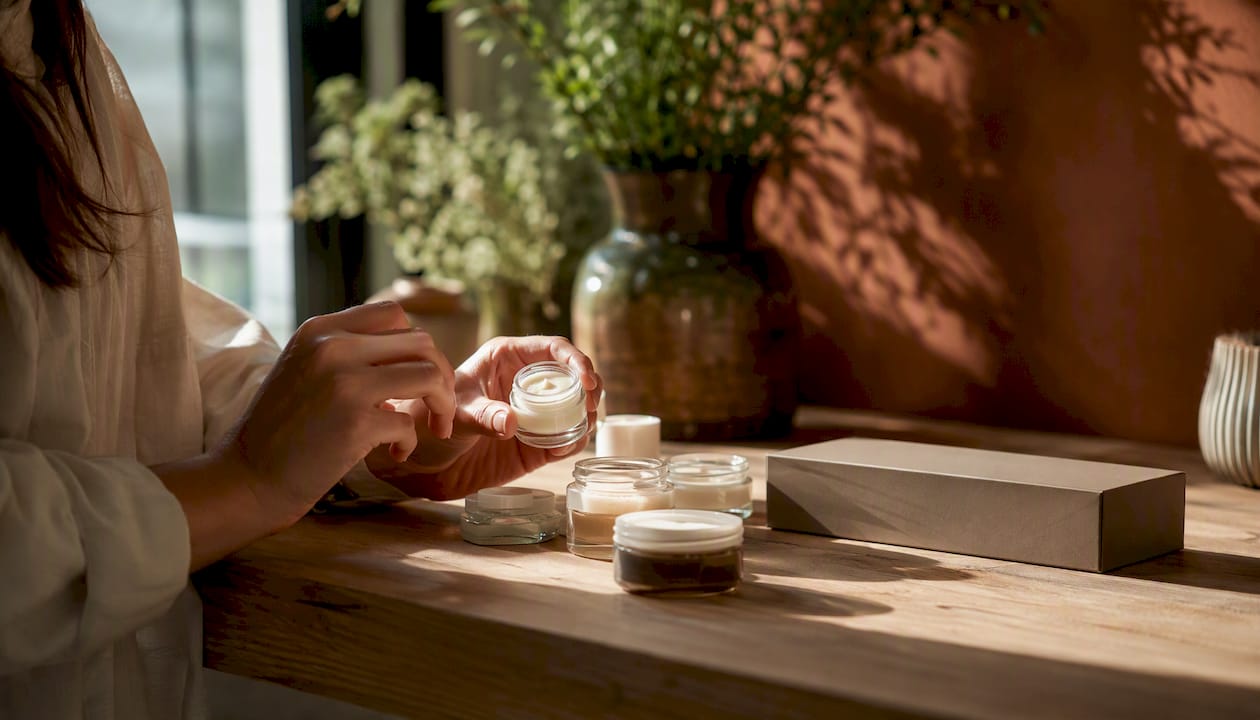
Digital tools handle discovery and matching efficiently. Physical touchpoints, whether in-store consultations, sample kits, or at-home devices, handle texture, scent, and the tactile confirmation that closes a purchase decision. AR try-on is excellent for colour discovery but cannot tell you how a foundation feels at 3 PM or whether a fragrance suits your skin chemistry.
Common delivery models:
- Website quiz + fulfilment: Consumer completes an intake form; a curated product set ships within days. Lowest barrier to entry.
- AR try-on + sample kit: Virtual shade preview followed by physical samples for texture confirmation before a full purchase.
- In-store diagnostic + bespoke mixing: A skin scanner or consultation generates a formula mixed on-site. Higher cost, stronger outcome data.
- Device-driven at-home dispensing: A connected device adjusts the formula daily based on sensor readings and app input.
A practical customer journey looks like this:
- Complete an online skin diagnostic (5–10 minutes, photo upload optional).
- Receive a curated sample kit or starter set matched to your profile.
- Use for 4–6 weeks and log any reactions or results via the brand’s app or follow-up survey.
- Receive an updated recommendation, adjusted for season or any reported changes.
The iteration step is where most brands fall short. A one-time quiz with no follow-up is not a personalised system; it is a product filter. Long-term value comes from tracking data over time and updating recommendations as your skin, climate, or life stage changes.
What should you watch for when choosing personalised beauty?
Not every “personalised” product deserves the label or the price premium. Before committing, run through these questions:
- Data use: What personal data does the brand collect, how is it stored, and is it shared with third parties? Canadian consumers are protected under PIPEDA (and provincial equivalents), which requires informed consent for data collection and limits secondary use.
- Ingredient transparency: Is the full ingredient list disclosed? Bespoke does not exempt a product from Health Canada’s labelling requirements.
- Clinical evidence: What evidence supports the efficacy claim? A peer-reviewed study is stronger than a brand-commissioned consumer survey.
- Return policy and sampling: Can you trial before committing to a full-size or subscription? A brand confident in its personalisation should offer this.
- Follow-up: Does the system update recommendations, or is the quiz a one-time event?
Pro Tip: For higher-priced bespoke products, ask specifically whether the efficacy data was collected on a diverse panel that includes your skin tone and type. A study conducted on 50 participants with similar skin profiles is not strong evidence for a product marketed to everyone.
Privacy note: if a service asks for genetic or microbiome data, confirm where that data is processed and stored. Canadian privacy law requires that organisations collecting sensitive biological data obtain explicit, informed consent and limit use to the stated purpose.
How Canadians can access personalised beauty services
Personalised beauty is more accessible in Canada than it was even three years ago. Here is a practical workflow:
- Start online: Most major brand websites and beauty shopping guides offer a skin or hair quiz as an entry point. Complete two or three from different brands to compare recommendations.
- Request samples: Before purchasing a full-size personalised product, ask for a sample or trial size. Many Canadian pharmacies with beauty counters (Shoppers Drug Mart, Jean Coutu) carry diagnostic tools or can refer you to a skin consultation.
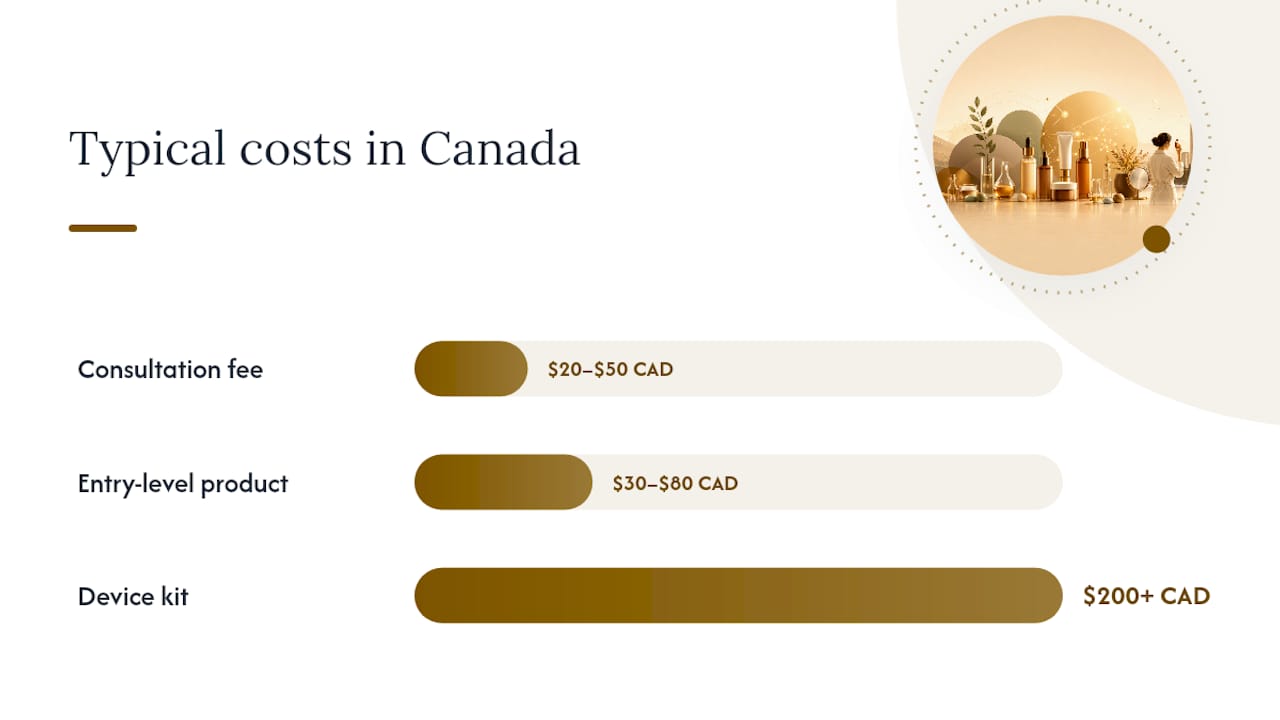
- Try an in-store diagnostic: Boutique skincare studios in Toronto, Vancouver, Montreal, and Calgary increasingly offer skin-scanner consultations. Expect to pay $20–$50 CAD for a standalone consultation; many apply the fee toward a purchase.
- Evaluate after 4–6 weeks: Skin takes time to respond. Photograph your skin in consistent lighting at the start and end of a trial period to assess change objectively.
- Update seasonally: Canadian winters are particularly drying. A routine built for August humidity will likely need adjustment by November. Check whether your brand’s system prompts seasonal updates or whether you need to re-initiate the quiz.
For costs: entry-level personalised products (quiz-matched serums, custom foundation) typically run $30–$80 CAD. Device-based or microbiome-driven systems can exceed $200 CAD for the initial kit. When in doubt about a skin reaction or persistent concern, a consultation with a Canadian dermatologist or pharmacist is the right next step before adding new actives to your routine.
Explore affordable ways to trial beauty trends alongside personalised products to build a routine without overcommitting your budget.
The gap between the promise and the practice
Personalisation in beauty is genuinely useful. It is also genuinely overhyped in places, and the gap between those two things is worth naming plainly.
The strongest applications are shade matching, climate-adjusted skincare, and routine sequencing for specific concerns. These are problems where data and diagnostics add real value, and where the difference between a generic product and a matched one is measurable. AR virtual try-on has improved dramatically, and the diffusion-based research cited in this article shows the technology is still advancing quickly.
The weakest applications are one-time quizzes dressed up as personalisation, microbiome products with thin clinical backing, and bespoke formulations that are essentially mass-market products with a custom label. The price premium on these is rarely justified by the evidence.
What actually separates a good personalised beauty service from a mediocre one is not the technology on the front end. It is whether the brand collects outcome data, updates its recommendations, and is transparent about what its system can and cannot do. A brand that tells you its quiz has limits and offers a follow-up is more trustworthy than one that promises a formula “scientifically matched to your unique biology” with no published methodology behind it.
For Canadian shoppers, the practical takeaway is simple: start with a low-cost or free diagnostic, trial before you commit, and treat seasonal updates as part of the process rather than a sign the first recommendation failed.
16thavenue: curated beauty for every style
16thavenue brings together a carefully selected range of beauty products including nail polishes, lip oils, eyelashes, and skincare items alongside women’s fashion, so you can build a look and a routine from one place. For shoppers who want to try personalised beauty without committing to an expensive bespoke service, starting with well-chosen, trend-informed products is a practical first step.
The 16thavenue catalogue is updated seasonally, which means the products you find reflect what is actually relevant for Canadian winters, spring transitions, and summer routines rather than a static inventory. Free shipping to most destinations makes it easy to trial new beauty additions without the risk of a wasted trip. Browse the current collection at 16thavenue and find the products that fit your skin, your style, and your season.
Sources
- NIQ — 2023 beauty personalisation innovation report
- Euromonitor — Introducing the personalisation megatrend
- Vogue Business — Personalisation is a necessity, not a luxury
- Sia Partners — Hyper-personalization in the beauty industry
- DreamMakeup — WACV2026 paper (makeup customisation with latent diffusion)