

Sustainable Fashion: Why It Matters for Modern Style
Scrolling through endless outfit photos, you might wonder if your wardrobe choices can truly make a difference. Fast fashion has made new trends feel disposable, but the consequences stretch far beyond your closet. Sustainable fashion goes far deeper than trendy tags, focusing on reducing environmental harm and ensuring fair treatment of workers worldwide. Discover why choosing conscious brands can shift power toward a fashion industry that values both people and the planet.
Table of Contents
- What Is Sustainable Fashion Really About?
- Key Principles and Core Misconceptions
- Eco-Friendly Materials and Circular Design
- Ethical Manufacturing and Labour Standards
- Benefits for Consumers and the Planet
- Challenges, Costs, and Accessibility
Key Takeaways
| Point | Details |
|---|---|
| Sustainable Fashion Defined | Sustainable fashion aims to address the harmful impacts of the industry by focusing on fair labour practices, eco-friendly materials, and reduced waste. |
| Consumer Choices Matter | Your purchasing decisions influence brand practices; choosing less but better signals a demand for accountability and transparency. |
| Misconceptions About Sustainability | Many believe sustainable fashion is always expensive, but intentional choices can yield affordable options without compromising ethics. |
| Systemic Change is Essential | Achieving true sustainability requires industry-wide collaboration and regulations beyond individual shopping habits to transform the fashion landscape. |
What Is Sustainable Fashion Really About?
Sustainable fashion isn’t about buying the most expensive organic cotton shirt or feeling morally superior at brunch. It’s a practical shift in how the entire fashion industry operates. At its core, sustainable fashion addresses the real damage the industry causes – from the water pollution poisoning communities where clothes are made to the exploited workers earning pennies per garment. When you hear “sustainable fashion,” understand that it encompasses reducing carbon emissions, stopping overproduction, cutting down textile waste, protecting ecosystems, and ensuring that people making your clothes earn fair wages and work in safe conditions. This isn’t abstract environmental talk. It’s about actual human beings and tangible environmental consequences happening right now.
The fashion industry’s current model is broken. Fast fashion has trained us to treat clothing like disposable items – wear it once, post it online, then discard it. Billions of tonnes of textiles end up in landfills annually while garment workers in developing nations face unsafe conditions and wages so low they can’t afford basics. This is why shifting toward regeneration and equity matters. The United Nations Environment Programme is pushing the industry to move away from exploitation and throwaway consumption toward systems that actually care about people and planet. Your choices as a consumer send direct signals to brands about what matters to you. When you buy less but buy better, you’re voting for accountability.
What makes sustainable fashion different from greenwashing is transparency and accountability. Real sustainable fashion means brands can tell you exactly where their clothes come from, how much workers are paid, and what materials they use. It means companies measure their impact and actually report it – not just slap “eco-friendly” labels on products. According to research on sustainable fashion initiatives, voluntary reform efforts by major companies have largely failed without proper standards and regulations. That’s why your awareness matters more than ever. You’re not expected to be perfect, but understanding what sustainability actually means helps you make choices that align with your values instead of falling for marketing tricks.
Pro tip: Start by checking if a brand publicly shares information about their supply chain, worker wages, and materials sourced – transparency is the first sign of genuine commitment to sustainable fashion.
Key Principles and Core Misconceptions
Sustainable fashion operates on a few straightforward principles, but the industry deliberately obscures them with marketing language. The real foundation comes down to three things: reducing waste at every stage of production, treating workers fairly and safely, and creating systems that don’t destroy ecosystems. When brands talk about sustainability, they should be able to point to concrete changes in how they source materials, manufacture products, and handle what happens after you’re done wearing something. Yet most companies skip the hard work and just slap “eco-friendly” labels on products. This is greenwashing, and it’s everywhere. The principle that matters most is accountability. If a brand can’t explain where your clothes come from or how much the person making them earns, that’s not sustainable fashion. That’s just marketing dressed up in environmental language.
One massive misconception is that buying recycled materials solves the problem. Yes, recycled polyester is better than virgin plastic, but it still sheds microplastics when you wash it, and the recycling process itself consumes energy and water. Another common myth is that sustainable fashion means paying premium prices. That’s simply false. Sustainable doesn’t always mean expensive. It means intentional. You can find affordable sustainable pieces if you shop from brands committed to ethical practices rather than assuming price tag equals ethics. People also wrongly believe that individual shopping choices alone will fix the industry. They won’t. True sustainability requires radical transformation in how companies operate, not just tweaks to product lines. Without industry-wide collaboration and proper regulations, companies can always find loopholes.
Another critical misconception involves underestimating how much harm fast fashion actually causes. It’s not just pollution you can see. The fashion industry consumes massive amounts of water, often in countries facing droughts. It creates toxic chemical runoff that poisons water sources communities depend on. It generates carbon emissions comparable to international flights and shipping combined. Sustainable fashion addresses these environmental and social costs by embracing circular economy concepts where products are designed to last, be repaired, or be properly recycled. Key principles include rejecting the throwaway mentality entirely. Buy fewer pieces. Choose quality over quantity. Support brands that invest in worker wellbeing and transparent supply chains. The goal isn’t perfection. It’s making choices that reflect what you actually value instead of what algorithms and advertisements tell you to want.
Pro tip: Before buying anything, ask yourself if you’d wear it a hundred times, and check if the brand publicly reports their environmental impact and worker wages on their website.
Eco-Friendly Materials and Circular Design
The materials your clothes are made from matter far more than most people realise. Conventional cotton requires enormous amounts of water and pesticides to grow. Polyester comes from fossil fuels and doesn’t biodegrade for centuries. But sustainable alternatives exist, and they’re becoming more accessible. Organic cotton uses no synthetic pesticides or fertilisers, significantly reducing water pollution and harm to farming communities. Linen and hemp are incredibly durable plant-based fibres that require minimal water and no pesticides to cultivate. Recycled synthetics take discarded plastic bottles and old garments and transform them into new fabric, keeping waste out of landfills. There are also innovative leather alternatives made from mushroom mycelium, pineapple leaves, and other plant materials that eliminate animal cruelty while reducing chemical pollution. Look for certifications from credible standards when shopping. These labels guarantee that fabrics have been produced ethically and with genuine environmental consideration, not just greenwashing claims.

But material choice alone isn’t enough. How clothing is designed matters just as much. This is where circular design comes in. Circular fashion extends product lifecycles by eliminating waste and pollution while keeping materials and products at their highest value for as long as possible. That means designing garments to last years, not seasons. It means creating clothes that can be easily repaired instead of thrown away. It means using durable construction techniques and timeless styles that won’t feel dated in six months. Brands applying circular principles focus on recyclability too, using mono-materials or easily separable components so that when a piece finally reaches end of life, it can be properly recycled rather than incinerated. Some companies now offer take-back programs where you can return worn-out items to be refurbished or recycled, creating a closed loop system.
When you shop, look for both sustainable materials and thoughtful design together. A dress made from organic cotton means nothing if it’s poorly constructed and falls apart after three wears. Conversely, a perfectly made garment from conventional materials still contributes to environmental damage. The best sustainable pieces combine durable, eco-friendly fabrics with timeless designs that you’ll actually want to wear repeatedly. Sustainable fabrics include renewable fibres and recycled options certified for ethical production. Pieces designed to last, be repaired, and eventually recycled create genuine environmental impact. This is the intersection of material innovation and circular thinking that actually changes how fashion works. You’re not just buying a shirt; you’re supporting a completely different approach to how clothes get made and what happens to them after.
Pro tip: When shopping, check product descriptions for material composition and construction details, then verify the brand offers repair services or take-back programs to ensure your purchase truly supports circular fashion.
Here’s a quick overview of how sustainable materials compare to conventional ones in fashion:
| Material Type | Environmental Impact | Durability | Typical Price Range |
|---|---|---|---|
| Conventional Cotton | High water and pesticide use | Moderate | Low to moderate |
| Organic Cotton | Reduced pollution, less water | Moderate to high | Moderate to high |
| Polyester | Non-biodegradable, fossil fuels | High (but pollutes) | Low |
| Recycled Polyester | Reduces landfill waste | High | Moderate |
| Linen/Hemp | Low water, minimal chemicals | Very high | Moderate |
| Leather Alternatives | Lower emissions, cruelty-free | Variable | Moderate to high |
Ethical Manufacturing and Labour Standards
When you buy a piece of clothing, someone made it. That person deserves respect, fair pay, and safe working conditions. Yet the reality of garment manufacturing in many countries is far grimmer. Workers, predominantly women, spend ten to fourteen hour days in cramped factories earning wages so low they can’t afford basic necessities. Some factories lack proper ventilation, fire exits, or medical care. Pregnancy discrimination is common. Sexual harassment goes unreported. These aren’t isolated incidents. They’re systematic problems baked into how fast fashion keeps prices artificially low. Ethical manufacturing means changing this completely. It means factories that meet strict labour standards, workers earning living wages (not just minimum wages), safe working conditions with reasonable hours, and the freedom to organise and voice concerns without fear of retaliation. It means transparency so you can actually trace where your clothes come from.
The challenge is that garment industry sustainability requires addressing labour practices alongside environmental concerns. Gender wage gaps persist even in supposedly ethical factories. Women earn significantly less than men for the same work. Abusive management remains common. Unsafe conditions still exist. This isn’t because ethical manufacturing is impossible. It’s because many brands choose profit over people. They’ll slap a “Fair Trade” label on a product made in a factory with documented human rights violations, banking on the fact that most consumers won’t dig deeper. Real ethical manufacturing requires constant audits, public reporting of findings, worker testimony, and genuine consequences when standards aren’t met. Some brands do this. Many don’t. The ones that do often charge more because they actually pay workers fairly.
You have power here, even if it feels small. When you choose to buy from brands committed to ethical manufacturing, you’re signalling that you care about the people behind your clothes. Look for certifications from independent organisations that verify labour practices, not just brands’ own claims. Ask questions. Do they publish factory lists and audit reports? Can they tell you how much workers are paid? Do they employ people year-round or just during peak seasons? Do workers have union representation? A brand unwilling to answer these questions probably has something to hide. You don’t need to buy everything ethically, but when you do purchase, make it count. Buy less, buy better, and buy from people who treat their workers like human beings instead of production costs.
Pro tip: Check if a brand publishes their factory list and third-party audit results on their website before purchasing, as transparency about labour practices is the strongest indicator of genuine ethical commitment.
Benefits for Consumers and the Planet
Choosing sustainable fashion isn’t a sacrifice. It’s actually better for you and the world around you. Start with the practical benefits you’ll experience directly. Sustainable clothing lasts longer because it’s made with better materials and construction. That dress you buy won’t fall apart after five wears. The seams won’t split. The fabric won’t pill or fade unevenly. Over time, you spend less money buying fewer, better pieces than constantly replacing cheap items that deteriorate quickly. You also escape the psychological exhaustion of fast fashion. No more endless scrolling through trend-focused websites trying to find something that makes you feel complete. No more guilt about wardrobes overflowing with unworn items. Quality over quantity creates space, clarity, and genuine style instead of consumption-driven anxiety. Beyond personal benefits, your choices directly impact the planet and vulnerable communities. Every garment made with sustainable practices means less water pollution poisoning farming communities, less toxic chemical exposure for factory workers, fewer carbon emissions contributing to climate breakdown, and fewer textiles choking landfills.
Sustainable fashion reduces environmental impact throughout the entire product lifecycle while supporting social justice and animal welfare. When you buy from brands committed to sustainability, you’re reducing resource depletion and pollution. Less water consumption matters enormously in countries facing droughts. Less chemical runoff protects ecosystems and human health. Lower carbon emissions contribute meaningfully to climate action. Fewer discarded garments mean less microplastic pollution entering oceans and accumulating in fish you might eat. The environmental benefits compound when millions of consumers shift purchasing patterns. Individual choices feel small until they align with millions of others making similar decisions. That’s when systemic change becomes possible. Companies respond to consumer demand. When enough people choose sustainable fashion, brands that ignore sustainability lose market share and investors begin demanding change. This is how industries transform.
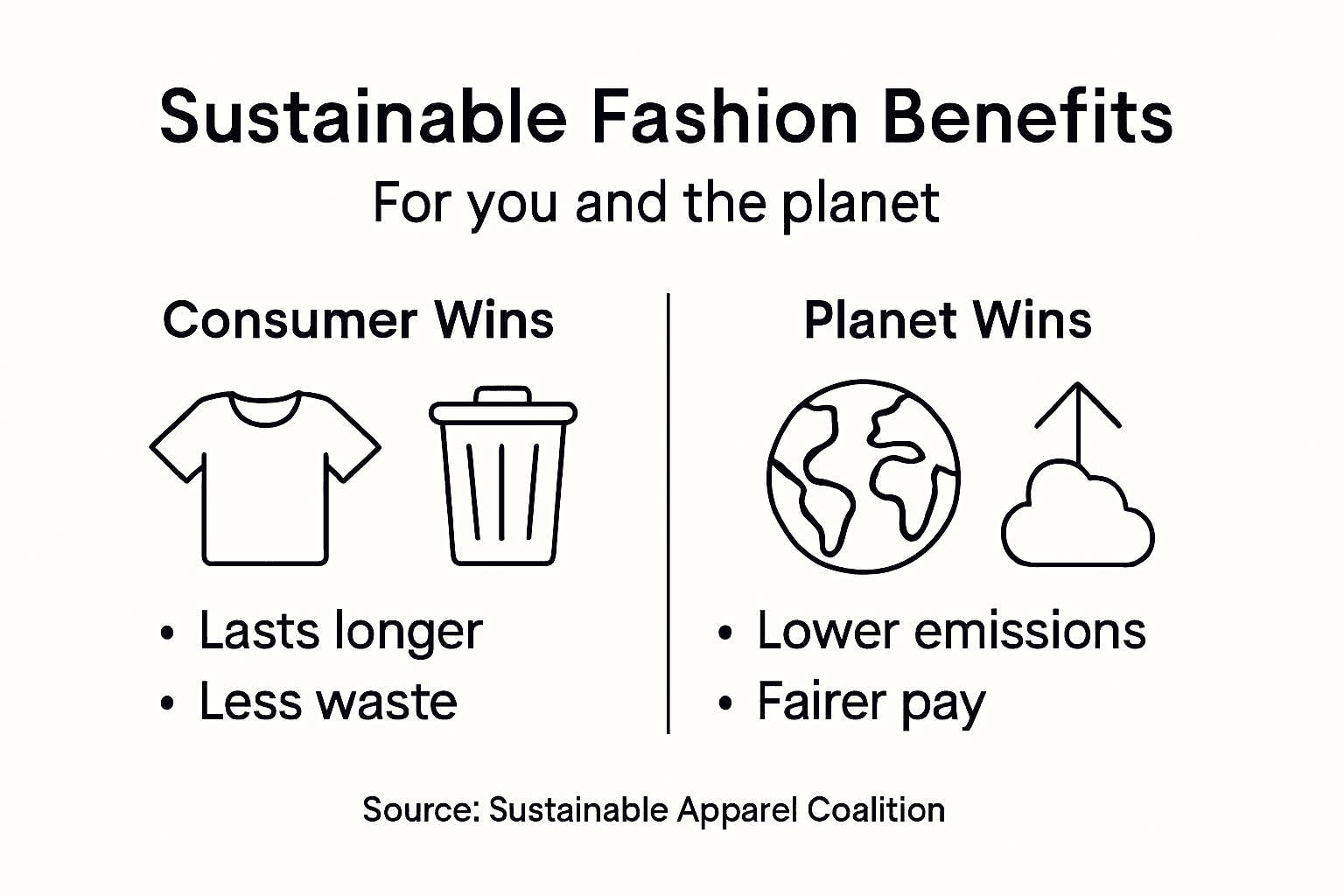
The social impact is equally powerful. Workers earning living wages can afford housing, education, and healthcare. Safe working conditions mean fewer injuries and illnesses. Freedom to organise means workers can collectively advocate for their own interests. Fair treatment means dignity and respect. When you support ethical brands, you’re directly improving lives. You’re also sending a message to every brand that consumer consciousness matters. Shifting consumption patterns promotes regenerative, equitable practices that benefit communities globally while empowering consumers to demand accountability. This creates a virtuous cycle. Consumers demand transparency. Brands implement change. Workers benefit. Environmental impact decreases. Other brands feel pressure to follow. Your choices matter more than you realise. You’re not just buying clothing. You’re voting for the kind of fashion industry you want to exist.
Pro tip: Track your spending by calculating cost-per-wear on sustainable pieces you already own, then compare it to fast fashion items you discarded after minimal use to see the real financial and environmental value proposition.
This table summarises the key personal and planetary benefits of choosing sustainable fashion:
| Benefit Type | Consumer Advantage | Environmental/Social Impact |
|---|---|---|
| Longevity | Clothes last longer | Reduces textile waste |
| Cost Efficiency | Lower cost-per-wear | Less frequent replacements |
| Health & Wellbeing | Safer materials, no toxins | Healthier workers, cleaner air |
| Social Justice | Ethical labour support | Improved community livelihood |
| Climate Action | Lower carbon emissions | Combats climate change |
| Animal Welfare | Cruelty-free options | Protects animal life |
Challenges, Costs, and Accessibility
Let’s be honest. Sustainable fashion is harder to access than fast fashion. A basic organic cotton t-shirt from an ethical brand costs two to three times more than a conventional one from a mass-market retailer. A sustainably made pair of jeans can run you 150 dollars or more, while fast fashion alternatives cost a quarter of that. This price gap exists because sustainable production actually costs more. Ethical wages, safe factories, quality materials, and proper environmental practices aren’t cheap. Fast fashion only seems affordable because it externalises costs onto workers, communities, and the planet. When a garment costs 15 dollars, someone is paying the real price through exploitation or environmental damage. Yet knowing this doesn’t make sustainable options magically affordable for everyone. If you’re living paycheque to paycheque, choosing ethical fashion can feel like an impossible luxury. This is a legitimate barrier, and pretending it doesn’t exist dismisses real economic constraints many people face.
Beyond pricing, infrastructure problems create significant obstacles. Sustainable fashion challenges include inadequate recycling infrastructure and overreliance on fast fashion culture. Even if you want to buy sustainable clothing and properly recycle or donate old pieces, the systems supporting this don’t exist everywhere. Many communities lack textile recycling facilities. Donation centres are overwhelmed or simply throw items away. Finding sustainable brands with styles and sizes that fit you remains difficult, especially if you live outside major urban centres or need plus sizes. The fashion industry’s infrastructure was built for fast fashion, not sustainability. Changing this requires massive investment in recycling facilities, supply chains, and distribution networks that simply don’t exist yet in many places. This is why accessibility remains a systemic problem, not just an individual shopping problem.
Fast fashion’s grip on global culture also presents a psychological challenge. We’ve been conditioned to see new trends, experience desire, and feel satisfaction through purchasing. Sustainable fashion asks you to break that cycle, but you’re swimming against powerful currents of advertising, influencer culture, and social media algorithms designed to keep you consuming. The sustainable fashion movement itself sometimes becomes elitist, with wealthy people congratulating themselves for buying expensive ethical brands while dismissing others for shopping at accessible retailers. This gatekeeping helps no one. Fashion industry challenges require systemic transformation across supply chains and consumption patterns through policy, investment, and education rather than individual moral perfectionism. The reality is that sustainable fashion needs to become cheaper and more available, not just more exclusive. This means policy intervention, industry investment, and systemic change from the top down, not just consumer choices from the bottom up.
Pro tip: Start by shopping secondhand and thrifting for quality pieces at accessible prices, then gradually mix in sustainable new purchases as your budget allows instead of trying to overhaul your wardrobe overnight.
Embrace Sustainable Style Without Compromise
The article highlights the challenges of navigating sustainable fashion from transparency concerns to affordability and ethical manufacturing. Many shoppers want to make better choices by reducing waste and supporting fair labour, but finding stylish, eco-conscious pieces that fit budgets remains a struggle. At 16th Avenue, we understand your goal to buy less but buy better while enjoying modern trends designed with quality and style in mind. Our curated collections of women’s clothing, footwear, and accessories combine thoughtful fashion with accessible options that help you make responsible choices without sacrificing your personal style.
Explore our diverse seasonal collections and beauty products to find outfits that last and align with your values. By shopping at 16th Avenue, you support a platform committed to transparency, affordability, and empowering consumers like you to send clear signals that sustainable fashion matters. Start transforming your wardrobe today by choosing pieces that are both trendy and ethically selected. Visit shop 16th Avenue now and take your first step toward a more conscious fashion future.
Frequently Asked Questions
What is sustainable fashion?
Sustainable fashion refers to a movement within the fashion industry aimed at promoting environmentally and socially responsible practices. It involves reducing waste, ensuring fair wages for workers, and protecting ecosystems while producing clothing.
How does fast fashion impact the environment?
Fast fashion contributes significantly to environmental damage through water pollution, textile waste, carbon emissions, and the depletion of natural resources. It promotes a throwaway culture, leading to billions of tonnes of textiles ending up in landfills each year.
What are some key principles of sustainable fashion?
Key principles include reducing waste during production, ensuring fair labor practices, using eco-friendly materials, and designing garments for longevity and recyclability, which collectively aim to minimize environmental and social harm.
What types of materials are considered sustainable in fashion?
Sustainable materials include organic cotton, linen, hemp, recycled synthetics, and innovative alternatives like leather made from plant-based sources. These materials are chosen for their reduced environmental impact compared to conventional options.
Recommended
- Blog | 16th Avenue
- High Waist Trousers | Women’s Streetwear Trousers | 16th Avenue
- Fashion Cat Eye Vintage Gradient Sunglasses – 16th Avenue
- Women’s Denim Trousers | Denim Trousers | 16th Avenue
Glenville Carr