


Why choose strappy sandals: a woman's guide
Strappy sandals are the most versatile shoe in a woman’s wardrobe. A single well-chosen pair moves from a weekday lunch to a rooftop dinner without missing a beat. Mid-heel designs with proper weight distribution can provide comfort over extended wear, and the open construction keeps feet cool in a way no closed shoe can match.
Three reasons women keep reaching for strappy sandals:
- Versatility: refined leather or mid-heel styles suit casual outings, office environments, and evening events without needing a wardrobe change.
- Breathability: the open strap design allows airflow that closed shoes simply cannot replicate, making them the practical choice for warm Canadian summers.
- Flattering proportions: thin straps visually lengthen the leg; ankle ties draw the eye upward and create a cleaner silhouette.
Table of Contents
- What are the real benefits of strappy sandals?
- How do you choose the right strappy sandals for your foot and lifestyle?
- Which strappy sandal styles suit different occasions?
- Styling tips: what outfits and proportions work best?
- Are strappy sandals actually good for your feet?
- Materials, construction, and care for long-lasting strappy sandals
- What does a comfortable strappy sandal design actually look like?
- Who should choose strappy sandals — and when to pick something else?
- Key takeaways
- The sandal that actually fits your life
- Strappy sandals available now at 16thavenue
- Further reading and useful sources
What are the real benefits of strappy sandals?
Versatility is the headline benefit, but it is worth unpacking what that actually means in practice. A pair of supple leather strappy sandals can genuinely suit almost any occasion when the design leans toward refined materials and a moderate heel. That is not marketing language; it is a function of how neutral the silhouette reads across dress codes.
Breathability is the second functional advantage, and it matters more than people give it credit for. Strappy designs allow airflow around the foot, which reduces heat build-up and moisture. For anyone who has worn closed flats through a humid July afternoon, the difference is immediate.
The aesthetic case is equally strong. Stylists consistently point to strap architecture as the detail that separates a sandal that looks expensive from one that looks cheap. Thin straps elongate the leg by exposing more skin; wider straps add visual structure and ground the look. Neither is wrong — they serve different proportions and occasions.
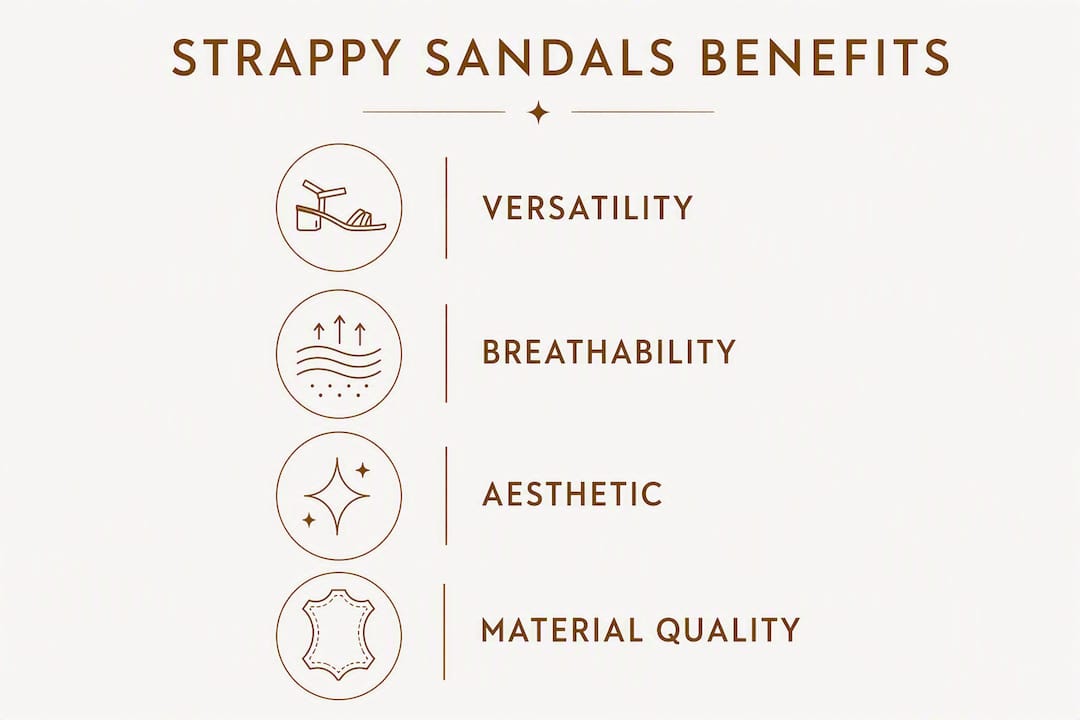
Quality materials pay off over time. Leather moulds to the shape of your foot across a season, which means a pair that feels slightly stiff in May will feel broken-in and comfortable by July. Treating a well-made strappy sandal as an investment rather than a disposable summer item is the advice that consistently comes from both stylists and footwear buyers.
How do you choose the right strappy sandals for your foot and lifestyle?
Getting the fit right matters more than the style. Here is a practical checklist to work through before committing to a pair.
- Check heel security first. The back of your heel should not lift when you walk. A backstrap or ankle strap keeps the shoe anchored and prevents the toe-gripping reflex that causes calf fatigue.
- Assess toe room. Your longest toe should sit at least a few millimetres from the front edge. Strappy sandals that crowd the toes cause pressure points, especially as feet swell in heat.
- Map strap placement against your foot. Straps that cross over bony areas — bunion joints, hammertoe knuckles — will rub. Adjustable straps let you shift the contact point.
- Choose heel height for your day. Flat sandals suit beach days and casual errands. Mid-heels in the 1.5–3 inch range redistribute weight away from the forefoot and reduce Achilles overextension — making them, counterintuitively, more comfortable for extended wear than completely flat designs. Block heels add stability; stilettos are best reserved for short-duration events.
- Look for an anatomical footbed. A contoured footbed with arch support is the single biggest comfort upgrade in any sandal. Cushioned soles matter too, particularly on hard urban surfaces.
- Size for afternoon feet. Feet swell by up to half a size over the course of a warm day. Measure or try on sandals later in the day, and choose adjustable straps so you can loosen them when needed.
- Break them in before a long event. Wear a new pair around the house for 20–30 minutes on two or three occasions before committing to a full day out.
Pro Tip: When testing a strappy sandal in-store, walk on a hard floor (not carpet), stand still for 30 seconds, and run a finger under each strap edge. Any strap that digs in at rest will be worse after two hours of walking. At home, try them on with thin socks first to identify pressure points before skin contact.
16thavenue stocks multiple strappy styles — from minimalist flats to cross-strap heels — so you can compare construction details and sizing notes before buying. Their comfort and sizing guide is a useful starting point if you are unsure which heel height suits your lifestyle.
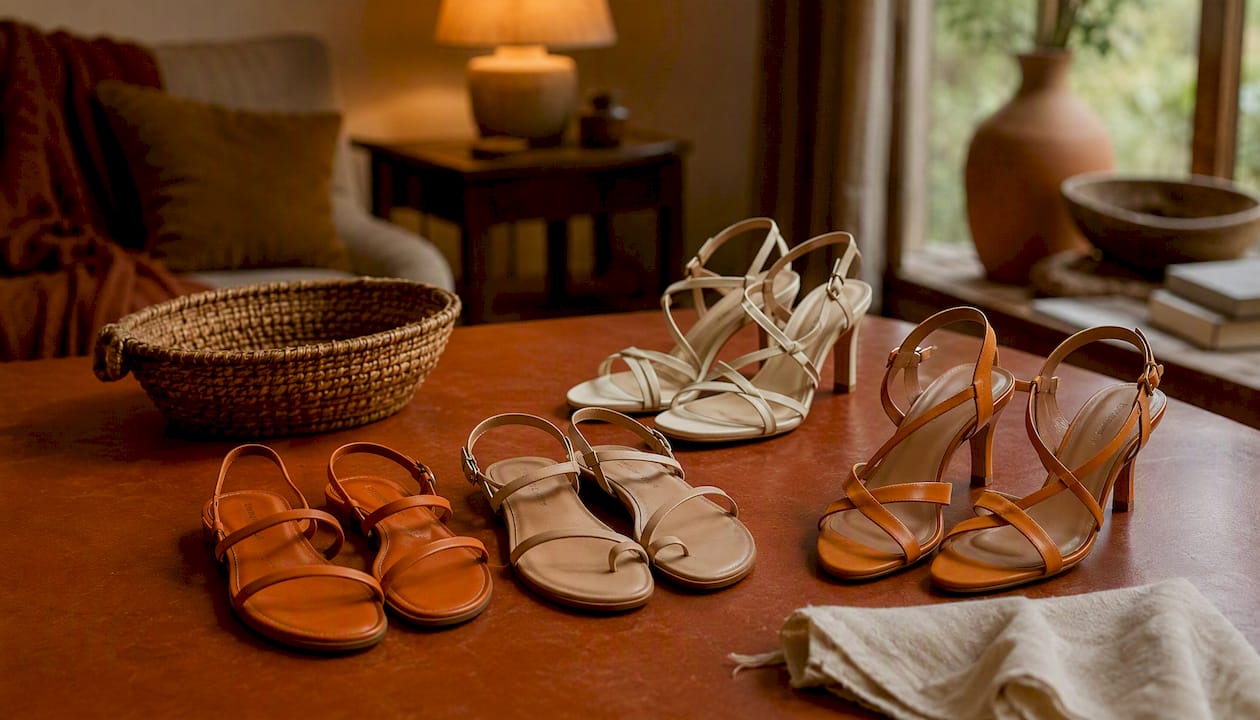
Which strappy sandal styles suit different occasions?
| Occasion | Recommended style | Material and heel notes |
|---|---|---|
| Casual / weekend | Minimalist flat or low block heel | Leather or textile; breathable and easy to walk in |
| Office / work | Closed-toe strappy or refined mid-heel | Nude or tan leather; clean lines read as polished |
| Outdoor wedding | Block mid-heel or platform wedge | Avoid stilettos on grass; metallic or nude tones |
| Evening / formal | Stiletto or embellished high heel | Metallics, rhinestones, or satin-finish straps |
| Travel / city walking | Low block heel with backstrap | Adjustable straps; cushioned footbed; packable |
| Long walks / all-day | Sporty sandal with arch support | This is where strappy styles have limits — consider a supportive alternative |
A few quick notes on when specific strap types earn their keep:
- Backstraps and ankle ties are the right call for outdoor events, cobblestone streets, or any occasion involving stairs. They keep the shoe on your foot without toe-gripping.
- Gladiator styles add visual weight and suit casual or bohemian outfits; they work well with platform wedge constructions that distribute weight evenly.
- Minimalist straps (two or three thin bands) are the most versatile across dress codes and the easiest to pack flat in a travel bag.
- Platforms add height with more stability than a stiletto and suit outdoor festivals or casual evening events.
- Embellished styles — beaded, rhinestone, or bow-detail sandals — read as occasion-specific. They are not the everyday pair, but they are the one that makes an outfit.
Styling tips: what outfits and proportions work best?
The hem-to-sandal relationship is where most styling mistakes happen. Strappy sandals expose the foot and ankle, so the hem line directly above them shapes the whole proportion of the look.
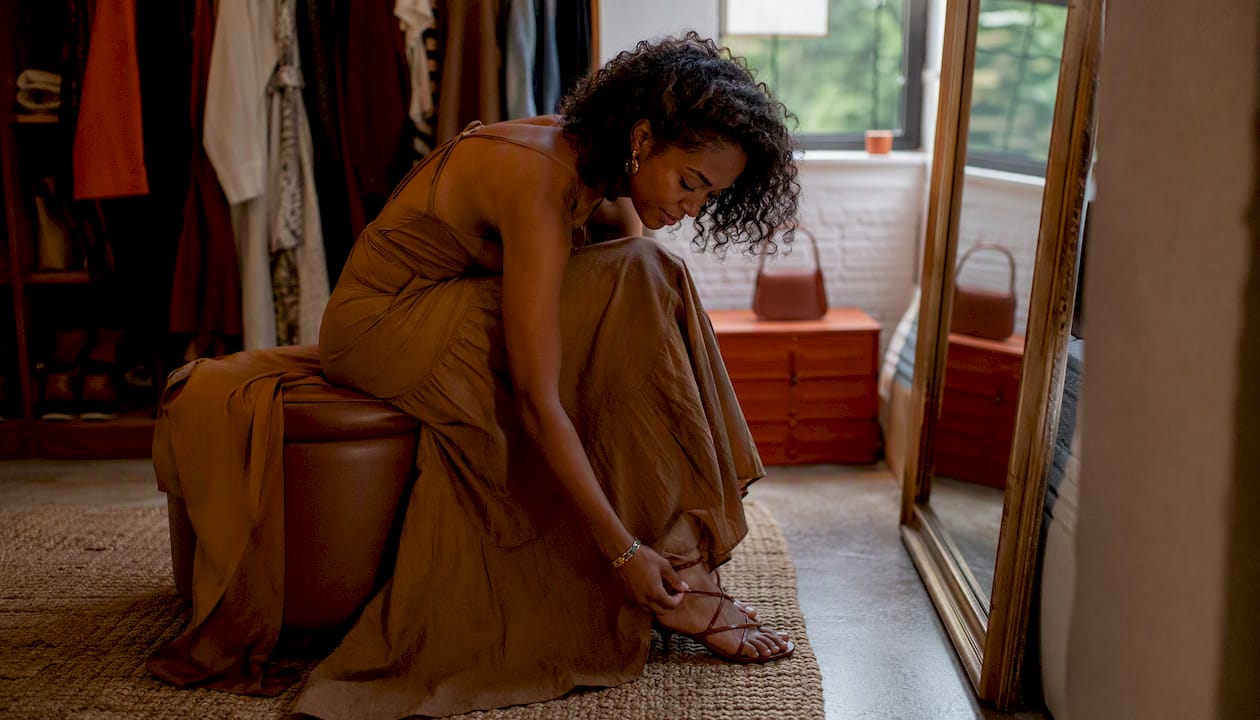
Midi dresses are the strongest pairing. The gap between the hem and the sandal creates a clean ankle reveal that thin straps frame beautifully. Wide-leg trousers work for the same reason — the trouser grazes the top of the foot, and a strappy sandal peeks out underneath without competing with the silhouette.
Cropped jeans and straight-leg denim are reliable everyday pairings. The key is that the hem sits above the ankle so the strap detail is visible. Maxi skirts with a front slit also work well, particularly with minimalist sandals that do not fight the fabric for attention.
- Nude straps are the closest thing to a universal styling tool. They extend the leg line by blending with skin tone, which makes them the go-to for shorter hemlines or when you want the outfit to read as one unbroken vertical.
- Metallics function as a neutral for evening wear. Gold and silver straps pair with almost any colour and add polish without requiring a matching accessory.
- Strap width and formality: thin straps read as dressy; wider straps or multi-strap designs read as casual or bohemian. Matching strap width to the occasion’s dress code is a quick way to calibrate the look.
- For petite frames: thin straps and a slight heel elongate the silhouette. Avoid chunky ankle cuffs that visually cut the leg.
- For taller frames: wider straps and block heels are proportionally balanced. Gladiator lacing up the calf can look striking rather than overwhelming.
To dress sandals up: add a structured bag and a single statement earring. To dress them down: swap the bag for a canvas tote and pair with a relaxed linen shirt. The sandal itself does not need to change.
Are strappy sandals actually good for your feet?
The honest answer is: it depends on the design. Strappy sandals can be a healthy choice, but the category has real variation in support levels.
The key mechanism is toe-clawing. In backless footwear, the toes grip the sole to keep the shoe on, which creates repetitive strain on the toe tendons, arches, and calves. Backstraps and ankle straps transfer that mechanical work to the shoe structure instead of your muscles. Podiatrists specifically recommend backstraps for anyone managing ankle instability, plantar fasciitis, or Achilles issues.
Here is a practical dos and don’ts list:
- Do choose sandals with a backstrap or ankle strap for anything beyond a short walk.
- Do look for an anatomical footbed with visible arch contouring.
- Do break in new sandals gradually to allow leather to soften and straps to conform.
- Don’t wear overly rigid straps for long periods — they create pressure points that worsen with heat-related swelling.
- Don’t assume flat sandals are automatically better for your feet. A slight mid-heel incline can actually reduce forefoot pressure.
- Don’t ignore early rubbing. A small blister on day one becomes a painful problem by day three.
Strappy sandals are well-suited to events, short city walks, and warm-weather outings. For all-day walking on uneven terrain, a sportier sandal with a contoured footbed and lateral support is the more sensible choice.
Materials, construction, and care for long-lasting strappy sandals
| Material | Breathability | Stretch and fit | Durability | Care |
|---|---|---|---|---|
| Full-grain leather | Good | Moulds to foot over time | High | Wipe clean; condition every few months |
| Synthetic (PU/vegan) | Moderate | Less give; size true | Medium | Wipe clean; avoid prolonged sun exposure |
| Textile / fabric | High | Minimal stretch | Lower | Spot clean; air dry; avoid soaking |
| Suede | Moderate | Some give | Medium | Brush dry; use suede protector spray |
Construction signals worth checking: supple leather uppers that flex without cracking, metal hardware that does not feel hollow, stitched rather than glued soles, and a footbed with visible cushioning rather than a flat insole.
For care, a few habits extend sandal life significantly. Wipe leather straps with a damp cloth after each wear and apply a leather conditioner at the start and end of the season. Fabric straps can be spot-cleaned with mild soap; never soak them or the adhesive bonding the sole may weaken. Store sandals in a cool, dry place away from direct sunlight, which fades dye and dries out leather faster than almost anything else.
Two mistakes that shorten sandal life faster than normal wear: storing them damp (which causes leather to stiffen and crack), and over-polishing delicate straps with products designed for heavier leathers.
What does a comfortable strappy sandal design actually look like?
Comfort in a strappy sandal is not a feeling — it is a set of measurable design features. Here is what to check:
- Arch positioning: the footbed’s highest point should sit under the arch, not under the ball of the foot. Press your thumb into the insole before buying.
- Sole thickness: a sole under 5mm offers almost no shock absorption on hard surfaces. Look for at least 8–10mm of cushioned material underfoot.
- Strap anchoring: straps should attach at multiple points along the sole edge, not just at the toe and heel. Single-point anchoring allows the strap to shift and rub.
- Ankle security: any sandal you plan to walk in for more than 30 minutes should have a heel strap or ankle tie. Without one, your gait compensates.
- Heel geometry: a block heel or wedge distributes weight across a wider base. A stiletto concentrates it on a point, which is fine for standing but tiring for walking.
- Strap adjustability: at least one adjustable buckle lets you accommodate swelling and fine-tune fit across the day.
Pro Tip: When shopping online, filter by “adjustable strap” and “cushioned footbed” before looking at style. Those two features eliminate most of the comfort problems before the sandal arrives at your door.
Applying this checklist to an online product page takes about two minutes. Check the product images for sole thickness and strap attachment points; read the description for footbed material; and look for sizing notes that mention width or swelling accommodation.
Who should choose strappy sandals — and when to pick something else?
Strappy sandals suit three types of wearers particularly well: style-focused women who want one shoe that covers multiple dress codes; travellers who need a packable, lightweight option that works from sightseeing to dinner; and office wearers who want a refined leather mid-heel that reads as polished without the discomfort of a closed pump.
- Style-first wearers get the most mileage from a neutral leather mid-heel with thin straps — one pair, many occasions.
- Travellers should prioritise a low block heel with a backstrap and adjustable buckles. Packable, stable, and versatile enough for a cobblestone street or a restaurant patio.
- Office wearers benefit from a closed-toe strappy design or a refined ankle-strap mid-heel in tan or nude leather.
When to choose something else: if you are walking more than a few kilometres on uneven ground, a sporty sandal with lateral support and a contoured footbed will serve you better. If you have a diagnosed foot condition — plantar fasciitis, bunions, or significant overpronation — consult a podiatrist before committing to any strappy style without orthotic compatibility.
The practical action: try on a mid-heel block and a minimalist flat on the same day, walk on a hard floor, and notice which one your foot settles into. Prioritise a secure heel strap. Browse 16thavenue’s strappy sandal styles to compare construction details and find a Canadian-available option that fits your occasion.
Key takeaways
Strappy sandals earn their place as a wardrobe staple because they combine breathability, visual versatility, and — when chosen with a backstrap and anatomical footbed — genuine all-day comfort.
| Point | Details |
|---|---|
| Mid-heels outperform flats for long wear | A 1.5–3 inch heel reduces Achilles strain and redistributes forefoot pressure. |
| Backstraps prevent toe-clawing | Ankle or heel straps transfer mechanical work from your muscles to the shoe. |
| Material determines longevity | Full-grain leather moulds to your foot and outlasts synthetic alternatives by seasons. |
| Match strap width to occasion | Thin straps read as dressy; wider or multi-strap designs suit casual and bohemian looks. |
| 16thavenue for Canadian shoppers | 16thavenue stocks a range of strappy styles with free shipping details and sizing guidance for buyers in Canada. |
The sandal that actually fits your life
The conventional wisdom says buy one classic pair and build from there. That is reasonable advice, but it skips the more useful question: which classic pair? A minimalist flat and a mid-heel block are not interchangeable. They suit different bodies, different days, and different wardrobes. The mistake most women make is buying the one that photographs well on the product page rather than the one that fits the specific occasions they actually have.
My honest recommendation: measure your foot at the end of the day, not the morning. Test strap edges with your fingernail before you walk. And do not underestimate the backstrap — it is the single feature that separates a sandal you wear twice from one you reach for all summer.
Strappy sandals available now at 16thavenue
16thavenue is a Canadian e-commerce destination for women’s footwear, and their strappy sandal selection covers the full range — from flat summer beach styles to embellished evening heels. Canadian shoppers get free shipping to most destinations, clear sizing notes on product pages, and a returns process that makes ordering online less of a gamble.
The practical starting point: use the product pages to compare sole construction and strap placement before ordering. If you are between sizes, the comfort and sizing guide on the 16thavenue blog walks through how to measure and what to look for in a well-fitting sandal. For a comfort-first alternative, their women’s sport sneakers are worth a look when you need more support than a strappy style can offer. Browse the full collection at 16thavenue.ca and find the pair that fits your summer.
Further reading and useful sources
- Strappy sandals — Wikipedia: background on the style’s history and defining characteristics.
- Sandals with backstraps: pros and cons — Feet First Clinic: podiatry-backed breakdown of how backstraps affect foot mechanics.
- 16thavenue.ca: Canadian source for strappy sandals, with product pages, sizing guidance, and shipping details for buyers across Canada.