


Why pick midi dresses: style, comfort, and fit
TL;DR:
- The midi dress is versatile, flattering, and functional, suitable for all body types and seasons. It simplifies wardrobe choices by combining style and comfort while allowing easy dressing with accessories and layering. Its adaptability makes it a cost-effective staple for various occasions, from casual outings to professional settings.
The midi dress is defined as a garment that falls between the knee and mid-calf, and it is the most versatile dress length available to women today. That single design choice solves three common wardrobe problems at once: what to wear to work, what to wear on a date, and what to wear when you simply want to feel put-together without much effort. The midi silhouette works across body types, seasons, and occasions in a way that mini and maxi lengths rarely achieve. If you are asking why pick midi dresses, the answer is straightforward: they deliver comfort, elegance, and adaptability in one garment.
Why pick midi dresses over other dress lengths?
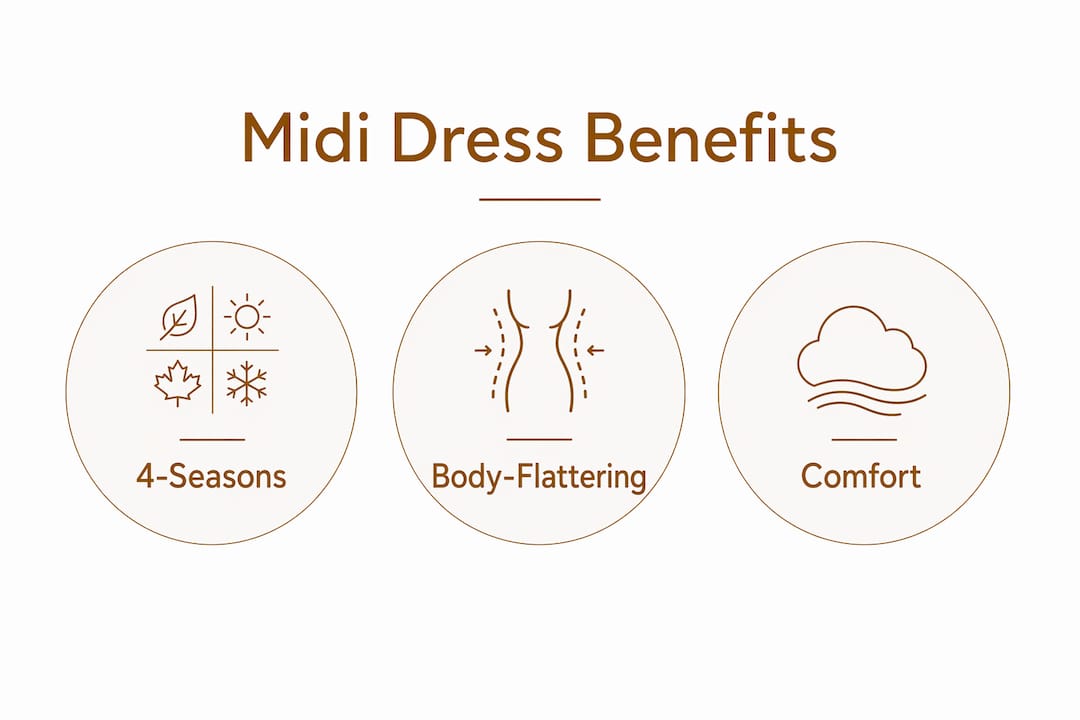
Midi dresses are year-round wardrobe staples that adapt through accessory swaps and layering, making them more cost-efficient than any other dress length. That means one well-chosen midi dress can carry you from spring brunch to a winter office party without needing a separate garment for each occasion. Mini dresses lose their usefulness in cold weather. Maxi dresses can feel too formal or too casual depending on the setting. The midi sits in the middle and handles both extremes with ease.
The benefits of midi dresses extend well beyond aesthetics. Midi dresses reduce morning decision-making by functioning as an all-in-one outfit solution that moves from casual to formal with minimal effort. That is a genuine time-saver for anyone with a packed schedule. You swap the sandals for heels, add a blazer, and the dress does the rest.
Seasonal adaptability is one of the strongest midi dress advantages. Light fabrics for spring and summer and wool blends for autumn and winter allow the same silhouette to work year-round. Pairing a midi with a chunky knit cardigan in october or a linen blazer in june keeps the look fresh without buying a new dress. For more guidance on building a wardrobe around seasonal dressing, the 16thavenue guide on seasonal dress shopping covers the key decisions clearly.
- Fabric choice matters: Opt for jersey, linen, or chiffon in warmer months and ponte or wool blends in cooler weather.
- Layering extends wearability: A denim jacket or tailored coat transforms the same dress into a completely different outfit.
- Accessories shift the tone: Swap a canvas tote for a structured handbag and the dress reads entirely differently.
- One dress, multiple seasons: A solid-colour midi in a mid-weight fabric covers the widest range of temperatures and occasions.
Pro Tip: Choose a midi dress in a neutral colour like camel, navy, or forest green. These shades layer with almost any outerwear and accessory you already own, which multiplies the number of outfits you can build from a single piece.
How do midi dresses flatter different body types?
The midi dress creates a vertical line that elongates the figure, making it flattering for both petite and tall women when paired with the right footwear. That elongating effect comes from the unbroken line of fabric from shoulder to mid-calf, which draws the eye downward and creates the impression of height. Petite women benefit from a pointed-toe heel or a wedge to extend the line further. Taller women can wear flat sandals or ankle boots without losing any of that visual length.

Proper fit at the waist and shoulders is more critical to a flattering silhouette than the length itself. A midi dress that fits well through the shoulders and nips at the waist will always look polished. One that hangs loosely through both areas will look shapeless regardless of how beautiful the fabric is. Tailoring those two points transforms the garment entirely.
For women exploring flattering dress options by body type, the midi silhouette offers something specific for every shape.
| Body type | Best midi styles | Key styling tip |
|---|---|---|
| Hourglass | Wrap or belted midi | Emphasise the waist with a fitted belt |
| Pear | A-line midi with structured top | Draw attention upward with bold necklines |
| Apple | Empire-waist or flowy midi | Choose fabrics that skim rather than cling |
| Rectangle | Tiered or ruffled midi | Add volume at the hem to create curves |
| Inverted triangle | Flared or pleated midi | Balance wider shoulders with a fuller skirt |
Pro Tip: If you are between sizes, size up and have the waist taken in by a tailor. A fitted waist on a midi dress does more for your silhouette than any other single adjustment.
Do midi dresses offer more comfort than mini or maxi lengths?
Midi dresses provide reliable coverage for long days that include sitting, standing, and walking, without the constant readjustment that shorter lengths require. That practical advantage is one that women who wear midi dresses regularly cite as the main reason they keep coming back to the length. You sit down at a restaurant, cross your legs on the train, or walk up a flight of stairs without a second thought.
Mini dresses demand constant attention. You pull them down when you sit, you think twice before bending over, and you are always aware of where you are in relation to other people. Maxi dresses solve the coverage problem but introduce a different one: they can drag on the ground, get caught underfoot, and feel heavy in warm weather. The midi length avoids both issues entirely.
Fabric choice amplifies the comfort factor significantly. Consider these options by season and activity:
- Jersey and modal: Soft, stretchy, and breathable. Ideal for long workdays or travel.
- Linen and cotton: Lightweight and cool for summer. Wrinkles easily but looks relaxed and intentional.
- Chiffon and satin: Elegant drape for evening wear. Pairs well with a structured underlayer.
- Ponte and scuba: Holds its shape through a full day. Excellent for professional settings where you need structure without stiffness.
The midi length also works exceptionally well for travel. It packs flat, resists wrinkles better than a maxi, and arrives at your destination ready to wear with minimal steaming.
How to style a midi dress for any occasion
Accessories and layering drive the transition between casual, professional, and formal looks far more than the dress itself does. That insight changes how you shop. Instead of buying three different dresses for three different occasions, you buy one well-made midi and invest in the pieces that surround it.
The following approach works reliably across settings:
- Start with the base dress. Choose a midi in a solid colour or a subtle print. Avoid loud patterns if you want maximum versatility.
- Add structure for professional settings. A tailored coat or belt elevates a casual midi to office-appropriate without changing the garment itself.
- Swap footwear to shift formality. White sneakers read as weekend casual. Block-heeled mules read as smart casual. Strappy heels read as evening formal.
- Use jewellery to set the tone. Delicate gold pieces feel polished and understated. Statement earrings or a bold necklace signal a more dressed-up occasion.
- Adjust the bag last. A crossbody bag keeps things relaxed. A structured clutch or tote completes a professional or formal look.
The table below maps specific styling combinations to occasion types.
| Occasion | Outerwear | Footwear | Bag | Jewellery |
|---|---|---|---|---|
| Weekend casual | Denim jacket | White sneakers | Canvas tote | Simple studs |
| Office | Tailored blazer | Block-heeled mules | Structured tote | Delicate chain |
| Evening out | Silk blouse tuck | Strappy heels | Clutch | Statement earrings |
| Travel | Oversized knit | Ankle boots | Backpack | Minimal |
| Garden party | Linen cardigan | Wedge sandals | Wicker bag | Layered bracelets |
For a deeper look at accessorising dresses for specific events, 16thavenue has a full guide covering the key combinations worth knowing.
Key takeaways
The midi dress is the most practical dress length available because it flatters every body type, works across all seasons, and adapts to any occasion through layering and accessories alone.
| Point | Details |
|---|---|
| Year-round adaptability | Fabric swaps and layering make one midi dress work across every season. |
| Flattering for all body types | Fit at the waist and shoulders matters more than length for a polished silhouette. |
| Comfort over other lengths | Midi coverage eliminates constant readjustment, making it ideal for full days. |
| Styling versatility | Footwear, outerwear, and accessories shift a midi from casual to formal without a new dress. |
| Cost-efficient wardrobe choice | One quality midi dress replaces multiple single-occasion garments. |
What I have learned from years of wearing midi dresses
Most women who avoid midi dresses have tried one that did not fit properly through the waist or shoulders. They blamed the length. The length was not the problem.
I have worn midi dresses to job interviews, beach holidays, weddings, and grocery runs. The dress did not change. The shoes, the bag, and the outerwear did. That is the part most fashion advice glosses over. People focus on finding the “right” dress for each occasion when the real skill is building around one good dress.
The other misunderstanding I hear often is that midi dresses do not suit petite women. That is simply not true when you pair the length with a pointed-toe shoe or a slight heel. The vertical line the dress creates does the work. I have seen women under 5’3" look taller in a midi than in a mini, purely because of the unbroken line from shoulder to mid-calf.
Travel packing is where midi dresses genuinely changed my routine. Two midi dresses, three pairs of shoes, and a tailored coat cover a full week of varied activities without a checked bag. That kind of efficiency is hard to replicate with any other garment. If you are not yet convinced, try packing for a five-day trip using only midi dresses and see what happens to your suitcase weight.
— Glenville
16thavenue’s midi dress collection for every season
16thavenue carries a curated range of midi dresses suited to different body types, occasions, and seasons, with free shipping to most destinations.
For colder months, pairing your midi with the women’s woolen coat from 16thavenue adds structure and warmth without sacrificing the silhouette. For casual warm-weather styling, the low wedge sneakers pair cleanly with a flowy midi for a look that works from morning errands to afternoon plans. 16thavenue also offers a range of trendy seasonal dresses to help you find the right midi for the current season. The full collection is available at 16thavenue.ca.
FAQ
What length is a midi dress exactly?
A midi dress falls between the knee and mid-calf, typically landing around 40–50 cm below the knee. The exact point varies by height, but the defining feature is coverage below the knee without reaching the ankle.
Are midi dresses flattering for petite women?
Midi dresses flatter petite women when paired with a pointed-toe shoe or a modest heel. The vertical line created by the length elongates the figure, and the right footwear extends that line further.
Can you wear a midi dress to a professional setting?
A midi dress works well in professional settings when styled with a tailored blazer or structured coat and a closed-toe heel or block-heeled mule. Fit at the waist and shoulders is the key factor for a polished office look.
What fabrics work best for midi dresses year-round?
Jersey and ponte work well for cooler months due to their structure and warmth. Linen, chiffon, and cotton are better choices for spring and summer because they are lightweight and breathable.
How do you transition a midi dress from day to evening?
Swap flat shoes for heels, replace a casual bag with a clutch, and add a statement accessory such as bold earrings or a structured necklace. These three changes shift the dress from daytime casual to evening-ready without changing the garment itself.