


Why use organic fabrics: a guide for women
TL;DR:
- Organic fabrics primarily reduce synthetic pesticide and fertilizer use, benefiting soil health and ecosystems.
- However, their overall environmental impact depends on supply chain practices, energy sources, and garment finishing processes.
Organic fabrics have quietly moved from niche sustainability circles into the mainstream fashion conversation, yet the real reasons why use organic fabrics still get buried under vague eco-marketing claims. The cotton industry alone touches millions of lives, and conventional cotton farming uses enormous volumes of synthetic pesticides and fertilisers. If you have ever wondered whether organic really matters beyond a label on a swing tag, whether it genuinely benefits your skin, or how to shop for it without being misled, this guide gives you the honest, specific answers.
Table of Contents
- Why use organic fabrics: understanding their true environmental impact
- Health considerations and skin comfort benefits of organic fabrics
- Nuances of environmental impact: carbon footprint and supply chain context
- Certification and shopping tips for organic fabric fashion choices
- How to apply organic fabric choices in your wardrobe thoughtfully
- Fresh perspectives on organic fabrics: what most guides miss
- Discover stylish organic fabric fashion at 16th Avenue
- Frequently asked questions
Key Takeaways
| Point | Details |
|---|---|
| Organic farming reduces synthetic impacts | Organic fabric cultivation typically lowers synthetic fertiliser use, benefiting soil health and biodiversity. |
| Health benefits are not guaranteed | Choosing organic fabric reduces exposure to some chemicals but does not ensure better health outcomes. |
| Carbon footprint varies by supply chain | Organic fabrics do not always have the lowest carbon footprint; energy sources and processes are key factors. |
| Certifications ensure trust and quality | Look for GOTS, OCS, and USDA certifications to verify organic fabric authenticity and eco-social standards. |
| Prioritize durable basics for impact | Choosing long-lasting, high organic content garments maximizes benefits for skin comfort and environmental footprint. |
Why use organic fabrics: understanding their true environmental impact
Organic fabrics, especially organic cotton, are grown without synthetic fertilisers or most synthetic pesticides. That distinction matters more than most people realise. Conventional cotton farming relies heavily on nitrogen-based inputs, and those inputs are the single biggest driver of field-level greenhouse gas emissions in cotton’s life cycle. Organic cotton cultivation reduces those field emissions by eliminating synthetic fertiliser use, which directly benefits soil health and surrounding ecosystems.
What makes organic cultivation genuinely different from greenwashed alternatives is the approach to soil management. Organic and regenerative farming practices build soil organic matter over time, improving the land’s ability to retain water and resist erosion. This matters enormously in cotton-growing regions that face increasing rainfall variability. The result is farmland that works better over a decade, not just a season.
That said, the environmental benefits of organic fabrics are not uniform. Local growing conditions, irrigation methods, and land management decisions all shape the final environmental score of any fibre. Here is what the evidence consistently supports:
- Reduced nitrogen-related soil and water pollution from eliminated synthetic fertiliser use
- Lower risk of pesticide runoff contaminating local waterways and biodiversity
- Improved soil carbon sequestration potential under well-managed organic systems
- Stronger soil structure that supports long-term farming resilience
“The impact hotspot in cotton farming is nitrogen-based field emissions. Organic cultivation directly addresses this by removing synthetic fertiliser from the equation, making it a meaningful environmental advantage at the farm level.”
The important nuance is that “organic fibre” describes the farming stage only. What happens after harvest, in spinning, dyeing, and finishing, is an entirely separate story that certifications help clarify.
Health considerations and skin comfort benefits of organic fabrics
Many women are drawn to organic textiles for health reasons, particularly for sensitive skin or children’s clothing. The evidence here is worth reading carefully rather than accepting at face value. No convincing evidence proves that organic fabrics produce superior health outcomes compared to conventional ones. However, that framing does not tell the whole story.
The stronger argument for organic fabrics from a health standpoint is about reduced exposure. Conventionally grown cotton can carry residues from the many synthetic pesticides applied during cultivation. While processing removes most of these, organic fibre starts the journey without them. For babies and children, whose skin absorbs more per body weight and who are more sensitive to chemical exposure, natural dyes and organic inputs meaningfully reduce the risk of skin irritation and allergic reactions.

It is equally important to distinguish between fibre cultivation and fabric finishing. A cotton blouse can be grown organically but still be treated with formaldehyde-based wrinkle-resistance finishes or synthetic dyes during processing. The organic label at the fibre level does not automatically mean the finished garment is free of potentially irritating chemicals. This is exactly why textile-specific certifications, discussed in a later section, carry so much weight.
For women with eczema, contact dermatitis, or generally reactive skin, the organic fabric advantages are most reliable when the garment carries both an organic fibre certification and a textile-safe finishing standard. The benefits are real, but they require informed shopping.
- Organic fibre reduces initial pesticide and synthetic input load on the fabric
- Natural dyes are associated with lower rates of skin sensitisation in clinical studies
- Children’s wear made with organic and natural inputs shows fewer reported irritation incidents
- Full skin-safety requires attention to both fibre origin and finishing chemistry
Pro Tip: If you are buying organic fabric clothing for sensitive skin or children, prioritise garments with GOTS certification rather than any label that only mentions organic cotton. GOTS governs the finishing process too, which is where most skin-irritating chemicals enter the picture.
Nuances of environmental impact: carbon footprint and supply chain context
Here is where most eco-fashion conversations go wrong. Organic fabric is not automatically the lowest-carbon choice in every scenario. A cradle-to-grave LCA study of organic cotton garments shows that carbon footprint varies significantly depending on the regional electricity grid powering the spinning mills, dyeing facilities, and manufacturing plants, not just what happened on the farm.
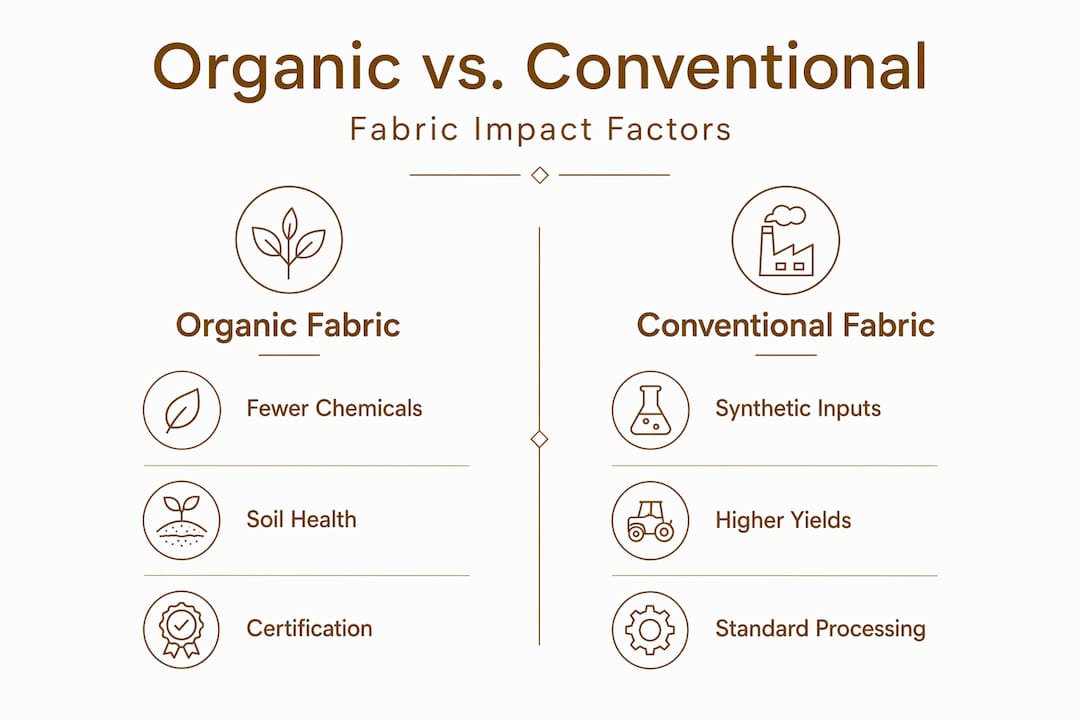
To understand this, you need to know the difference between a cradle-to-gate assessment, which measures impact from farm to finished fabric, and a cradle-to-grave assessment, which accounts for the full garment lifecycle including washing, drying, and eventual disposal. The farm-level wins of organic cotton can be partially offset downstream if the garment is manufactured in a region where electricity comes primarily from coal.
| Factor | Organic cotton advantage | Where it varies |
|---|---|---|
| Synthetic fertiliser emissions | Strong reduction | Consistent across most regions |
| Pesticide pollution | Significant reduction | Depends on local pest pressure |
| Carbon footprint overall | Often lower | Varies by electricity grid |
| Water use | Mixed, often higher | Depends on irrigation method |
| Soil health | Clear long-term benefit | Depends on management practice |
This is not a reason to avoid organic fabrics. It is a reason to read labels with more sophistication. An organic cotton garment made in a country powered largely by renewable energy can have a substantially lower total carbon footprint than conventionally grown cotton processed in a coal-heavy grid. The fibre choice matters, but so does the supply chain design behind the brand.
- Ask brands where their fabric is spun and finished, not just where it is grown
- Look for brands that pair organic fibre with renewable energy sourcing in manufacturing
- Understand that “made with organic cotton” without supply chain transparency tells only part of the story
- Consider garment longevity as a carbon variable: a durable organic piece worn 200 times beats a disposable conventional one worn 20 times
Pro Tip: When evaluating an organic fashion brand’s sustainability claims, look for transparency about their Tier 2 and Tier 3 suppliers, meaning the mills and dye houses, not just the farms. Brands that can name their processing facilities are usually telling the fuller truth.
Certification and shopping tips for organic fabric fashion choices
If you are going to invest in organic fabrics, knowing your certifications saves you from buying into misleading claims. There are three main standards you will encounter:
| Certification | What it covers | Best for |
|---|---|---|
| GOTS (Global Organic Textile Standard) | Farm through finished garment, including social standards | Full eco-social assurance |
| OCS (Organic Content Standard) | Verifies organic fibre percentage only | Fibre content verification |
| USDA NOP | Farm-level organic agriculture in the USA | Farm practice assurance |
GOTS, OCS, and USDA certifications each serve different purposes, and stacking them improves traceability significantly. A garment carrying both GOTS and OCS marks gives you confidence about the fibre content and the processing conditions. GOTS alone is the gold standard for fashion because it covers dyes, finishing chemicals, wastewater treatment, and worker welfare across the supply chain.
Here is a practical shopping checklist:
- Look for GOTS certification on the label or brand website for full-chain assurance
- Use OCS as a minimum bar for verifying the organic fibre percentage in a blend
- Search the GOTS public database to confirm a brand’s certification is current
- Ask brands directly if their certification covers fabric processing, not just fibre origin
- Treat “made with organic cotton” without a third-party certification as an unverified claim
Pro Tip: The GOTS public database is searchable by brand and product at global-standard.org. If a brand claims GOTS certification but does not appear in the database, the claim is likely outdated or inaccurate. It takes under a minute to verify and can save you from paying a premium for nothing.
Certifications also tell you something about a brand’s commitment to fabric quality and comfort. The process of achieving GOTS certification requires brands to audit their supply chains rigorously, which tends to produce garments with better finishing quality overall.
How to apply organic fabric choices in your wardrobe thoughtfully
Understanding organic fabrics is only useful if it changes how you shop. The most practical advice is to focus your organic fabric investment where it creates the most impact. Prioritising frequent-wash basics with high organic fibre content maximises the environmental and skin-comfort benefits you gain per purchase.
- Start with high-contact garments: underwear, t-shirts, and sleepwear are the most logical first step because they sit directly against your skin for extended periods
- Choose pieces designed for durability and longevity over trend-driven items that will be discarded after one season
- Prioritise garments with a high organic fibre percentage rather than blends that contain minimal amounts
- Coordinate your organic fabric choices with sustainable shopping habits, such as washing in cold water to extend garment life
- Expand into seasonal and outerwear once you have your basics covered, looking for certified organic wool or linen as complementary options
Pro Tip: Cold water washing alone can extend the life of organic cotton garments by reducing fibre degradation. Combined with line drying instead of machine drying, it also cuts the garment’s lifetime carbon footprint considerably more than the farming stage improvements alone.
Fresh perspectives on organic fabrics: what most guides miss
Most organic fabric articles stop at the farm. They tell you that organic cotton uses fewer pesticides, and they leave you with the impression that buying anything labelled “organic” makes you a better consumer. That framing does a disservice to women who actually want to make a difference.
The uncomfortable truth is that the finishing and dyeing stage of textile production often introduces more potentially harmful chemicals than the farming stage. A garment can be grown on a certified organic farm and then processed with synthetic finishing agents that would concern any thoughtful shopper. The organic label at the farm level does not guarantee a chemical-free finished garment. Only textile-specific certification, particularly GOTS, closes that gap.
There is also the question of impact data maturity. Life cycle assessments for textiles are still evolving. Methodologies differ between studies, regional data quality varies enormously, and few assessments have followed garments through their complete useful life in consumer hands. When a brand quotes specific carbon savings from switching to organic cotton, treat those figures as directionally useful rather than precise measurements. The science supports the direction of travel. It does not yet support claims of exact percentage improvements with confidence.
What this means practically is that organic fabric choices are genuinely worthwhile, but they work best as part of a broader approach to sustainable fashion that includes buying less, wearing more, washing thoughtfully, and choosing brands that are transparent about their full supply chain. Organic fibre is the starting point, not the complete answer.
Discover stylish organic fabric fashion at 16th Avenue
Knowing the benefits of organic fabrics is only satisfying when you can act on them with pieces you actually want to wear. At 16th Avenue, the focus is on fashion that feels as good as it looks, with quality materials and considered construction at the centre of every collection.
For the cooler months ahead, the women’s woolen coat brings together warmth, structure, and timeless style in a natural fibre piece built to last far beyond a single season. Pair it with the breathable sport sneakers for everyday comfort or the fashion snow boots for colder days. These are the kinds of pieces that earn their place in a thoughtful wardrobe, season after season. Explore the full collection and shop with the confidence that comes from knowing what to look for.
Frequently asked questions
Are organic fabrics always better for the environment?
Organic fabrics often reduce synthetic fertiliser use and improve soil health, but their overall environmental impact depends on specific farming practices and supply chain factors including regional energy sources.
Do organic fabrics guarantee better health benefits or skin safety?
While organic fabrics reduce exposure to certain synthetic chemicals, no conclusive evidence proves superior health outcomes; skin comfort also depends significantly on fabric finishing and individual sensitivities.
What certifications should I look for when choosing organic fabric clothing?
Look for GOTS for full eco-social coverage, OCS for fibre content verification, and USDA NOP for farm-level assurance; stacking these certifications strengthens traceability and gives you the most complete picture.
Can organic fabrics have a higher carbon footprint than conventional fabrics?
Yes, depending on supply chain energy sources and processes, organic cotton’s carbon footprint may sometimes exceed that of conventional cotton despite the farm-level benefits from reduced synthetic inputs.
How can I make the most eco-friendly choices when shopping for organic fashion?
Prioritise organic garments with high natural fibre content, durable design, and certified processing; focusing on frequent-wash basics with high organic content and longer-lasting construction delivers the greatest environmental return per purchase.