


Winter skincare tips: how to protect dry skin in cold months
TL;DR:
- Cold weather damages skin barriers and causes moisture loss during winter.
- Effective skincare involves gentle cleansing, layered moisturizers, reduced exfoliation, daily SPF, and environmental support.
Cold weather is the leading cause of skin barrier disruption and moisture loss during the winter months. When temperatures drop, the air holds less humidity, indoor heating strips moisture further, and your skin pays the price with tightness, flaking, and sensitivity. The Canadian Dermatology Association and dermatologists consistently point to three priorities for cold weather skincare: protect the barrier, lock in hydration, and adjust your routine to match the season. The good news is that effective winter skincare tips do not require a complete overhaul. They require smarter choices.
1. How to adapt your winter skincare routine for cleansing
Cleansing is where most people unknowingly damage their skin every single day in winter. The wrong cleanser or the wrong water temperature strips the skin’s natural oils and leaves the barrier compromised before any moisturiser even touches your face.
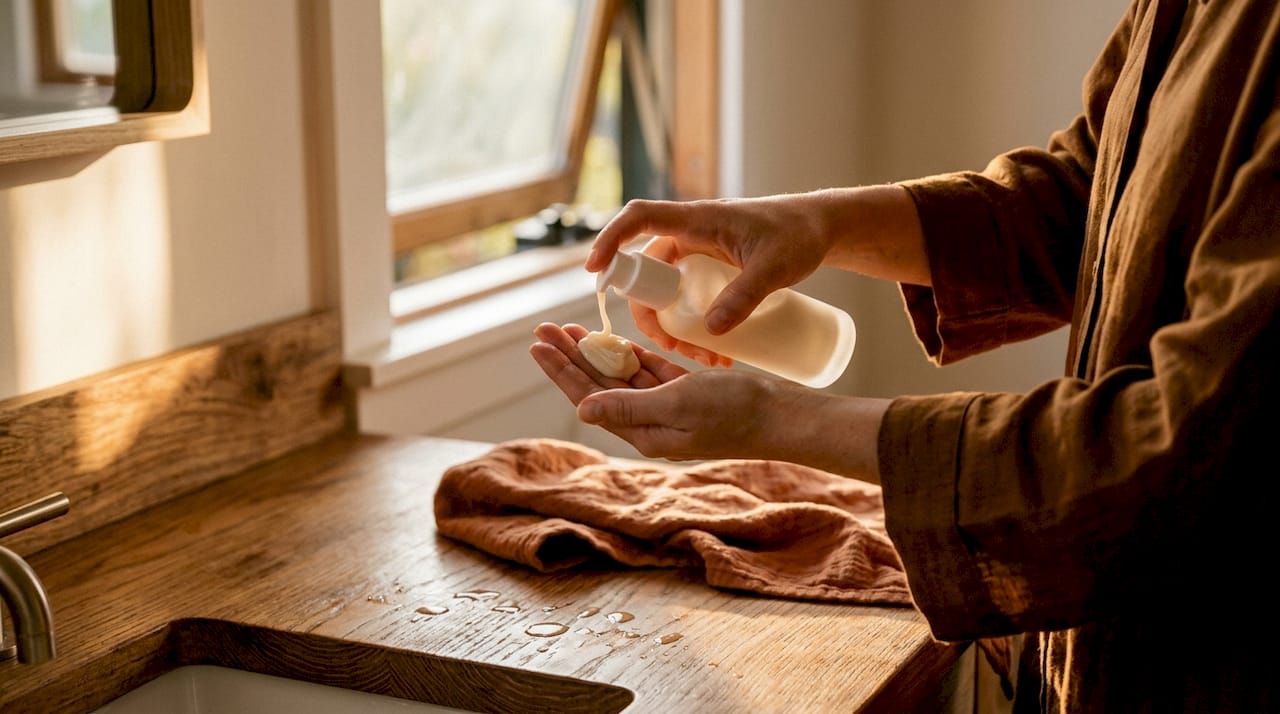
The Canadian Dermatology Association recommends syndet cleansers with pH 5–7 to align with your skin’s natural acidity. Traditional bar soaps are typically alkaline, sitting well above pH 7, which disrupts the acid mantle and triggers dryness and irritation. Switching to a gentle syndet bar or a mild gel cleanser is one of the highest-impact changes you can make.
Water temperature matters just as much as the product. The Canadian Dermatology Association advises limiting showers to 5–10 minutes with water no warmer than 37°C. Hot water feels comforting in winter, but it dissolves the lipid layer that keeps moisture inside your skin. Cooler, shorter showers preserve that layer.
After washing, pat your skin dry with a soft towel instead of rubbing. Rubbing creates friction that irritates already-sensitised winter skin.
- Use a syndet or mild gel cleanser with pH 5–7
- Keep shower and bath water at or below 37°C
- Limit washing to 5–10 minutes
- Pat skin dry, never rub
- Avoid antibacterial soaps and any cleanser with added fragrance
Pro Tip: If your skin feels tight within five minutes of cleansing, your cleanser is too harsh for winter. Swap it for a cream or oil-based formula immediately.
2. Which moisturising ingredients actually work in winter
The three-tier moisturising approach is the most effective framework for winter hydration. It uses humectants, emollients, and occlusives together, each doing a distinct job.
Humectants attract water into the skin from the environment and deeper skin layers. Hyaluronic acid and glycerin are the most widely used. Apply them first, on slightly damp skin, so they have water to draw in.
Emollients fill the gaps between skin cells, smoothing texture and repairing the barrier. Ceramides are the most clinically supported emollient for winter use. Ceramide levels drop in winter, directly impairing the barrier and increasing sensitivity. A ceramide-rich moisturiser rebuilds what cold weather takes away. Shea butter is another effective emollient, particularly for very dry patches on hands and elbows.
Occlusives seal everything in. Petrolatum and mineral oil are the most effective occlusives available. They sit on top of the skin and physically block water from evaporating. Apply them last, over your humectant and emollient layers.
- Apply a hyaluronic acid or glycerin serum to damp skin
- Follow with a ceramide-rich cream or lotion
- Seal with a thin layer of petrolatum on the driest areas (lips, hands, heels)
- For oily or acne-prone skin, skip the heavy occlusive and rely on a ceramide moisturiser alone
Heavy occlusives on oily skin cause breakouts. Product layering with a hydrating serum followed by a lighter moisturiser works better for that skin type. Matching the product to your skin type is not optional in winter.
Pro Tip: Apply your moisturiser within three minutes of stepping out of the shower. The Canadian Dermatology Association calls this the “soak and seal” method, and it traps residual moisture before it evaporates.
3. How to scale back exfoliation without losing clarity
Exfoliation is one of the most mismanaged steps in a winter beauty routine. People either stop entirely or continue at their summer frequency, and both approaches cause problems.
Reducing exfoliation to once or twice weekly with gentle enzyme-based or mild acid exfoliants protects the barrier while maintaining skin clarity. Enzyme exfoliants derived from papaya or pumpkin dissolve dead cells without the abrasion of physical scrubs. Low-concentration lactic acid is another good option because it also acts as a humectant.
Over-exfoliation in winter causes visible redness, increased sensitivity, and a compromised barrier that lets irritants in more easily. The skin is already under stress from cold air and indoor heating. Adding aggressive exfoliation compounds that stress significantly.
- Limit exfoliation to 1–2 times per week in winter
- Choose enzyme-based or mild acid exfoliants (lactic acid, mandelic acid)
- Avoid physical scrubs with large or sharp particles
- Skip exfoliation entirely on days when skin feels raw or irritated
- Never use strong acids like high-concentration glycolic acid in winter without professional guidance
The goal is smooth, clear skin without stripping. If you notice flaking after exfoliating, reduce frequency before increasing moisturiser. The barrier needs repair, not more removal.
4. Why sunscreen and lip care cannot wait until summer
UVA rays remain at consistent intensity year-round, including in winter. Daily sunscreen protects against photoaging, pigmentation, and inflammation even when the sky is overcast. Dehydrated winter skin is actually more vulnerable to UV damage because the barrier is already compromised.
Choose a broad-spectrum SPF 30 or higher with a non-comedogenic formula. Mineral sunscreens containing zinc oxide or titanium dioxide sit well on dry skin and are less likely to irritate a sensitised barrier.
Lips are the most neglected area in any cold weather skincare plan. The skin on your lips has no sebaceous glands, which means it produces no natural oil. Without regular protection, lips crack, peel, and bleed in cold weather. For a full guide to keeping lips soft through winter, the lip care essentials guide at 16thavenue covers the best products and application habits.
- Apply broad-spectrum SPF 30 or higher every morning, regardless of cloud cover
- Use a mineral sunscreen if your skin is reactive or sensitised
- Apply a nourishing lip balm with shea butter, vitamin E, or beeswax every few hours
- Consider a gentle lip exfoliant once a week to remove flaking skin
- Reapply lip balm after eating, drinking, or being outdoors
5. Lifestyle and environmental habits that support skin hydration
Topical products do most of the work, but your environment and daily habits either support or undermine them. Humidifiers significantly reduce skin dryness caused by indoor heating by restoring moisture to the air. A humidifier set to 40–50% relative humidity in your bedroom makes a measurable difference, particularly overnight when your skin does most of its repair work.
Diet also plays a direct role. A diet rich in antioxidants and essential fatty acids supports skin hydration and resilience from the inside out. Omega-3 fatty acids from salmon, walnuts, and flaxseed reinforce the lipid layer. Vitamins C and E from fruits and vegetables support collagen and reduce oxidative stress on the skin.
Protective clothing reduces direct cold air exposure on skin. Gloves, scarves, and a well-fitted coat shield your hands, neck, and face from wind and freezing temperatures. 16thavenue carries a range of winter outerwear and accessories that pair protection with style. For a relaxing self-care evening that complements your skincare routine, soy candles for a self-care night can set the right atmosphere without harsh synthetic fragrances.
| Habit | Effect on skin |
|---|---|
| Humidifier at 40–50% humidity | Reduces moisture loss from indoor heating |
| Omega-3 rich diet | Reinforces the skin’s lipid barrier from within |
| Protective gloves and scarves | Shields exposed skin from wind and cold air |
| Avoiding overheated rooms | Prevents additional dryness from hot, dry air |
| Soak and seal after showering | Traps moisture on damp skin before evaporation |
Pro Tip: Drinking more water helps general health but does not directly fix dry skin. External moisture management using humectants, emollients, occlusives, and a humidifier is far more effective for winter dryness.
Key takeaways
The most effective winter skincare routine combines gentle cleansing, three-tier moisturising with humectants, emollients, and occlusives, reduced exfoliation, daily sunscreen, and environmental controls like humidifiers.
| Point | Details |
|---|---|
| Cleanse gently | Use a syndet cleanser with pH 5–7 and keep showers under 10 minutes at 37°C. |
| Layer moisturisers correctly | Apply humectant first, then emollient, then occlusive for maximum moisture retention. |
| Reduce exfoliation | Limit to 1–2 times weekly with enzyme or mild acid exfoliants to protect the barrier. |
| Wear sunscreen daily | UVA rays are consistent year-round; SPF 30 or higher prevents photoaging and inflammation. |
| Support skin from within | Use a humidifier indoors and eat omega-3 rich foods to reinforce the skin barrier. |
What I have learned about winter skincare after years of following it closely
Most people treat winter skincare as a problem to solve with more products. That instinct is almost always wrong. The skin in winter needs fewer stripping agents and more barrier support, not a shelf full of new serums.
The single biggest mistake I see is the hot shower habit. People know it dries their skin out, and they do it anyway because it feels good. The fix is not willpower. It is turning the dial to lukewarm before you step in, so the decision is already made.
Facial oils are another area where people go wrong. An oil like rosehip or squalane works beautifully as a sealant over a ceramide moisturiser. Used alone, it does not hydrate. The layering order matters more than the individual product.
Skipping sunscreen in winter is the habit that causes the most long-term damage. The skin is already compromised, and UVA exposure on a weakened barrier accelerates pigmentation and ageing faster than in summer. SPF is not a warm-weather product.
Winter skincare is a seasonal adjustment, not a reinvention. Swap your foaming cleanser for a cream formula, add a ceramide moisturiser, cut your exfoliation frequency in half, and keep your sunscreen. That is genuinely most of what you need.
— Glenville
Stock up on winter skincare essentials at 16thavenue
16thavenue carries a curated selection of beauty products and winter accessories designed to support your cold-weather routine from head to toe. Whether you are looking for nourishing skincare staples or protective outerwear to shield your skin from the elements, the collection has you covered.

From must-have beauty products to warm, well-made outerwear like the Women’s Trendy Autumn and Winter Woolen Coat, 16thavenue makes it easy to shop everything you need in one place. Free shipping to most destinations means your winter essentials arrive without added cost. Browse the full collection at 16thavenue.ca and build a routine that keeps your skin healthy all season long.
FAQ
What is the best moisturiser for winter dry skin?
A ceramide-rich cream layered over a hyaluronic acid serum is the most effective combination for winter dryness. The three-tier approach using humectants, emollients, and occlusives gives the best results across most skin types.
How often should I exfoliate in winter?
Exfoliate once or twice a week using a gentle enzyme-based or mild acid exfoliant. Harsh physical scrubs and high-concentration acids damage the already-stressed winter skin barrier.
Do I still need sunscreen in winter?
Yes. UVA rays remain at consistent intensity year-round and cause photoaging and pigmentation regardless of season. Apply a broad-spectrum SPF 30 or higher every morning, even on overcast days.
How do I stop my lips from cracking in cold weather?
Apply a nourishing lip balm with shea butter, vitamin E, or beeswax every few hours, especially before going outdoors. Gentle lip exfoliation once a week removes flaking skin and helps balm absorb more effectively.
Does drinking more water fix winter dry skin?
Drinking water supports overall health but does not directly resolve skin dryness. External moisture management using humectants, emollients, occlusives, and a humidifier is significantly more effective for treating dry winter skin.