


Your complete winter accessories list for 2026
TL;DR:
- Choosing 3-4 high-quality winter accessories tailored to your climate and style offers better warmth and versatility than owning many pieces that rarely get used. Layering and texture mixing create polished, intentional looks, while selecting accessories based on functionality ensures comfort in different conditions. Focusing on essential pieces like a warm hat, scarf, insulated gloves or mittens, thermal socks, and weatherproof boots optimizes both style and practicality throughout winter.
Cold weather doesn’t have to mean sacrificing style. The real challenge with building a winter accessories list is knowing which pieces actually earn their place, and which ones just pile up in a drawer by February. Whether you’re braving a Canadian winter commute or bundling up for a weekend market, the right cold weather gear does double duty: it keeps you genuinely warm and makes your outfit look intentional. This guide covers what to look for, what to buy, and how to wear it all together.
Table of Contents
- Key takeaways
- How to choose the right winter accessories
- The core winter accessories list
- Gloves vs. mittens: what to actually choose
- How to style winter accessories without overdoing it
- My honest take on building a winter accessories wardrobe
- Warm up your winter wardrobe with 16thavenue
- FAQ
Key takeaways
| Point | Details |
|---|---|
| Prioritise quality over quantity | Choosing 3-4 key accessories matched to your lifestyle outperforms owning many pieces you rarely use. |
| Match insulation to temperature | Mittens perform best below 15°F while gloves suit milder cold above 25°F for tasks requiring dexterity. |
| Coordinate textures and colours | Mixing knit, leather, and faux fur adds visual depth without requiring a completely new wardrobe. |
| Layering multiplies your options | A few versatile accessories layered together create more outfit combinations than single-use statement pieces. |
| Style is part of the function | Winter accessories act as focal points that can transform a neutral coat into a polished, complete look. |
How to choose the right winter accessories
Before you add anything to your winter accessories list, it helps to know what you’re actually shopping for. Three factors consistently separate good purchases from regretted ones: warmth rating, functionality for your daily life, and whether the piece fits your personal style.
Warmth and material matter more than most people realise. Wool retains heat even when damp. Cashmere offers softness at a lighter weight. Synthetic fills like PrimaLoft perform well in wet conditions, which is critical for Canadian winters where rain and snow often mix. Down insulation excels in dry cold but loses its insulating power when wet, so context matters.
Functionality shifts depending on how you spend your day. Someone walking between meetings in a city needs different gear than someone spending hours outdoors. Consider whether you need touchscreen compatibility in gloves, whether a scarf will stay put on a windy day, and whether your hat will actually fit under a helmet if you ski or cycle.
Style and colour coordination round out the decision. Neutral tones like camel, charcoal, and cream work with almost any outerwear. If your coat is bold, your accessories can stay understated. If your coat is a classic black or navy, your accessories become the opportunity to add personality. For current colour direction, 16thavenue’s colour trends guide is worth a look before you shop.
- Choose wool, cashmere, or quality synthetics over acrylic for lasting warmth
- Look for accessories that transition between casual and dressed-up contexts
- Build around two or three base colours that already exist in your coat wardrobe
- Consider how pieces work together, not just individually
Pro Tip: Experts recommend limiting yourself to 3-4 winter accessories that you rotate regularly. A smaller, well-chosen collection is easier to style and more practical than a drawer full of impulse buys.
The core winter accessories list
This is where most people want to land: a clear, practical list of what actually belongs in a winter wardrobe, along with enough detail to make confident choices.
1. Warm hats and beanies
A well-fitted beanie is probably the single highest-impact accessory on any winter accessories list. Slouchy beanies suit a relaxed, streetwear aesthetic. Fitted styles read as more polished and work well with tailored coats. Pull-down styles that cover the ears are the most functional for extreme cold. Look for merino wool or fleece lining for warmth without bulk. A chunky knit with a faux fur pom, like the options at 16thavenue’s knitted hat collection, adds texture and personality in one piece.
2. Scarves and wraps
Scarves deserve more credit as must-have winter items. A large wool or cashmere scarf can function as a wrap, a blanket scarf, or a classic neck wrap depending on how you knot it. The infinity scarf is the most foolproof option for staying warm during a commute since it never comes loose. For styling versatility, a neutral plaid or solid-colour oversized scarf works across every outfit in your rotation. Winter accessories act as focal points that transform neutral outfits, and a well-draped scarf is the most effective tool in that regard.
3. Gloves and mittens
This is the category where most people make an uninformed choice. Mittens perform best in sub-zero temperatures below 15°F to 20°F because fingers share warmth inside a single compartment. Gloves are the better choice above 25°F when you need to use your phone, handle keys, or manage a stroller. Look for conductive thread in palm panels if touchscreen compatibility matters to you. Not all touchscreen gloves deliver on that promise, so integrated conductive panels with real insulation are what you want.
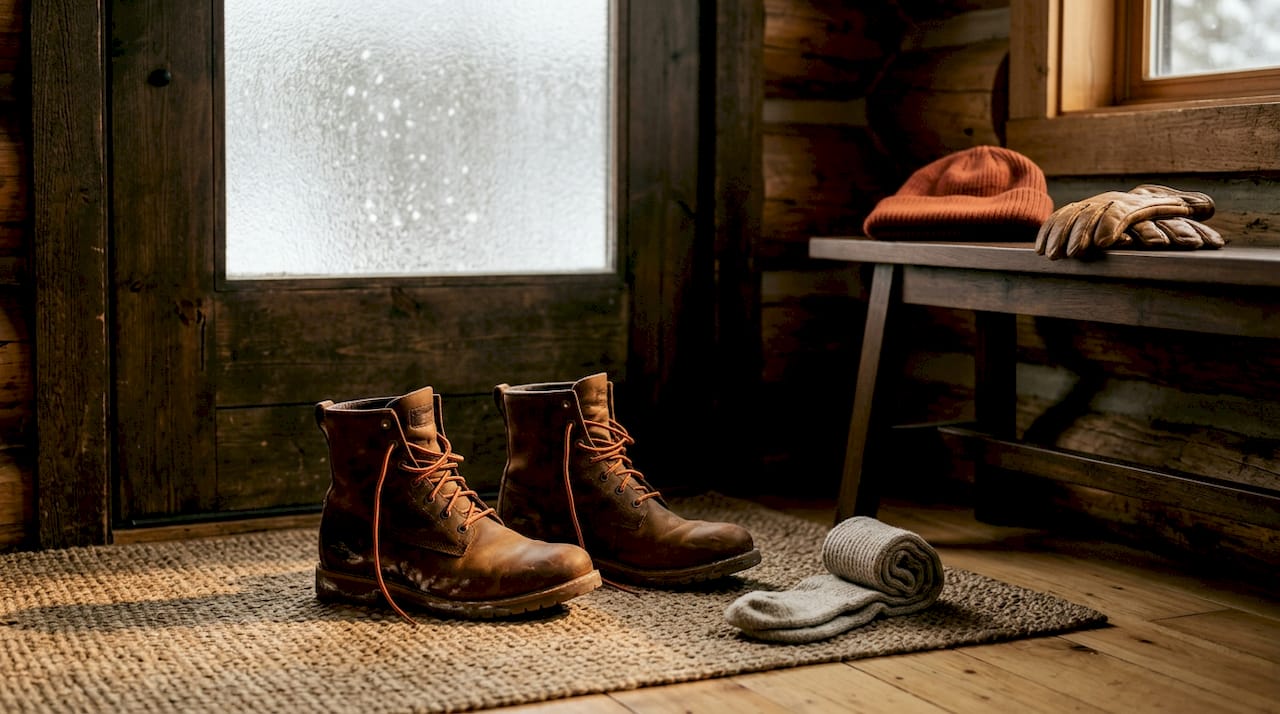
4. Warm socks and boot accessories
Thermal socks are consistently underrated as essential winter apparel. Merino wool socks regulate temperature and wick moisture, making them genuinely better than cotton in cold conditions. Knee-high or over-the-knee styles have become a strong fashion choice, worn visible over boots or tights for a layered look. Insulated boot liners are worth considering if you already own boots that lack built-in warmth.
5. Insulated winter boots
Footwear is where function absolutely cannot be compromised. Cold, wet feet affect your entire day. Ankle boots with plush fur lining offer a balance of style and insulation for urban wear, and 16thavenue’s winter ankle boots are a good example of that blend. For heavier snowfall, a taller shaft with a waterproof outer layer is the more practical choice. Pair boots with visible socks for a current, layered aesthetic.
6. Earmuffs
Earmuffs have returned as a legitimate fashion accessory, not just a practical stopgap. Faux fur styles add texture to a minimal outfit. Structured styles in faux leather read as sleek and modern. They work especially well on days when a beanie would flatten a blowout or clash with a more polished look.
7. Shield and tinted sunglasses
Sun reflects intensely off snow, and winter UV exposure is a real concern. Shield-style sunglasses in amber or grey tints are both protective and fashion-forward. They complement structured outerwear and add an editorial quality to winter street style. This is one of the best winter fashion accessories for someone who wants an unexpected, high-impact element in their cold-weather look.
8. Thermal leggings
Thermal leggings sit under clothing but they change how you experience a winter day outdoors. Fleece-lined styles add significant warmth without adding bulk, which means your outerwear silhouette stays clean. They function as a base layer for outdoor activities and as standalone leg coverage under longer coats or dresses.
Gloves vs. mittens: what to actually choose
This comparison comes up every winter and the answer is more specific than most people expect.
| Feature | Gloves | Mittens |
|---|---|---|
| Best temperature range | Above 25°F | Below 15°F to 20°F |
| Dexterity | High | Low |
| Warmth retention | Moderate | High |
| Best use case | City commuting, daily tasks | Skiing, outdoor exposure, extreme cold |
| Touchscreen compatible | Often available | Rarely available |
| Layering potential | Good as liners | Best as outer layer |
For serious cold, the most effective solution is a layered system. Liner gloves worn under mittens trap additional air and manage moisture during extended outdoor exposure. This approach suits temperatures below 0°F or activity like skiing and snowshoeing. For daily city life in temperatures around 20°F to 35°F, a well-insulated glove with a snug cuff is enough.
Palm reinforcements and structured cuffs reduce heat loss and block wind intrusion. These construction details matter more than the brand on the label.
Pro Tip: For active winter pursuits, use a layered system: thin liners for temperatures between 40°F and 55°F, standard gloves for 25°F to 45°F, and insulated mittens below 25°F. Wind chill can push effective temperatures well below the reading on the thermometer.
How to style winter accessories without overdoing it
Styling cold weather gear is about intention, not volume. The goal is a look that feels complete, not a look that shouts “I put on everything I own.”
The most reliable approach is the rule of two textures. Choose two distinct textures per outfit, such as a smooth leather glove against a chunky knit scarf, or a sleek toque beside a faux fur coat. More than two textures in one look gets visually busy fast.
Colour coordination follows a similar logic. Winter accessories coordinated with outerwear create a polished result. You can either match closely (tonal dressing in shades of grey or cream) or use one accessory as a deliberate contrast (a rust-coloured scarf against a black coat). Avoid mixing three competing colours across your accessories. It fragments the look.
For styling scarves specifically:
- The Parisian knot (loop once, tuck the ends through) suits tailored coats
- A blanket wrap draped over the shoulders reads as relaxed and editorial
- A simple double wrap with ends tucked is the most secure option in wind
Beanie choices should match the mood of the outfit. A slouchy ribbed beanie works with athleisure and casual coats. A fitted, structured style suits minimalist looks. A beanie with embellishment, like a faux fur pom, brings energy to simple, neutral dressing. For more guidance on putting full winter looks together, 16thavenue’s winter styling guide covers the broader picture well.
My honest take on building a winter accessories wardrobe
Over the years, I’ve watched people approach winter accessories as a trend exercise, buying whatever looks good in October and abandoning half of it by December. What I’ve learned is that the pieces you actually reach for every day are the ones that solve a real problem while looking good doing it.
The biggest mistake I see is prioritising aesthetics in the store without thinking about the specific conditions you face. A delicate cashmere wrap looks beautiful but won’t hold up in a wind tunnel commute. A massive puffer mitten might be the warmest option, but if you hate wearing it because it doesn’t fit your style, you’ll leave it at home on the coldest days.
My actual advice: start with one really good scarf in a neutral that works with your coat, one pair of gloves suited to your temperature range and daily tasks, and one hat that fits your face shape and the vibe of how you dress. Build from there based on gaps, not trends. The three pieces you love will serve you better than ten pieces you tolerate.
I also think texture mixing is the most underused skill in winter styling. A knit hat, a leather glove, and a wool coat together feel intentional and polished without any of it being expensive or complicated. It’s worth spending time on this instead of just adding more.
— Glenville
Warm up your winter wardrobe with 16thavenue

If you’re building out your winter accessories list and need outerwear to anchor the whole look, 16thavenue has you covered. The women’s woolen winter coat is an ideal canvas for layering accessories: its clean, tailored silhouette pairs with everything from chunky beanies to sleek leather gloves. For those who want to complete the cold-weather look from head to toe, the fashion snow boots add both warmth and style without compromise. 16thavenue’s curated winter collection is designed for women who want to look put-together on the coldest days. Free shipping to most destinations makes it easy to shop the full range and find your winter staples.
FAQ
What should be on every winter accessories list?
The core pieces are a warm hat, a scarf or wrap, insulated gloves or mittens, thermal socks, and weather-appropriate boots. Earmuffs and thermal leggings are strong additions for colder climates.
When should I choose mittens over gloves?
Mittens are the better choice in temperatures below 15°F to 20°F, when warmth matters more than dexterity. For daily tasks like using your phone or handling keys, gloves work better above 25°F.
How do I style winter accessories without clashing?
Stick to two textures per outfit and no more than two contrasting colours across your accessories. Coordinate your hat, scarf, and gloves so at least two of the three share a colour or tone with your outerwear.
What materials are best for winter accessories?
Merino wool, cashmere, and quality synthetics like PrimaLoft offer the best warmth-to-weight balance. Avoid acrylic for anything that needs to retain heat in genuine cold, as it loses warmth quickly once temperatures drop.
How many winter accessories do I actually need?
Experts suggest 3-4 thoughtfully chosen accessories matched to your lifestyle and climate work better than a large collection of pieces you cycle through inconsistently. Quality and relevance to your actual routine matter far more than quantity.